

- What counts as an employment gap?
- Sample resumes with employment gaps
- How to talk about your employment gaps in an interview
- Frequently asked questions
- Should I talk about employment gaps in my cover letter?
- I had a three month employment gap. Will it affect my chances of finding a job?
- I have multiple employment gaps on my resume. What should I do?
- Do I need to explain myself if I took a career break due to personal reasons (e.g., illness or caretaking)? What should I do?

Struggling to get interviews?
Career breaks are a part of life. Whether it’s because we went back to school, took time off to care for family members, or were otherwise out of work, many of us have gaps in our job history.
But how you present career breaks to employers does matter for a successful job application. According to our Hiring Trends Survey, 69% of employers say that resume gaps have some influence over their hiring decisions.
Below, we break down when you need to address an employment gap and how to do so professionally. We also provide sample resumes with employment gaps so you know exactly what to do in different situations.

What counts as an employment gap?
An employment gap is any period where you weren’t employed, working on a professional project, or engaged in a formal course of study.
Common examples of employment gaps:
- Taking a year off to travel
- Childcare
- Time off for health or family care
- Periods of unemployment lasting over 1 year
Your gaps only require special mention on your resume if they lasted for an extended period and can’t be covered by your other experience entries or qualifications.
Sample resumes with employment gaps
These examples demonstrate how you can still write a professional resume with employment gaps. We explain why each applicant formatted their resume the way they did and how this helped them address their specific employment gap professionally.
Sabbatical taker
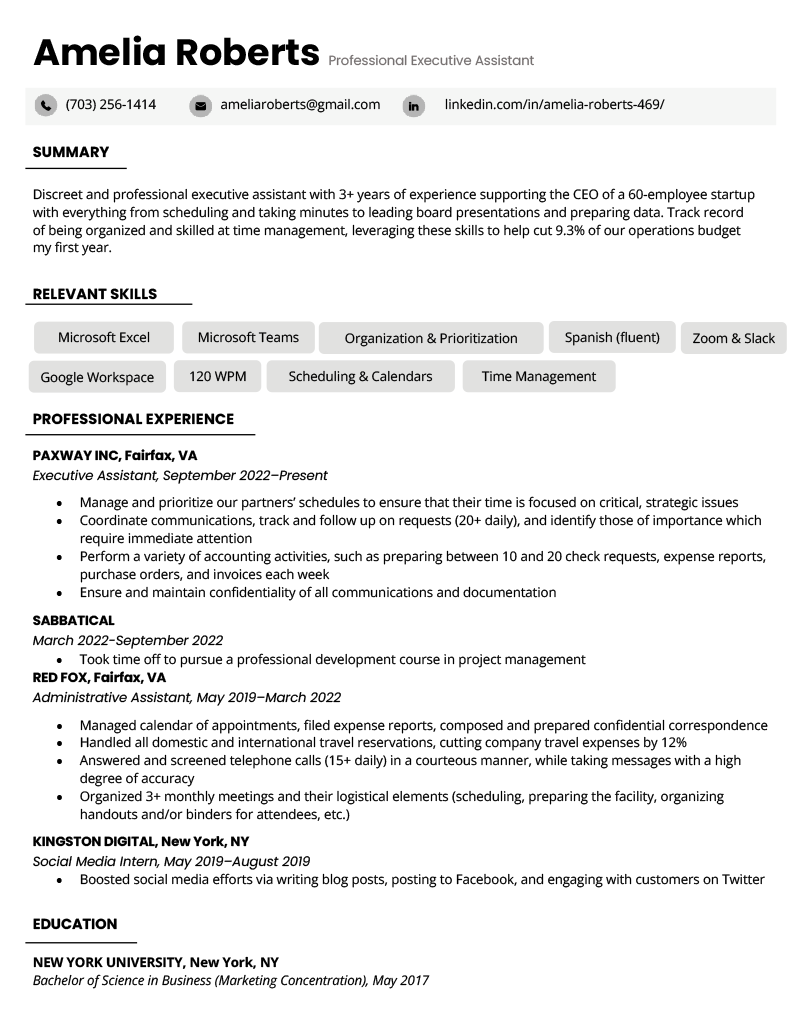
This applicant lists their career break as an entry in their experience section. This approach works if you took a career break to travel, work on personal projects, or study informally (e.g., at a language school).
Remember, you don’t need to mention career breaks that were less than 1 year long.
Parent returning to the workforce
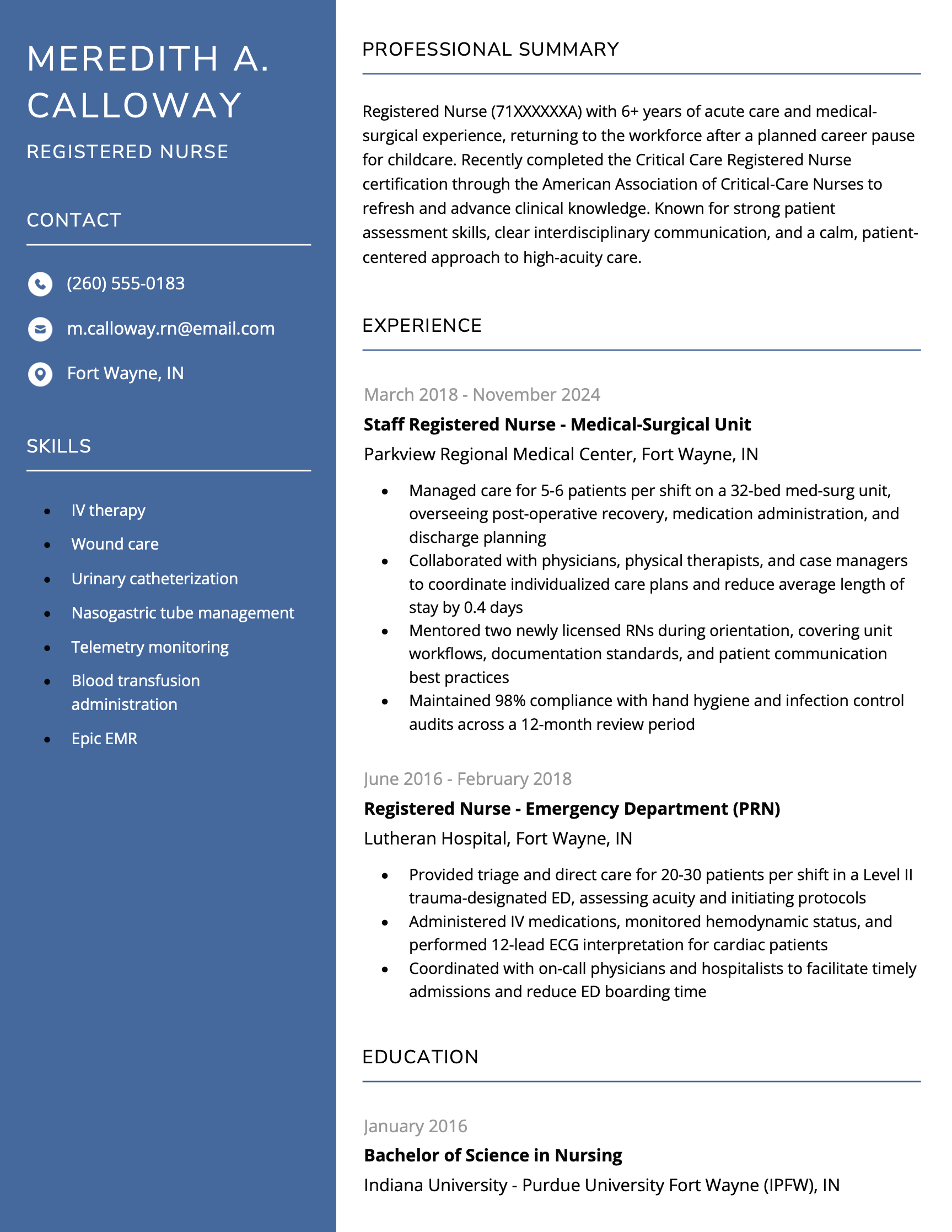
Taking extended parental leave is extremely common, especially among new parents. Like the applicant below, you don’t need to list your parental leave as an experience entry. A brief mention in your resume summary or cover letter is sufficient.
Applicant returning after a period of illness
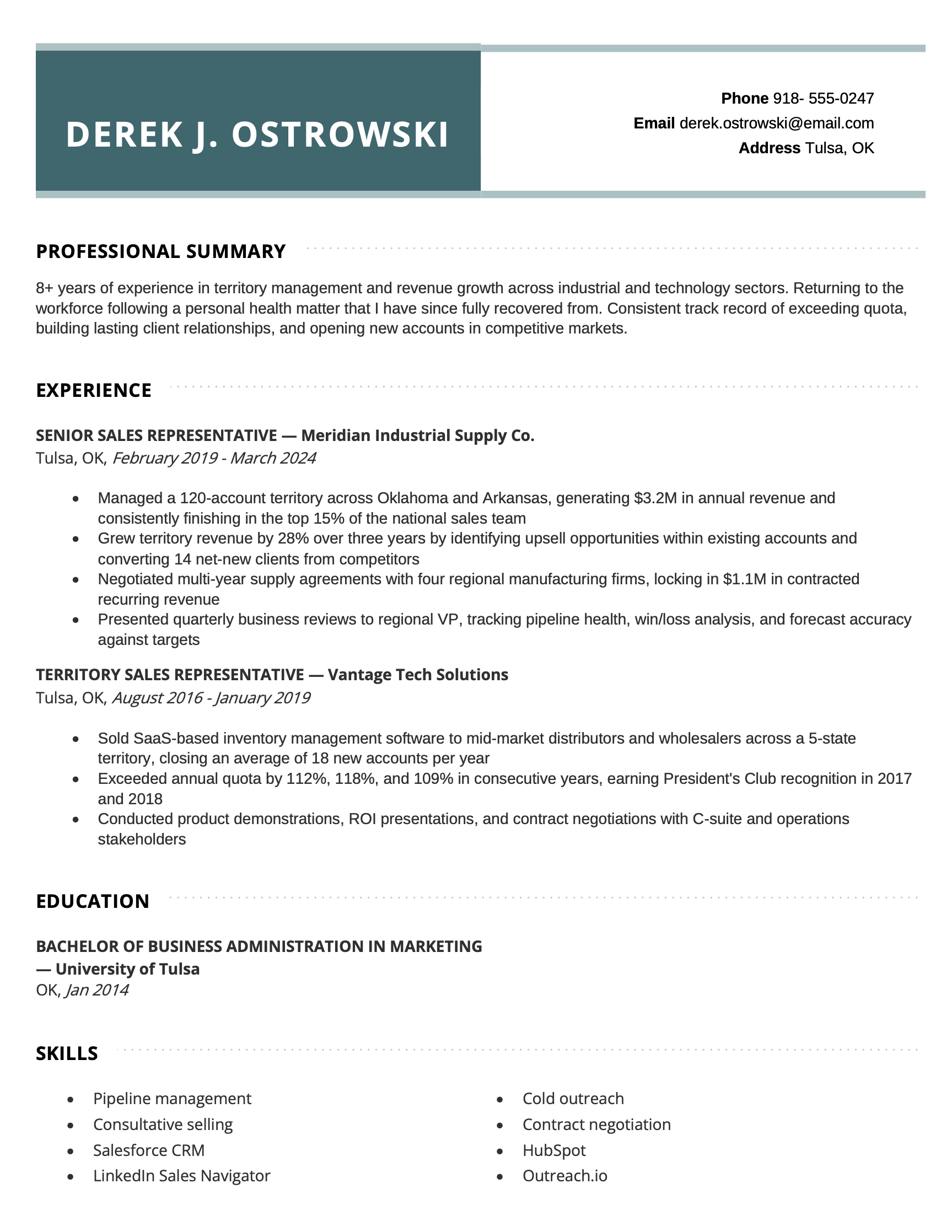
This applicant acknowledges their career break in their summary. The mention is brief and to the point. You don’t need to explain an illness or caregiving career break in detail on your resume.
Mature student
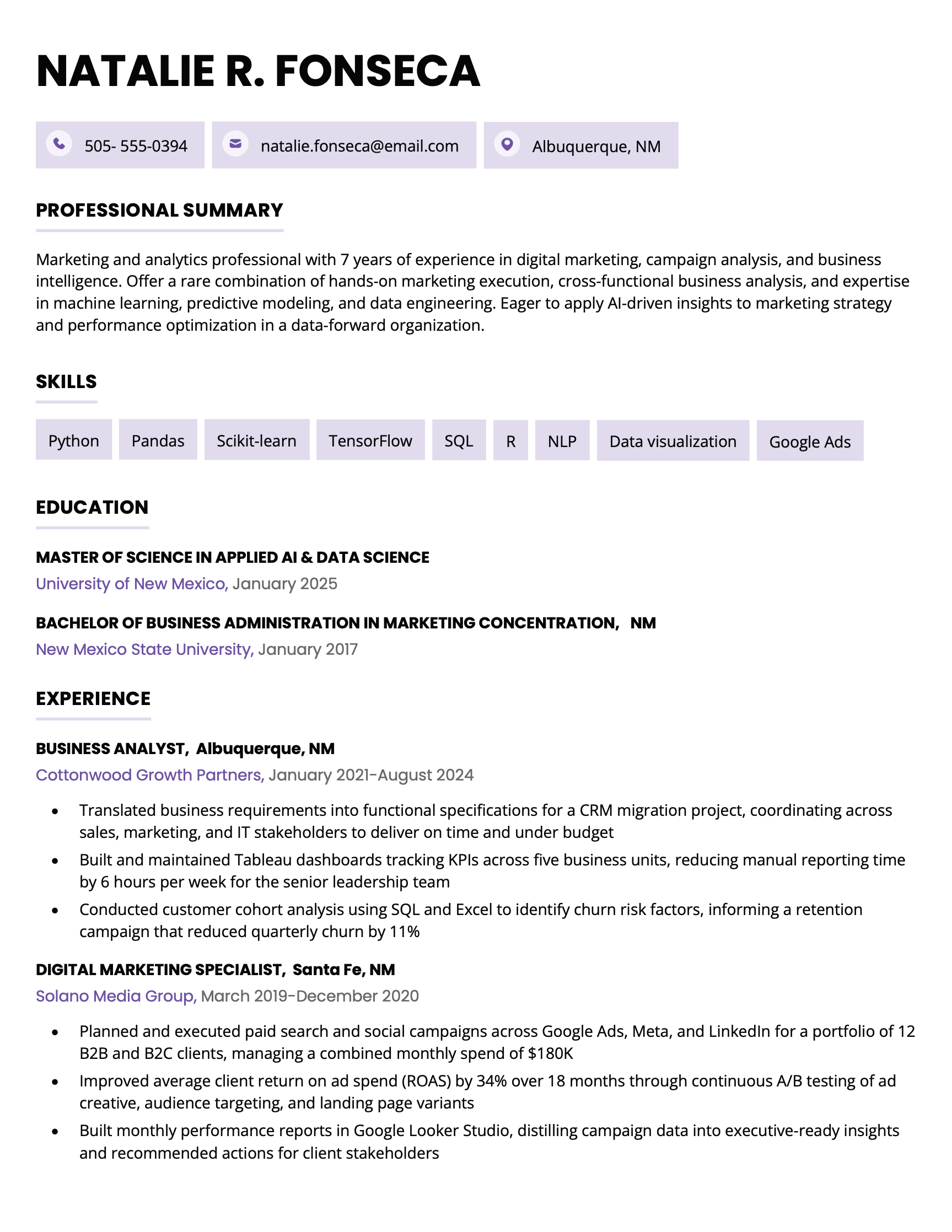
This applicant went back to school for a couple of years. Because their time out of work is covered in their education section, they don’t need to explicitly mention that they took a career break.
If you took a career break to study, move your education section above your work experience. This makes it clear that you paused your career to further your professional development.
Returning citizen
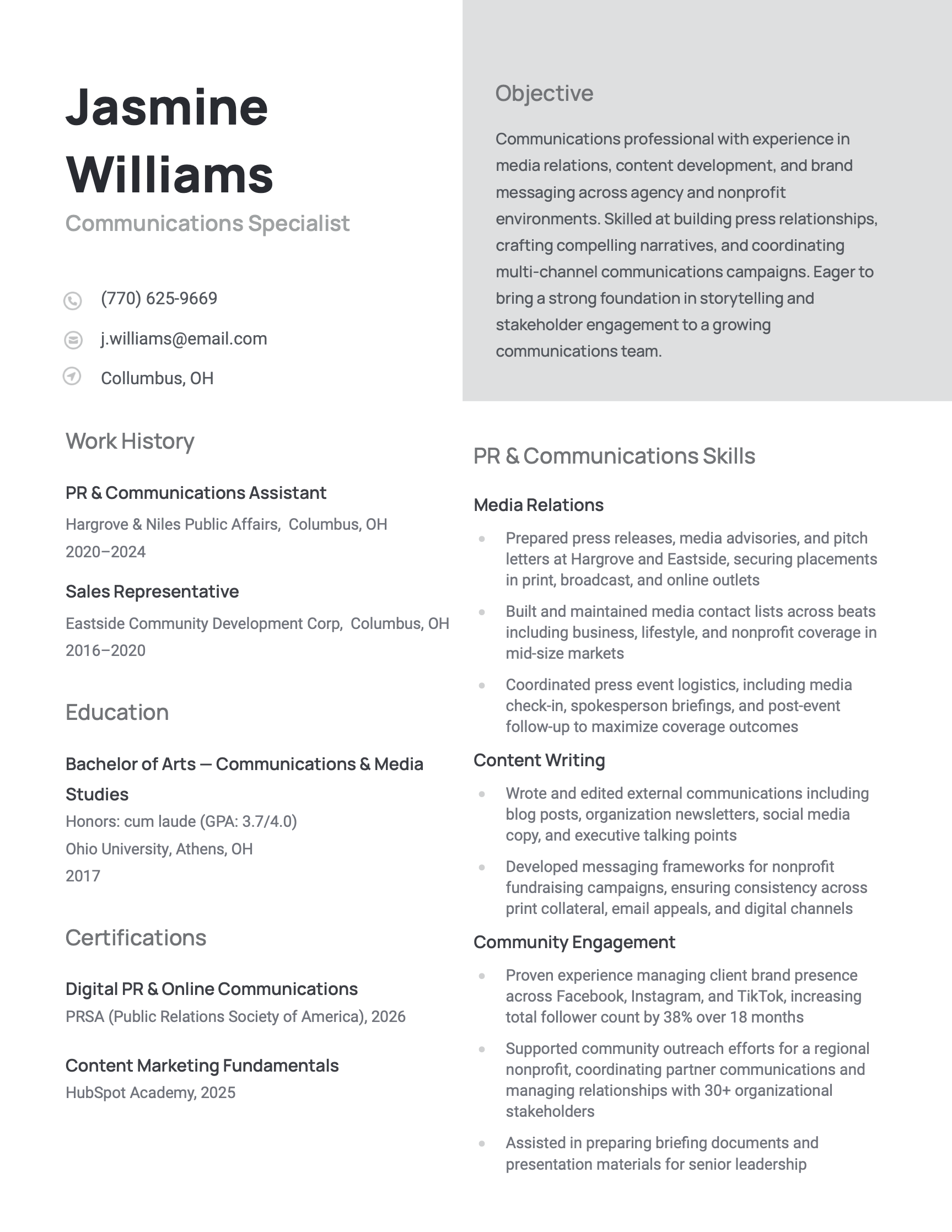
Resume gaps present unique challenges if you’ve served time in prison. Legal protections for people with felonies differ based on your state, the type of felony, and the job you’re applying for.
This applicant uses a functional format to put their skills front and center instead of drawing attention to gaps. A certifications section shows they kept learning and stayed engaged in their field.
How to talk about your employment gaps in an interview
Employers will ask about your resume gaps in job interviews. Prepare ahead of time by rehearsing your response, like in the example below:
- Prepare a brief explanation: A direct 1–2 sentence statement will help you respond to any questions confidently and professionally (e.g., “I took time off to care for a family member, and I’m now ready to return to work full-time.”)
- Frame the gap positively: Go in confidently and let potential employers know why you have what it takes to do the job
- Be honest and brief, then redirect: Be truthful without going into unnecessary detail, then steer the conversation back to your desire and ability to do the job
- Show you stayed engaged: Explain how you maintained your professional development during the gap (e.g., mention courses, projects, volunteering roles that you took on in the interim)
Frequently asked questions
Here are a few additional questions you may have about your resume gaps.
Should I talk about employment gaps in my cover letter?
No, you shouldn’t talk about employment gaps in your cover letter.
Your cover letter should focus on your relevant skills, achievements, and reasons for wanting the specific job. You don’t need to explain away irregularities in your employment history.
I had a three month employment gap. Will it affect my chances of finding a job?
A short career gap won’t raise concerns for employers, and it won’t affect your chances of getting hired.
Employers are mainly concerned about recent, lengthy gaps or frequent job hopping — they cast doubt over the freshness of your expertise or your ability to stick with one employer. A single employment gap of a few months isn’t an issue in that respect.
I have multiple employment gaps on my resume. What should I do?
If the employment gaps were each less than a year long, simply list the start and end years in your work experience section, rather than the start and end months. This will make the gaps less visible.
You should also prepare a brief explanation for the gaps if they come up in the interview. Here are some good reasons to consider:
- Actively searching for the right job
- Going back to school
- Taking time to develop a relevant skill
- Volunteering or community work
Do I need to explain myself if I took a career break due to personal reasons (e.g., illness or caretaking)? What should I do?
You don’t owe details, but some explanation helps.
Use general terms like “medical reasons” or “family caretaking” if you’d rather keep specifics private.
If asked about the gap in the interview, you do not need to give additional detail. Frame your answer positively, and redirect to your readiness for the role. If pushed for more than you’re comfortable sharing, it’s fine to say: “I’d prefer not to go into detail.”
About the Author

Seb is a Certified Professional Resume Writer with 10 years of combined experience in career counseling and editorial work. With a MA in International Communications from National Chengchi University (Taiwan), he helps job seekers translate their experience into employer-ready applications for global job markets.