
Most hiring teams now use AI-powered tools to screen resumes, write job descriptions, match candidates to jobs, and schedule interviews. At the same time, recruiters are increasingly encountering AI-generated resumes, interview responses, and online profiles.
All of this raises new questions about authenticity and transparency, both for employers and job seekers.
To better understand how AI is reshaping recruitment, Resume Genius surveyed 1,500 U.S. hiring managers and hiring team members about their use of AI tools, experiences with AI-generated candidate materials, and expectations for the future of hiring.
Key takeaways
AI has become standard when screening applicants
- 87% of hiring managers use AI in at least one part of the recruitment process
- AI is most commonly used to screen resumes (58%)
Hiring managers trust AI, but only when they use it
- 72% of hiring managers agree AI will make recruitment faster and more efficient, while 82% are concerned about candidates using AI in job applications
Hiring managers have concerns about candidate authenticity
- 58% of hiring managers have encountered AI-generated resumes or cover letters
- 17% have caught candidates using deepfake technology during video interviews
- Nearly half (46%) have seen candidates use AI to answer interview questions
- 86% agree that AI will create challenges in verifying candidate authenticity over the next year
Not every candidate knows when AI is judging their application
- 1 in 5 organizations (20%) don’t tell candidates how they use AI in hiring decisions
Nearly 9 in 10 hiring managers use AI during recruitment
Artificial intelligence has become a standard part of the hiring process, with 87% of hiring managers reporting that they use AI in at least one stage of recruitment.
Resume screening is the most widespread use of AI, with 58% of hiring managers using AI to review resumes and job applications. Nearly half (46%) also use AI to write job descriptions and job postings, while 44% rely on AI to match candidates to open roles based on their skills.
The findings suggest that employers are primarily using AI to streamline administrative tasks rather than make hiring decisions on their behalf. A minority of hiring managers reported using AI for more subjective aspects of recruitment, such as reducing bias in hiring (20%) or conducting AI-assisted video interviews (18%).
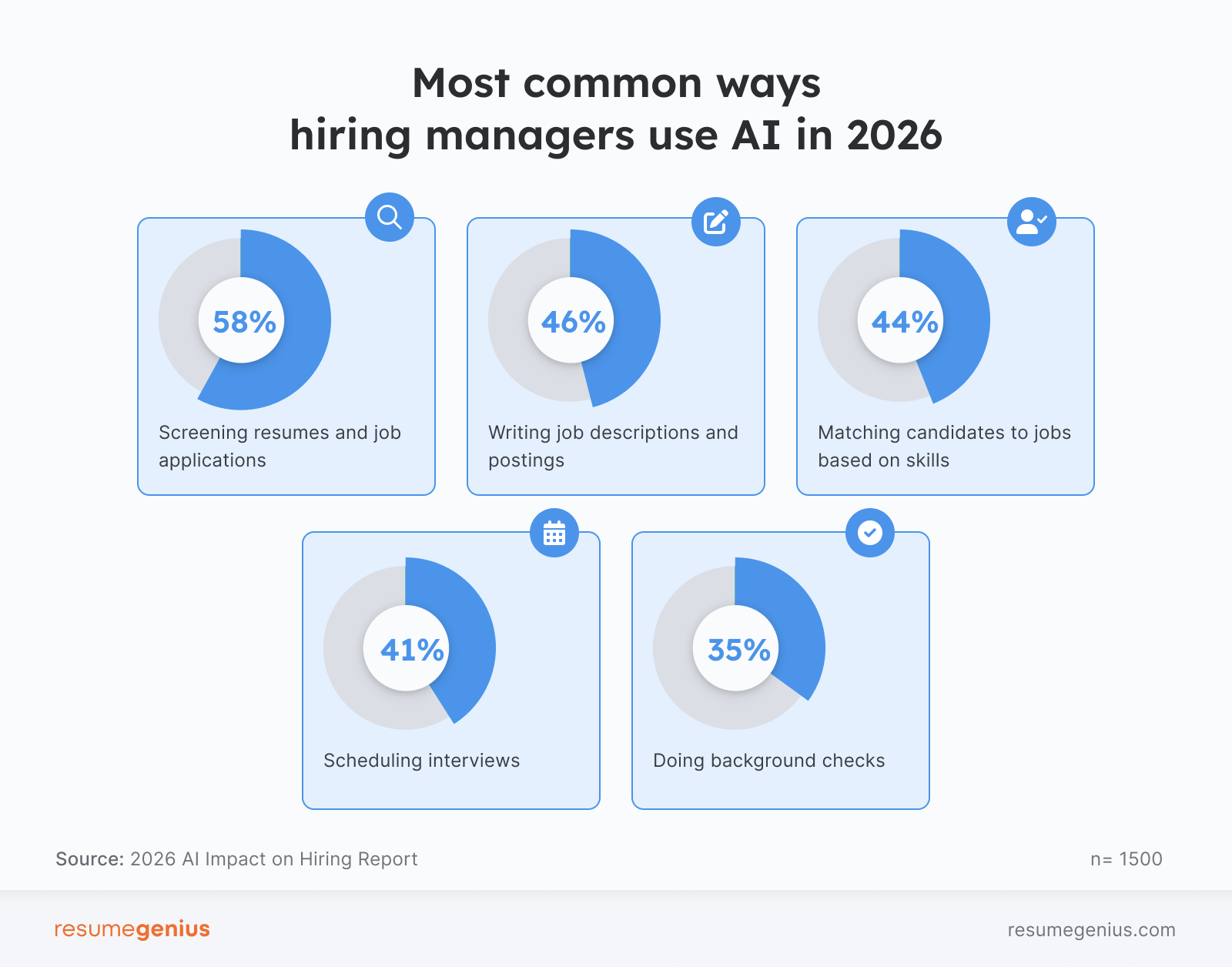
Most common AI uses:
- Screening resumes and job applications (58%)
- Writing job descriptions and postings (46%)
- Matching candidates to jobs based on skills (44%)
- Scheduling interviews (41%)
- Background checks and verification (35%)
- Skills assessments (33%)
- Candidate communication (27%)
- Reducing hiring bias (20%)
- AI-assisted video interviews (18%)
80% of hiring managers have encountered AI-assisted applications
Our survey found that AI use in job applications is now the norm rather than the exception, with only 19% of hiring managers saying they haven’t encountered or noticed AI use from candidates.
AI-generated resumes and cover letters are by far the most common use of AI by job applicants, with 58% of hiring managers reporting receiving them. Nearly half (46%) have also encountered interviewees using AI to answer interview questions, while 34% have seen AI-generated LinkedIn or other social media profiles.
Additionally, 29% have received AI-generated portfolio projects or creative work, and 28% have caught people using AI to cheat on online skills assessments.
The findings suggest that AI is now being used across nearly every stage of the job application process. As these tools become more sophisticated and widely available, hiring managers face increasing challenges in distinguishing a candidate’s own abilities from AI-assisted work.
While deepfakes have attracted significant media attention, they remain less common than other uses of AI in one’s job search. Still, 17% of hiring managers reported encountering candidates using deepfake technology during video interviews, and this could become a growing concern for recruiters in coming years as AI-generated video and voice technology continues to advance.
Recruiters report widespread AI use by job applicants during the hiring process:
- 58% have received AI-generated resumes or cover letters
- 46% have caught candidates using AI to answer interview questions
- 34% have found AI-generated LinkedIn or social media profiles
- 29% have seen AI-generated portfolio projects or creative work
- 28% have encountered AI-assisted cheating on skills assessments
Hiring managers trust AI efficiency but worry about candidate authenticity
Nearly three quarters (72%) of hiring managers agree that AI will make recruitment faster and more efficient over the next year, making it the most widely recognized benefit of AI in hiring. More than two-thirds (68%) also believe AI will help identify higher-quality candidates, while 65% agree that AI hiring tools can support diversity efforts by helping reduce bias in the recruitment process.
Despite these perceived advantages, an overwhelming 86% of hiring managers agree that AI will create new challenges in assessing whether a candidate’s resume, portfolio, interview responses, and other application materials accurately reflect their abilities. Similarly, 82% say they’re “concerned” about candidates using AI tools in their job applications.
Taken together, these findings suggest that hiring managers are embracing AI as a tool to improve their own recruiting processes while growing more cautious about how applicants use the same technology. Rather than questioning the use of AI itself, employers appear more concerned with maintaining confidence that a candidate’s qualifications, work samples, and interview performance genuinely represent their knowledge and skills.
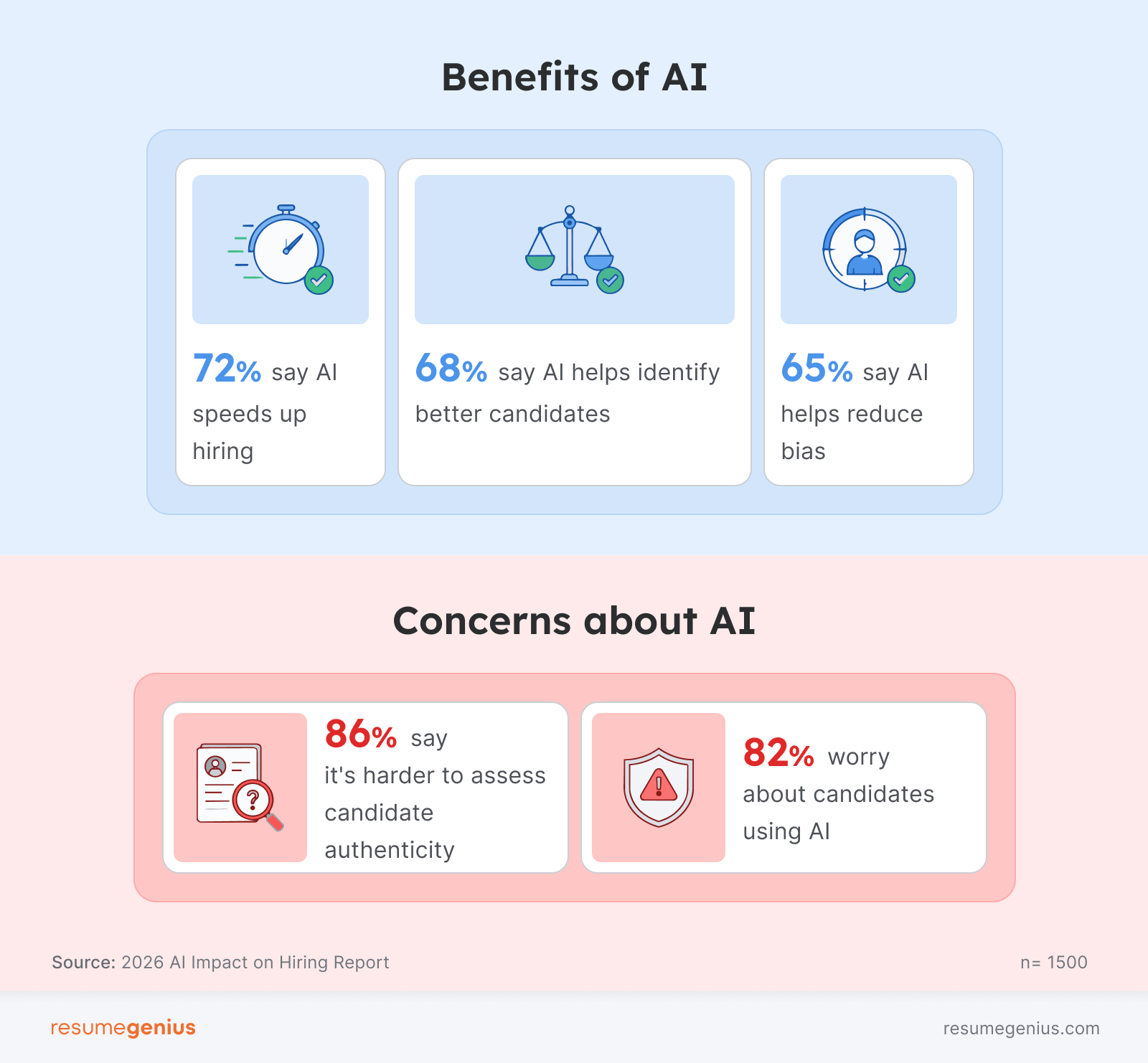
Hiring managers’ opinions on AI in the hiring process:
- AI will make hiring faster (72% agree)
- AI will identify better candidates (68% agree)
- AI will reduce bias (65% agree)
- AI will create authenticity challenges (86% agree)
- They’re concerned about candidate AI use (82% agree)
1 in 5 companies don’t disclose AI use in hiring
While most organizations that use AI inform candidates at least some of the time, our findings show that transparency is not universal.
More than one-third (35%) of hiring managers say their company always discloses when AI tools are used during interviews or candidate evaluations, while another 26% say they disclose AI use only sometimes.
However, 1 in 5 organizations (20%) currently do not mention their use of AI to candidates. This includes 12% that have no plans to reveal their AI use and 8% that say they intend to be transparent about it in the future. Another 19% report that their organization does not currently use AI tools during interviews or evaluations.
The findings show that although AI adoption has become commonplace, there is still no consistent standard for informing candidates when AI is used in the hiring process. As organizations continue integrating AI into recruitment, transparency about AI use may become an increasingly important part of building trust with job seekers.
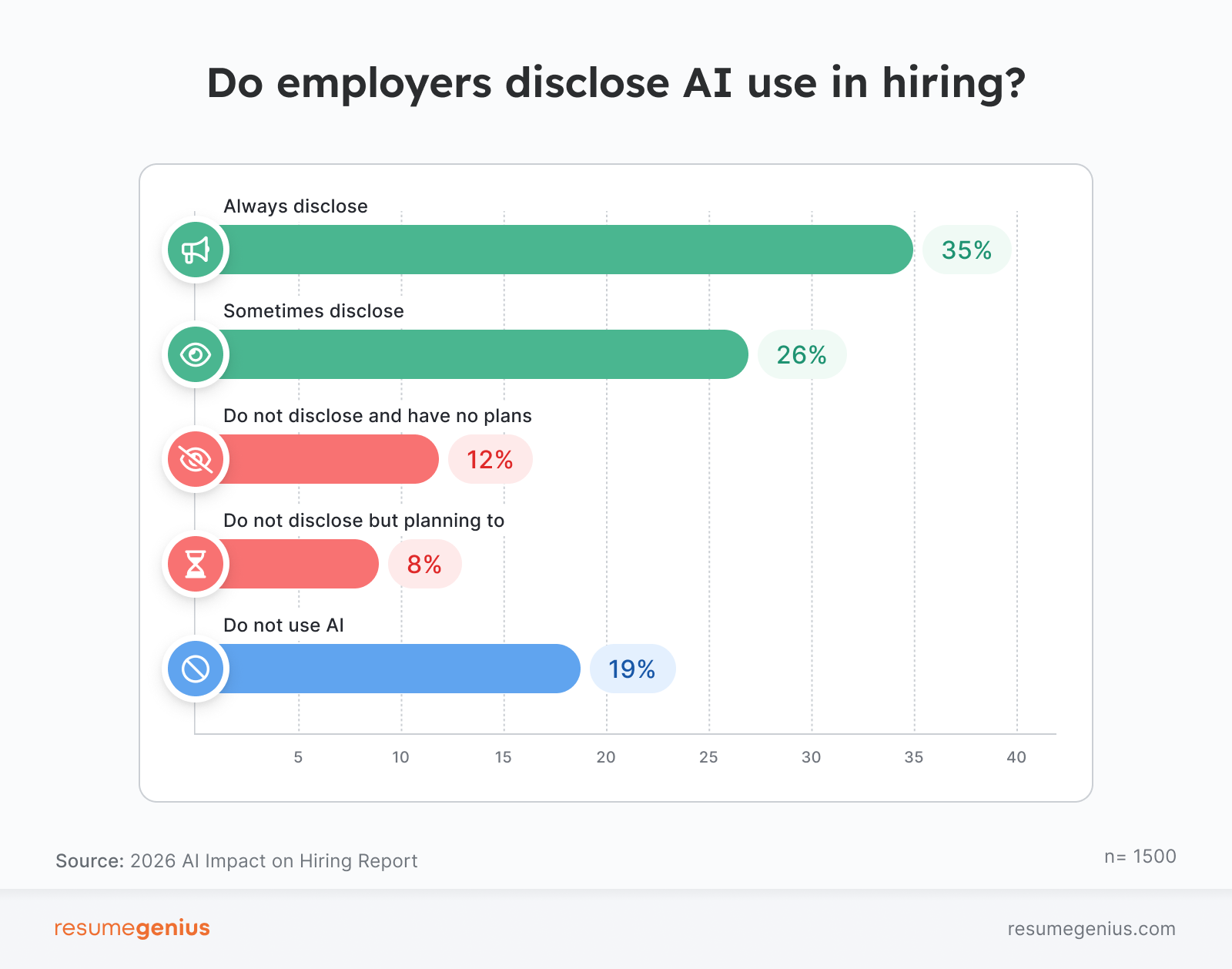
Employer disclosure of AI use during the hiring process:
- Always disclose: 35%
- Sometimes disclose: 26%
- Do not disclose and have no plans: 12%
- Do not disclose but planning to: 8%
- Do not use AI: 19%
Conclusion
The findings from this year’s survey show that AI is no longer an emerging technology in recruitment but a standard part of the hiring process.
Nearly 9 in 10 hiring managers now use AI in at least one stage of recruitment, with resume screening, job description writing, and candidate matching among the most common applications. And rather than replacing recruiters, AI is primarily being used to streamline administrative tasks and improve hiring efficiency.
At the same time, the widespread availability of AI tools has changed how candidates approach the job search. Hiring managers increasingly report encountering AI-generated resumes, interview responses, social media profiles, and work samples, making it harder to accurately assess a candidate’s skills and experience. As a result, concerns about applicant authenticity are one of the biggest challenges for recruiters heading into the next year.
Overall, the survey suggests that hiring managers see significant value in AI’s ability to make recruitment faster and more efficient, but they also recognize the importance and difficulties of maintaining transparency and trust throughout the hiring process.
As AI continues to evolve, companies will likely need to balance the productivity benefits of these tools with clear communication and thoughtful hiring practices.
Methodology
This report was based on a Pollfish survey launched on June 4, 2026, and targeted a sample of 1,000 participants. This study examined how U.S. hiring managers evaluate AI-related skills, the role of AI tools in recruitment, and the perception of AI’s impact on hiring efficiency and diversity.
Qualifying respondents were required to be working as a hiring manager, or be part of the hiring team in their company. Resume Genius analyzed the results for overall trends and differences across age and gender. Percentages were rounded to the nearest whole number.
To minimize bias, Pollfish uses Random Device Engagement (RDE) to ensure a fair and organic selection process. For further details on Pollfish’s methodology, please visit their website or contact eduardo@resumegenius.com.
About Resume Genius
Since 2009, Resume Genius and its resume builder software have been helping people from all backgrounds and experience levels land their next jobs faster.
Resume Genius also provides a wide range of free career resources, including customizable resume templates, resume examples for different industries, and resume writing guides, to help job seekers find fulfilling work and reach their career goals.
Resume Genius is led by a team of dedicated career advisors and HR experts and has been featured in The New York Times, Harvard Business Review, Fast Company, CNBC, and USA Today.
For media inquiries, please contact us.
About the Author

Lauren Mastroni is a Digital Content Writer at Resume Genius, where she creates data-driven career content and actionable job search advice. With a background in academic research, she brings a research-focused approach to topics like resume writing, interviewing, and career development. Lauren is dedicated to helping job seekers at all stages navigate the hiring process and present themselves more effectively to employers.