Resume Templates Chronological Resume
Chronological Resume Format: Templates, Examples, and Writing Guide
The chronological resume format is the clearest way to show employers your experience and career growth. Here are 12 chronological resume templates you can use to structure your resume professionally, plus advice on creating a resume that meets current employer standards.
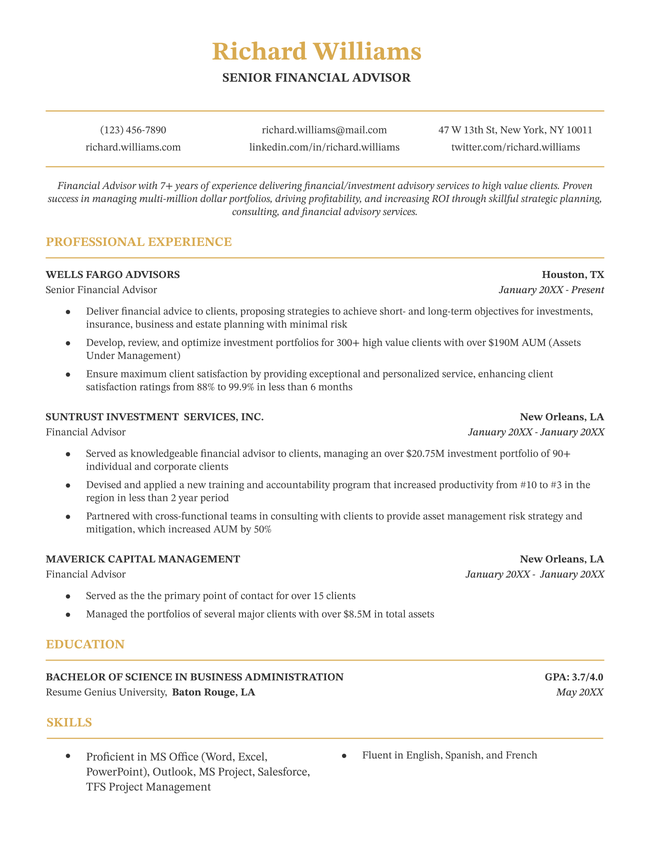
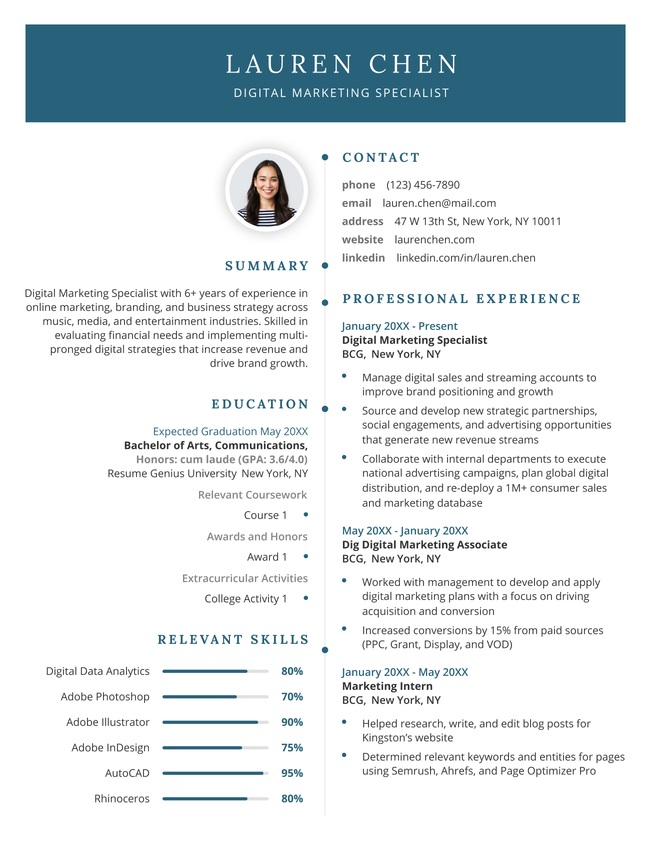
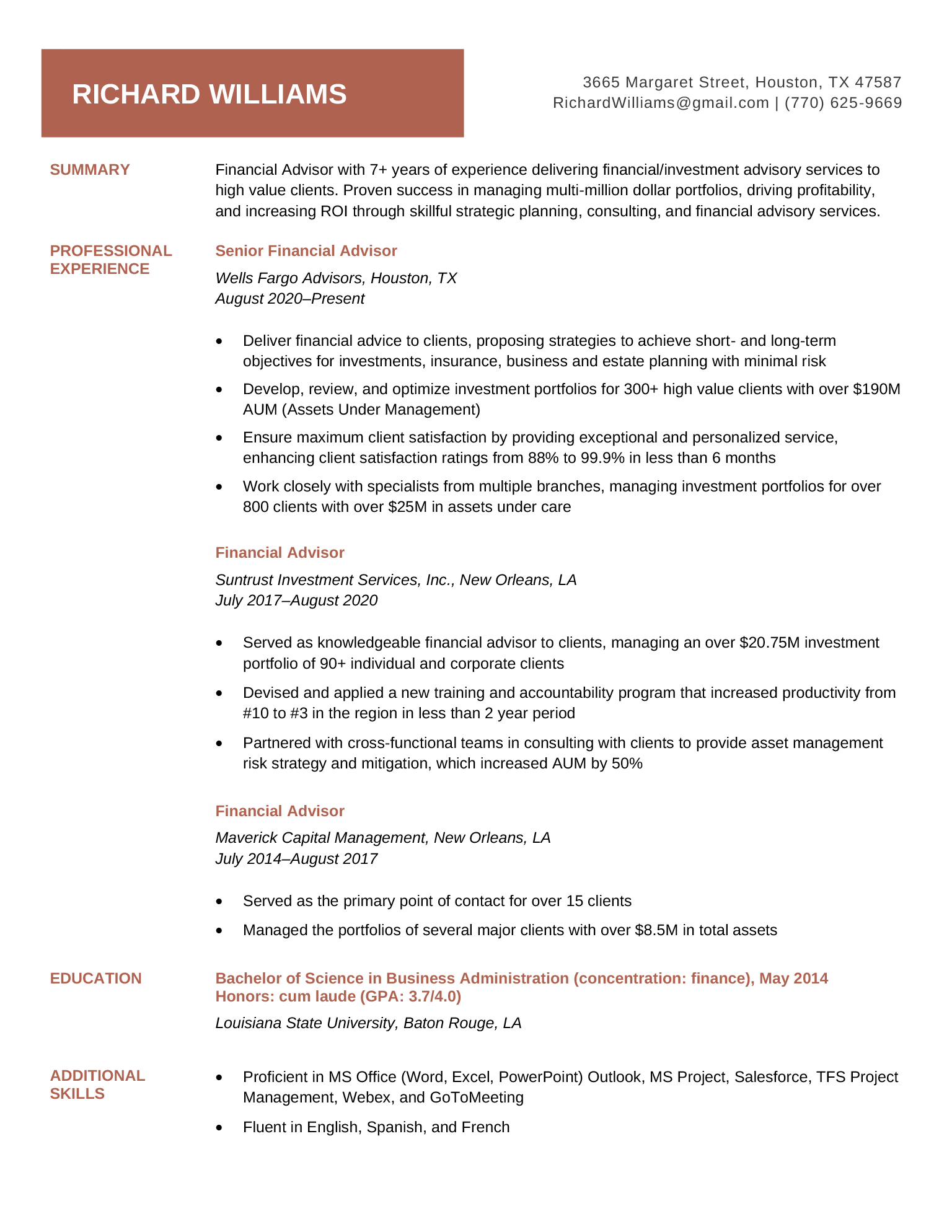
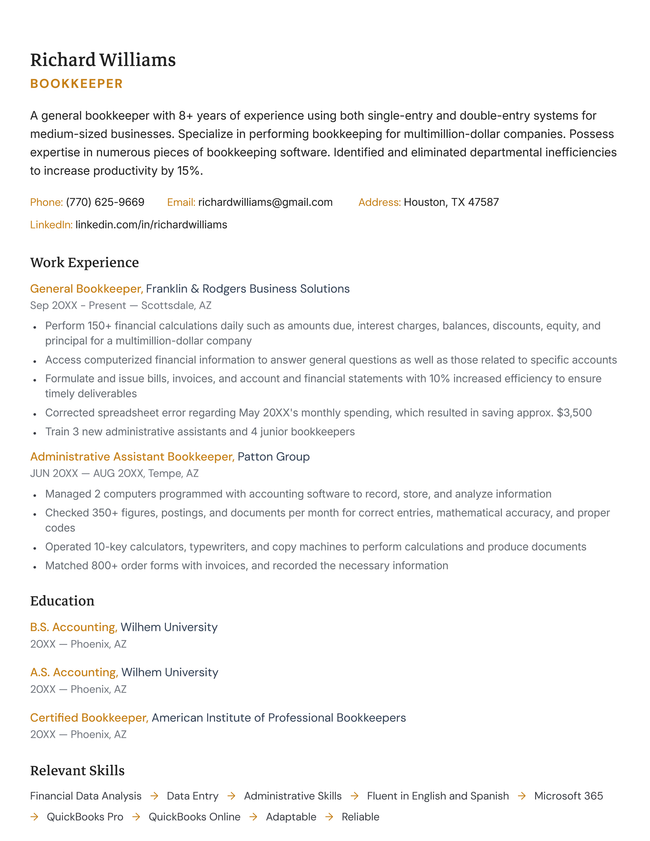
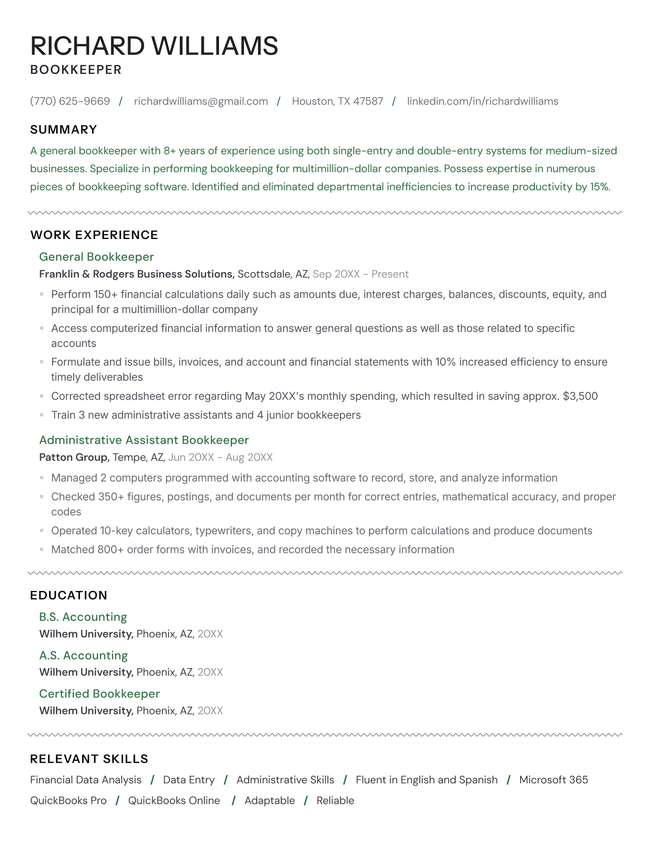
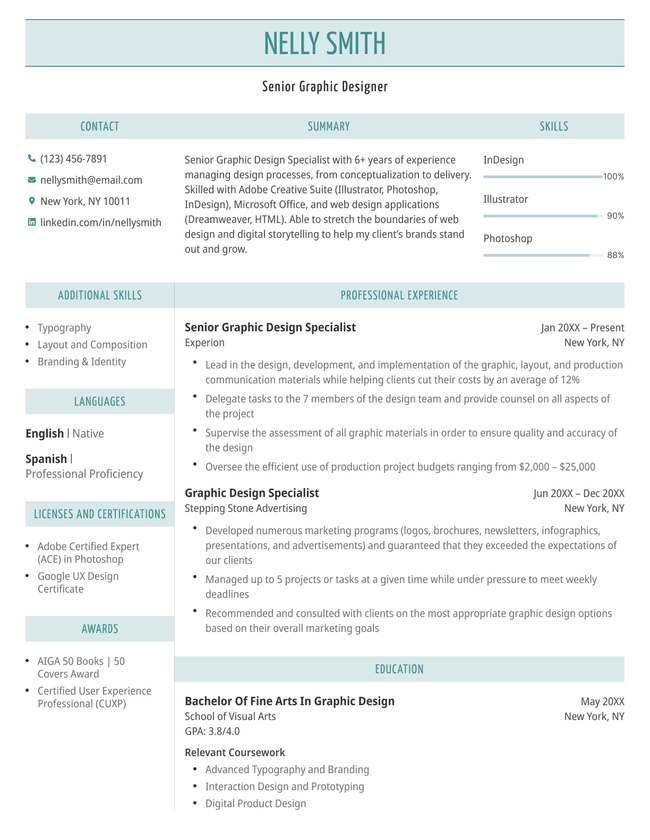
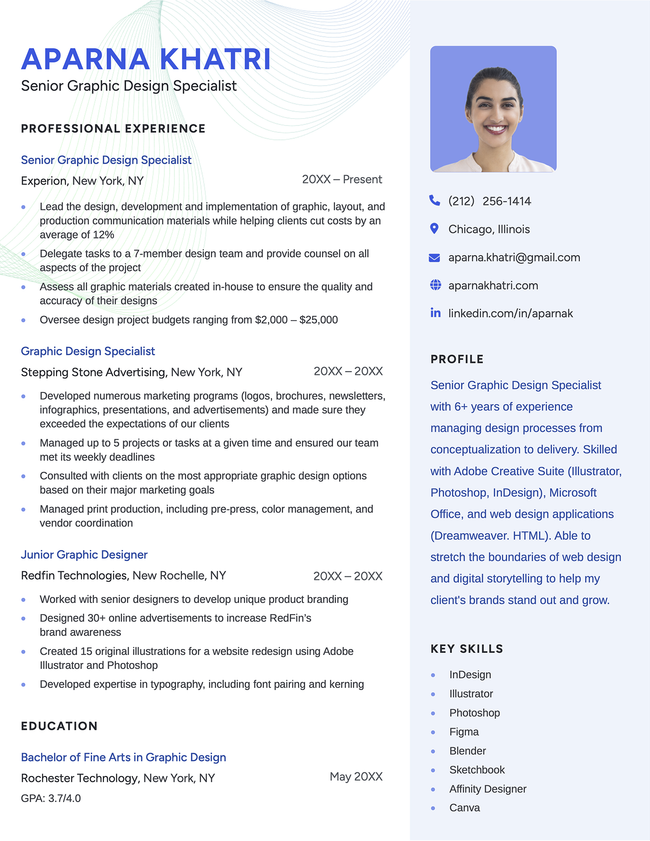
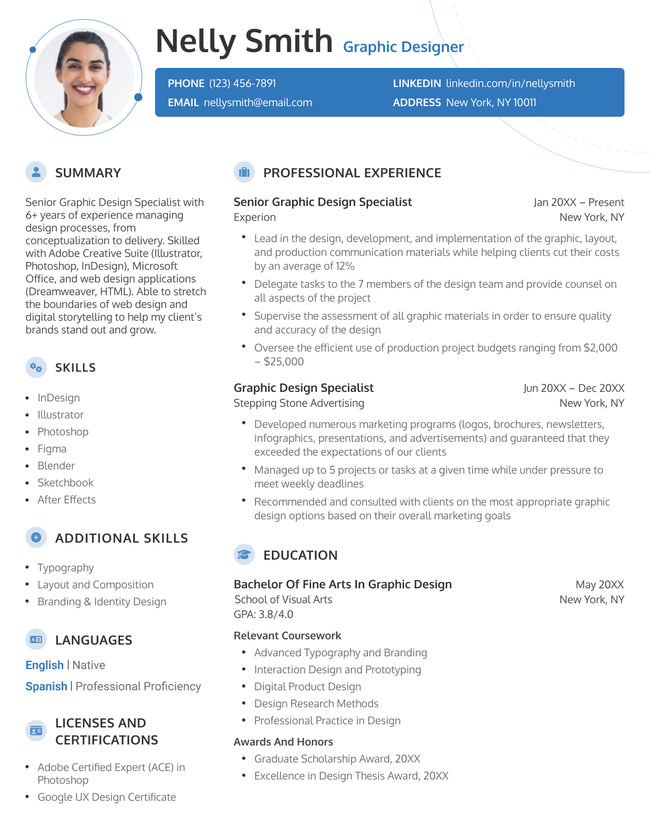
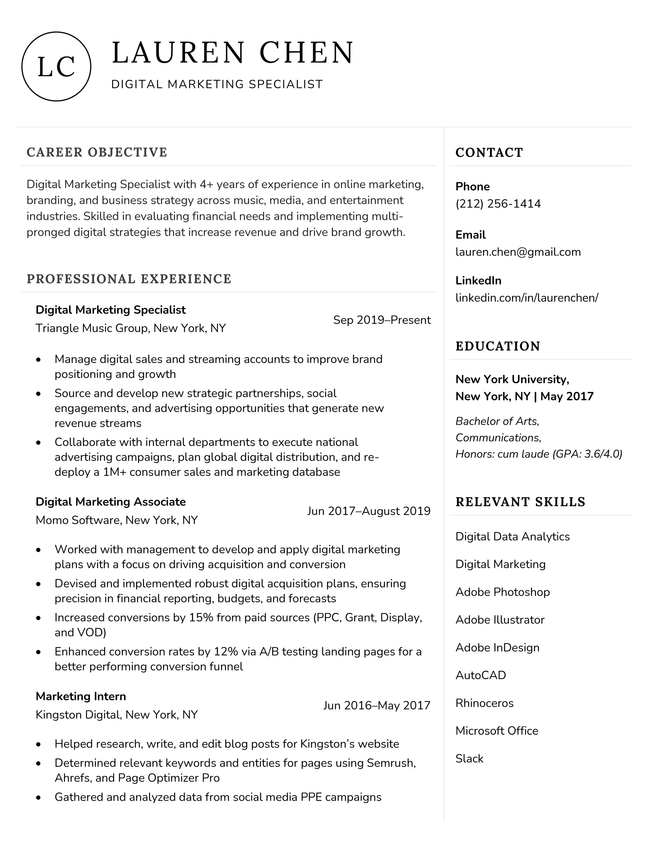
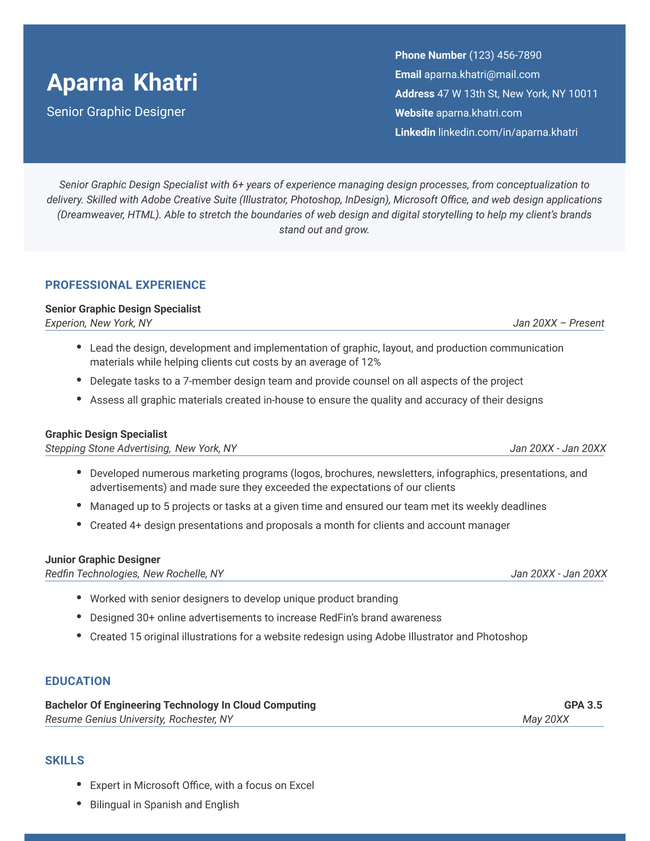
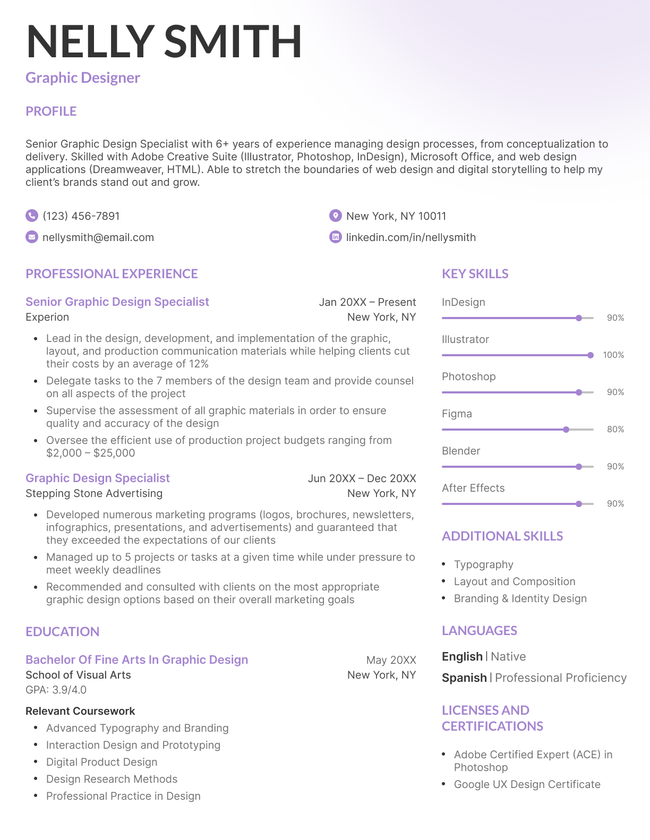
Chronological resume templates for any role
Below you'll find a mix of free and premium resume templates you can edit and download. All designs are clean, ATS-friendly, and easy to personalize.
Navigation chips header: More popular resume template categories
Resume templates by layout & career level

Struggling to get interviews?
What is a chronological resume?
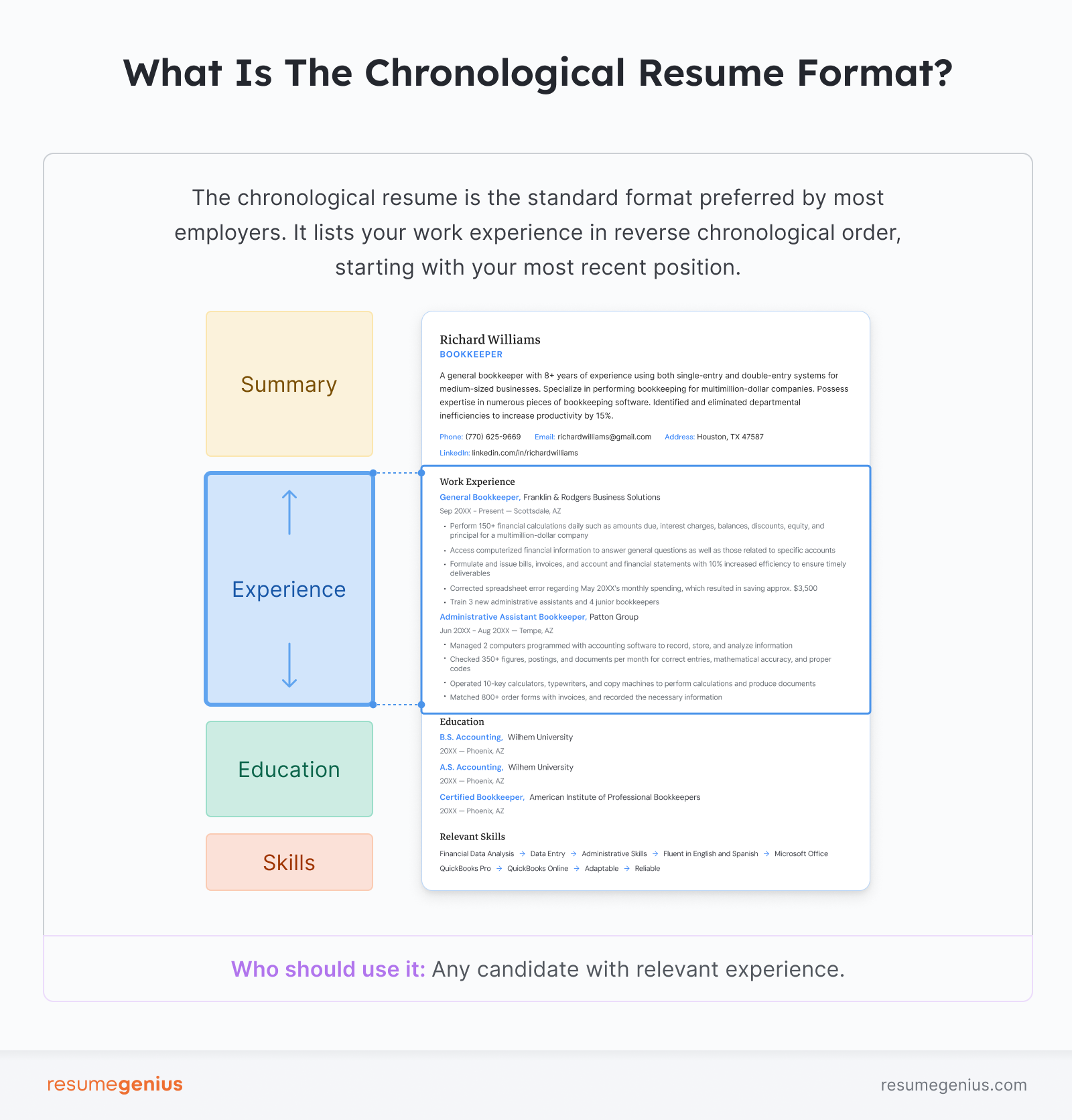
A chronological resume is a resume that lists your work experience in reverse, starting with your most recent job.
The chronological resume is the most widely used resume format on the job market. Employers prefer this layout because it focuses on your hands-on experience and makes your job history clear and easy to review.
Our 2026 resume statistics survey found that 1 in 3 hiring managers (34%) reject resumes that have unclear or incomplete job histories. Formatting your resume chronologically helps you avoid confusion and increase your chances of success.

When to use the chronological resume format
You should use the chronological resume format if you have any previous work experience. Chronological resumes are suitable for every experience level, including first-time job applicants.
“Experience doesn’t just mean full time jobs. You can also include experience from part time jobs, side hustles, internships, or volunteer work.” — Bonnie Dilber, Recruitment Manager at Zapier
A chronological resume does more than show your career growth. It also highlights your skills.
Employers can see your skills in action because you focus on your actual work in past roles. This makes it easier for them to picture the value you’d bring if hired.
When you should use a chronological resume:
- You have a steady work history with no major gaps
- You’re applying for a promotion or more senior role
- Your most recent job is relevant to the one you want
- You’re applying to a traditional or conservative industry (finance, law, corporate)
When you shouldn't use a chronological resume:
- You have zero experience (paid or unpaid)
- You’ve job-hopped frequently in a short span
- You’re changing to a completely new career
- You haven’t worked in a long time and want to emphasize your skills
Resume formats compared: which resume is right for you?
In some cases, an alternative resume format will help you present your skills and expertise more clearly.
Two alternative resume formats you should consider are the functional resume and combination resume.
Functional resumes focus on your skills and qualifications, grouping them by category. You still include a work experience section, but you keep it to a brief timeline of your previous jobs. Functional resumes are also known as skills-based resumes.
Combination resumes use the elements of both chronological and functional resumes. They lead with a detailed functional-style skills section, followed by a traditional work experience section with job entries listed in reverse-chronological order. Combination resumes are sometimes referred to as hybrid resumes.
How Different Resume Formats Compare
| Format type | Pros | Cons | Best for |
|---|---|---|---|
| Chronological | Format most employers are familiar with Clearly shows career growth and skill development | Draws attention to employment gaps or frequent job hopping Less impressive if your job history doesn't match your target role | Candidates with a stable work history in the same field or industry |
| Functional (skills-based) | Focuses on what you know over where you've worked Minimizes major and frequent employment gaps | Grouping your skills by category is less compelling than situating them in context Can raise questions about your work experience | Zero-experience applicants, career changers, applicants |
| Combination (hybrid) | Gives a balanced view of your skills and experience Easy to customize | Resume often runs quite long Takes more effort organize well | Career changers, freelancers, and technical professionals |
How to list your work experience in reverse-chronological order
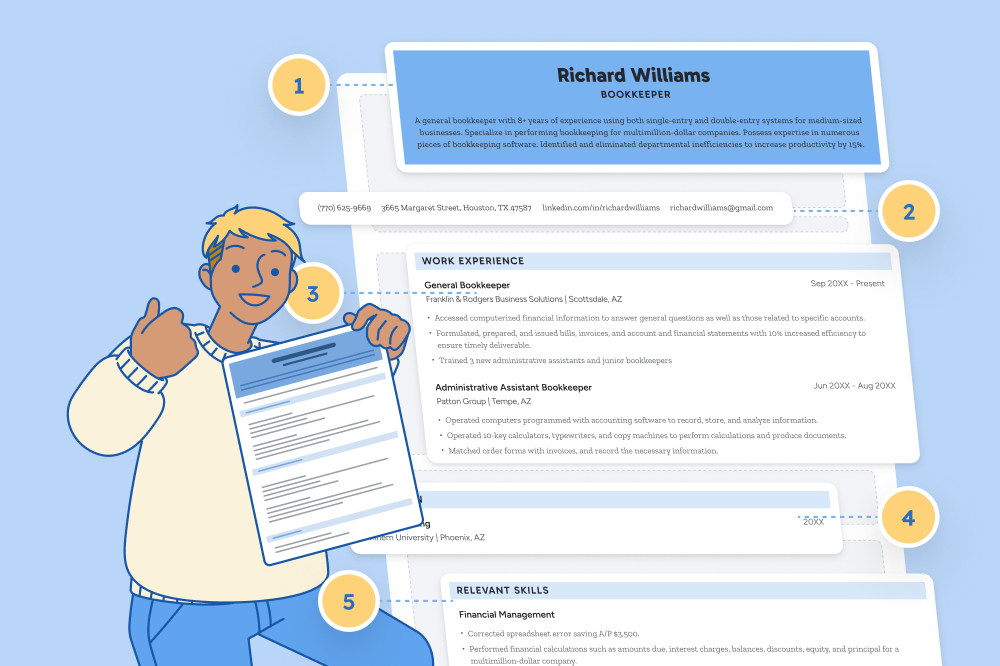
The work experience section is the core of a chronological resume. You should include it straight after your resume introduction and before your education and skills sections. By doing so, you immediately draw the employer’s eye to your job history.
Once you’ve downloaded one of the chronological resume templates above, follow these steps to list your jobs and achievements correctly.
1. List your roles in reverse
Start with your current or most recent job and work backward. This puts your newest skills and experience front and center and clearly illustrates your career growth.
For each role, include your job title, company name, location, and dates of employment:
Office Manager, September 20XX–Present
Express, Inc., San Jose, CA
2. Outline your main achievements in each role
Under each position, write three to five bullet points that highlight your key achievements.
Use the present tense for your current position and the past tense for previous jobs.
WORK EXPERIENCE
Office Manager, September 20XX–Present
Express, Inc., San Jose, CA
- Manage schedules, organize office functions, and oversee daily operations of office with 50 employees
- Hired, trained, and on-boarded over 13 new employees, providing initial support that expedited staff assimilation by 20%
- Slashed office expenditures by $35K by negotiating cheaper supply contracts, implementing inventory control, and standardizing ordering procedures
Office Assistant, June 20XX–August 20XX
Simple Functions, Fresno, CA
- Prepared daily, weekly, and monthly reports, and updated calendar of appointments
- Performed basic accounting functions, including cash reconciliations and wire transfers
- Discovered and rectified erroneous vendor billing, saving $2K in potential costs
Remember to quantify your achievements so hiring managers can clearly understand your impact in previous roles.
“[T]he eyes are naturally drawn to numbers so those pieces of your resume will really stand out”. — Bonnie Dilber.
3. Keep early job entries brief
Your oldest roles don’t need the same level of detail as your recent ones, particularly if the role was more than 15 years ago.
Your title, company, dates, and location are enough for early roles. This keeps your resume from running long and helps the employer focus on your more recent achievements.
Example chronological resumes
Here are some example resumes for different career stages that use the chronological format:
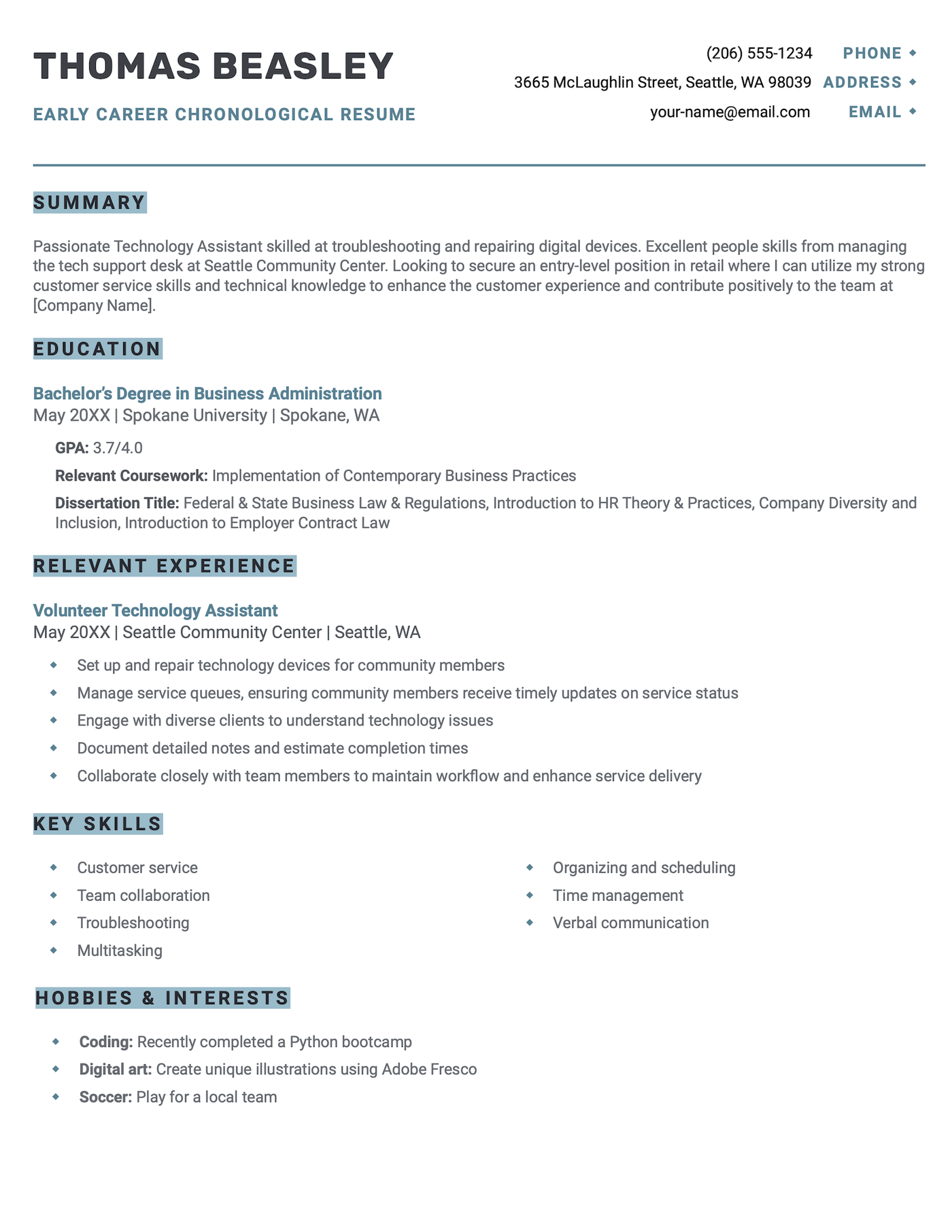
Early career
This resume example leads with education, with added academic details that demonstrate that the candidate is qualified even with limited formal work experience.
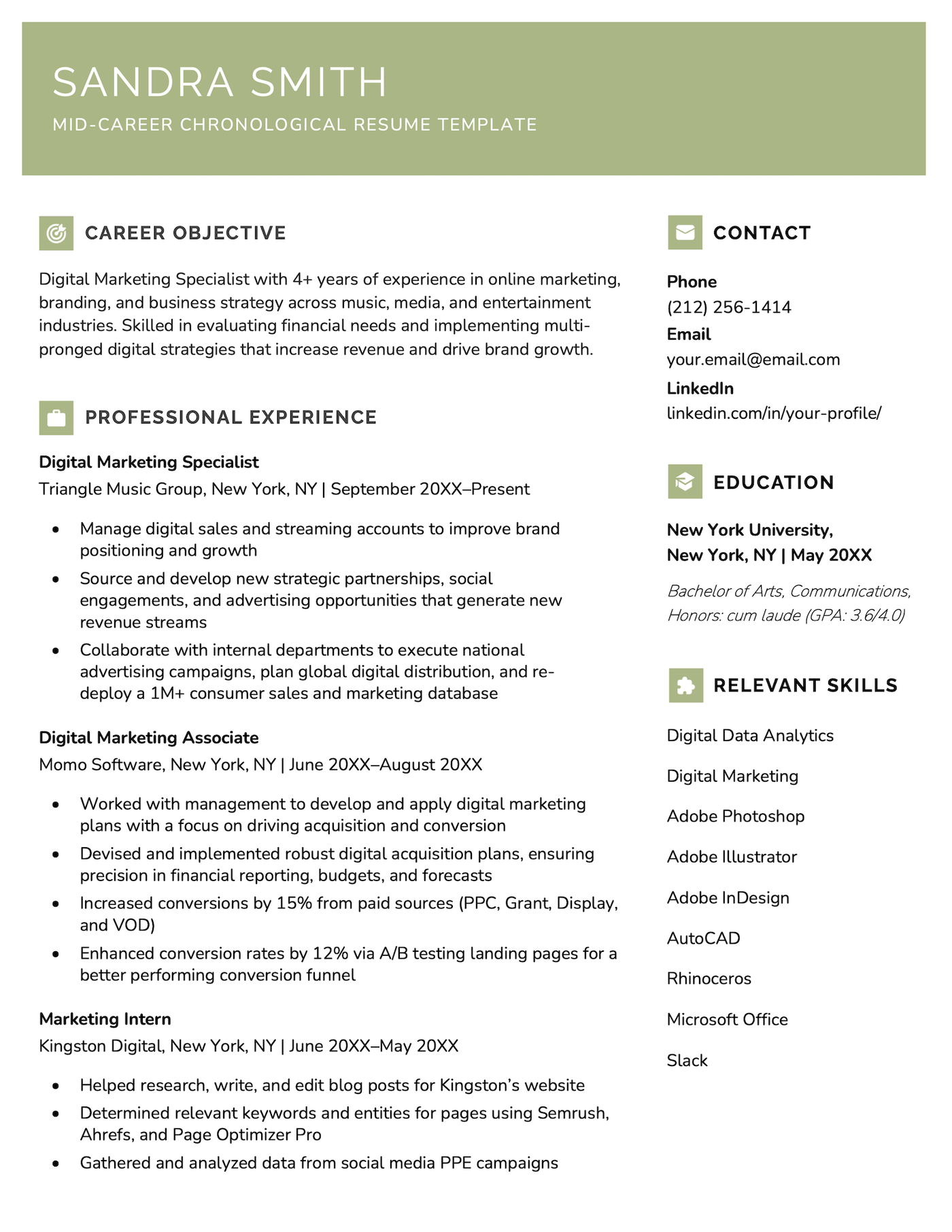
Mid-career
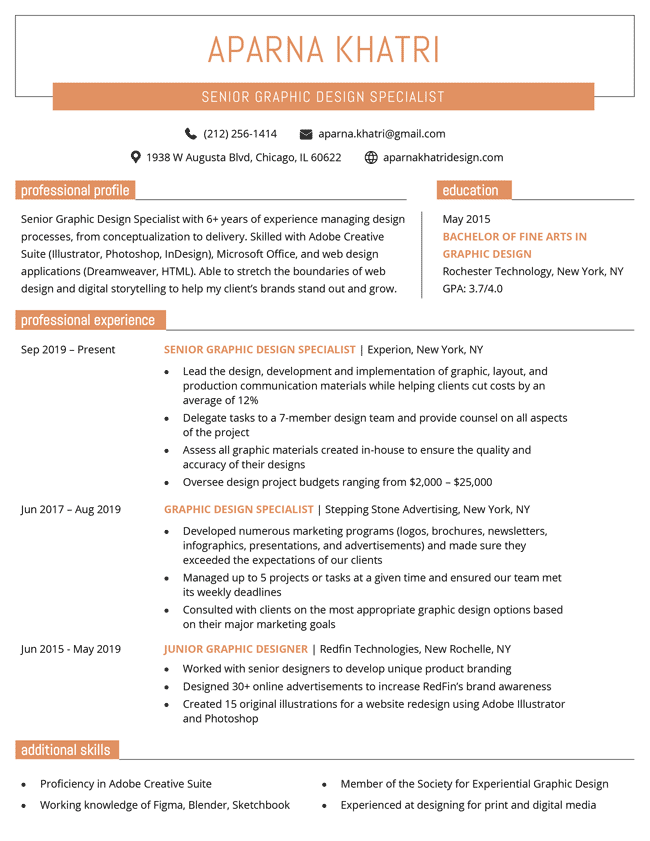
This example highlights steady career progression with clearly structured job entries. The chronological format shows career growth over time, making it easy for employers to see the applicant’s expanding responsibilities and impact.
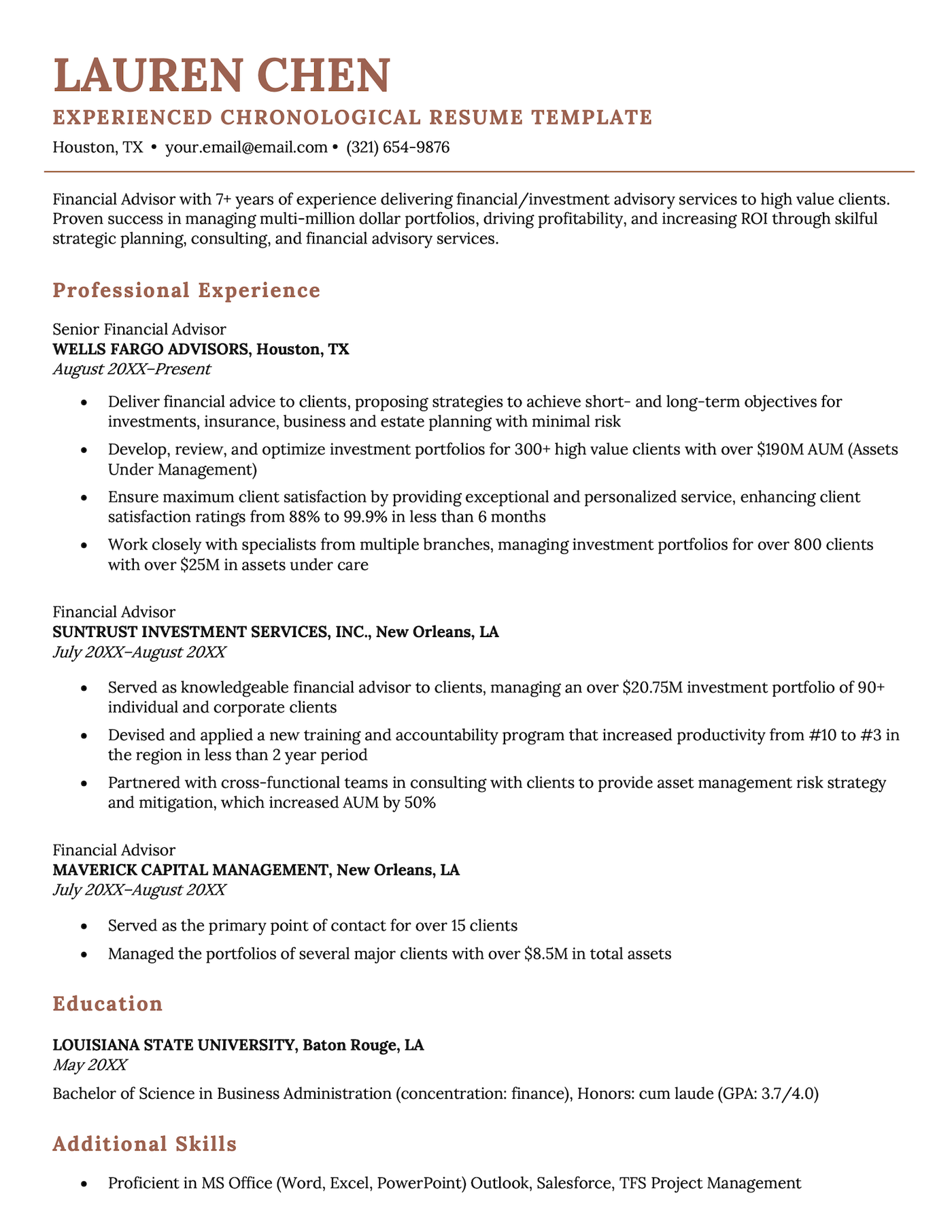
Senior-level
The work experience section in this example takes center stage, featuring a clean, spacious layout that highlights career progression without appearing cluttered.
Frequently asked questions (FAQs)
Check out our answers to some of the most common questions about chronological resumes below.
Do employers prefer chronological resumes?
Yes, employers typically prefer chronological resumes because they provide a clear, easy-to-follow timeline of your work history.
This format highlights your career progression by placing your most recent and relevant experience at the top, making it easy for employers to see how your skills have developed over time.
What is the difference between a chronological resume and a functional resume?
Chronological and functional resumes differ in both structure and focus.
A chronological resume emphasizes your work history by listing roles in reverse-chronological order, emphasizing career progression over time. In contrast, a functional resume focuses on your skills and qualifications, grouping them by category rather than by job title or timelines.
Functional resumes can be useful for job seekers with employment gaps, frequent job changes, or any other resume red flags as they shift attention away from the traditional work history.
What if I have gaps in my work history?
If you have gaps in your work history, be honest. Never fudge dates. Instead, briefly explain the gap in your cover letter, and use your resume to highlight any freelance work, volunteering, or courses you completed during that time to show continued professional growth and initiative.
Should I include every job I’ve ever had?
Not necessarily. Focus on including jobs that are relevant to the role you’re applying for. Leave out short-term, outdated, or unrelated positions unless they demonstrate key skills the employer is looking for.