
Resume Templates Student Resume Templates
Student Resume Templates (High School, College, & New Grads)
You don’t need years of experience to create an effective resume. These student-friendly templates help you organize your education, skills, and activities into a professional application.
Free downloadable student resume templates
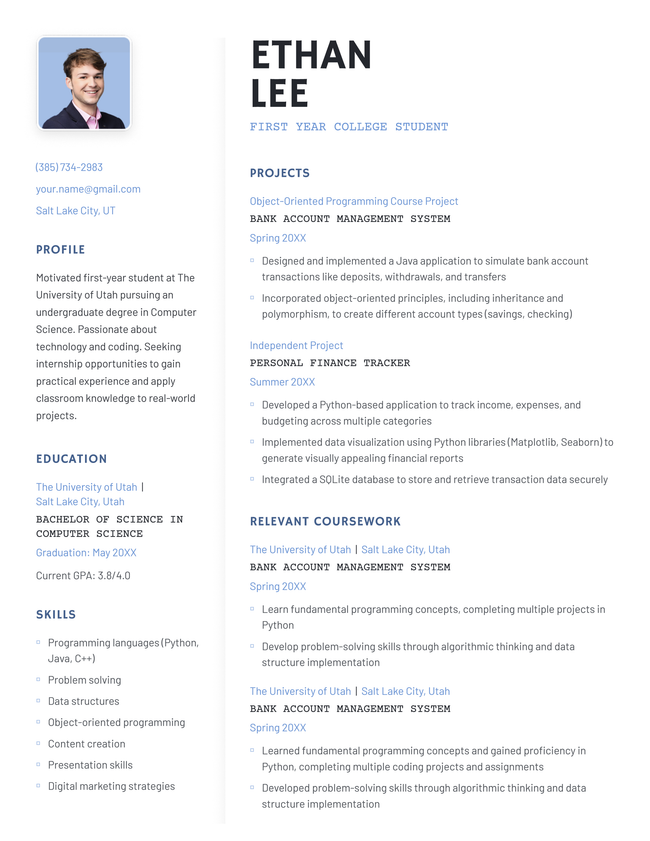
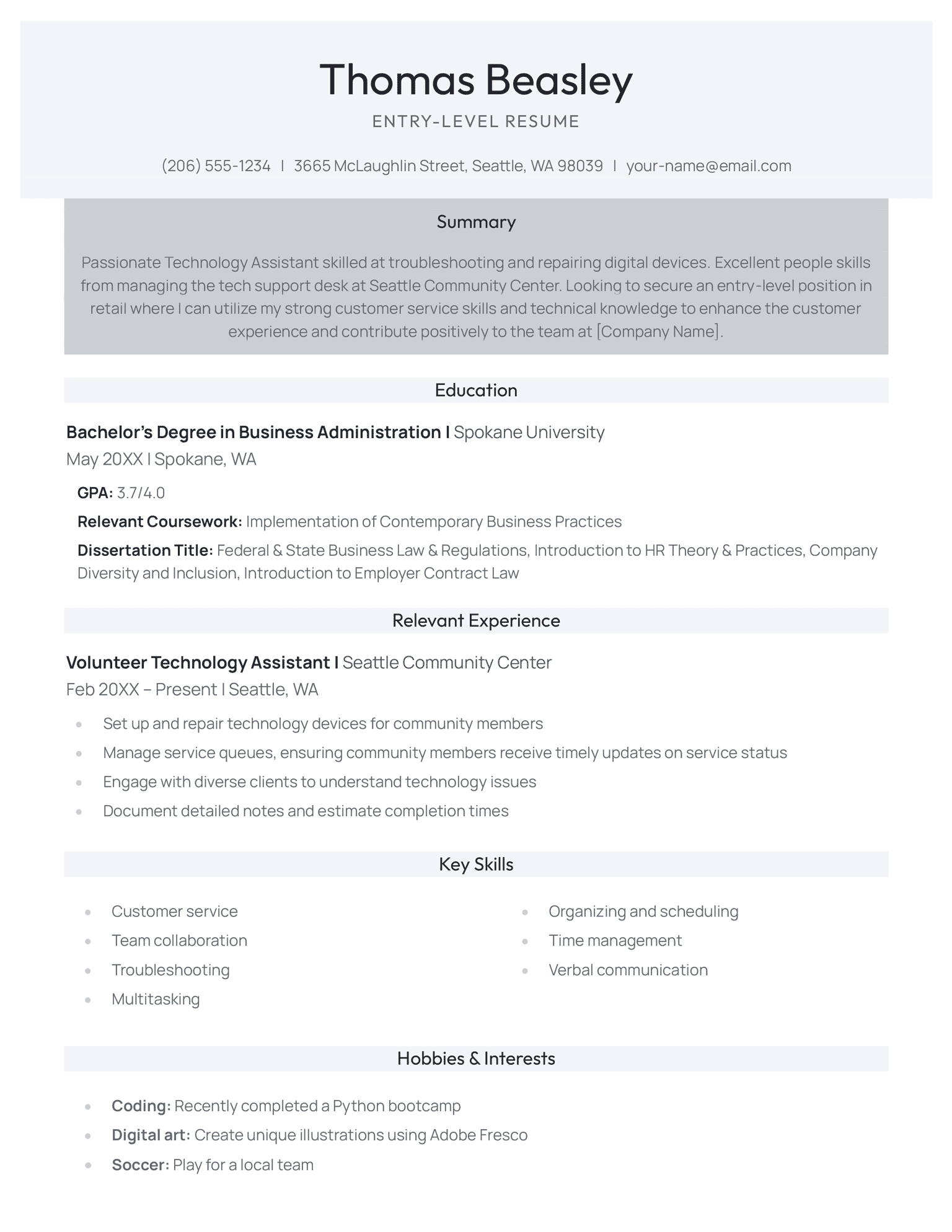
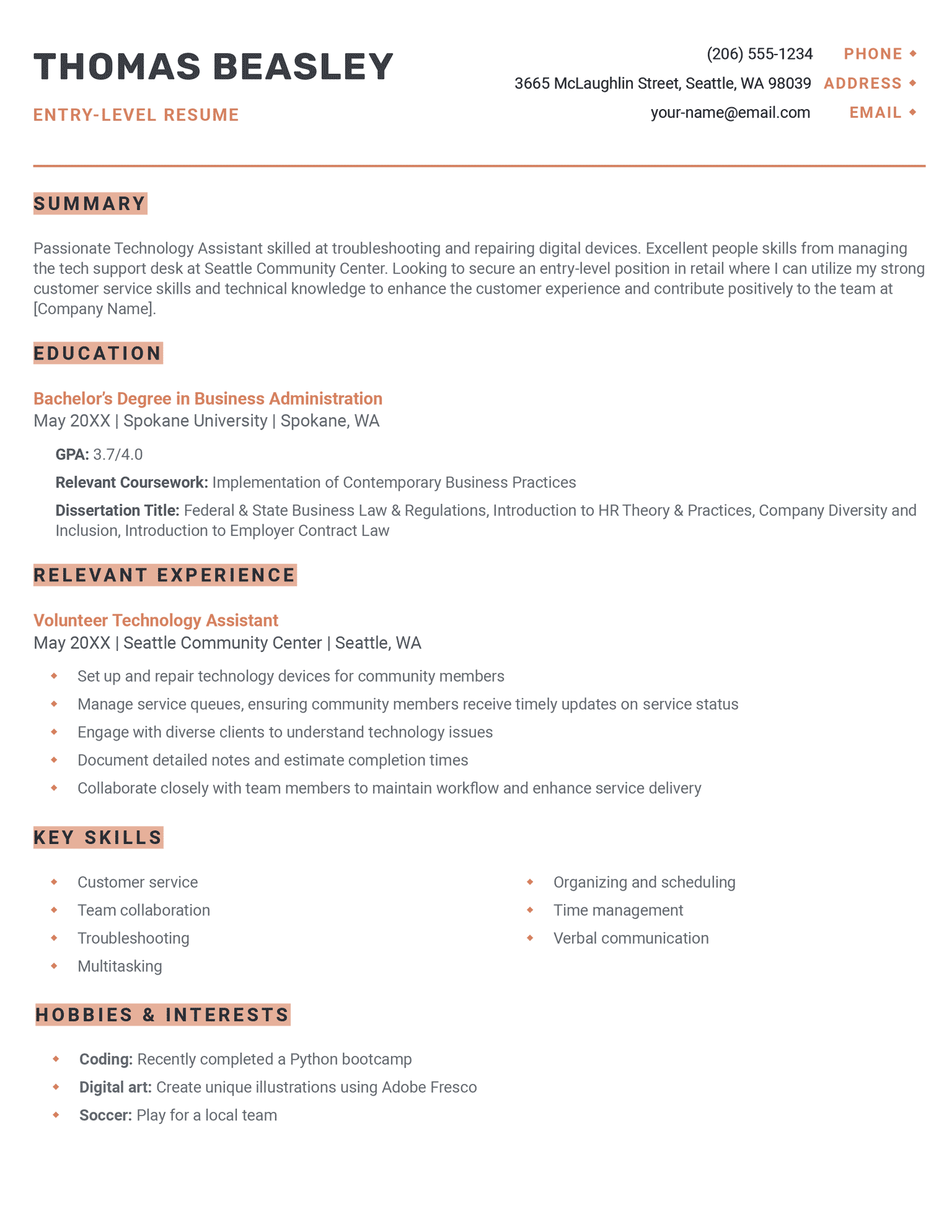
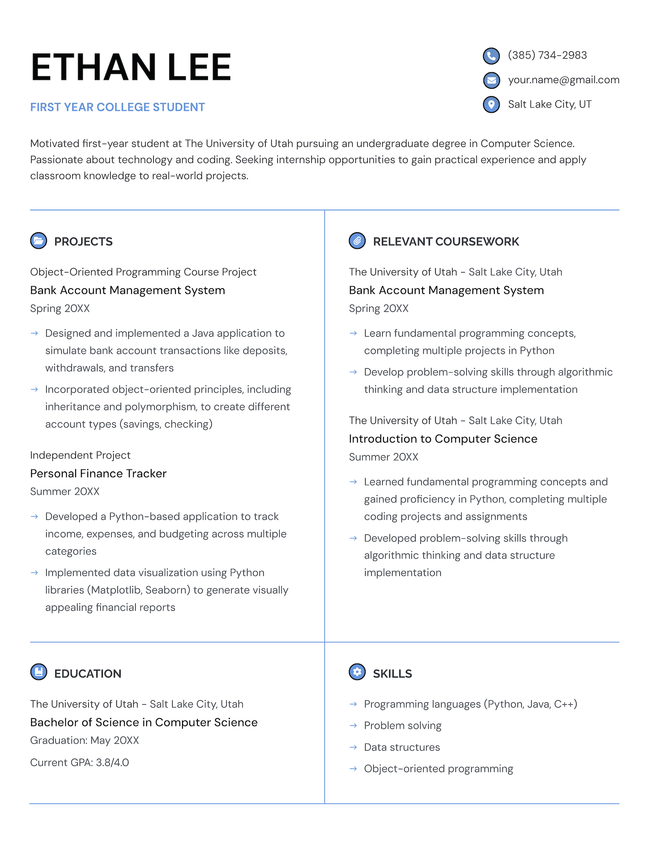
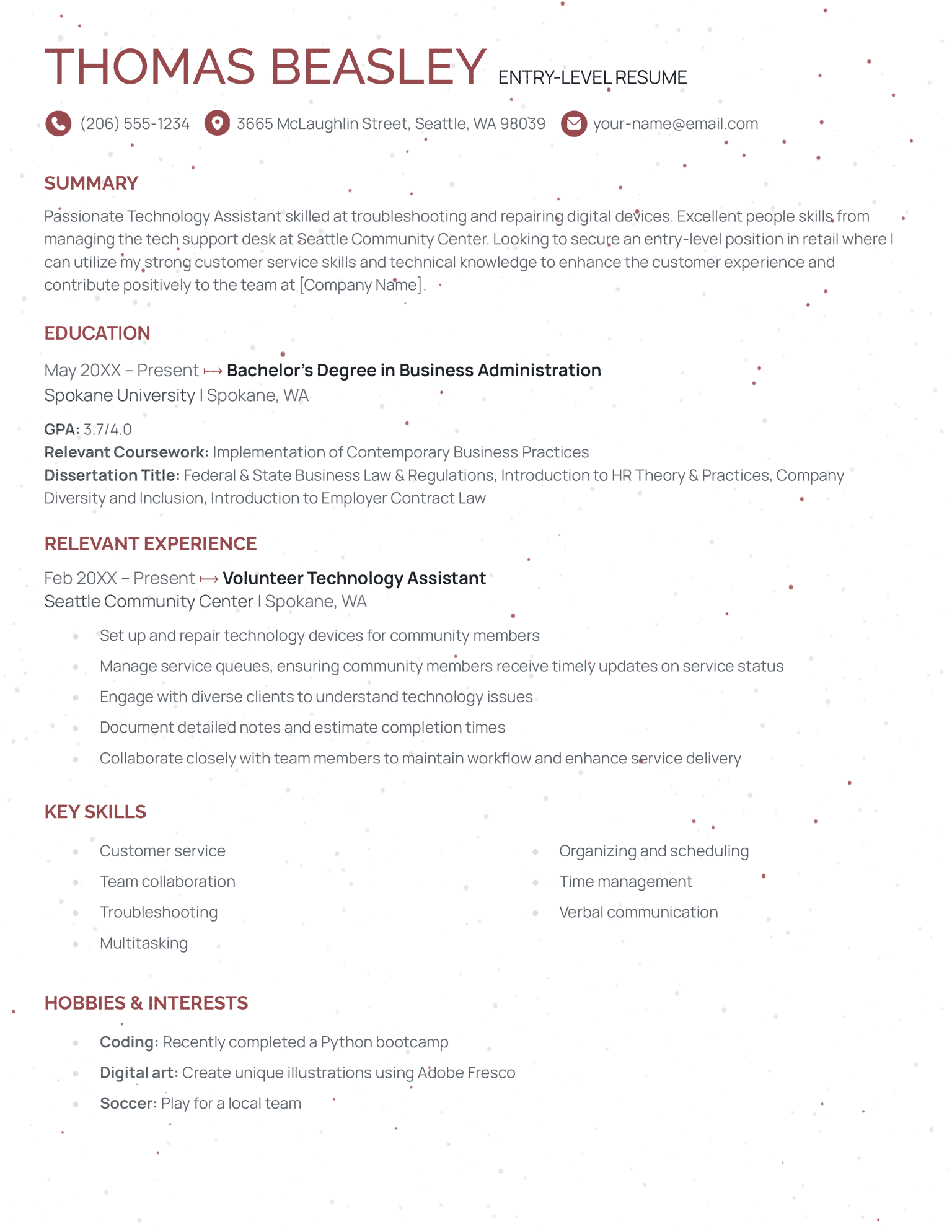
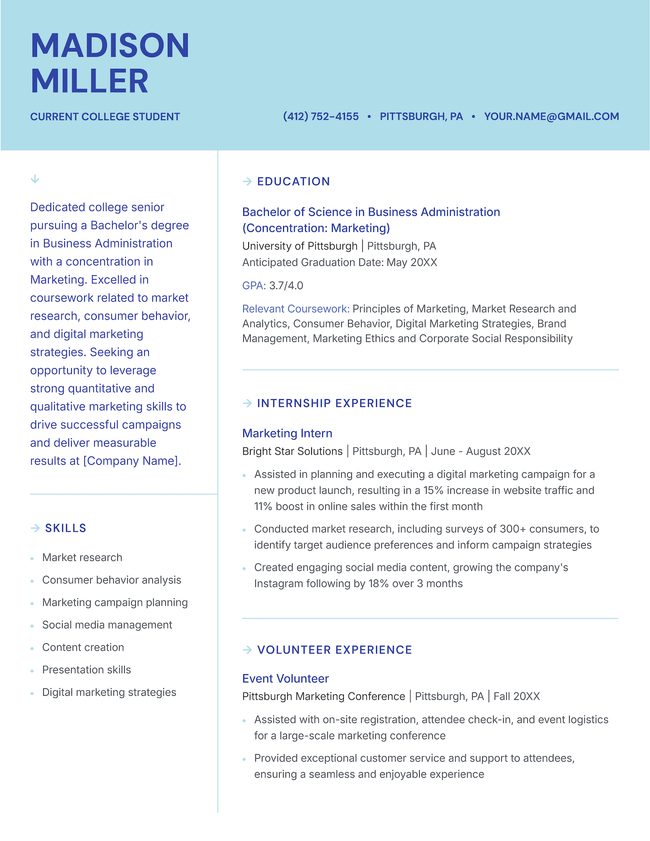
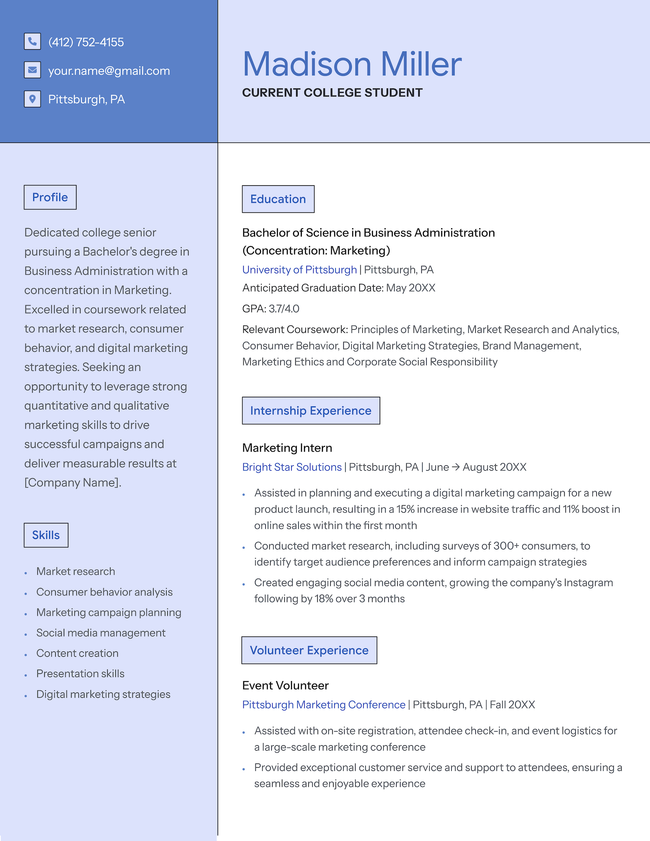
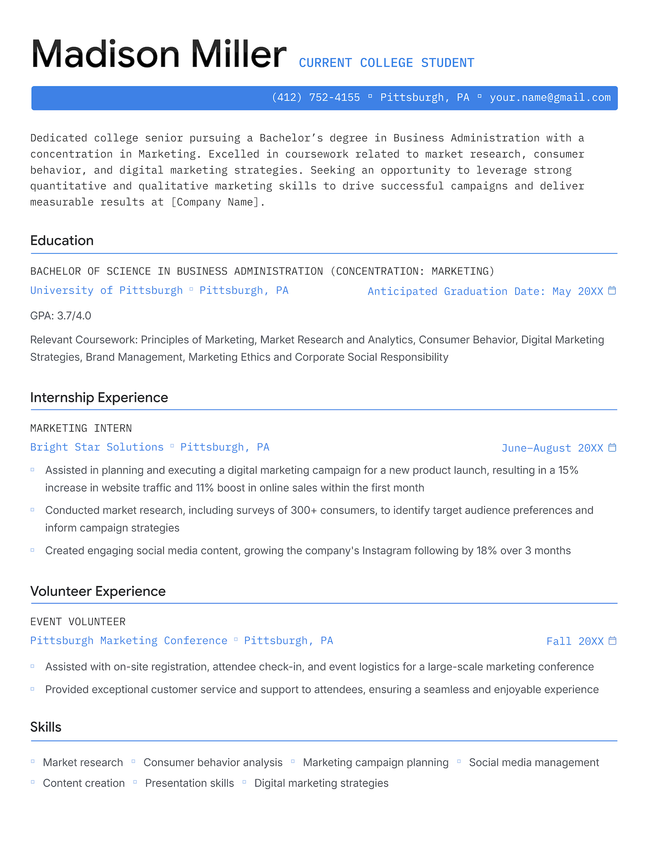
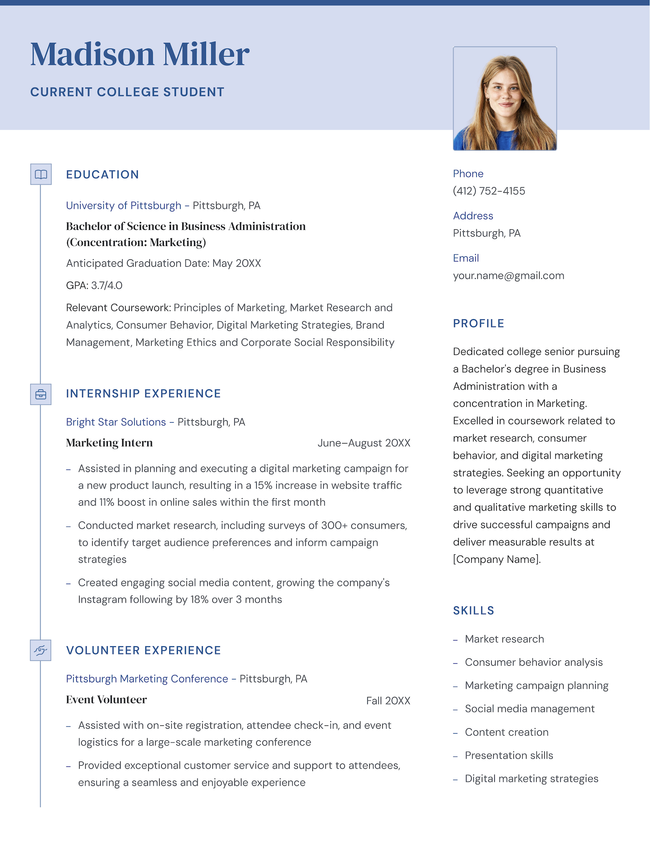
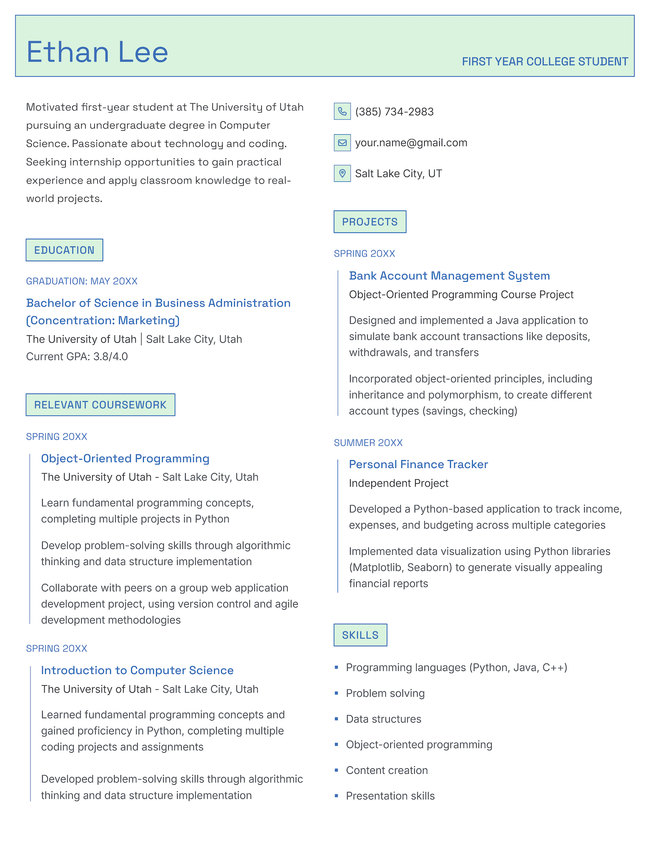
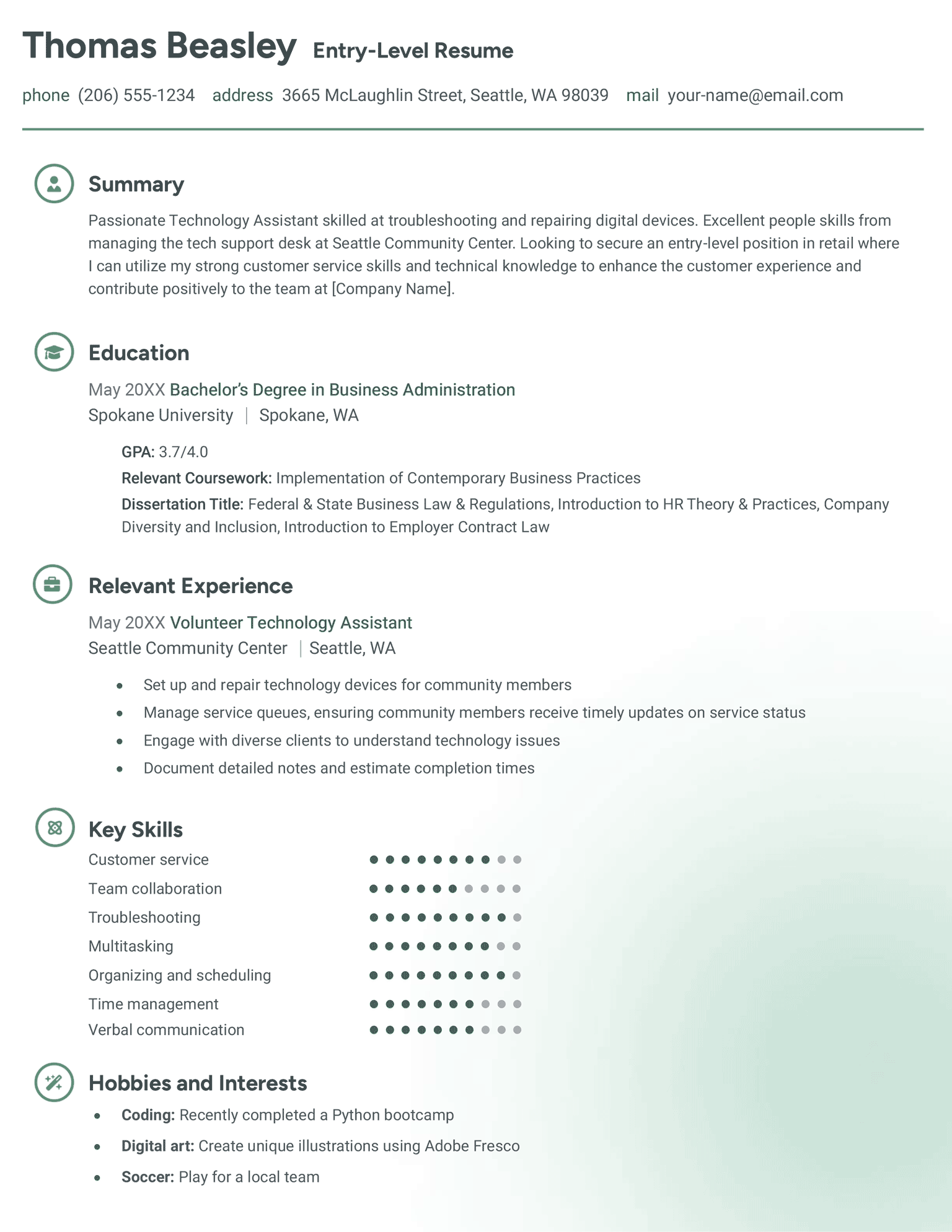
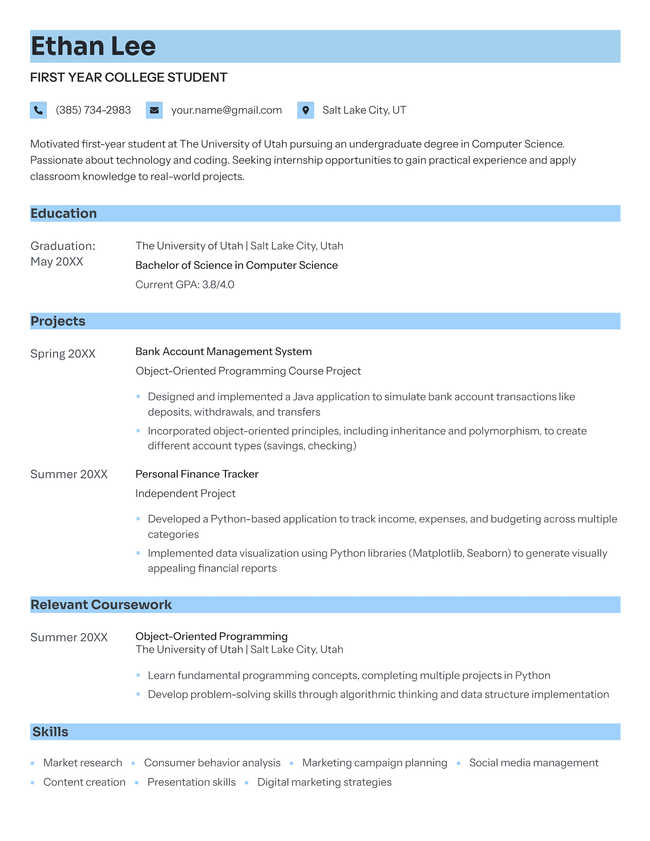
Additional free resume templates
RESUME TEMPLATES BY LAYOUT & CAREER LEVEL

Make your resume in minutes.
What to include in a student resume
Student resumes are different from traditional resumes because they’re designed for people who are still building experience. If you’ve ever wondered how you’re supposed to get a job when every job seems to require experience, you’re not alone.
The good news is that employers hiring students don’t expect extensive work histories. Instead, they look for evidence of your skills, potential, and involvement through your education, projects, activities, and other experiences.
Because of this, student resumes typically emphasize education rather than work experience.
Core sections
The exact sections you include will vary depending on the opportunity, but most student resumes contain the following:
- Header: Include your full name, phone number, professional email address, and links to your LinkedIn profile, portfolio, or GitHub account if they’re relevant to the role.
- Resume objective: A resume objective is a 2–4 line introductory paragraph that briefly explains who you are, what role you’re applying for, and the skills or strengths that make you a good fit.
- Education: Place your education section near the top of your resume and include your school, degree, graduation date, and any relevant coursework, academic achievements, honors, or extracurricular activities.
- Work experience: Include any experiences that demonstrate responsibility and transferable skills, such as internships, campus jobs, tutoring, babysitting, freelance work, volunteer roles, or part-time jobs.
- Skills: List the technical and transferable skills that are most relevant to the job you’re applying for.
Optional sections (depending on your experience)
If you’ve gained specific types of experience that show relevant skills, you can describe them in detail with dedicated sections.
Depending on your experience and the type of role you’re applying for, you might also include the following additional sections.
Projects
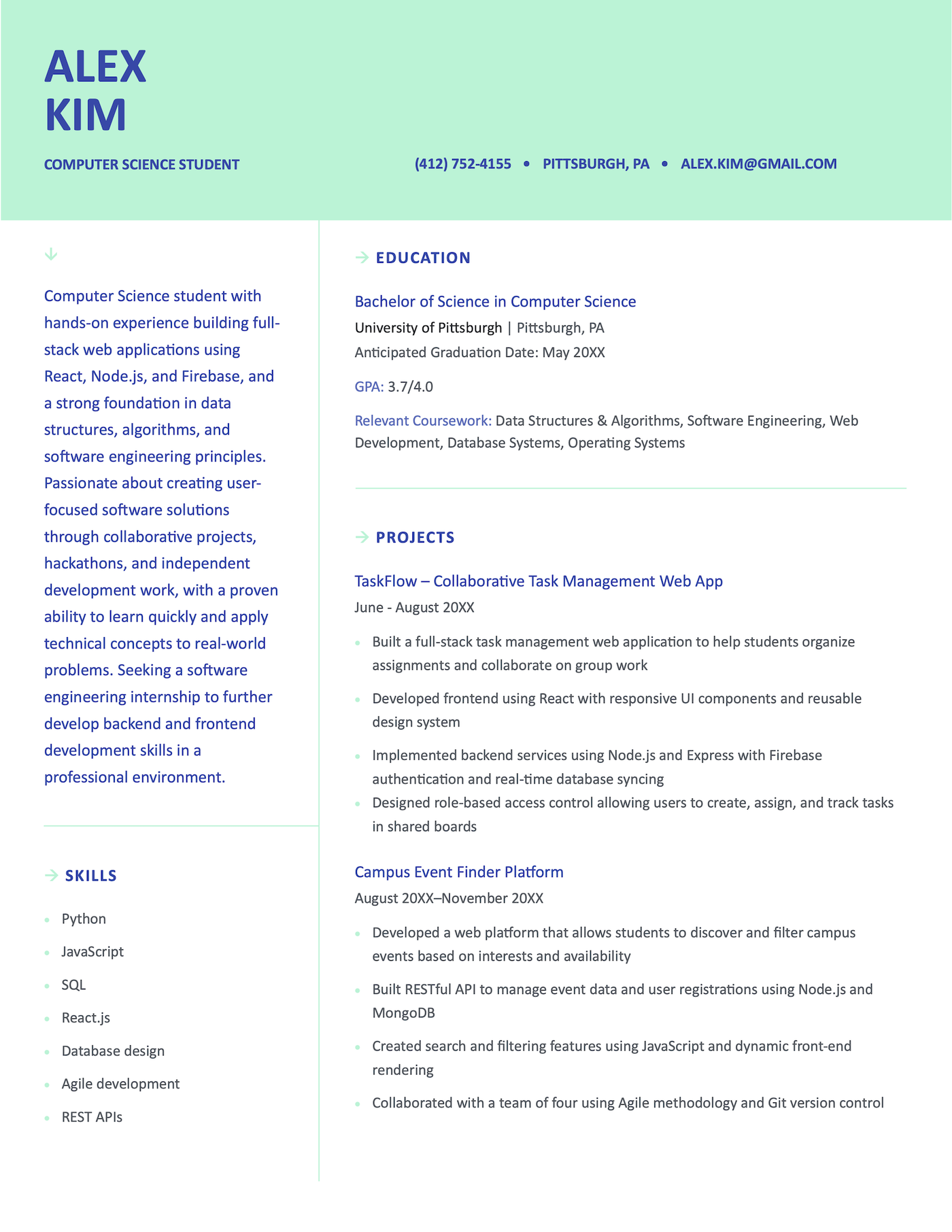
Include any group assignments, presentations, research projects, or personal projects that show relevant skills. This projects section should follow the same format as a work experience section and use bullet points to list your responsibilities and the results you achieved.
Personal Budget Tracker App | Independent Project
September 20XX–December 20XX
- Designed and developed a web application that helps users track expenses and monitor monthly spending habits
- Built the application using HTML, CSS, JavaScript, and Firebase
- Implemented user authentication and real-time data storage features
- Tested functionality across multiple devices and resolved usability issues based on peer feedback
Internship experience
If you don’t have formal work experience, list internships on your resume in place of an experience section and focus on the skills you developed, projects you contributed to, and measurable results you achieved.
Marketing Intern | BrightWave Media
May 20XX–August 20XX
- Assisted with the planning and execution of social media campaigns across Instagram, LinkedIn, and Facebook
- Created and scheduled content using Canva and social media management tools
- Analyzed engagement metrics and prepared weekly performance reports for the marketing team
- Supported the launch of a product campaign that increased social media engagement by 15%
Volunteer work
Create a volunteer work section that includes community service, charity events, tutoring, or nonprofit involvement that demonstrates reliability and initiative.
Food Bank Volunteer | City Food Pantry
June 20XX–August 20XX
- Sorted, packaged, and distributed food donations to local families in need
- Assisted with inventory management and organization of warehouse supplies
- Worked with a team of volunteers to prepare weekly food distribution events
- Helped serve more than 100 community members during high-demand periods
Extracurricular activities
If you want to add a lot of detail, you can list extracurricular activities like student government, or clubs in your experience section:
Student Government Association | Vice President
August 20XX–May 20XX
- Represented the interests of more than 500 students by collaborating with school administrators and student leaders
- Organized campus events and initiatives that increased student participation throughout the academic year
- Managed meeting agendas, communications, and project timelines for the executive board
If you want to save space, you can mention them briefly in your education section:
Bachelor of Science in Marketing
Iowa State University | Expected Graduation: May 20XX
Activities: Marketing Club, Student Government Association, Campus Volunteer Program
Awards
List any awards that strengthen your application in their own dedicated section.
- Dean’s List (Fall 20XX–Spring 20XX)
- First Place, State Business Case Competition (20XX)
- Recipient, Academic Excellence Scholarship (20XX)
- AP Scholar with Distinction (20XX)
- National Honor Society Member (20XX–20XX)
How to write a student resume for different opportunities (with examples)
Student resumes aren’t one-size-fits-all. Depending on the role, you should highlight different sections of your resume, like education, projects, leadership experience, technical skills, or work history.
Internships
Resumes for internships should emphasize academic achievements, transferable skills, and career potential rather than extensive work experience because employers will understand that this may be your first position.
To do this, place your education section near the top of your resume and consider adding dedicated sections for projects, research, certifications, or leadership activities if they’re relevant to the internship.
What to prioritize:
- Education
- Relevant coursework
- Academic projects
- Technical skills
- Leadership activities
- Research experience
- Certifications
For example, a computer science student might add a projects section featuring coding assignments and personal projects:
Part-time or summer job
Resumes for part-time and summer jobs should focus less on academic achievements and more on the qualities employers look for in entry-level workers.
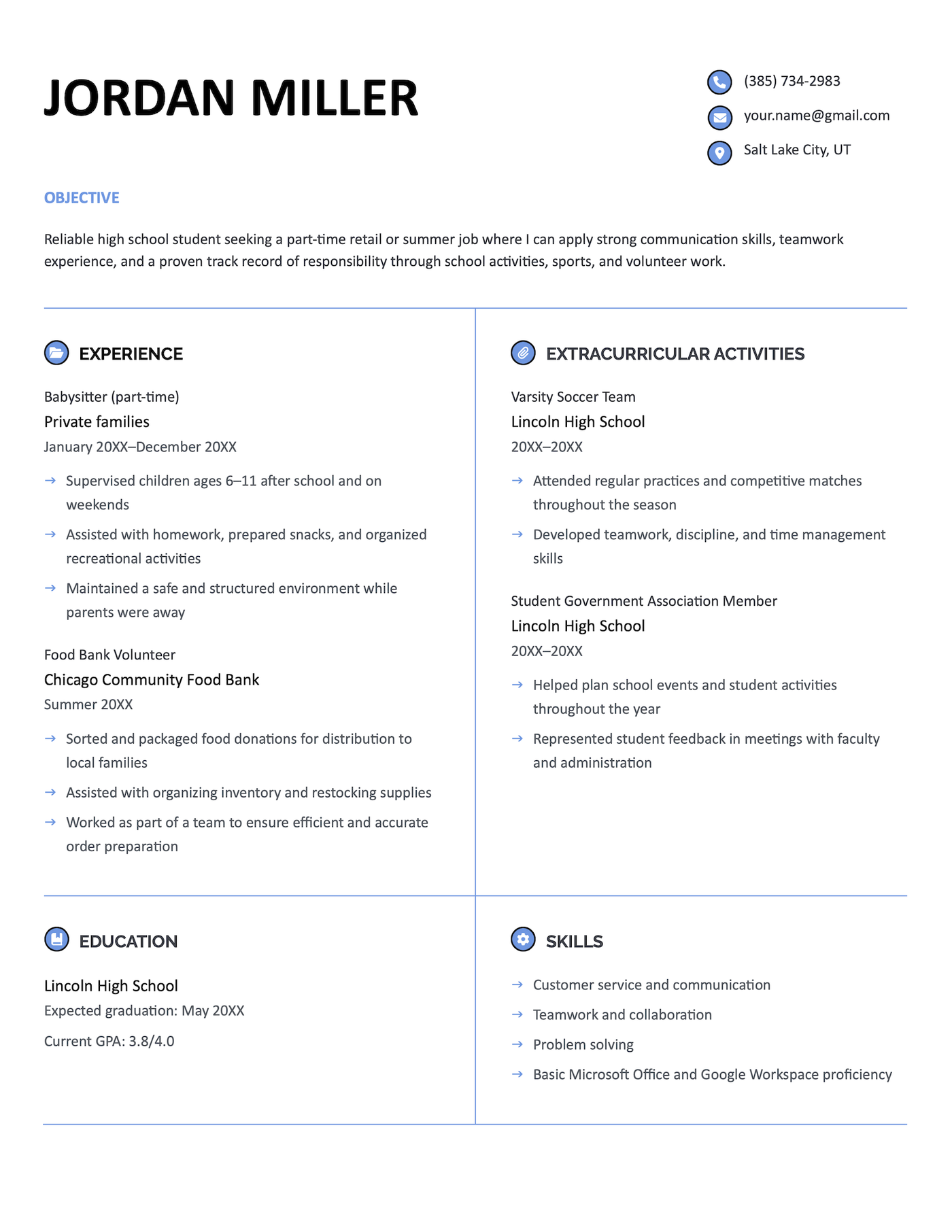
To emphasize these strengths, expand your experience section with volunteer work, extracurricular activities, or informal jobs, and make sure your skills section highlights communication, teamwork, and customer service skills.
What to prioritize:
- Availability
- Customer service skills
- People skills like teamwork and communication
- Extracurricular involvement
- Volunteer work
For example, a student applying for a retail job might include volunteer experience, sports participation, student clubs, or babysitting experience to demonstrate reliability and responsibility:
Entry-level position after graduation
Entry-level resumes should present you as a capable early-career professional ready to transition into the workforce.
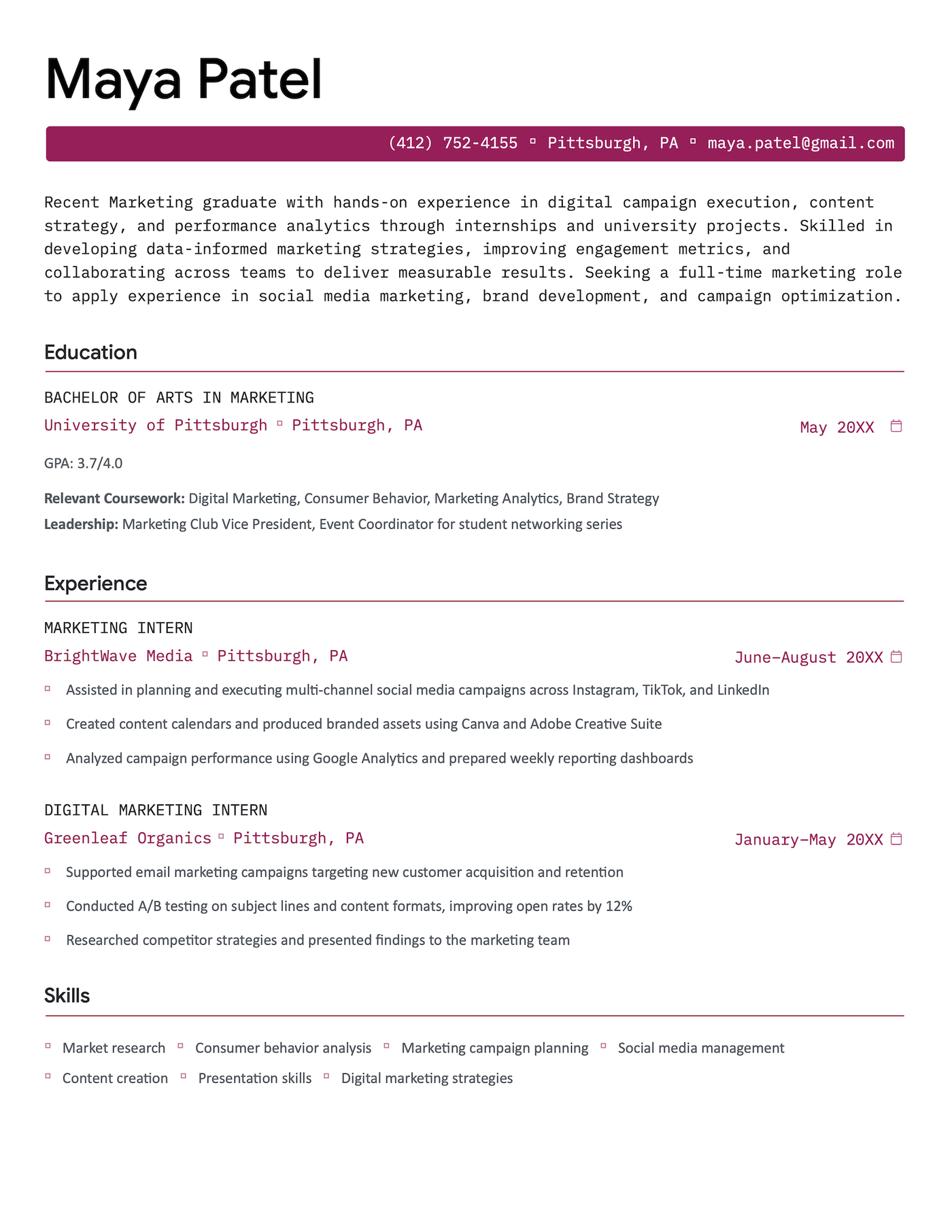
Compared to an internship resume, you’ll want to place greater emphasis on professional experience by expanding internship descriptions, highlighting measurable achievements to show that you can deliver real results, and adding sections for certifications, portfolios, or industry-related projects if applicable.
What to prioritize:
- Internships
- Measurable achievements
- Industry-related projects
- Technical skills
- Leadership experience
- Certifications
- Portfolio links
For example, a recent marketing graduate might dedicate more space to internships and focus on campaign results:
More resume examples for different types of students
These student resume examples demonstrate how to tailor your resume based on where you are in your academic or professional journey.
- High school resume examples
- College student resume examples
- Recent grad resume examples
- Resume examples for teens
Frequently asked questions
Here are answers to some of the most common questions we get about writing a resume as a student with limited experience:
What is the best resume format for students?
The best resume format for students places the education near the top. Like a traditional chronological resume, it lists your experiences in reverse order, starting with the most recent, but it moves the education section above work experience to highlight your academic background.
Student resumes are also more flexible than professional resumes, allowing you to customize your experience section with internships, projects, volunteer work, extracurricular activities, leadership positions, research, and other relevant experiences that demonstrate your skills and potential.
Which skills should I include on a student resume?
On a student resume, you should include a mix of job-relevant skills and transferable skills that you’ve developed through school, projects, internships, and extracurricular activities. Any skills you have that are listed in the job ad should go at the top of your skills list so employers can immediately see that you’re a good fit.
The goal is to show employers that you already have the foundation to succeed, even if you’re early in your career.
Should I include my GPA on my resume?
You should include your GPA on your resume if it’s 3.5 or above. In these cases, it helps to demonstrate academic performance and consistency, especially for internships, scholarships, or early-career roles where experience may be limited.
If your GPA is below that threshold, it’s better to leave it off and focus on other strengths such as projects, skills, internships, and extracurricular activities.
What’s the difference between an academic CV and a resume?
A resume is a short, tailored document (usually one page for students) used to apply for internships, part-time jobs, and entry-level roles. It focuses on the most relevant skills, experiences, and achievements for a specific position.
An academic CV (curriculum vitae) is a much longer, more detailed document used mainly in academic or research settings. It includes a complete record of your academic background and may span multiple pages.
Should I include hobbies on my resume?
In most cases, no, you should not include hobbies on your resume. Space is limited, and employers are usually more interested in your skills, experience, and achievements that relate directly to the role.
However, you can include hobbies if they’re highly relevant to the job or help demonstrate useful skills.
Which file format should I use for my resume?
You should use a PDF file format for your resume because it looks consistent across all devices, and is the most widely accepted by employers. The only exception is if an employer specifically requests another format, such as a Word document (.docx), in which case you should follow their instructions.
Tools to help you fill in your student resume
Write your resume faster with these free tools:
- Resume summary generator: Generates a professional introduction highlighting your key skills
- Bullet point generator: Helps you write about your experience in an impactful way
- Skills generator: Identifies skills to include on your resume based on your target job
- AI resume generator: Makes a first draft of your resume automatically
About the Author

Lauren Mastroni is a Senior Digital Content Writer at Resume Genius, where she creates data-driven career content and actionable job search advice. With a background in academic research, she brings a research-focused approach to topics like resume writing, interviewing, and career development. Lauren is dedicated to helping job seekers at all stages navigate the hiring process and present themselves more effectively to employers.


Related Articles
Resume Help
Resume Examples for Jobs in 2026
Geoffrey Scott
Lauren Mastroni

Corissa Peterson
Resume Help
Creative Resume Templates
Sebastian Morgan
Lauren Mastroni


Conrad Benz

Lauren Mastroni
Resume Help
Resume TemplatesConrad Benz