
Resume Templates Combination Resume Templates
Combination (Hybrid) Resume Templates
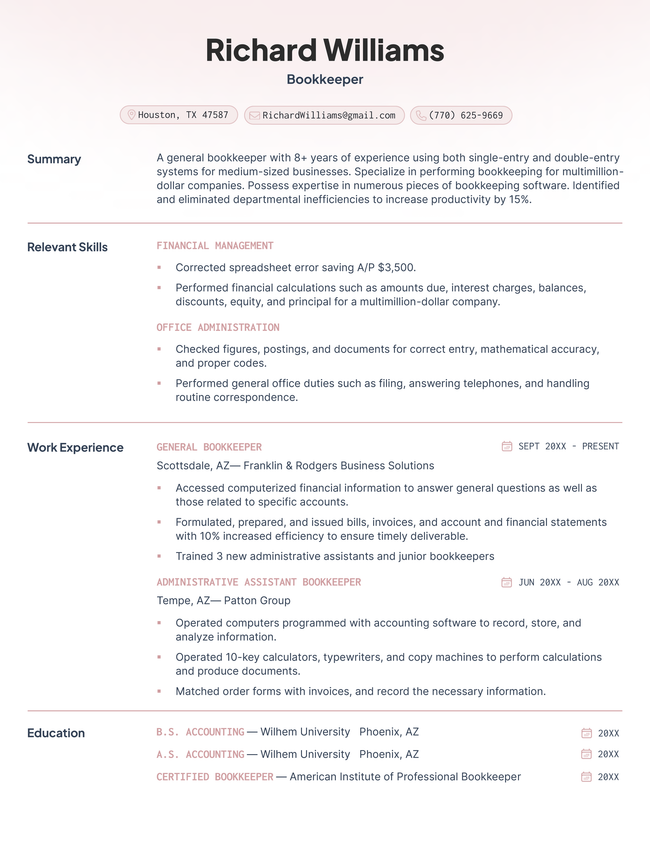
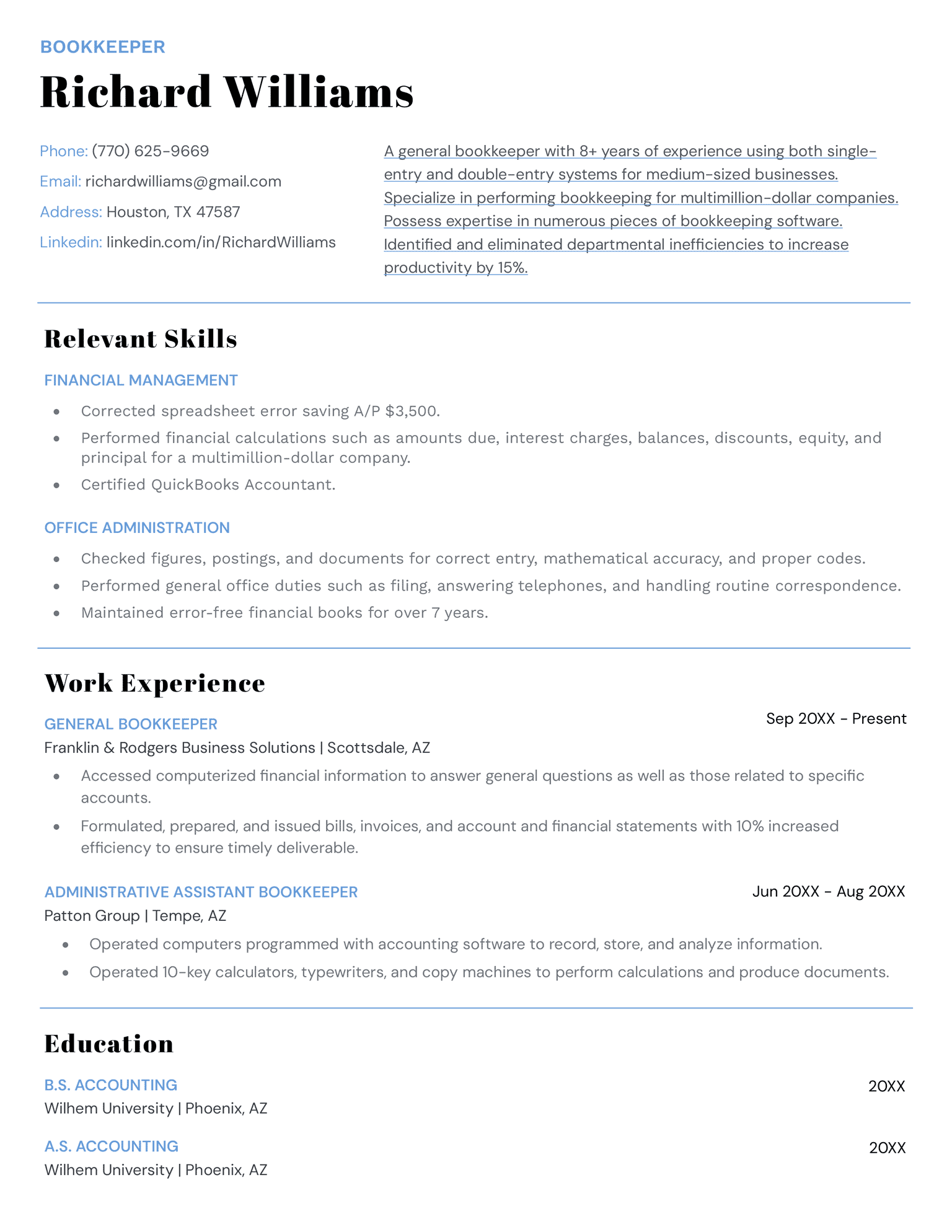
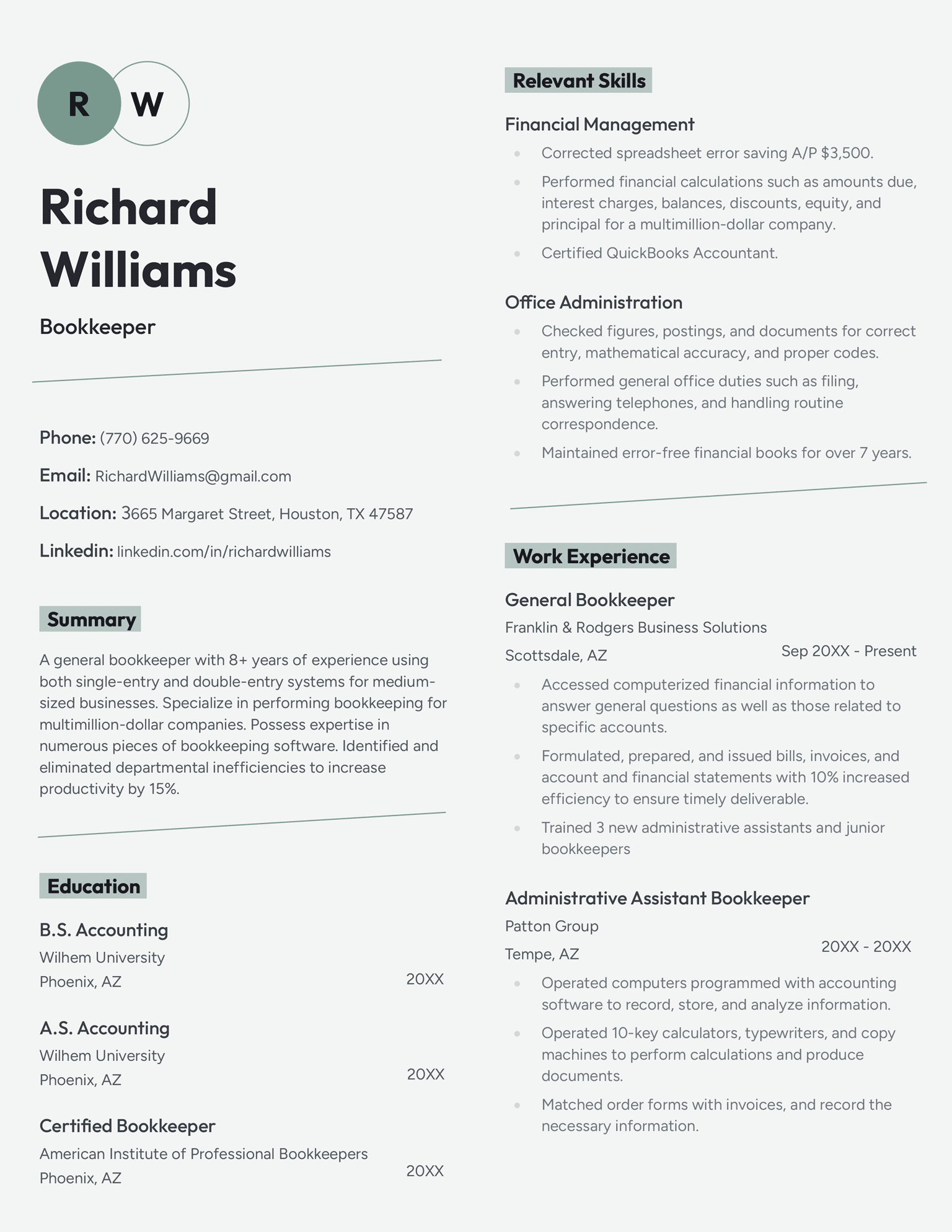
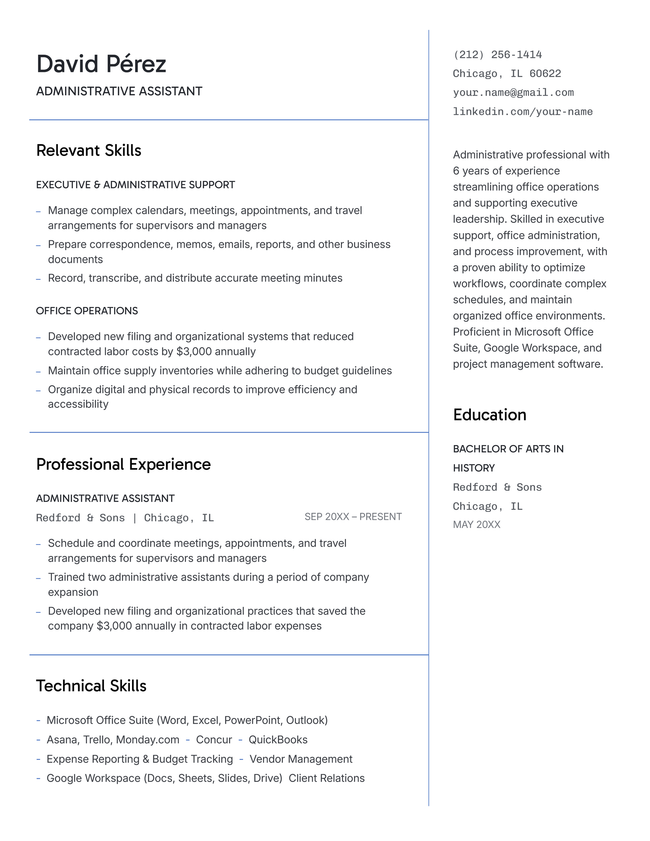
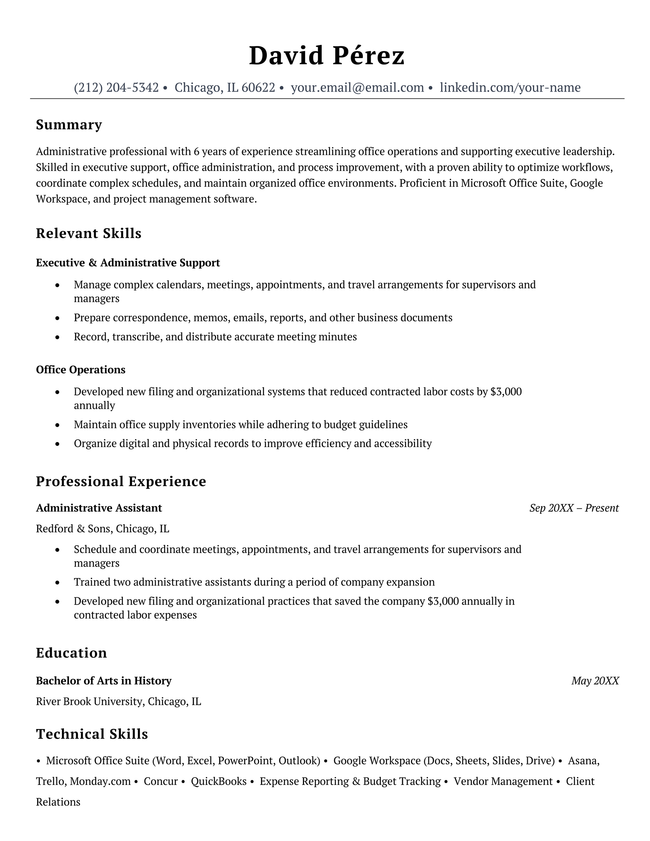
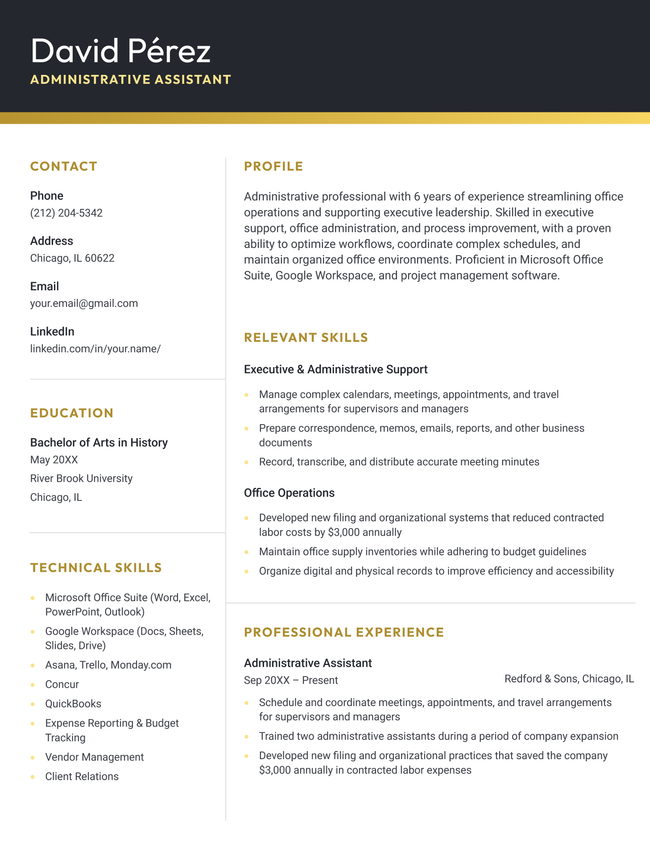
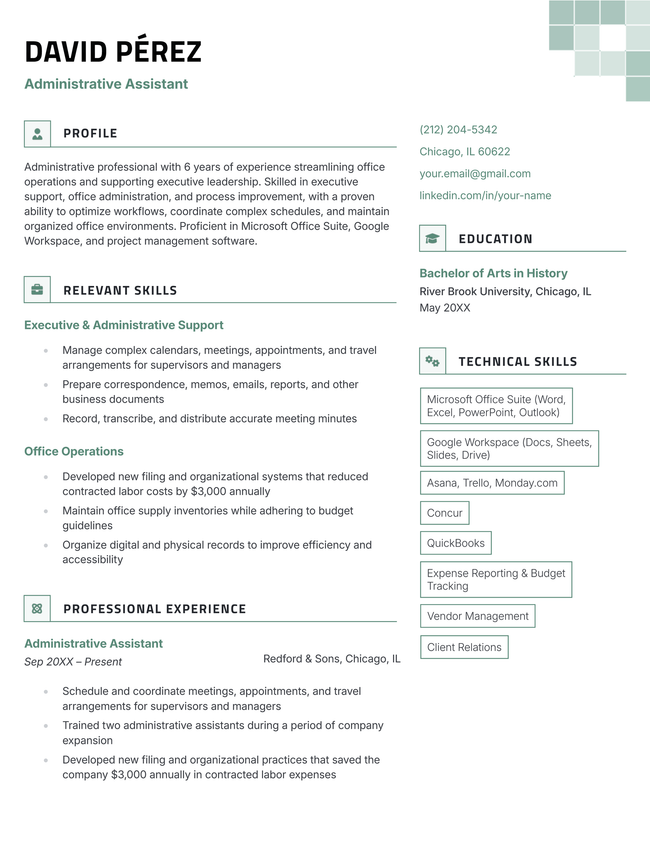
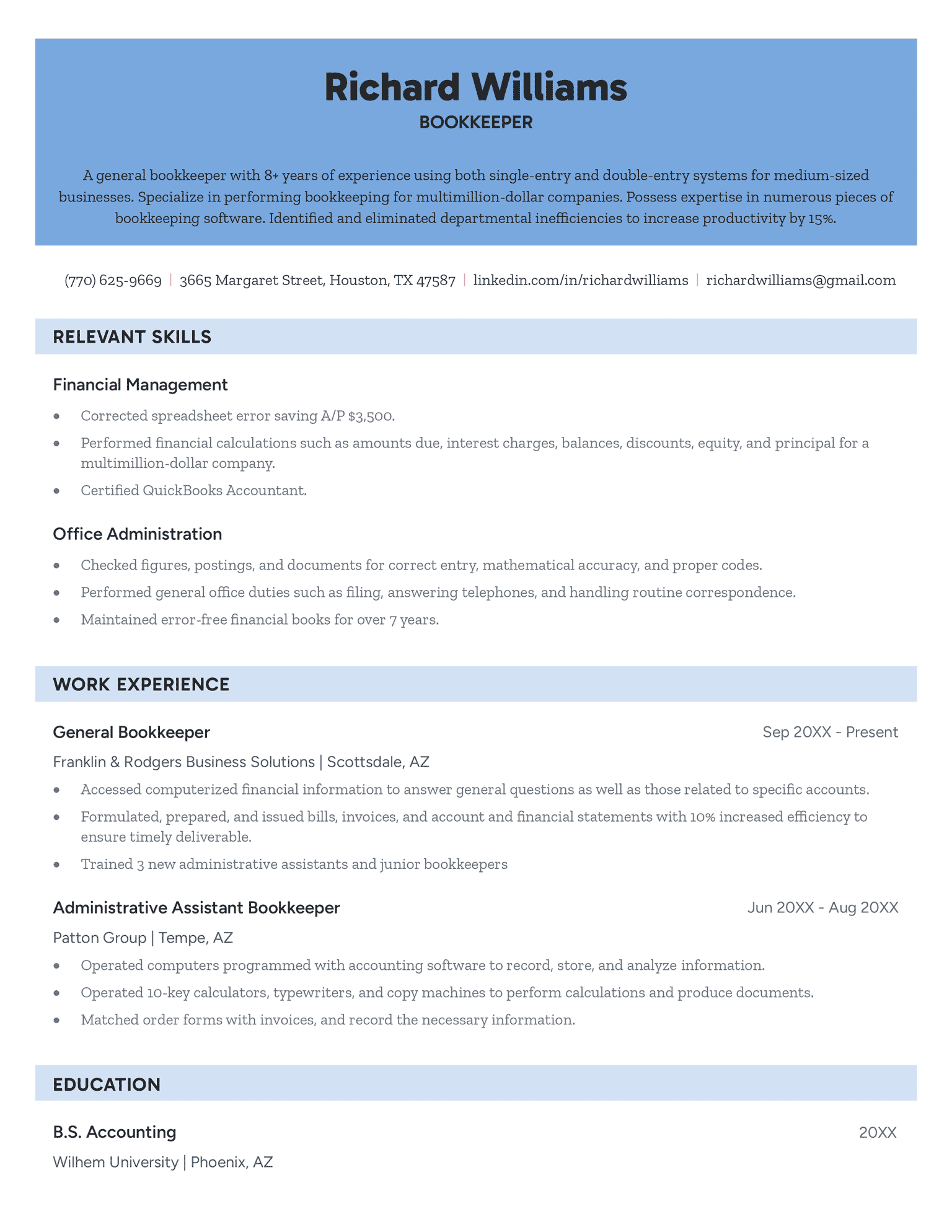
Download and customize one of our free combination resume templates designed for candidates who need to give equal weight to their skills and experience sections.
Free combination resume templates to download & edit
Additional free resume templates
RESUME TEMPLATES BY LAYOUT & CAREER LEVEL
- What is a combination resume? (AKA hybrid resume)
- When to use a combination resume format
- Resume formats compared: which one is right for you?
- How to make your resume with one of our free combination templates
- Fill-in-the-blank combination resume template
- Combination (hybrid) resume examples
- Frequently asked questions (FAQs)

Make your resume in minutes.
What is a combination resume? (AKA hybrid resume)
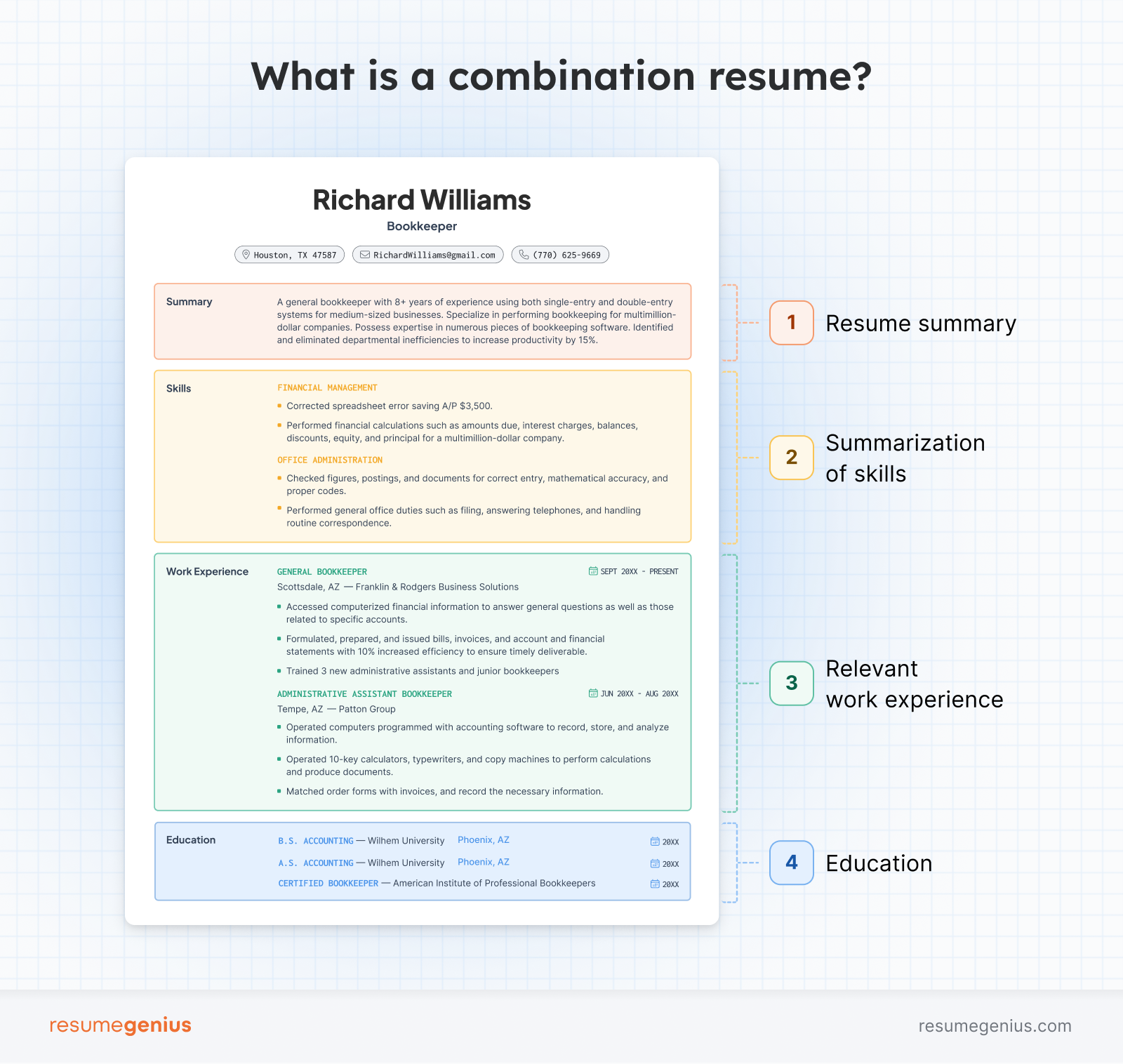
A combination resume blends elements of both chronological and functional resume formats. It begins with a skills summary or highlights section, followed by a reverse-chronological work experience section.
This format offers the best of both worlds, highlighting your skills while still detailing your relevant work experience. Because it presents both sections in balance, it’s often called a “hybrid” resume.
When to use a combination resume format
A combination resume is best when you want to equally highlight both your skills and your professional experience. It’s especially effective if you have a mix of transferable skills and a solid work history that supports your next career move.
This format works best for:
- Career changers who need to highlight transferable skills before diving into a less directly relevant work history
- Freelancers or contractors whose project-based work doesn’t fit neatly into a traditional timeline
- People with employment gaps who want to lead with capabilities rather than dates
- People re-entering the workforce after an extended break, such as parents returning to work or military veterans transitioning to civilian careers
- Candidates with multiple short-term roles who want to emphasize consistent skills over a choppy job history
Resume formats compared: which one is right for you?
There are three main resume formats to consider, each suited to different situations.
A chronological resume lists your work history in reverse order, starting with your most recent job. It’s the most familiar format to recruiters and works well if you have a steady career progression in the same field.
A functional resume shifts the focus away from your job timeline and groups your qualifications by skill category instead, making it a better fit if you’re changing careers or have noticeable gaps in employment.
A combination resume blends the two, leading with a skills summary and following it with a chronological work history, giving you the flexibility to highlight strengths while still providing the career timeline employers expect.
| Format type | Pros | Cons | Best for |
|---|---|---|---|
| Chronological | Most common format Clearly shows career growth and stability | Draws attention to employment gaps or frequent job changes Less effective if your past titles don’t match your target role | Candidates with a consistent work history in the same field or industry |
| Functional (skills-based) | Highlights transferable skills Minimizes the visibility of gaps or unrelated experience | Can raise questions about your timeline Some employers view functional resumes with skepticism | Career changers, those with significant gaps, or candidates with limited formal work experience |
| Combination (hybrid) | Highlights both skills and experience Flexible and customizable | Can run longer than other formats Requires more effort to organize effectively | Career changers, freelancers, and professionals who want to go into detail about specific skills |
How to make your resume with one of our free combination templates
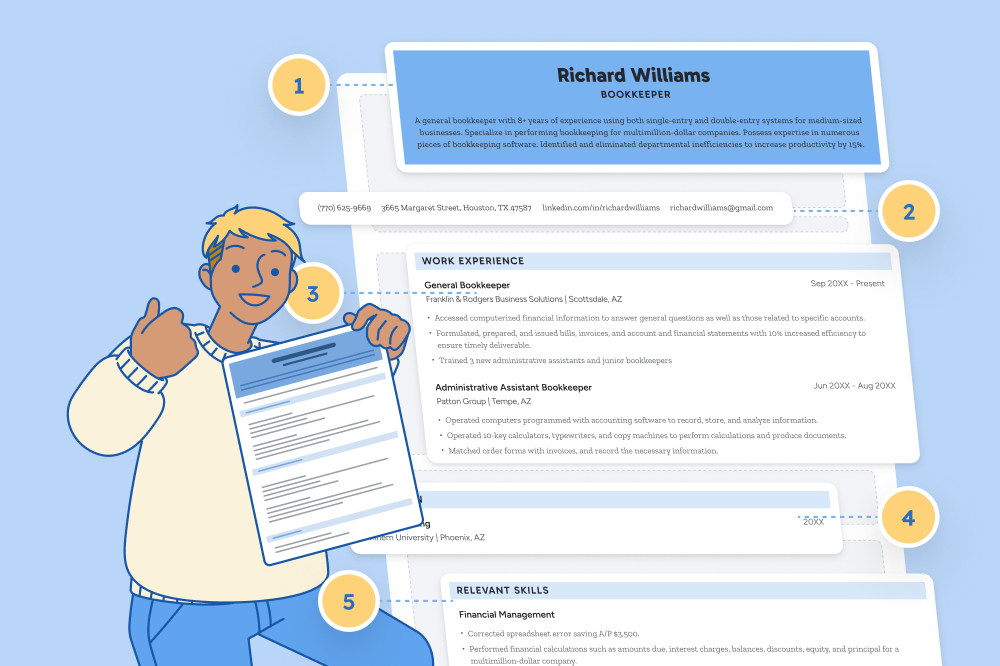
Here’s how to write a combination resume by editing one of our free templates:
1. Download your favorite template
Choose a template from above and click the “Download for Word” button to download it for free.
Then, open the template’s ZIP file in your downloads folder and install any fonts you need (see the Read-Me-Font-Installation.pdf document in the ZIP folder).
Once the fonts are installed, choose your favorite color and open it in Microsoft Word.
Now you’re ready to start replacing the placeholder content with your own information section by section.
2. List your contact information
Include the following information in the header section:
- First and last name
- Job title (optional)
- Professional email address
- Phone number
- City and state (optional)
- LinkedIn profile or portfolio URL (optional)
For example:

3. Introduce yourself
Below your contact information, write a targeted resume summary.
This 2–4 line snapshot should mention your years of experience, core areas of expertise, and one or two achievements that align with the job you’re applying for.
Here’s an example of a well-written resume summary:

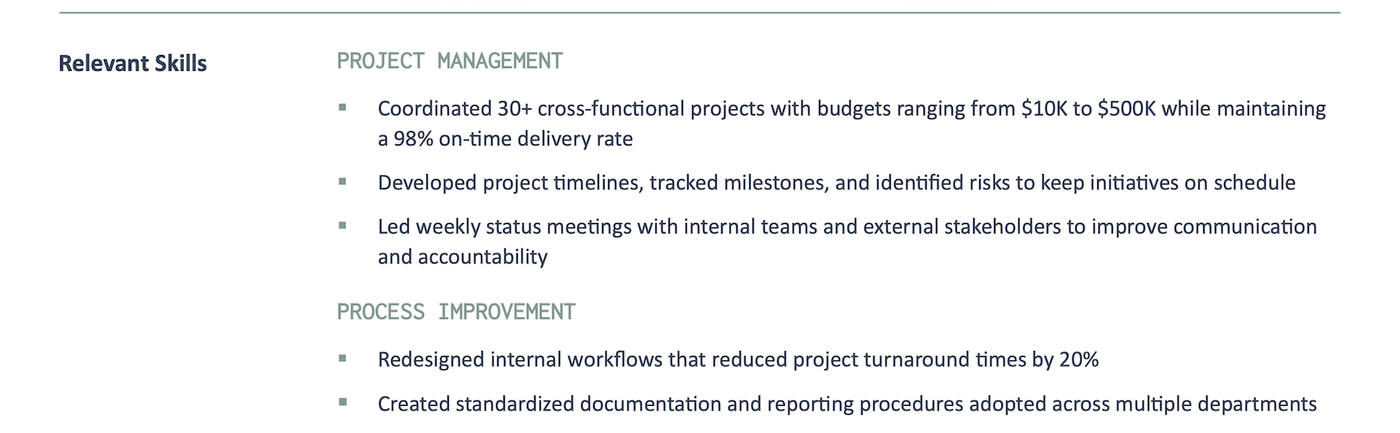
4. Group your skills by category
In the template, organize your skills into two or three broad categories that match the job description. Under each category, add 2–3 bullet points detailing specific accomplishments or results you’ve achieved using that skill.
Here’s an example of a properly formatted skills section on a combination resume:
5. Add your work experience
Next, replace the sample work history with your own experience.
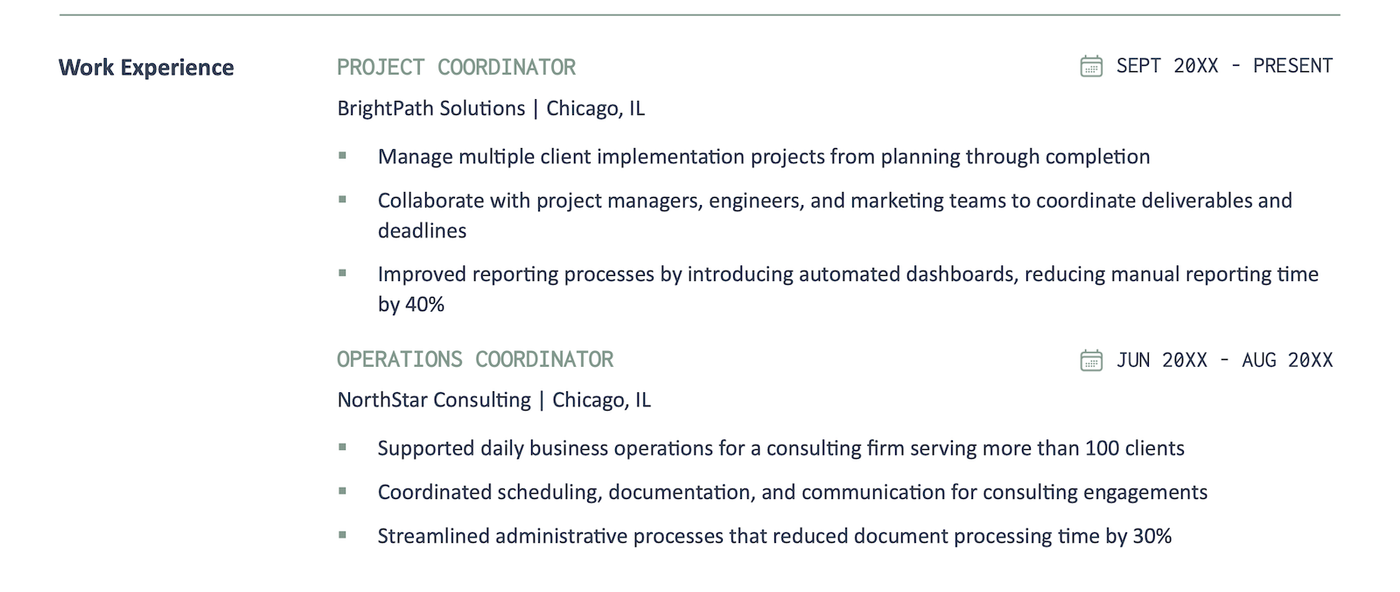
Because your skills section already highlights your qualifications, focus on your two or three most relevant positions. For each role, include:
- Job title
- Employer
- Location
- Dates of employment
- 2–3 achievement-focused bullet points
Here’s an example of a well-organized work experience section for a combination resume:
6. Add your education
Because a combination resume focuses more on your skills and experience, the education section should be brief and take up minimal space.
For each degree, list the degree title, school name, and graduation year.
For example:

Fill-in-the-blank combination resume template
To speed up the resume-writing process, copy the text template below and fill it in with your own information.
FIRST AND LAST NAME
youremail@gmail.com | (123) 456 7891 | City, State | linkedin.com/in/yourprofile
Resume Summary
[Industry] professional with [# of years] years of experience. Looking to use my expertise in [relevant skills] to fill the [Position Title] position at [Company Name]. Possess a [degree] in [area of study] and skills in [relevant skill]. A dedicated worker aiming to help achieve [Company’s Name]’s goals and take on more responsibility as soon as possible.
Relevant Skills
[Skills Category 1]
- Choose skills that directly match the job requirements
- Be specific about your expertise by mentioning tools or software by name
[Skills Category 2]
- Group your skills by category, followed by 3–4 bullets
- Use numbers and specific outcomes to demonstrate your impact
Work Experience
Current Job Title
Employer Name | Location
Start Date – End Date
- Include a bulleted list of your achievements
- Start each bullet off with an action verb (like “built” or “spearheaded”) to grab attention
- Use hard numbers when possible to quantify your accomplishments at work
Earlier Job Title
Employer Name | Location
Start Date – End Date
- List relevant accomplishments from your previous job
- Assuming you’re no longer at this job, use past tense verbs to describe your work
Education
Degree Name / Major
University, Location | Start Date – End Date
Combination (hybrid) resume examples
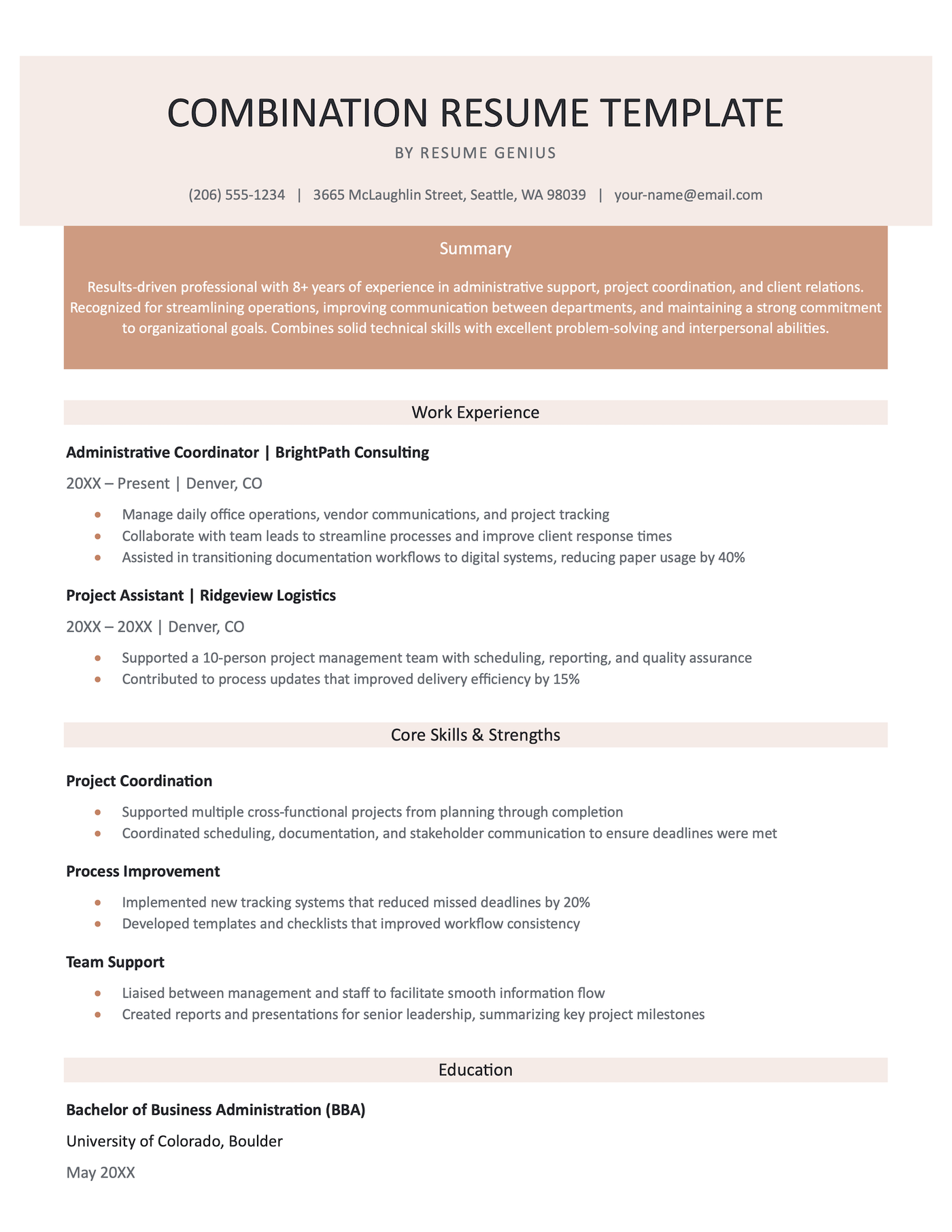
Below are examples of combination resumes that show how professionals from various backgrounds balance their skills and work history.
Customize these templates with your own skills and experience or explore our extensive library of job-specific resume examples.
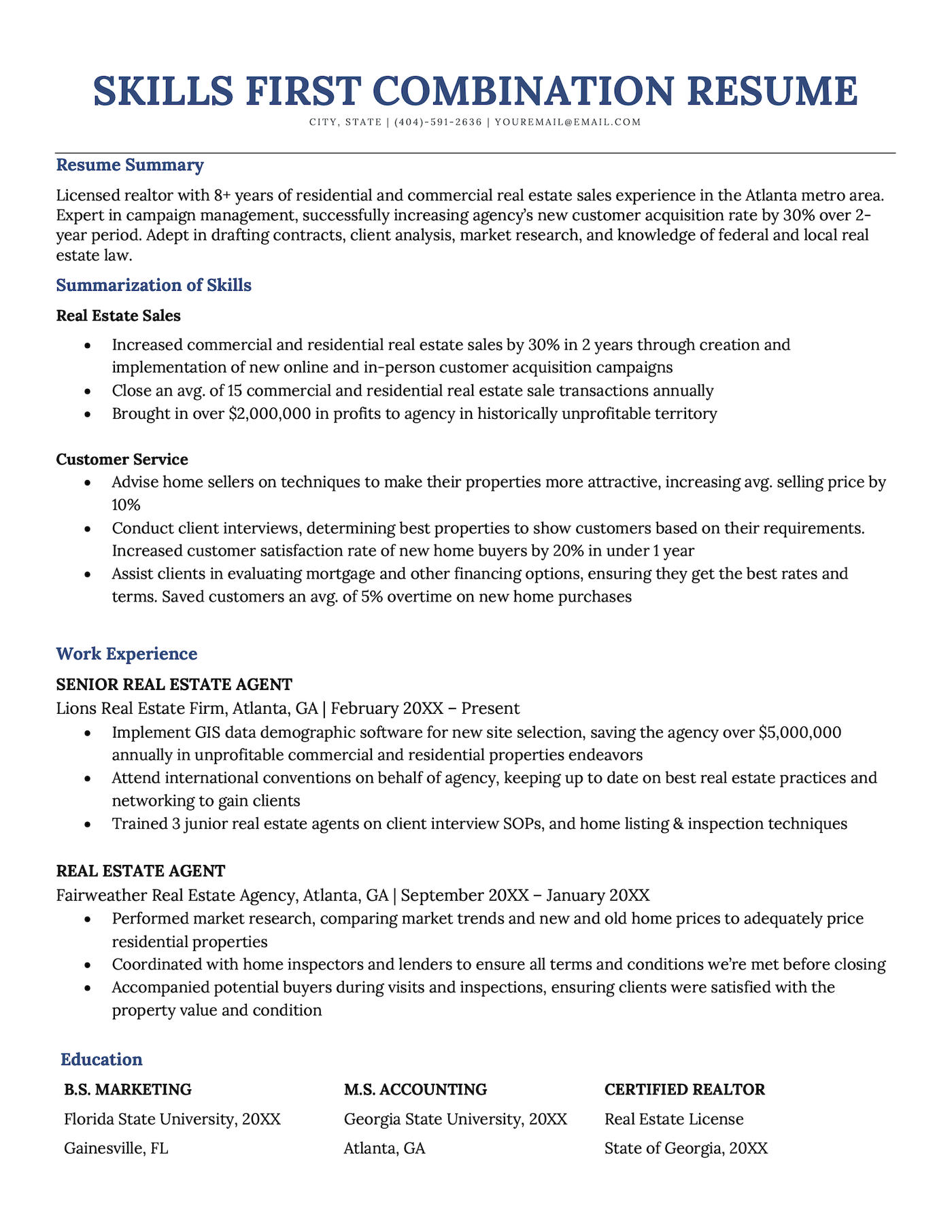
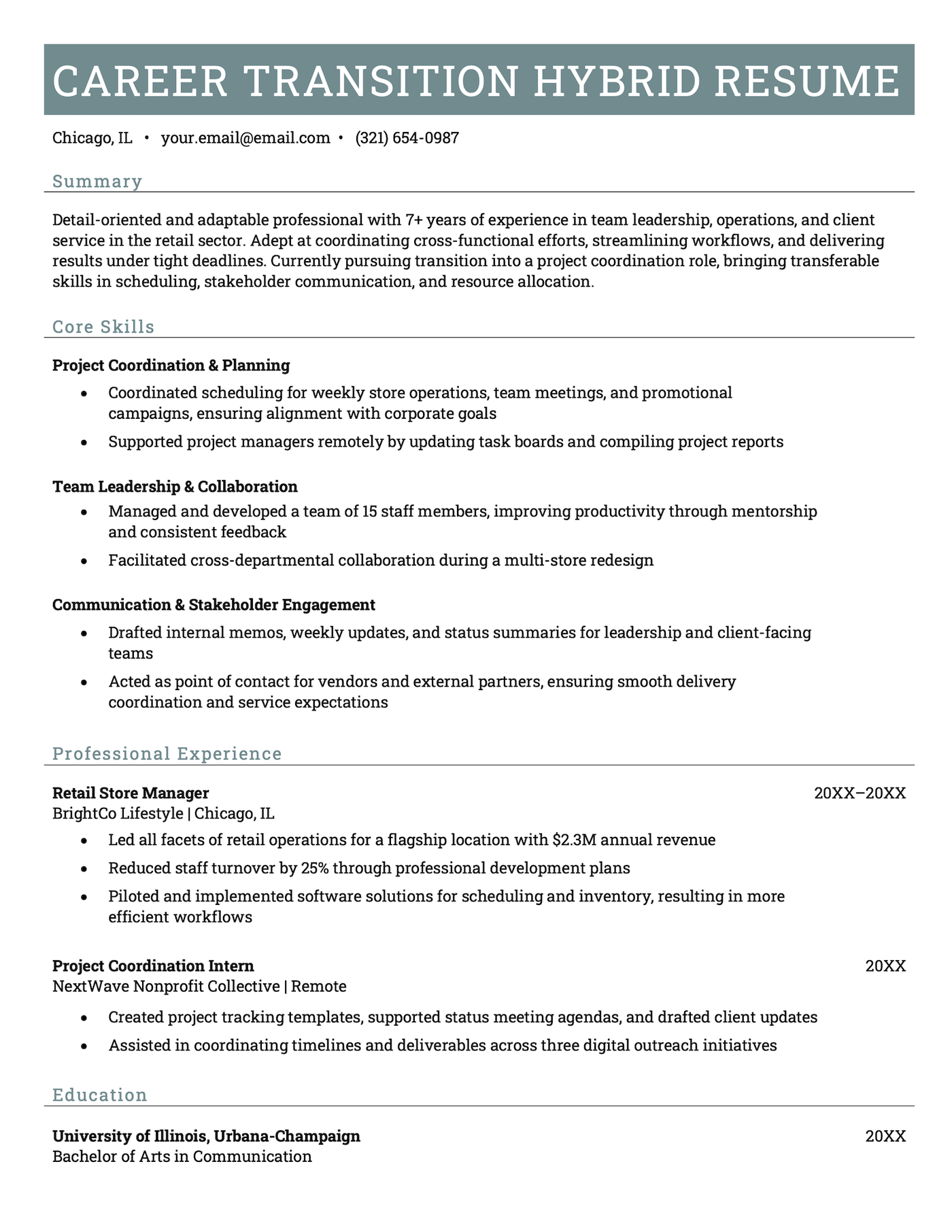
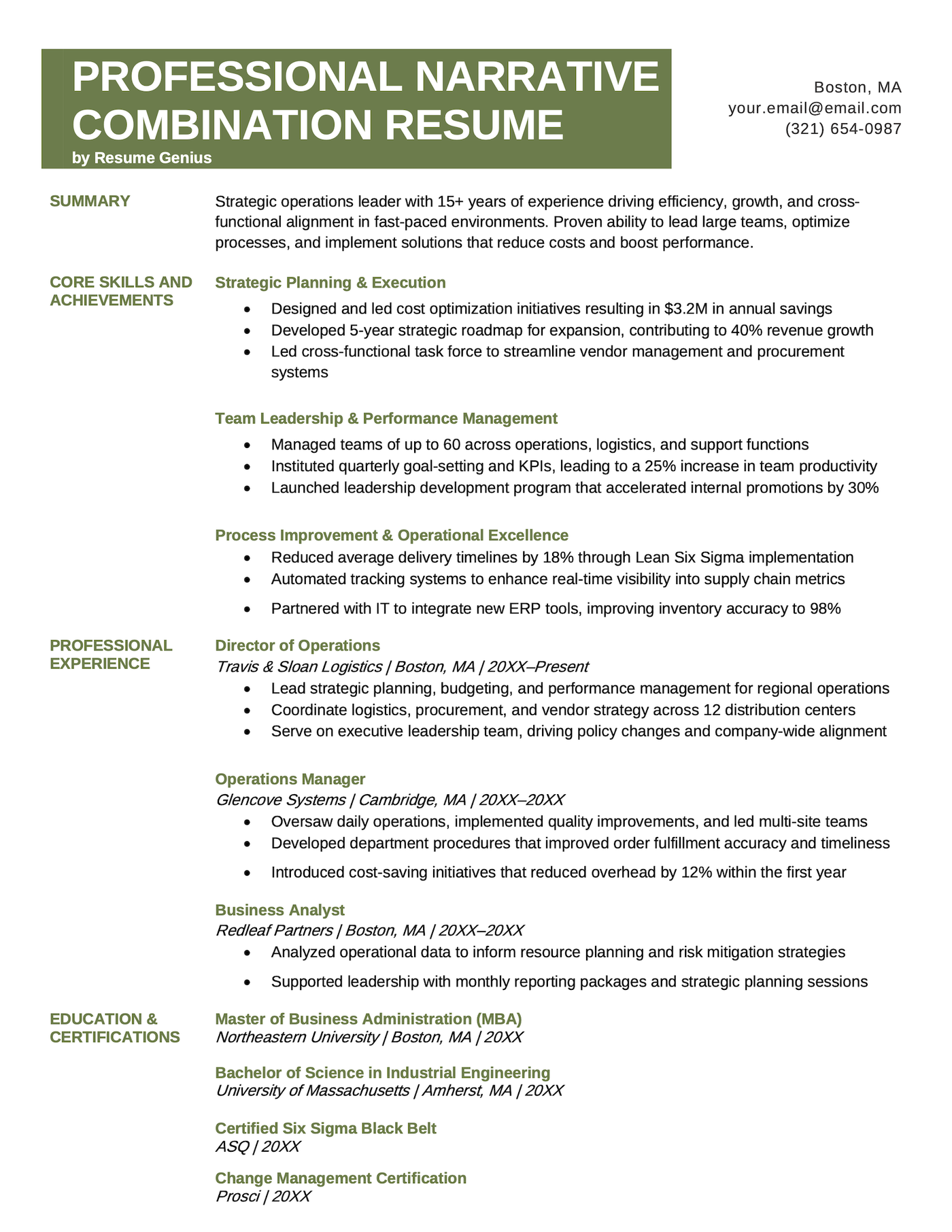
General combination resume example
Skills-first resume
Career transition resume
Professional narrative resume
Frequently asked questions (FAQs)
Still have questions? Here are answers to some of the most common questions about combination resumes:
What are the disadvantages of a combination resume?
While a combination resume is great for emphasizing both skills and work history, it’s not always the best choice for every job seeker. Here are some possible disadvantages:
- Can be too long or repetitive
- May confuse applicant tracking systems
- Requires more time to customize
Is the combination resume format ATS-friendly?
Yes, a combination resume can be ATS-friendly if it’s formatted carefully.
However, if the layout is too creative, overly designed, or lacks clear dates and job titles, it can confuse ATS software. Here are some tips to keep your combination resume ATS-friendly:
- Use standard section headings like “Skills” and “Work Experience”
- Clearly include job titles, company names, and dates
- Avoid text boxes, tables, or graphics
- Align your skills section with keywords from the job posting
- Submit your resume as a PDF (unless another file format is specified in the job listing)
If you’re not sure whether your combination resume can be read by ATS software, run it through our free ATS resume parser.
Is a hybrid resume the same as a combination resume?
Yes, a hybrid resume and a combination resume are two names for the same resume format. Both combine elements of a chronological resume and a functional resume by highlighting your most relevant skills while also including a detailed work history in reverse chronological order.
Is a skills-based resume the same as a combination resume?
No, a skills-based resume is not the same as a combination resume.
A skills-based resume is the same as a functional resume, which focuses primarily on your skills and only includes a concise work history.
A combination resume, on the other hand, balances a prominent skills section with a detailed, reverse-chronological work history.
About the Author

Lauren Mastroni is a Senior Digital Content Writer at Resume Genius, where she creates data-driven career content and actionable job search advice. With a background in academic research, she brings a research-focused approach to topics like resume writing, interviewing, and career development. Lauren is dedicated to helping job seekers at all stages navigate the hiring process and present themselves more effectively to employers.


Related Articles
Resume Help
Resume Examples for Jobs in 2026
Geoffrey Scott
Resume Help
Resume Templates
Conrad Benz

Lauren Mastroni
Resume Help
Creative Resume Templates
Sebastian Morgan
Lauren Mastroni

Corissa Peterson

Conrad Benz

Lauren Mastroni