


Resume expectations are constantly evolving as hiring tools and employer priorities change — and in 2026, staying up to date on the latest trends is a real advantage.
This report compiles our latest resume data and survey findings, highlighting the statistics that matter most this year. From formatting and content priorities to best practices for applicant tracking systems (ATS) and smart ways of using AI, our insights will help you navigate today’s hiring landscape.
- 71% of companies use an ATS, and 37% say that candidates are screened out before being seen by an employer
- 42% say missing required skills or poor role alignment can stop a resume from progressing
- 26% say low-quality formatting can prevent a resume from moving forward, and 72% say inconsistent formatting weakens an application
- 90% say a clear resume summary helps them evaluate candidates faster
- 80% of hiring managers can often tell when a resume is AI-written, 79% say candidates should disclose AI assistance, and only 4% say they don’t notice signs of AI use
- 51% say unnatural phrasing or tone is the top giveaway that a resume is AI-generated
Resume formatting & length
Your resume has to work for both software (ATS) and humans. Our data shows that most hiring teams use ATS tools, and resume formatting choices can directly affect whether a resume moves forward.
- 71% of hiring managers say their company uses an ATS, which determines how resumes are initially processed
- 37% say their ATS screens out applications before being reviewed by an employer
- 26% say poor formatting can stop a resume from moving forward, emphasizing the need for a clean structure
- 72% say inconsistent spacing, formatting, or alignment negatively affects their perception
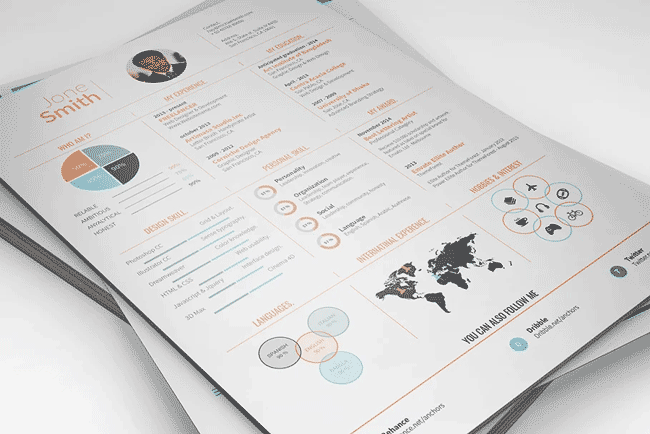
- 62% say overly designed resumes (with excessive color or visuals) hurt their perception, suggesting “simple and clear” outperforms “flashy”
- 57% spend 1–3 minutes reviewing a resume, so clarity is rewarded, but messy formatting can kill your resume’s chances
- 1 in 4 hiring managers spend less than 30 seconds looking at a resume (Zippia, 2023)
- 40% of recruiters are turned off by resumes with overly flashy design elements (e.g. multiple colors or graphics, a distracting background, hard-to-read fonts)
ATS-friendly file formats
Hiring managers recommend using simple file formats that are easy for ATS tools to read.
- 53% prefer a text-based PDF for ATS compatibility
- 43% favor Word (.docx) files for ATS compatibility
- 34% prefer a PDF with light design elements for ATS
- 13% say design-heavy/graphic resumes work best for ATS
Resume length: two pages is ideal
There’s a clear sweet spot for resume length:
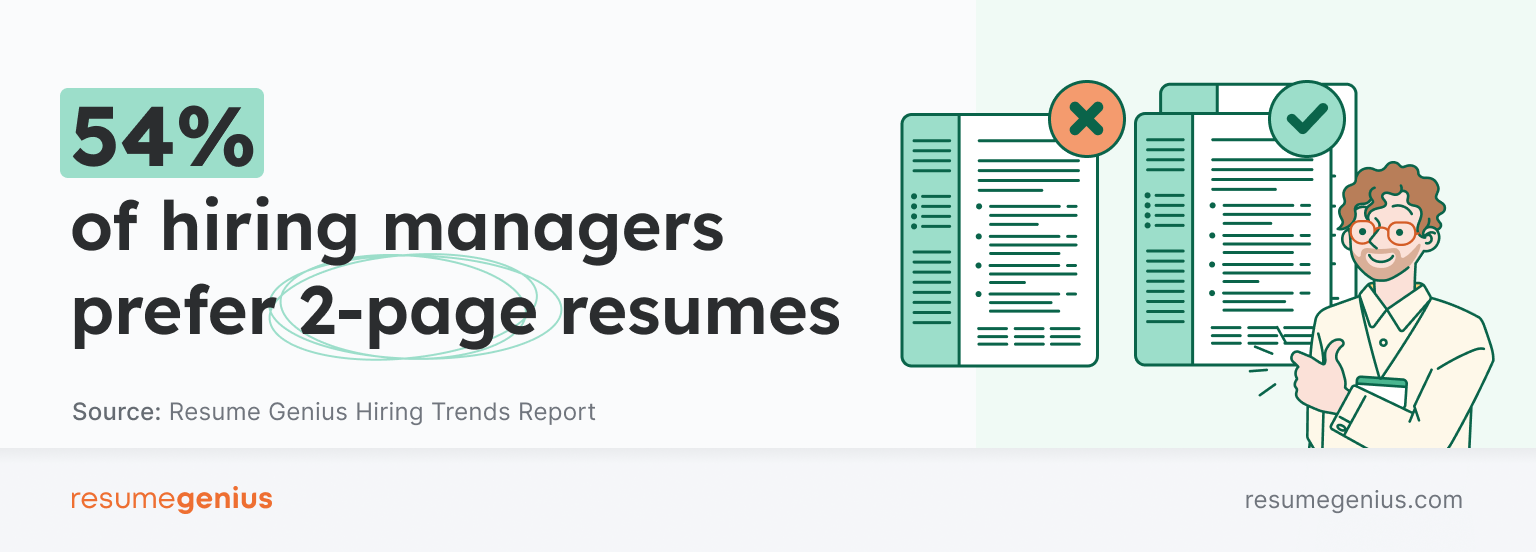
- 54% of hiring managers expect a resume to be two pages long
- 43% say they don’t read resumes longer than two pages
- 20% say too-long or dense resumes can prevent a candidate from moving forward, so relevant content is more important than length
Resume sections and what hiring managers value
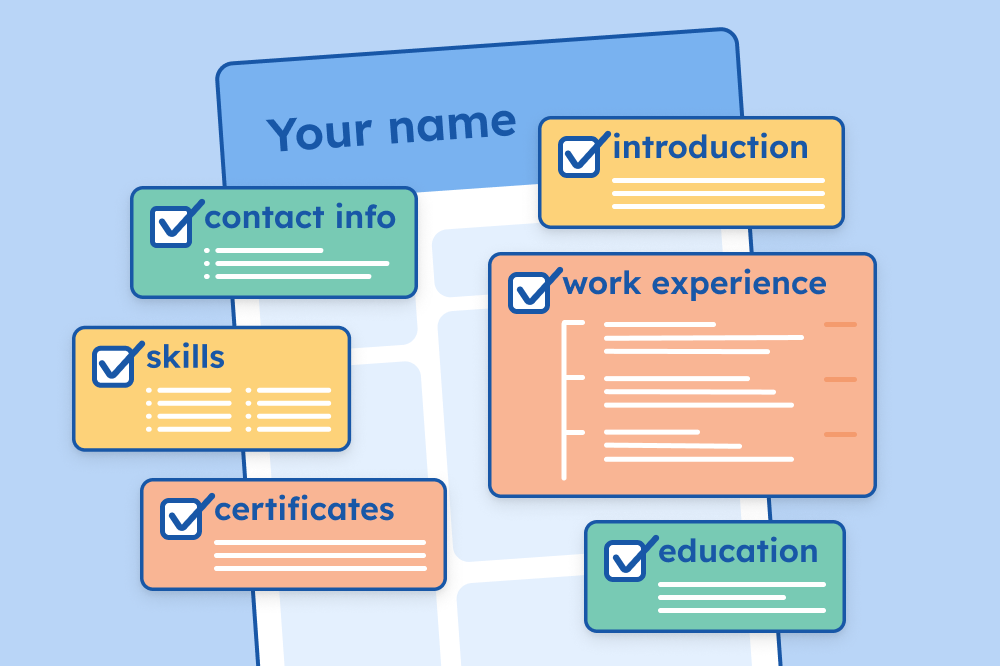
While the sections on a candidate’s resume still matter, what’s inside them matters more. Hiring managers want resumes that quickly demonstrate role fit, and then back that up with clear, scannable proof.
- 90% of hiring managers say a clear resume summary makes it easier to evaluate candidates quickly to make the top of the page especially impactful
- 42% rank the resume introduction among the top three most important sections
- 20% say the resume introduction is the single most critical section, making it one of the highest-leverage parts of your document
- 85% expect every resume to include a skills section, so leaving it out can undermine your application
- 34% say an unclear or incomplete work history section can prevent a resume from moving forward, meaning dates, titles, and scope must be immediately clear
Skills and keywords
Skills are one of the biggest reasons candidates either move forward or get filtered out. Skill alignment and providing proof matter more than long lists of skills.
- 42% say missing required skills or poor role alignment can prevent a resume from moving forward, making targeting essential
- 28% say a lack of relevant keywords can stop a resume in its tracks, so using role-specific language can help your resume get noticed
- 30% say applicants don’t provide concrete evidence of the skills they list, meaning that skills without proof often won’t persuade
- 20% say applicants’ skills don’t match job or company needs
- 22% say candidates list too many or too few skills, suggesting there’s a balance between completeness and focus
Top skills hiring managers prioritize
Our data shows hiring managers most commonly prioritize the following skills:
- Communication and collaboration (48%)
- Critical thinking and problem-solving (46%)
- Industry/domain knowledge (42%)
- Project management (35%)
- Data analysis (28%)
- Artificial intelligence (AI) and Machine learning (ML), including prompt engineering (26%)
- Cybersecurity/cloud computing (22%)
AI in resume writing
AI has become a major part of applications, and hiring managers are responding accordingly, with survey data showing that AI use is often noticed and that heavy reliance on AI can create trust issues.
- 77% say many resumes feel completely or partially AI-generated, meaning AI-assisted writing is now part of the baseline
- 80% say they can often tell when a resume has been written by AI, meaning AI isn’t “invisible” to readers
- 79% believe candidates should disclose AI assistance in application materials, signaling a strong preference for transparency
- 76% say AI-written resumes make it harder to tell who’s qualified, which can lead to skepticism during screening
- 72% say relying heavily on AI makes candidates seem less capable, showing that “too polished” can be a negative signal
- At the same time, 59% say AI use shows adaptability, and 51% say it shows efficiency/productivity, suggesting hiring managers’ perceptions depend on how effectively AI is used
What makes a resume “look AI-generated”
Our data identifies the most common signs that hiring managers associate with AI-written resumes:
- 51%: Unnatural phrasing or tone
- 44%: Repetitive or overly generic language
- 41%: Vague or inflated descriptions
- 41%: Buzzword-heavy writing
Only 4% say they don’t notice signs of AI use.
Career gaps, education, and early-career signals
While education still plays a role in hiring decisions, experience and proof-based signals frequently carry more weight, especially when candidates demonstrate role alignment and skills.
- 86% of hiring managers say relevant work experience matters more than education, emphasizing practical evidence of performance
- 72% say degree level still matters in their hiring decisions, showing that education remains a factor for many roles
- 82% say certifications can be as valuable as a degree, highlighting alternative ways to demonstrate job qualifications
- 62% say bootcamps can qualify candidates for many roles, suggesting that nontraditional pathways are widely recognized
- 65% say a master’s degree justifies higher pay for the same role, indicating education can influence compensation expectations even if it’s not the primary hiring factor
Career gaps and job changes: what creates hesitation
Our data shows hiring managers react most strongly to uncertainty and unclear timelines.
- 50% say frequent job-hopping makes them hesitate
- 34% say an unclear or incomplete work history can prevent a resume from moving forward
- 48% of job seekers admit to lying or considering lying on resumes, with 31% of those who lie doing so to hide a career gap
Early-career signals that can substitute for experience
For candidates with limited work history, proof-based signals — such as certifications, portfolio projects, and job-relevant training — align closely with what hiring managers say they value most.
Social media and online presence
Social platforms are increasingly influencing how candidates get discovered and how hiring teams evaluate fit. Survey data shows generational differences are reshaping how applications happen:
- Gen Z hiring managers are 70% more likely than Baby Boomers to accept applications via social media, leading to a shift in what “applying” can look like
- 20% of Gen Z job seekers report landing interviews through TikTok, showing that social platforms can act as a top-of-funnel channel for candidates
- 35% of employers reject resumes with unprofessional email addresses
Cover letters and extra materials
Cover letters and supporting materials still play a meaningful role in many hiring decisions, despite a gap between what hiring managers prefer and what job seekers submit.
- 78% of hiring managers prefer applicants to include a cover letter with their resume, indicating that it’s still a valued part of many applications
- 87% of hiring managers always read cover letters, meaning they frequently receive attention when included
- 45% of job seekers don’t send a cover letter, presenting an opportunity for candidates who do submit one to stand out (Zippia, 2025)
- 82% of hiring managers say certifications can be as valuable as a formal degree, making them a strong “extra materials” signal
- 76% say self-taught skills and portfolio work can outweigh formal education, highlighting the value of proof-based materials
When a cover letter can make the biggest difference
A cover letter is especially effective when it quickly explains fit, highlighting role alignment, motivation, and context that isn’t obvious from bullet points alone (for example, career changes, non-linear paths, or relevant projects).
Methodology
These statistics are based on Resume Genius research, which includes responses from our 2024 Hiring Trends Survey and 2025 Hiring Manager Survey, jobseeker data, and related analyses of application materials. The results reflect self-reported hiring practices and preferences and may vary by industry, company size, and role type.
Sources
- Resume Genius, 2024 Hiring Trends Report
- Resume Genius, 2026 Hiring Insights Report
- Zippia, 40+ Resume Statistics for 2023
About Resume Genius
Since 2009, Resume Genius and its globally popular resume builder have been helping people from all backgrounds and experience levels land their next job faster.
Resume Genius also provides a wide range of free career resources, including customizable resume templates, resume examples for different industries, and resume writing guides to help job seekers find fulfilling work and reach their career goals.
Resume Genius is led by a team of dedicated career advisors and HR experts and has been featured in The New York Times, Harvard Business Review, Fast Company, CNBC, and USA Today.
For media inquiries, please contact us.
About the Author

Jack Hulatt graduated from the University of Greenwich with a bachelor’s degree in Politics and International Relations before pursuing certifications in computer science and data analytics. In his short career, he has already worked on multiple entrepreneurial projects and as part of a larger team, giving him direct insight into the needs and wants of young job seekers today.