

Struggling to get interviews?
Highlighting your past accomplishments on your resume is one of the most effective ways to show employers your strengths and what you’re capable of.
In this article, we break down where, when, and how to list accomplishments on your resume, complete with helpful examples.

Where to put your accomplishments on a resume
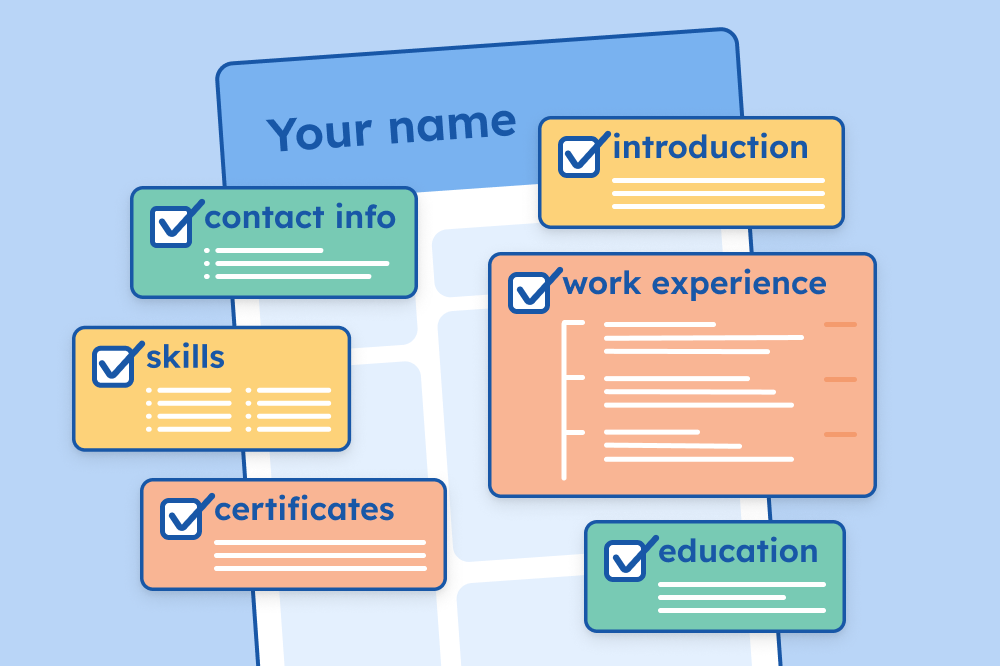
On your resume, there are several places you can include your accomplishments:
- Your resume introduction
- The work experience section
- A dedicated “Awards” section
Resume introduction
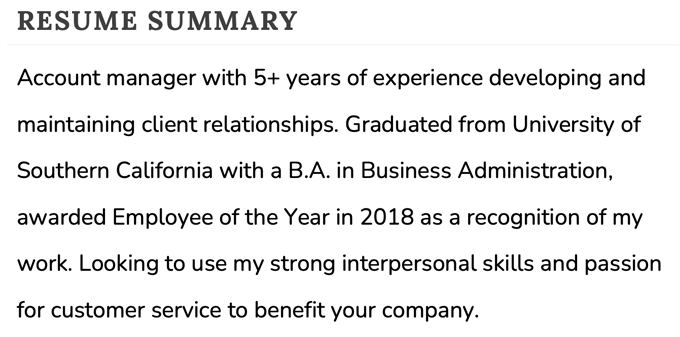
Your resume introduction is the first thing employers see when they read your resume. Use this section to highlight your most impressive achievements so the hiring manager doesn’t miss or skim over them.
Experience section
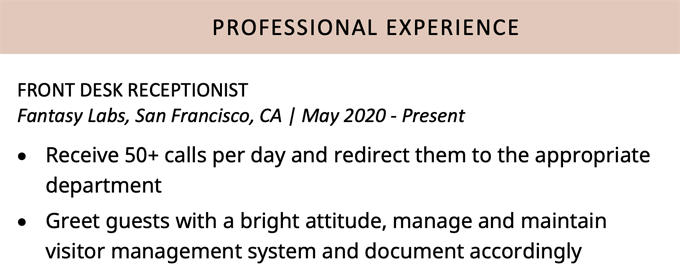
Your work experience section is where employers look to see what you’ve actually done on the job. Use it to highlight your most relevant achievements so they can quickly see the value you’d bring to their team.
Awards section
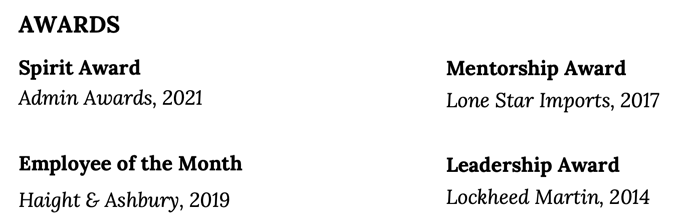
A dedicated awards section gives employers a clear, at-a-glance view of your accomplishments. If you have multiple awards to highlight, add this section to your resume so none of them gets overlooked.
The best resume templates for 2026
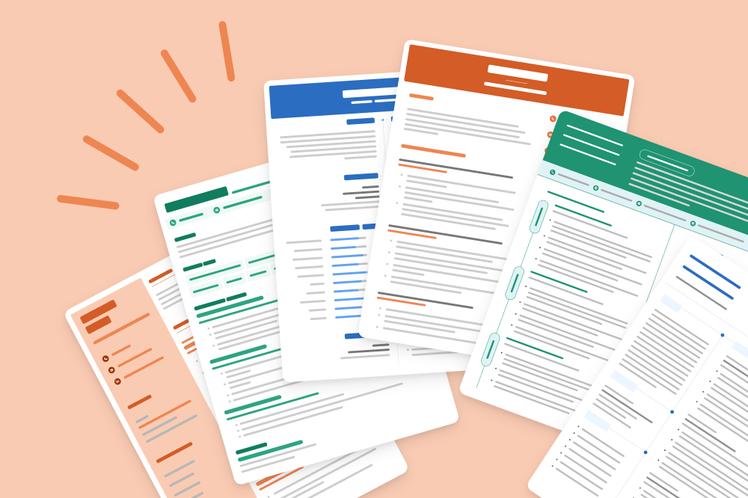
One of the best ways to make your resume is with a premade resume template. All of our templates were designed by career experts and are free to download for Microsoft Word or Google Docs.
How to highlight your professional accomplishments
Here are some essential tips for making the accomplishments on your resume stand out:
Use action verbs
When writing the work experience section of your resume, always begin each bullet point with an action verb like “organized,” “managed,” or “created.” Action verbs show you as doer of the action, as opposed to phrases like “responsible for” or “tasked with,” etc.
Take a look at these two examples:
No action verbs
In charge of creative projects to teach children
With action verbs
Designed and implemented a creative arts curriculum for elementary school children
In the first example, the candidate makes a general statement that doesn’t explain how they were involved in the project, or what they accomplished.
By contrast, the second example uses the action words “designed” and “implemented”, telling the hiring manager what their role was and that the project was successfully executed.
If you’re struggling to think of action verbs for your bullet points, try using our resume bullet point generator to come up with ideas:
Struggling to write your resume? Make clear, achievement-oriented bullet points for your resume in seconds with our free AI bullet point generator.
Use these work-experience bullet points to make a resume that lands you interviews.
Quantify your accomplishments
Use numbers to show recruiters the results that you achieved in your past roles.
For example, include numbers to answer questions like:
- How many employees did you work with or oversee?
- By what percentage did you increase sales or efficiency?
- How much of a budget did you work with, with what type of results?
Numbers in your work experience illustrate your accomplishments clearly and memorably. Here’s an example of how to add numbers to a bullet point:
No numbers
Increased sales
With numbers
Increased sales revenue by 30% in three months
The first statement describes a job responsibility, but the second statement shows employers the impact this job seeker had at their last company.
Numbers to include:
Percentages:
- Did you increase sales, market share, or customer satisfaction by a certain percentage? How?
- Did you increase efficiency or productivity by a certain percentage?
- Did you recruit, work with, or manage a certain number of employees or teams?
- How many customers did you serve on average? Did you increase the number of customers served? By how much?
- Did you implement new ideas, systems, or processes to the company? What was the impact?
Dollar amounts:
- Did you propose or work with a budget of a certain dollar amount?
- Did you increase sales or profitability by a certain dollar amount? How?
Time:
- Did you decrease delivery or turnaround time on a project? How?
- Was one of your achievements completed within a tight deadline?
- Did you resolve any particular issues? How soon?
@resumegenius Here’s the EASIEST way to upgrade your resume and make it stand out. Listing your work experience and achievements with numbers isn’t as hard as you might think! ? For extra help on this, comment “resume help” and we’ll dm you a free guide! ? #resumetips #jobsearch #jobsearching #jobhunting ♬ original sound – Resume Genius | Career Tips
Work accomplishment examples by industry
Here are eight industry-specific examples demonstrating how to include accomplishments on your resume:
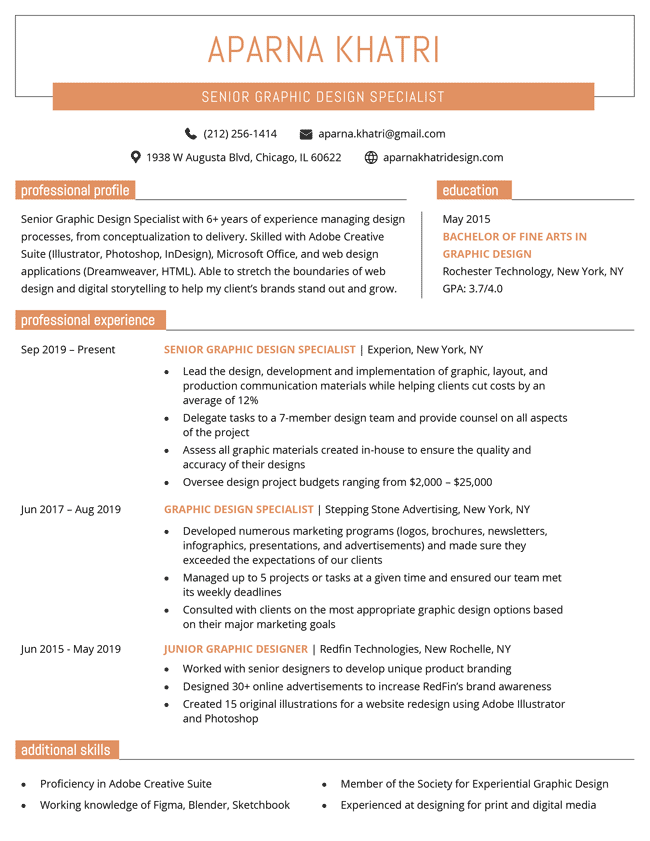
- Memorized restaurant’s wine stock and the meals they should accompany, leading to daily wine sales averaging $150, fully 20% higher than company average
- Write patrons’ food orders on slips, memorize orders, or enter orders into computers for transmittal to kitchen staff in a 110+ seat restaurant
- Developed new filing and organizational practices, saving the company $3,000 per year in contracted labor expenses
- Answered incoming calls (avg. 40/day) resolving issues with both customers and billing department
- Provide direct quality care to patients including daily monitoring, recording, and evaluating of medical conditions of up to 20 patients per day
- Led and mentored 10 newly licensed nurses in developing and achieving professional expertise
- Increased students’ scores in standardized tests by 24% in literacy and 35% in math
- Educated an average of 18 students in grades 2 and 3, and received four “Best Teacher Award”
- Manage a $350,000 budget, with a reduction of costs totaling 15% over two years
- Trained and supervised 2 new employees, ensuring they maintain fastidious attention to detail
- Consolidated multiple ticketing systems, improving communication and ticket turnover rate by 7%
- Refined and improved existing documentation system, resulting in reduced labor costs totaling $15,000 annually via increased workplace efficiency
- Operate POS cash register, handling 92 transactions on average daily, and count money in cash drawers to ensure the amount is correct
- Assist an average of 40 customers per day in finding or selecting items, and provided recommendations that generated $8K in additional revenue
About the Author

Nathan Soto is dedicated to providing practical guidance to job seekers, especially people with nonlinear career paths.
Nathan graduated from the University of Nevada with a double B.A. in French and Music. His articles and career advice have been featured on multiple platforms, offering insights into resume writing, interview preparation, and personal branding.