
Cover Letter Templates Modern Cover Letter Templates
Modern Cover Letter Templates to Download & Edit
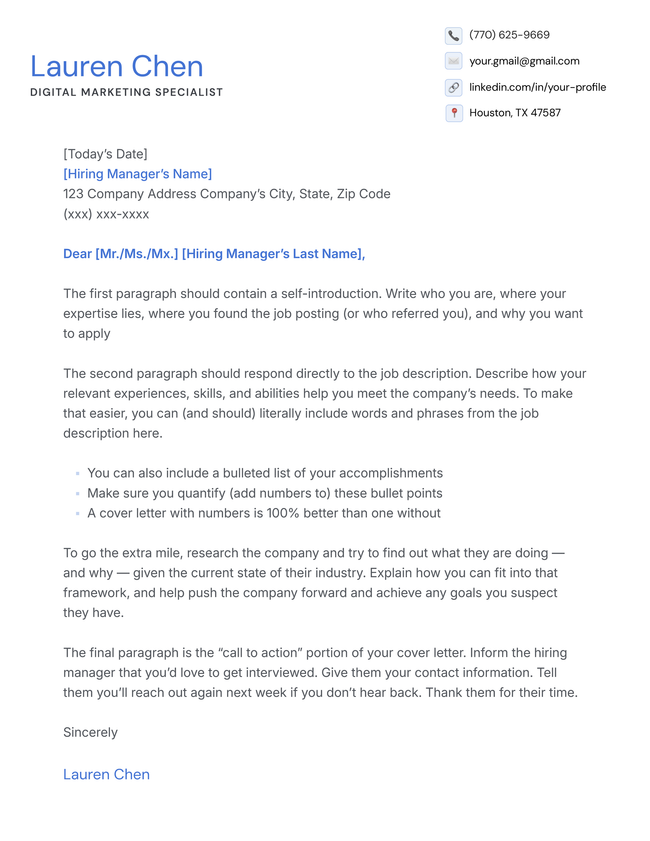
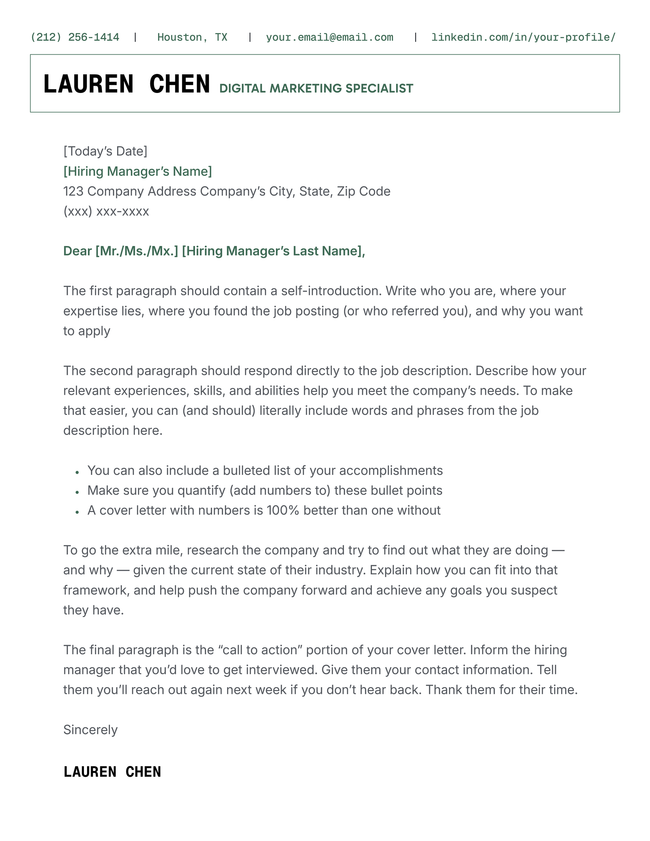
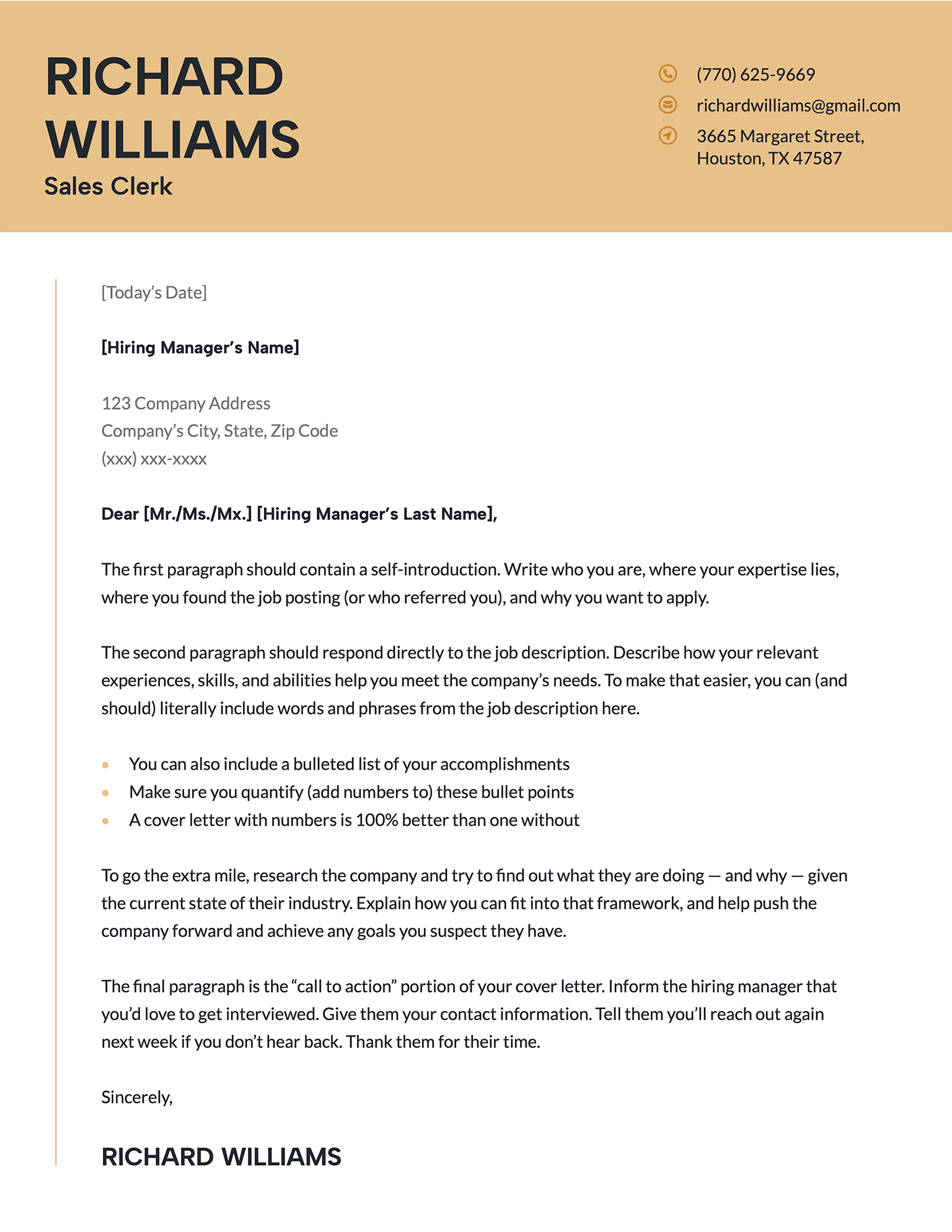
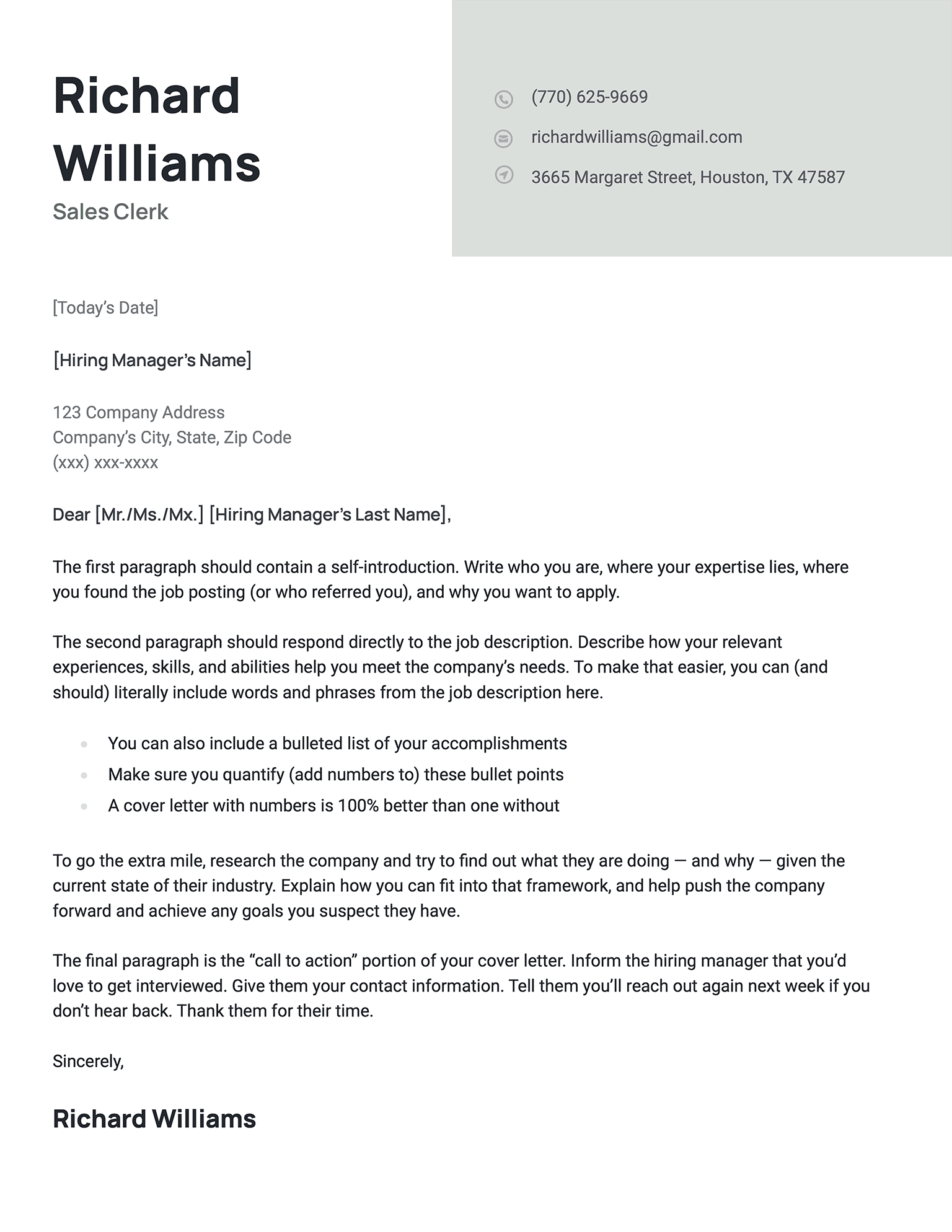
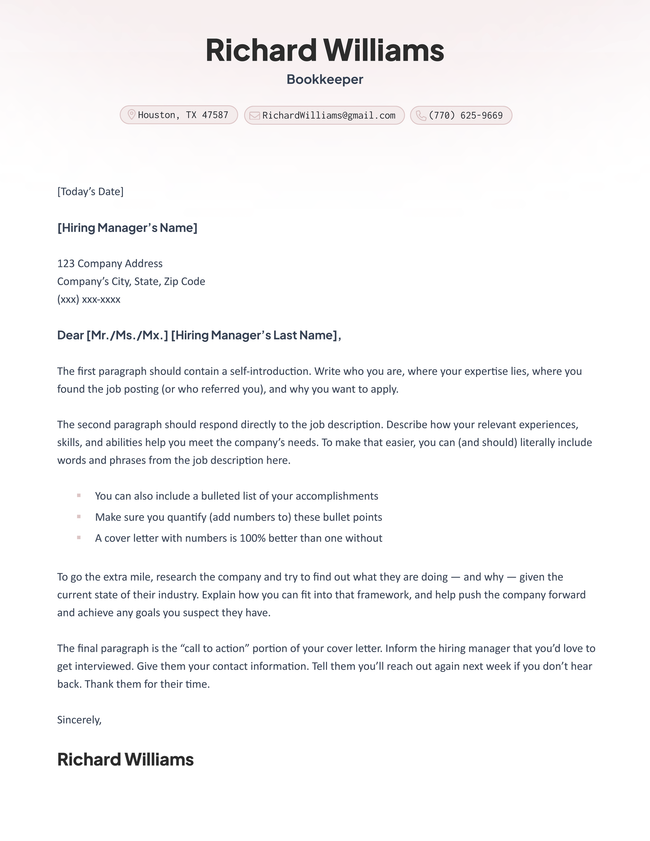
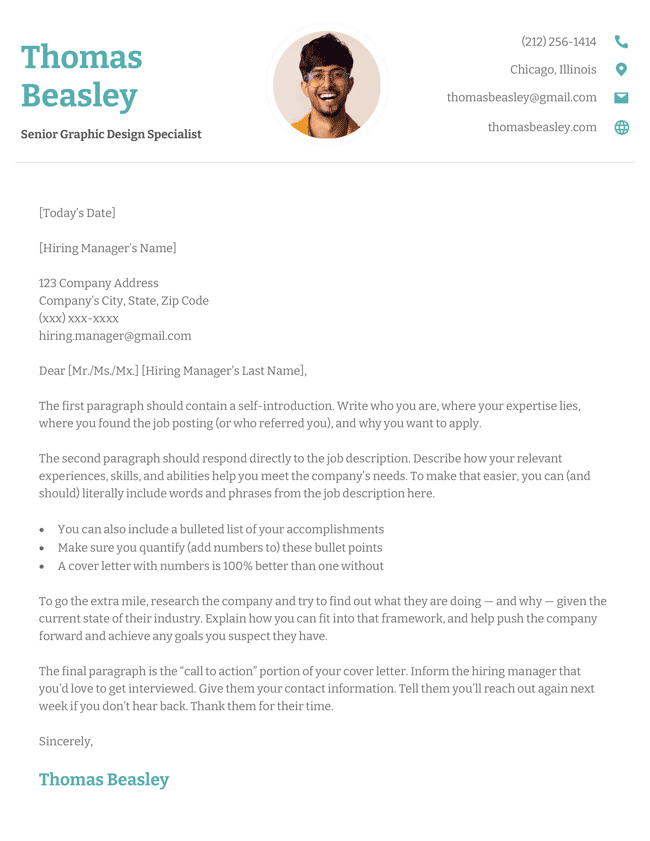
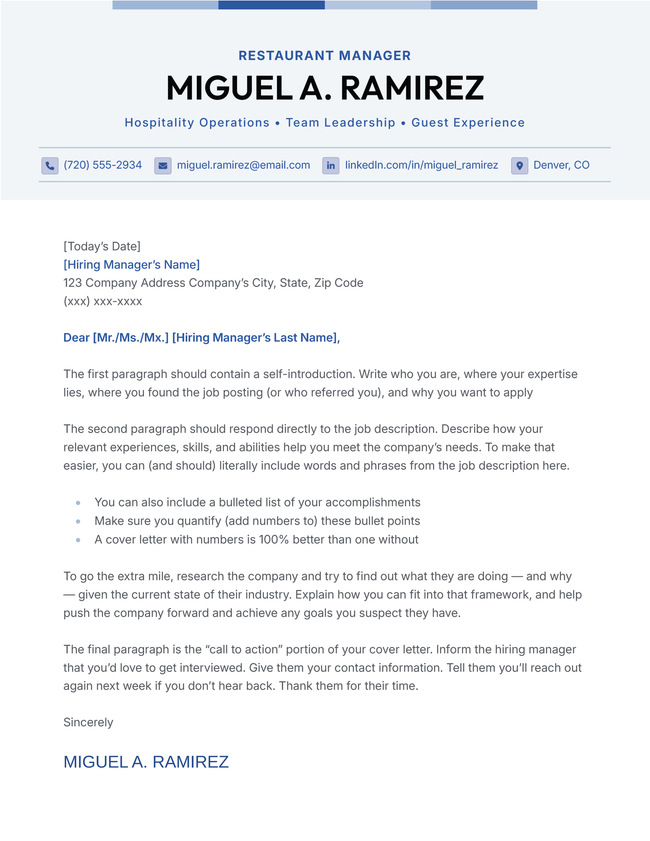
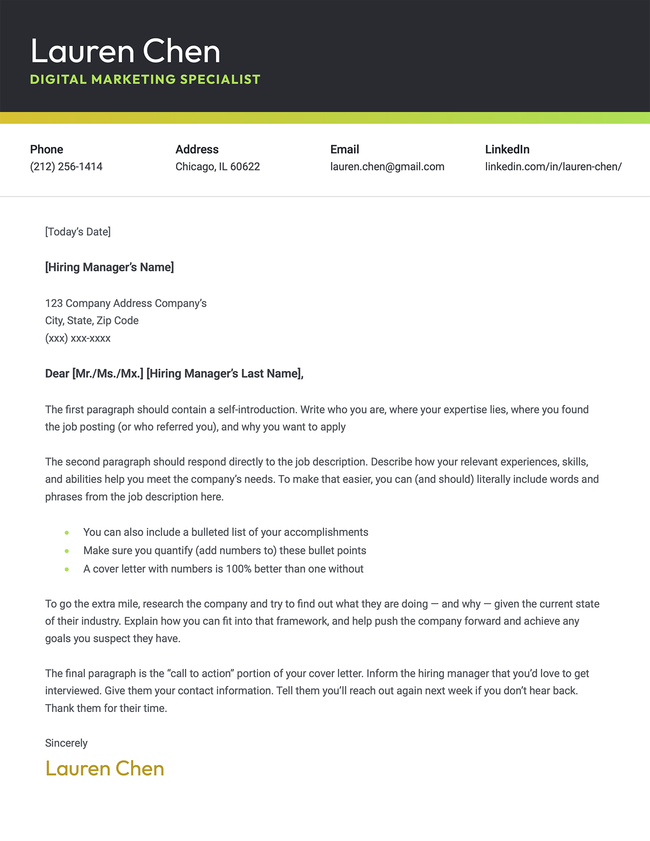
Give your job application a polished look with a modern cover letter template. Choose a design you like, download it, and customize it with your own skills and experience.
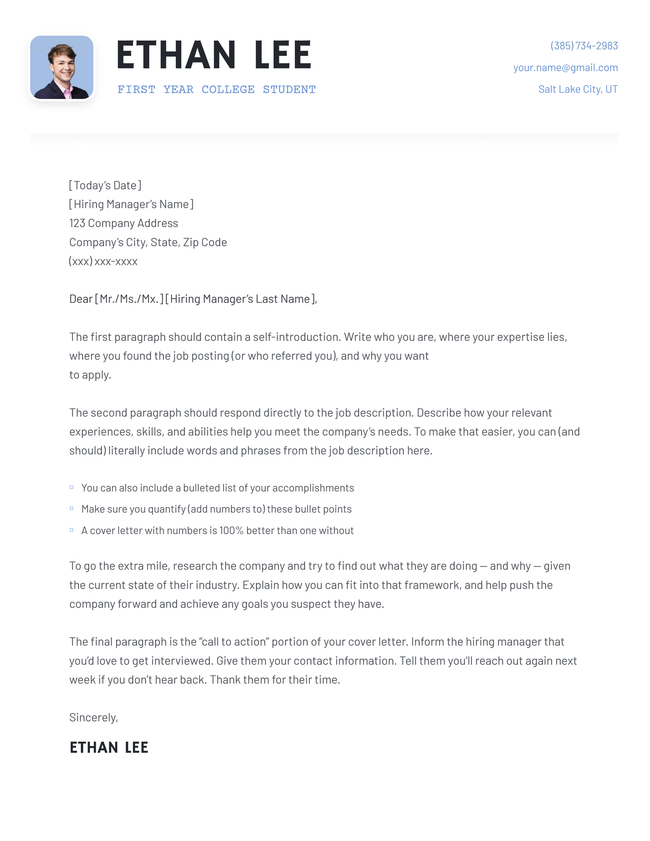
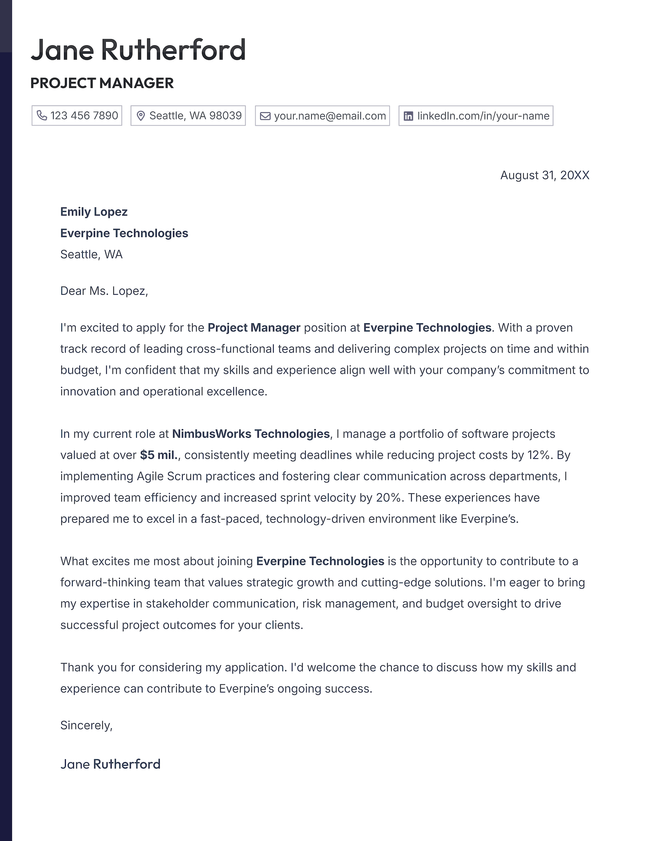
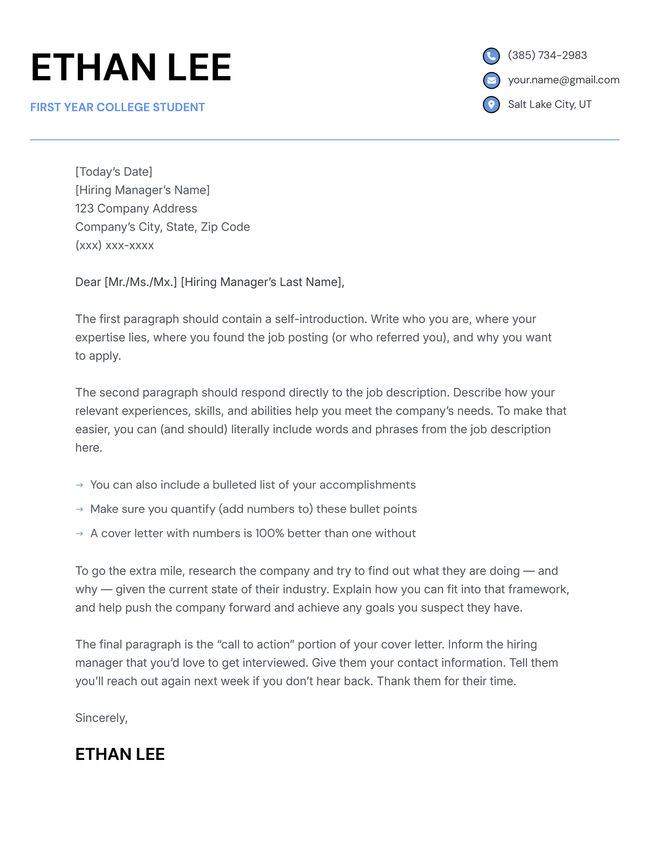
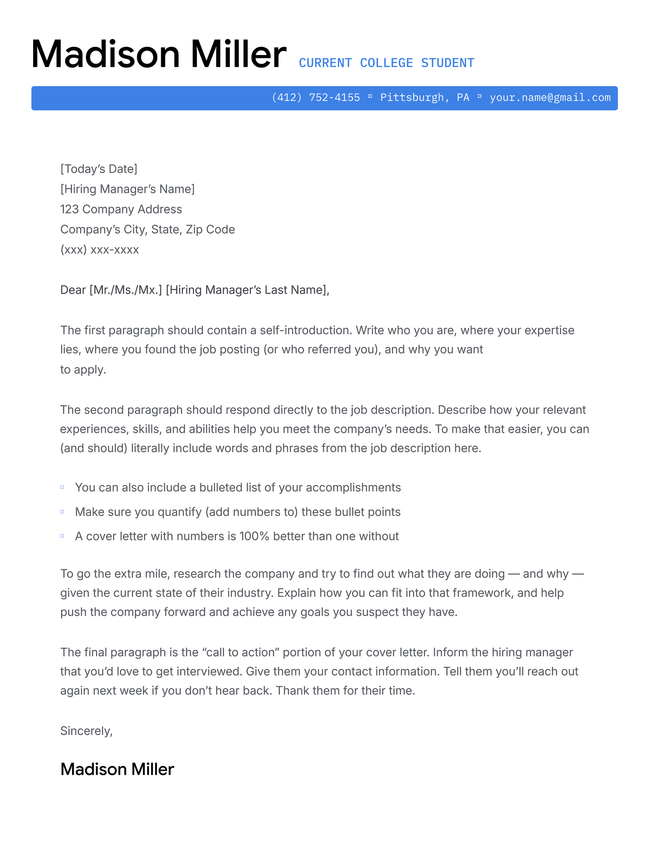

Make your cover letter in minutes.
Modern cover letter text template
Use this text template as a starting point to speed up the writing process, with a structure that follows current hiring standards and leaves room to tailor your qualifications to each job. Paste it into your favorite cover letter template design to get started.
[Your Name]
[Phone Number] | [Email Address] | [City, State] | [LinkedIn URL]
[Date]
[Hiring Manager’s Name]
[Company Name]
[Company Address]
Dear [Hiring Manager’s Name],
I’m excited to apply for the [Job Title] position at [Company Name]. With [number] years of experience in [field/industry] and a background in [relevant area], I’m confident I can contribute to your team by [specific value you can bring to the company].
In my current/recent role at [Company Name], I [describe a relevant responsibility or achievement]. I also [describe another relevant achievement, skill, or responsibility], which helped [describe a measurable result or positive outcome]. These experiences have strengthened my skills in [2–3 relevant skills] and prepared me to succeed in the [Job Title] role.
I’m particularly interested in [Company Name] because [specific reason you want to work there]. I’d welcome the opportunity to bring my experience in [relevant skill or area] to your team and contribute to [specific company goal, project, or priority].
Thank you for considering my application. I look forward to the opportunity to discuss how my experience and skills align with the [Job Title] position.
Sincerely,
[Your Name]
How to make a modern cover letter
A modern cover letter should follow current hiring conventions while still looking and sounding professional. This is especially important when applying for creative roles (e.g., marketing), tech roles (e.g., software engineering), or other roles in rapidly changing industries (e.g., computer science) where outdated formatting or overly formal language can make your application feel out of touch.
Modern cover letter design
Keep your cover letter design clean, professional, and easy to read. Here are a few ways to give your cover letter a modern look:
Choose a clean, readable font: Stick to professional fonts such as Arial, Calibri, or Helvetica, and keep the body text font size around 10–12pt.
Use white space strategically: Leave enough space between sections and paragraphs so your letter doesn’t look crowded.
Add subtle color: A small amount of color in your headings or contact information can add personality without distracting from your content.
Keep formatting consistent: Match your cover letter’s fonts, colors, and overall style to your resume for a cohesive application.
Skip unnecessary design elements: Avoid excessive graphics, icons, photos, and decorative elements that can make your letter harder to read.
Modern cover letter writing
Your cover letter should sound natural and confident rather than overly formal or dated. Focus on what you can contribute to the employer and avoid phrases that add length without providing useful information.
- Skip outdated phrases: Avoid clichés such as “To whom it may concern” or “I am writing to express my interest in the position of.”
- Use conversational professional language: Write the way you would speak to a hiring manager in a professional setting instead of using unnecessarily complicated wording.
- Lead with relevant information: Quickly explain what position you’re applying for, what you bring to the role, and why you’re interested.
- Show, don’t just tell: Use specific examples and achievements to demonstrate your skills instead of relying on generic claims like “I’m a hard worker.”
- Tailor your letter: Mention the company, position, and qualifications that are most relevant to the job rather than sending the same generic cover letter everywhere.
- Keep it concise: Aim for a focused cover letter that adds useful context to your resume without repeating your entire work history.
Frequently asked questions about modern cover letters
How is a modern cover letter different from a traditional cover letter?
A modern cover letter uses a more contemporary design while keeping the same basic structure and purpose as a traditional cover letter. It may also use more natural, direct language and avoid overly formal phrasing or outdated formatting conventions.
What should a modern cover letter include?
A modern cover letter should include the same essential information as any effective cover letter, presented in a clear and concise way. Make sure to include:
- The position you’re applying for: State the job title and, if relevant, where you found the opening.
- Why you’re interested in the company: Briefly explain what attracts you to the organization, role, or work.
- Relevant experience and achievements: Highlight specific accomplishments, skills, or experience that relate to the position.
- How you can meet the company’s needs: Connect your background to the employer’s priorities and explain the value you could bring to the role.
- A call-to-action closing: Thank the hiring manager for their consideration and express your interest in discussing the position further.
What is the best format for a cover letter in 2026?
In 2026, you don’t necessarily need to follow the old-fashioned cover letter format that includes the hiring manager’s full name, the company’s mailing address, and other formal letter details. A straightforward format that makes your contact information, introduction, relevant experience, and interest in the role easy to find is generally sufficient.
A basic cover letter format includes:
- Your contact information: Name, phone number, email address, and optionally your city and LinkedIn profile.
- Date: Include the date you’re submitting your application.
- Greeting: Address the hiring manager by name when possible, or use a professional alternative such as “Dear Hiring Manager.”
- Introduction: Mention the position you’re applying for and briefly explain why you’re interested.
- Body paragraph(s): Connect your relevant experience, skills, and achievements to the company’s needs.
- Closing: Reiterate your interest, thank the hiring manager, and invite them to discuss your qualifications.
- Sign-off: End with a professional closing such as “Sincerely” followed by your name.
Do employers still care about cover letters?
Yes, employers still care about cover letters. Recent research has found that 94% of hiring managers say cover letters influence their interview decisions. Even when a cover letter isn’t required, 73% of hiring managers say they still read them, so a well-written letter can give employers useful context about your experience, motivation, and fit for the role.
About the Author

Lauren Mastroni is a Senior Digital Content Writer at Resume Genius, where she creates data-driven career content and actionable job search advice. With a background in academic research, she brings a research-focused approach to topics like resume writing, interviewing, and career development. Lauren is dedicated to helping job seekers at all stages navigate the hiring process and present themselves more effectively to employers.


Related Articles
Cover Letter Help
Cover Letter Examples for All Job Applications and SituationsLauren Mastroni
Cover Letter Help
How to Write a Cover Letter for a Job in 2026
Conrad Benz

Cover Letter Help
50+ Cover Letter Statistics Hiring Managers Want You to Know
Eva Chan
Cover Letter Help
Cover Letter Templates
Sebastian Morgan