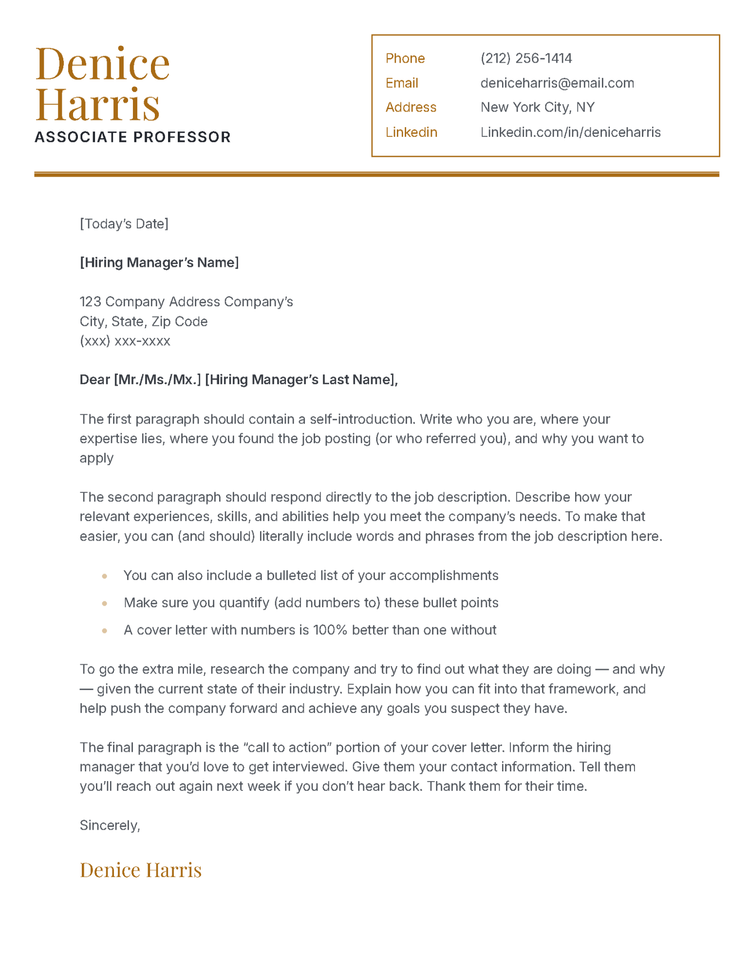

A cover letter is your chance to make a strong first impression and make your case for why you’re the perfect fit for the position. But what exactly goes into a successful cover letter?
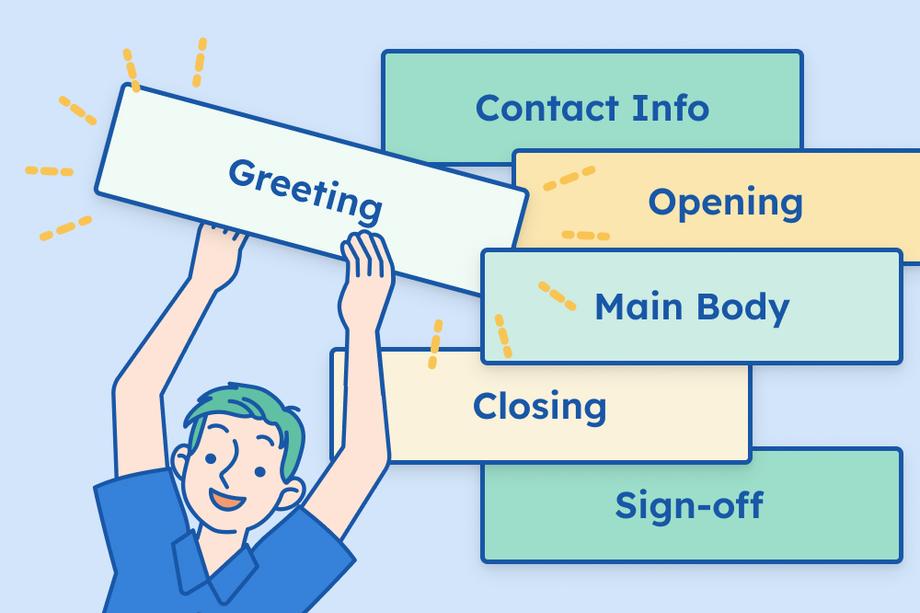
We’ll break down the six essential components to make it easier for you to write an effective cover letter.
1. Contact information
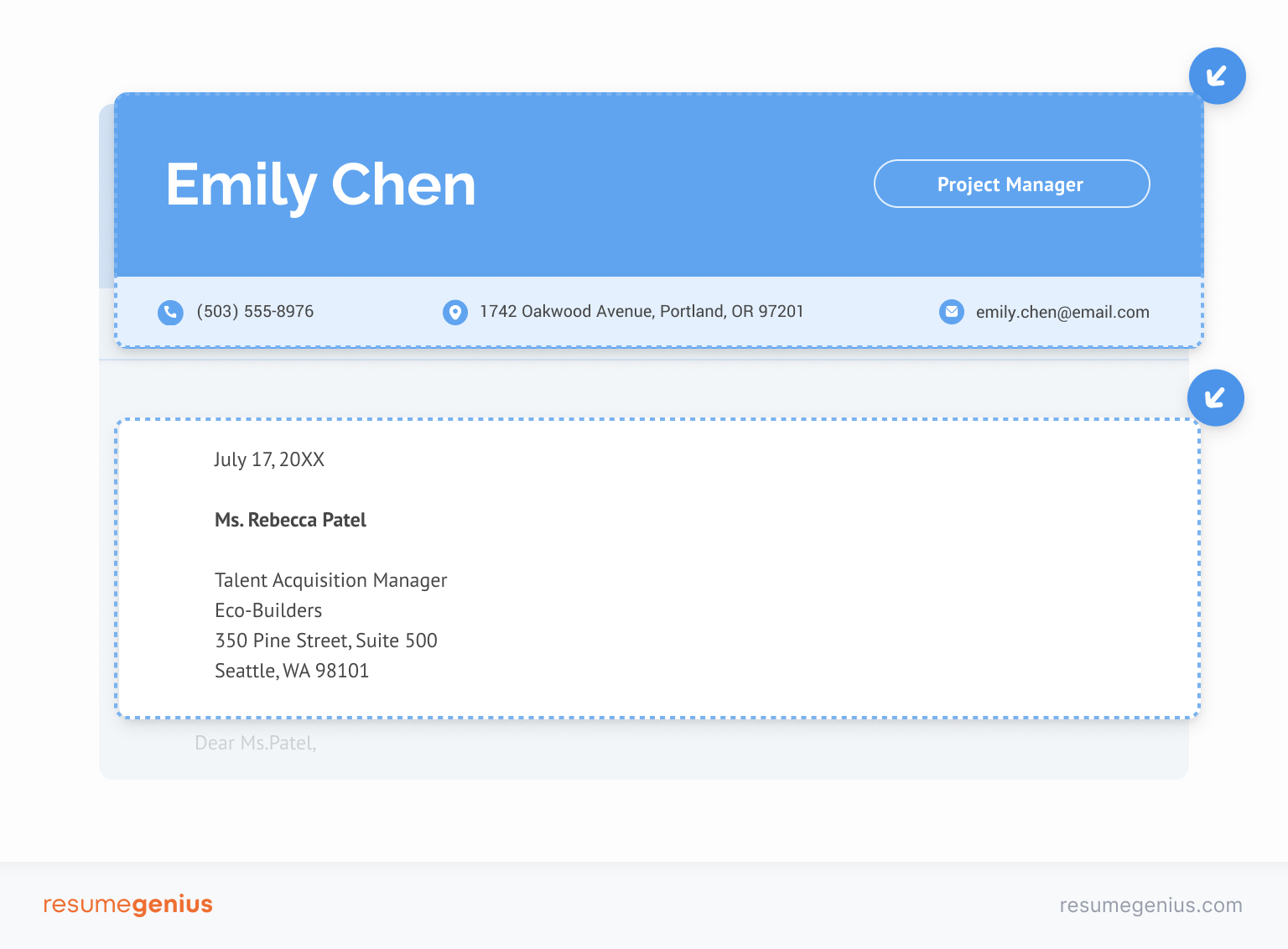
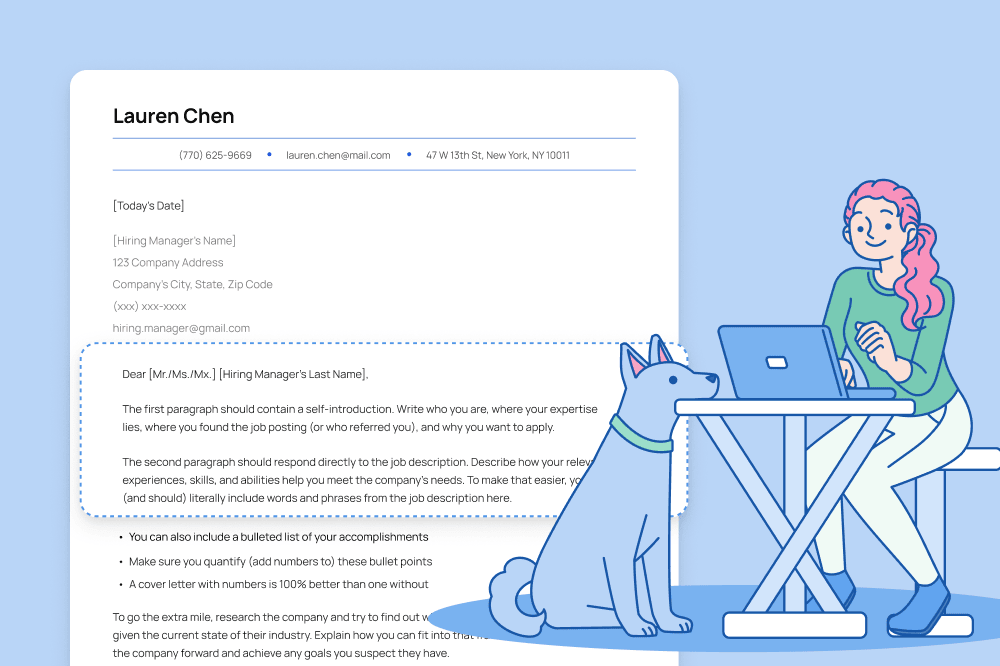
Include your full name, address, phone number, and email address at the top of your cover letter.
Directly below your contact details, add the current date.
Next, include the contact information of the employer. This typically consists of the hiring manager’s name and title, followed by the company name and address.
Purpose: Helps employers contact you and sets a professional tone.
2. Greeting
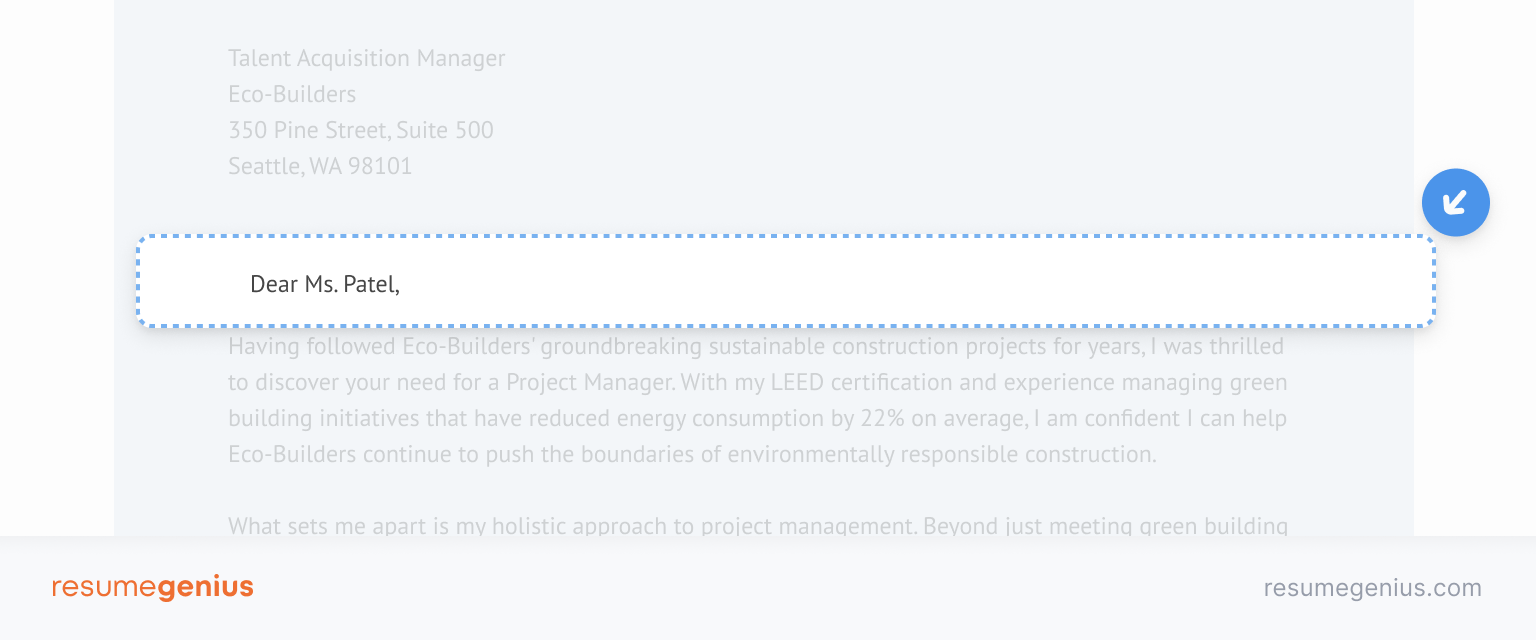
Avoid generic openings like “To whom it may concern” or “Dear Sir or Madam,” which sound dated and impersonal.
Instead, try to find the name of the hiring manager or department head. If you can’t find a name, use “Dear Hiring Manager,” “Dear [Department] Team,” or “Dear [Company Name] Hiring Team.”
Purpose: Creates a personal connection and shows attention to detail.
3. Opening paragraph (hook the reader)
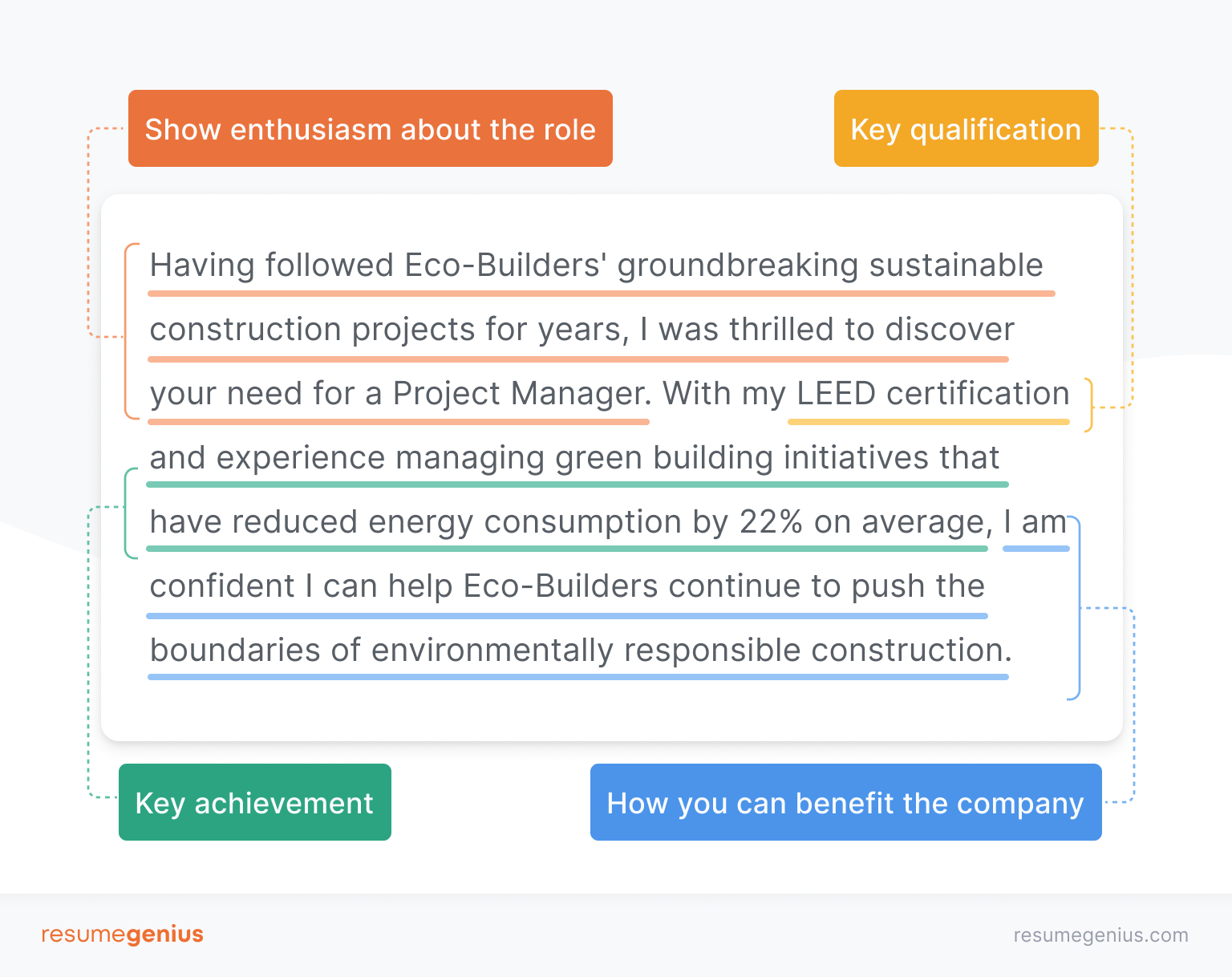
Your opening paragraph is your chance to grab the reader’s attention. Start strong by highlighting a key achievement, skill, or qualification that’s particularly relevant to the position you’re applying for.
Then, explain how your experience benefits the employer. Your goal is to immediately demonstrate your value and make the reader want to learn more about you.
Purpose: Sets the tone and keeps the employer engaged.
4. Main body paragraph (make your case)
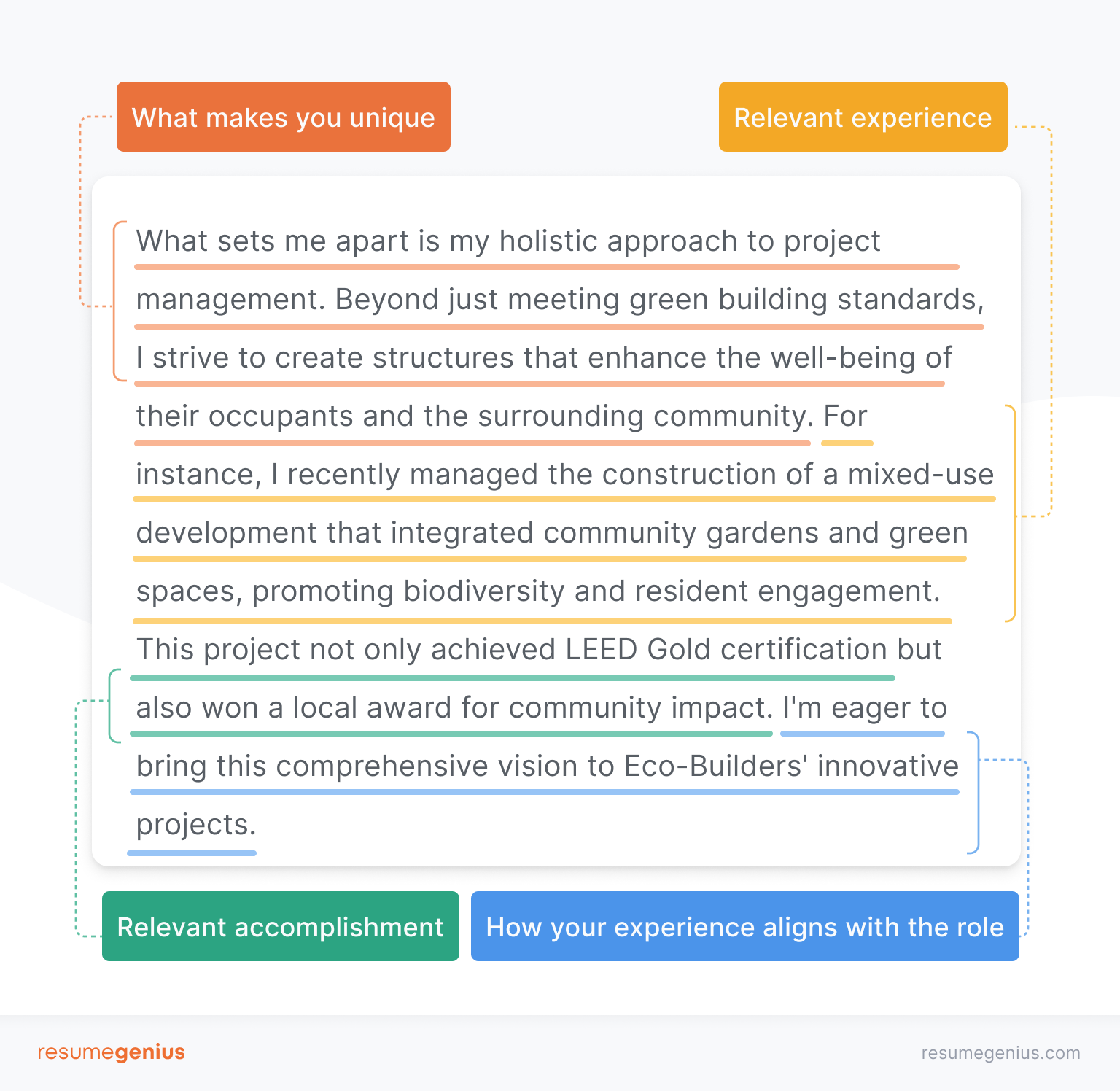
The main body of your cover letter is where you should expand on your qualifications, skills, and experience — the details that make you a great fit for the position.
It is also a great opportunity to supplement your resume with additional context regarding special circumstances, such as industry changes, re-entering the workforce, or employment gaps.
Use the job description as your guide. Identify key requirements and responsibilities listed, and then explain how your background aligns with these needs.
Provide specific examples of how you’ve successfully performed similar tasks or demonstrated relevant skills in previous roles. Focus on being employer-centered rather than merely repeating your resume, emphasizing how you hope to contribute to the company’s goals.
Purpose: Shows you understand the role and have the skills to succeed.
5. Closing paragraph (call to action)
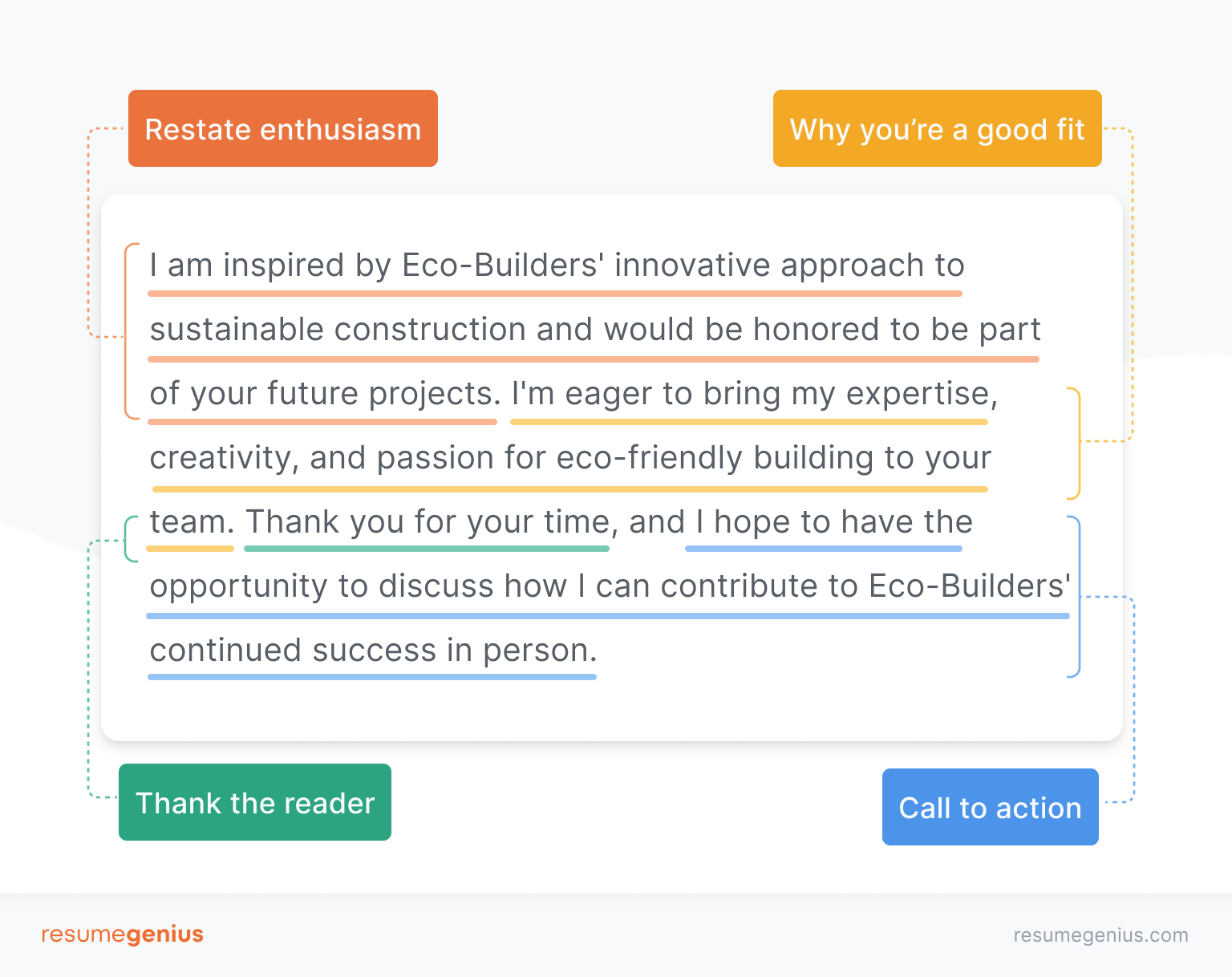
To wrap up your cover letter, start by thanking the employer for taking the time to consider your application. Then, restate your enthusiasm for the opportunity and briefly summarize why you believe you’re an excellent fit.
Finally, end with a call to action. Express your interest in discussing the opportunity further and request an interview.
You might say something like, “I would welcome the chance to discuss how my skills and experience can contribute to your team’s success. I look forward to the possibility of speaking with you soon.”
Purpose: Shows initiative and interest in moving forward.
6. Sign-off
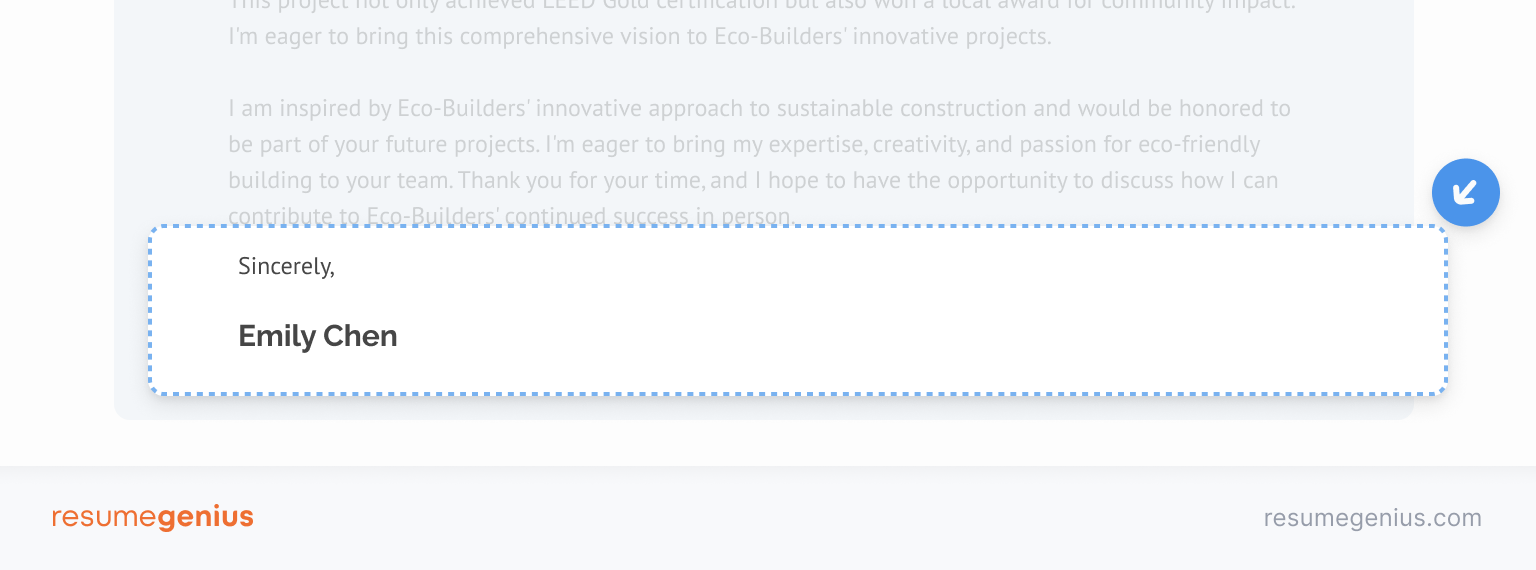
The sign-off is your final opportunity to maintain a professional tone. Choose a closing that’s respectful and appropriate for a business context. Good options include “Sincerely,” “Best regards,” or “Thank you for your consideration.”
Avoid informal or casual closings like “Cheers,” “Take care,” or “Thanks,” as these can undermine the professional image you’ve built throughout your letter.
Leave a space under your closing for your signature if you’re submitting a hard copy. Below that, type your full name.
Purpose: Ends your cover letter professionally.
About the Author

Lauren Mastroni is a Senior Digital Content Writer at Resume Genius, where she creates data-driven career content and actionable job search advice. With a background in academic research, she brings a research-focused approach to topics like resume writing, interviewing, and career development. Lauren is dedicated to helping job seekers at all stages navigate the hiring process and present themselves more effectively to employers.