


Once a reliable launchpad for a career, entry-level jobs are now rapidly disappearing. In 2025 and beyond, many of these positions will shrink or be replaced entirely as AI tools take over routine tasks such as scheduling, filing, and data entry.
But the bigger shift is in how companies hire. As AI handles more of the basic work, employers now expect entry-level workers to arrive better prepared and start contributing faster.
Our AI vs. Entry-Level Jobs Report explores what’s changing, who’s affected, and how job seekers can stay ahead.
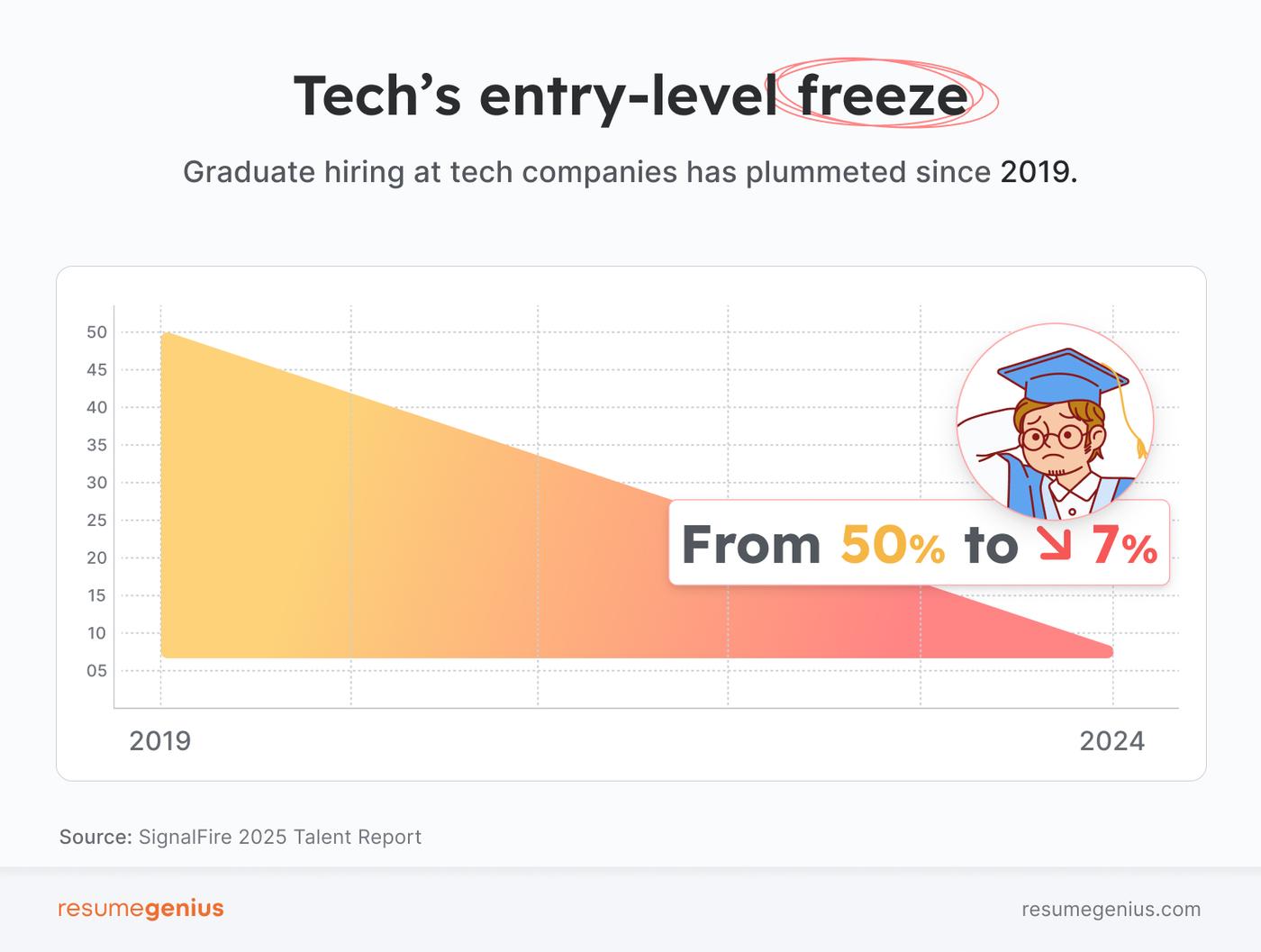
- Entry-level hiring is shrinking. At major tech companies, just 7% of new hires were fresh graduates in 2024, down from over 50% in 2019
- Clerical jobs are disappearing. Roles like bank teller, payroll clerk, and data entry clerk are among the fastest-declining jobs. Across the category, overall employment is expected to fall 5%
- Specialist roles are on the rise. Jobs such as data analyst, AI specialist, and cybersecurity specialist are growing quickly, with projected job growth averaging 11%
- To illustrate this shift, Resume Genius compiled two new lists. The report examines a shift in early-career roles contrasting 10 fast-declining “clerk” jobs with 10 fast-growing “specialist” roles
- Employers are offering more for specialist roles. While both categories saw similar wage growth (6%) from 2021 to 2024, specialist roles offer an average median salary of $108,182 compared to $43,618 for clerical jobs — a difference of $64,564
- AI fluency is now a must. 8 in 10 hiring managers prioritize applicants who can use AI tools like ChatGPT, MidJourney, and automation software
- Soft skills still matter. Employers continue to value communication, adaptability, and problem-solving, and 48% of hiring managers have rejected candidates due to weak soft skills
- Expectations for early-career hires are rising. Deloitte found that 66% of HR leaders say new hires arrive unprepared, largely because they lack hands-on experience. Entry-level roles are no longer designed to train workers from scratch
Decline of the “clerks,” rise of the “specialists”
The types of jobs that once defined entry-level work are fading fast.
Clerical roles like file clerk and payroll clerk were once reliable first steps into the workforce. But in modern, AI-powered offices, many of these tasks can be completed faster and cheaper by machines.
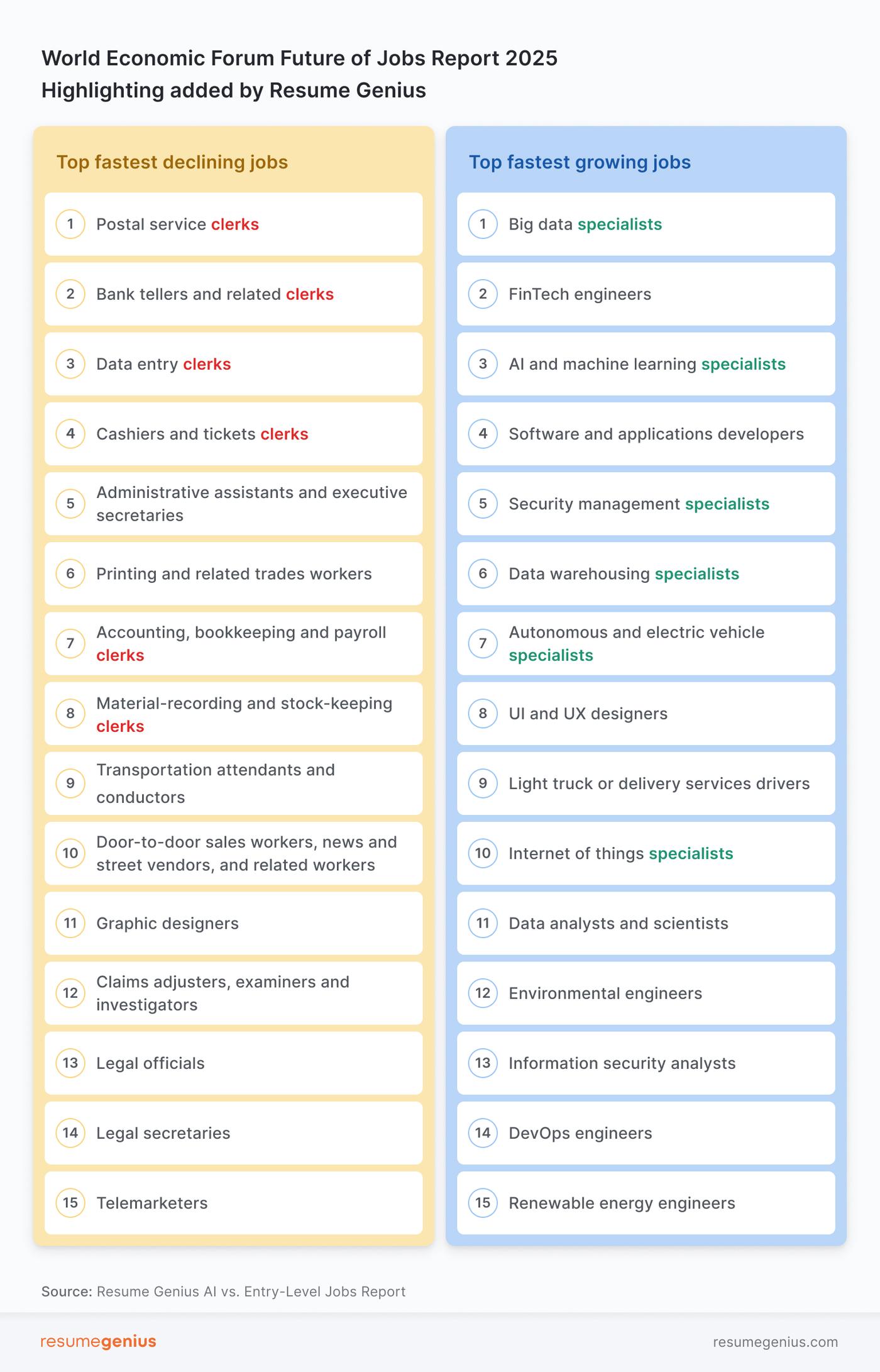
The World Economic Forum’s 2025 Future of Jobs Report lists data entry clerks, cashiers, ticket clerks, and payroll clerks among the fastest-declining jobs, with some roles projected to shrink by more than 40% by 2030.
Meanwhile, specialist roles are on the rise. The same WEF report shows roles like big data specialists, cybersecurity specialists, and AI specialists among the fastest-growing jobs. These roles demand sharper technical and analytical skills, but they also offer greater growth potential.
Below is the original WEF list, where we first noticed the contrast between declining clerk roles and rising specialist ones. We’ve highlighted those here:
The clear divide between clerical and specialist roles prompted us to dig deeper using U.S. labor data. To see how this trend is unfolding in the U.S., we looked into jobs with titles that either include “clerk” or “specialist” or reflect similar job functions.
The comparison highlights the divide between routine administrative roles and data-driven, technical roles:
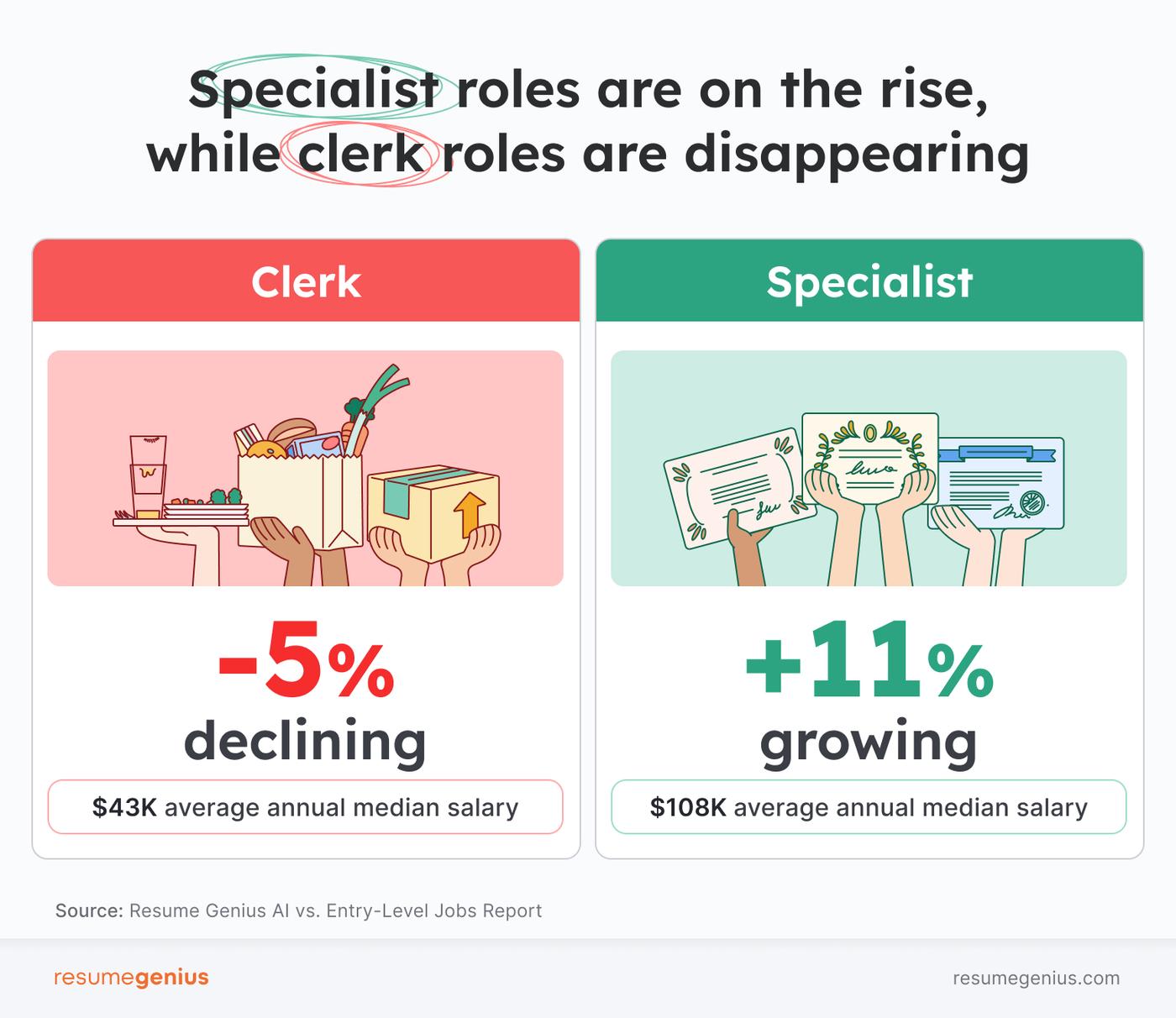
- Average median salary for clerks: $43,618
- Average projected job growth (2023–2033): –5%
- Average yearly pay growth (2021–2024): 6%
- Average median salary for specialists: $108,182
- Average projected job growth (2023–2033): 11%
- Average yearly pay growth (2021–2024): 6%
That’s a pay gap of $64,564, with specialist roles outpacing clerical ones in both pay and growth potential. You can find a full breakdown of our data sources and process in the Methodology section below.
Below are the 10 job titles for “clerks” from our research:
10 Disappearing “Clerk” Jobs in the U.S. (By Resume Genius)
| Job Title | Job Growth (2023–2033) | Median Salary (2024) | Yearly Wage Growth (2021–2024) |
|---|---|---|---|
| Bank tellers and related clerk | -15% | $43,730 | 6% |
| Cashiers and ticket clerk | -11% | $31,190 | 5% |
| General office clerk | -6% | $43,630 | 6% |
| Bookkeeping, accounting, and auditing clerk | -5% | $49,210 | 3% |
| Postal office clerk | -4% | $57,870 | 4% |
| Material recording clerk | -4% | $46,120 | 3% |
| Financial clerk | -4% | $48,650 | 8% |
| Receptionist | -1% | $37,320 | 8% |
| Data entry clerk | -1% | $43,730 | 13% |
| Retail sales worker | 0% | $34,730 | 7% |
Below are the 10 job titles for “specialists” from our research:
10 Fast-Growing “Specialist” Roles in the U.S. (By Resume Genius)
| Job Title | Job Growth (2023–2033) | Median Salary (2024) | Yearly Wage Growth (2021–2024) |
|---|---|---|---|
| Data scientist | 36% | $112,590 | 4% |
| Information security analyst | 33% | $124,910 | 7% |
| Computer and information research scientist | 26% | $140,910 | 2% |
| Operations research analyst | 23% | $91,290 | 13% |
| Logistician | 19% | $80,880 | 2% |
| Computer network architect | 13% | $130,390 | 3% |
| Management analyst | 11% | $101,190 | 3% |
| Database administrator and architect | 9% | $123,100 | 8% |
| Market research analyst | 8% | $76,950 | 6% |
| Electrical and engineering technician | 3% | $99,600 | 16% |
Why entry-level roles are disappearing
Entry-level jobs aren’t vanishing overnight, but the job market is shifting in ways that make them harder to land.
AI and layoffs are squeezing out early-career roles
The entry-level squeeze comes from two directions: automation and corporate downsizing. Across industries, companies are streamlining teams by cutting early-career roles and replacing them with AI tools that can handle routine work with minimal oversight.
At the same time, employers are less willing to hire workers who still need training. SignalFire’s 2025 Talent Report found that graduate hiring at major tech companies dropped from over 50% in 2019 to just 7% in 2024. Startups show a similar trend, with only 6% of roles now going to early-career candidates. The report links this steep decline to AI tools automating much of the work that junior employees once did.
This trend reaches far beyond the tech sector. In an interview with Axios, Anthropic CEO Dario Amodei warned that AI could eliminate up to half of all entry-level white-collar jobs within the next few years. He named finance, law, consulting, and software as especially vulnerable, and urged a more candid conversation about what’s coming.
That warning is no longer theoretical — headlines already reflect the shift, with media outlets describing a white-collar “bloodbath” as companies restructure, cut junior staff, and rely more on automation or experienced professionals who can contribute immediately.
Without early roles, it’s harder to build the right skills
The decline of early-career opportunities is creating a skills gap that’s hard to close.
Traditionally, entry-level roles were where people learned to communicate, collaborate, and solve problems — skills developed by working alongside experienced colleagues and adapting to real workplace dynamics. Research from Harvard Business School shows that these foundational abilities are harder to acquire later in a career if they aren’t built early.
Employers are feeling the impact. A 2024 General Assembly survey found that only 12% of mid-level executives and 48% of employees believe today’s entry-level hires are fully prepared for their roles. Nearly half of executives (49%) and more than a third of employees (37%) cited a lack of soft skills — including communication, adaptability, and collaboration — as the most pressing issue.
The result is a tough cycle. The very roles that once taught soft skills on the job are disappearing, but employers still expect candidates to have them. With fewer companies offering structured training, today’s job seekers are under pressure to arrive ready, even as the opportunities to build those skills are dwindling.
The qualities employers prioritize most today
The definition of “entry-level” has changed, and so have the expectations that come with it.
Specialist roles are the new standard for early-career work
Entry-level jobs haven’t vanished, but they have evolved. In many companies today, early-career roles now come with a clearer focus and higher expectations than ever before.
Employers are no longer hiring based on potential alone. Instead, they want junior candidates who have already started building specialized skills, whether in customer operations, marketing analytics, or process automation. Even at the entry level, job titles often include the word “specialist,” and those roles ask for more than just a willingness to learn: they demand early expertise too.
This shift reflects broader changes in team structures. With tighter budgets and a growing reliance on technology, companies now expect new hires to contribute sooner. As a result, they prefer candidates who can step into a defined function and build expertise from there.
For job seekers, it’s increasingly important to pick a direction early. That doesn’t mean having a career all mapped out, but it does mean showing that you’ve started building the knowledge to grow in a focused area.
AI skills are now part of the job description
AI proficiency is rapidly becoming one of the most important qualifications for early-career candidates. According to Resume Genius’s 2025 AI Impact on Hiring Survey, 81% of hiring managers now prioritize applicants familiar with AI tools.
The top skill employers look for is the ability to use platforms like ChatGPT, MidJourney, and automation software to handle everyday tasks.
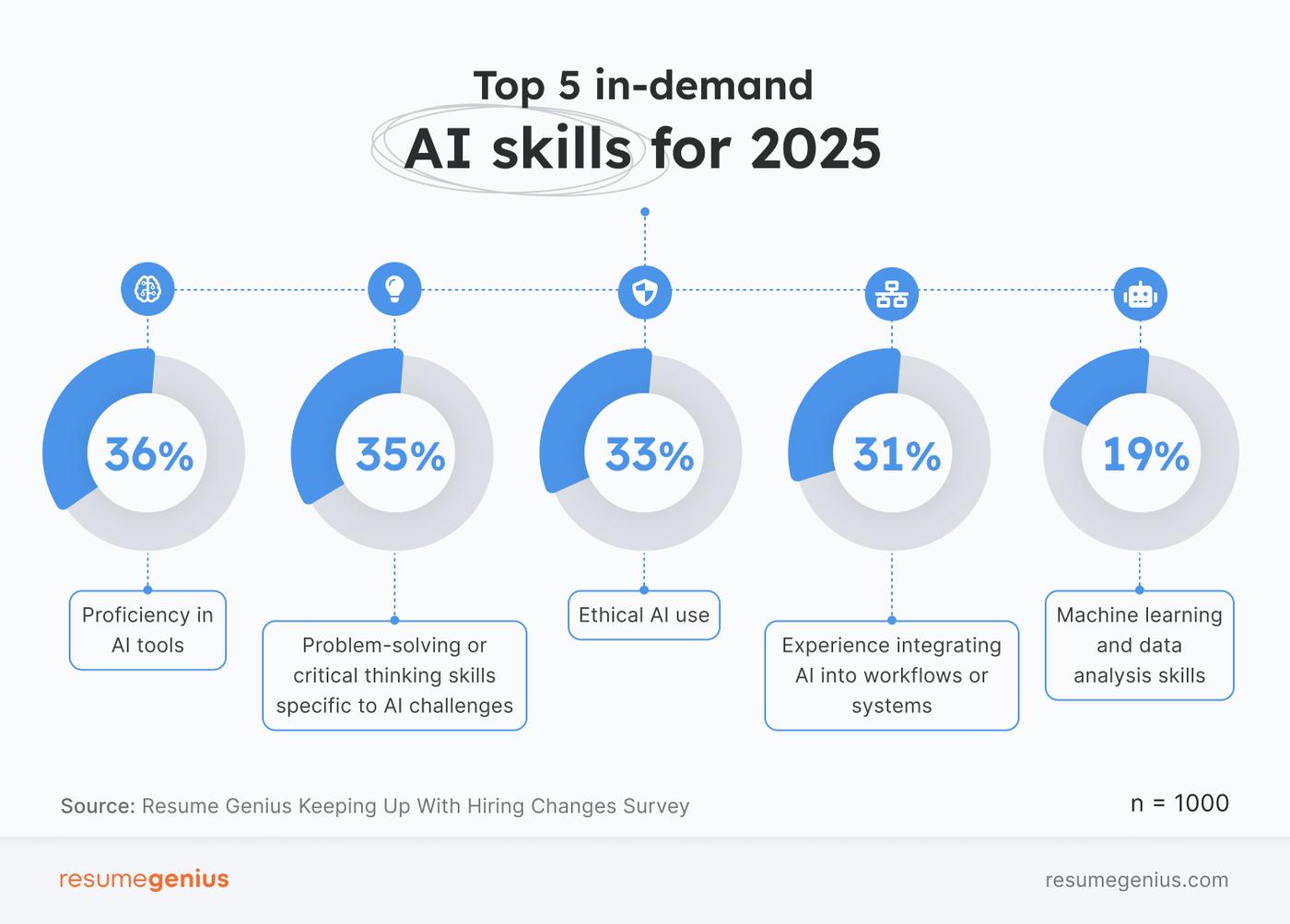
But it doesn’t stop there: Hiring managers also want candidates who can:
- Troubleshoot in AI-supported environments
- Use these tools responsibly
- Integrate them into team workflows
Even entry-level job descriptions now frequently list data analysis and basic machine learning as desirable skills.
These rising expectations reflect how quickly workplaces are evolving. Today, entry-level candidates are hired not just for their potential, but because they can contribute in digital environments from day one.
Soft skills still matter more than ever
In today’s AI-shaped workplace, technical skills may help candidates get in the door, but soft skills determine how well they thrive once hired.
A 2025 Thomson Reuters analysis found that:
- Nearly 40% of young professionals struggle with communication
- More than 25% lack strong problem-solving skills
These gaps are especially visible now, as employers expect new hires to collaborate, navigate AI tools, and adapt to shifting priorities.
Resume Genius’s 2024 Hiring Trends Survey reinforces this point:
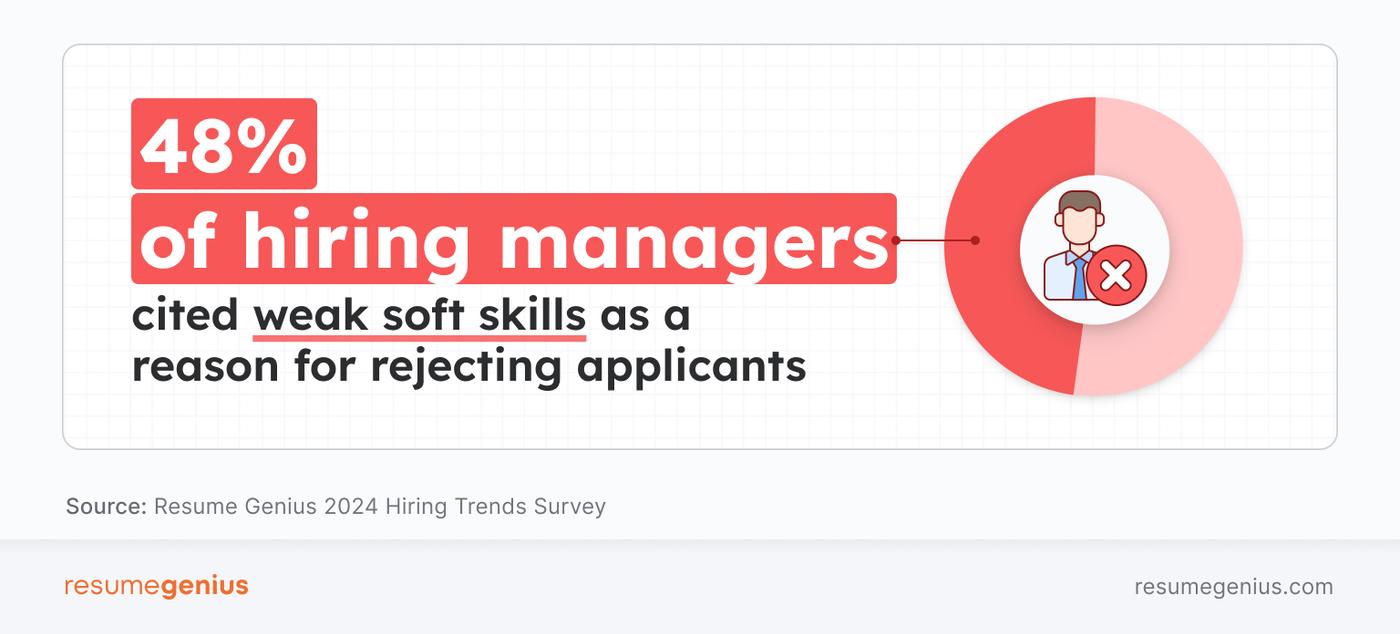
- 54% of hiring managers say soft skills are a top priority when evaluating candidates
- 48% have rejected applicants due to weak soft skills
LinkedIn predicts that 70% of job skills will shift significantly by 2030, with AI driving much of the change. As a result, employers are actively seeking candidates who can keep learning and adapt as roles evolve.
Together, this data shows that employers are prioritizing qualities AI can’t replicate. Soft skills are becoming core factors in hiring decisions, especially for teams that need to stay flexible and future-ready.
How job seekers can become “AI-ready”
Success in 2025 means knowing how to work with AI — and how to talk about it. Here are 5 tips to help you stay competitive in today’s market.
1. Use accurate job titles and keywords that reflect today’s market
Even if your last job was in a traditional support position, you can describe it in ways that align with current hiring trends.
For example, if your job title was “office clerk,” but your responsibilities included scheduling meetings, managing calendars, and supporting team operations, it’s reasonable to describe the role with a clearer title like “scheduling assistant” or “administrative coordinator.”
These updates make your resume more recognizable to applicant tracking software and better reflect how companies describe entry-level positions today. Just make sure the title and keywords accurately match your responsibilities and mirror the language in job descriptions for roles you’re targeting.
The goal is to present your background clearly so both recruiters and hiring software can immediately understand the value you bring.
2. Position yourself as a junior specialist
Today’s employers want focus, not vague potential. If you apply as a generalist, your application may get overlooked. But if you present yourself as a junior specialist, even in a broad area like operations or customer experience, you’re far more likely to stand out.
You might describe yourself as:
- an entry-level marketing assistant with hands-on experience using AI tools for content planning and writing
- a customer support candidate with experience using live chat platforms like Facebook Messenger or Intercom to answer customer questions
- an early-career operations generalist learning workflow tools by building simple automations in Notion or Google Sheets
You don’t need years of experience to make this work. What matters is showing that you’ve picked a direction and are actively building skills in that area.
3. Show specific, relevant AI experience on your resume
Instead of vaguely saying you’re “familiar with AI tools,” prove it with concrete examples. Draw from school projects, internships, side work, or volunteer experience. For example:
- Created onboarding materials for a student club using ChatGPT
- Automated weekly scheduling with Notion AI
- Designed visual concepts for a side project using AI image generators
To take it further:
- Look at job ads for the roles you want and note which AI tools are most common.
- Experiment with those tools to gain hands-on experience.
a. For marketing roles, use ChatGPT for content or MidJourney for visuals.
b. For HR or customer support, try Notion AI or Zapier for workflow automation.
Being able to name the tools you’ve used and explain how you used them will set you apart from applicants who speak in general terms.
4. Show your soft skills in action on your resume
AI tools are powerful, but employers still want people who can communicate, stay organized, and collaborate.
Instead of simply listing soft skills, demonstrate them through your experience:
- Instead of: Strong communicator
Show it with: Coordinated a 10-person volunteer team to organize a campus event
- Instead of: Problem solver
Show it with: Streamlined an onboarding process during my internship, reducing setup time by 20%
Resumes that show what you’ve done and how you work with others, especially in hybrid or tech-assisted roles, give employers a clear picture of your impact.
5. Upskill with focus, one step at a time
You don’t need a degree in AI to stay competitive, but you do need to keep learning.
Start by reviewing job listings for the roles you want and look for recurring skills or tools — like SQL, Tableau, prompt writing, or AI collaboration. Then, choose one course or certification that matches what employers are asking for.
You don’t need to master everything at once. Focus on small, achievable goals every 30–90 days, like:
- Learn one new tool
- Apply to five roles using updated keywords
- Complete a small project that sharpens your niche
Hiring managers care more about practical knowledge than a long list of credentials. Prioritize depth over quantity, and build confidence through steady progress.
Conclusion
For early-career job seekers, the path into the workforce looks different from just a few years ago. The steady decline of clerical roles and the rise of technical, specialist positions mean that today’s candidates must bring sharper skills, clearer focus, and more initiative from the start.
Yet this shift also creates opportunity. Job seekers who adapt early by building digital fluency, demonstrating soft skills, and positioning themselves as junior specialists can still carve out meaningful career paths in the AI era. Getting started may take new strategies, but entry-level opportunities still exist for those who are prepared.
Methodology
This report draws from a range of industry-backed sources to examine how AI is reshaping entry-level hiring in the United States. We reviewed third-party research from the World Economic Forum, Harvard Business School, SignalFire, and major news outlets.
To identify in-demand jobs, we began with roles highlighted in the World Economic Forum’s 2025 Future of Jobs Report, focusing on those with “clerk” or “specialist” in the title. We then expanded our list by searching the U.S. Bureau of Labor Statistics (BLS) Occupational Outlook Handbook for additional jobs that matched those terms and underlying role responsibilities. Each job title was matched to the most relevant occupational category in the U.S. Bureau of Labor Statistics database, which allowed us to track salary, job growth, and wage trends from 2021 to 2024.
We refined the dataset using the following criteria:
- Titles had to include “clerk” or “specialist” when possible
- For “specialist” titles, we prioritized those involving data, analysis, digital systems, or automation
- All roles required available job growth projections and salary data in BLS
- Any titles not listed in BLS were mapped to the closest match based on core responsibilities, technical skillsets, and job descriptions
Finally, we calculated average job growth and salary for both categories to compare long-term demand and earning potential.
We also drew on original survey data from Resume Genius, based on two national polls of 1,000 U.S. hiring managers conducted in 2024 and 2025.
Sources
- Axios, Behind the Curtain: A White-Collar Bloodbath
- General Assembly, Are Today’s Entry-Level Employees Ready for the Job? Survey Says… Not Quite
- LinkedIn, Work Change Report: Skills For Jobs Set to Change by 70% by 2030
- Resume Genius, AI Impact on Hiring Survey: How Recruitment is Evolving
- Resume Genius, 2024 Hiring Trends Survey: What Makes a Great Job Candidate?
- The SignalFire, The SignalFire State of Talent Report – 2025
- Thomson Reuters, Future of Professionals Report 2025
- U.S. Bureau of Labor Statistics, Occupational Outlook Handbook
- World Economic Forum, Future of Jobs Report 2025: These are the Fastest Growing and Declining Jobs, The Future of Jobs Report 2025
About Resume Genius
Since 2009, Resume Genius and its resume builder software have been helping people from all backgrounds and experience levels land their next job faster.
Resume Genius also provides a wide range of free career resources, including customizable resume templates, resume examples for different industries, and resume writing guides, to help job seekers find fulfilling work and reach their career goals.
Resume Genius is led by a team of dedicated career advisors and HR experts and has been featured in The New York Times, Harvard Business Review, Fast Company, CNBC, and USA Today.
For media inquiries, please contact us.
About the Author

Eva Chan is a Senior Digital PR Writer and Communications Lead at Resume Genius. Eva oversees the research and data-led campaigns that reveal key trends in today’s workforce and represents the company in media interviews and press features. Her work focuses on guiding job seekers through today’s job market and helping them present their applications and skills with confidence.