

Struggling to get interviews?
Below, we’ll break down proper etiquette for emailing your resume to employers when you apply for a job.
How to email your resume (step by step)
1. Follow the instructions carefully
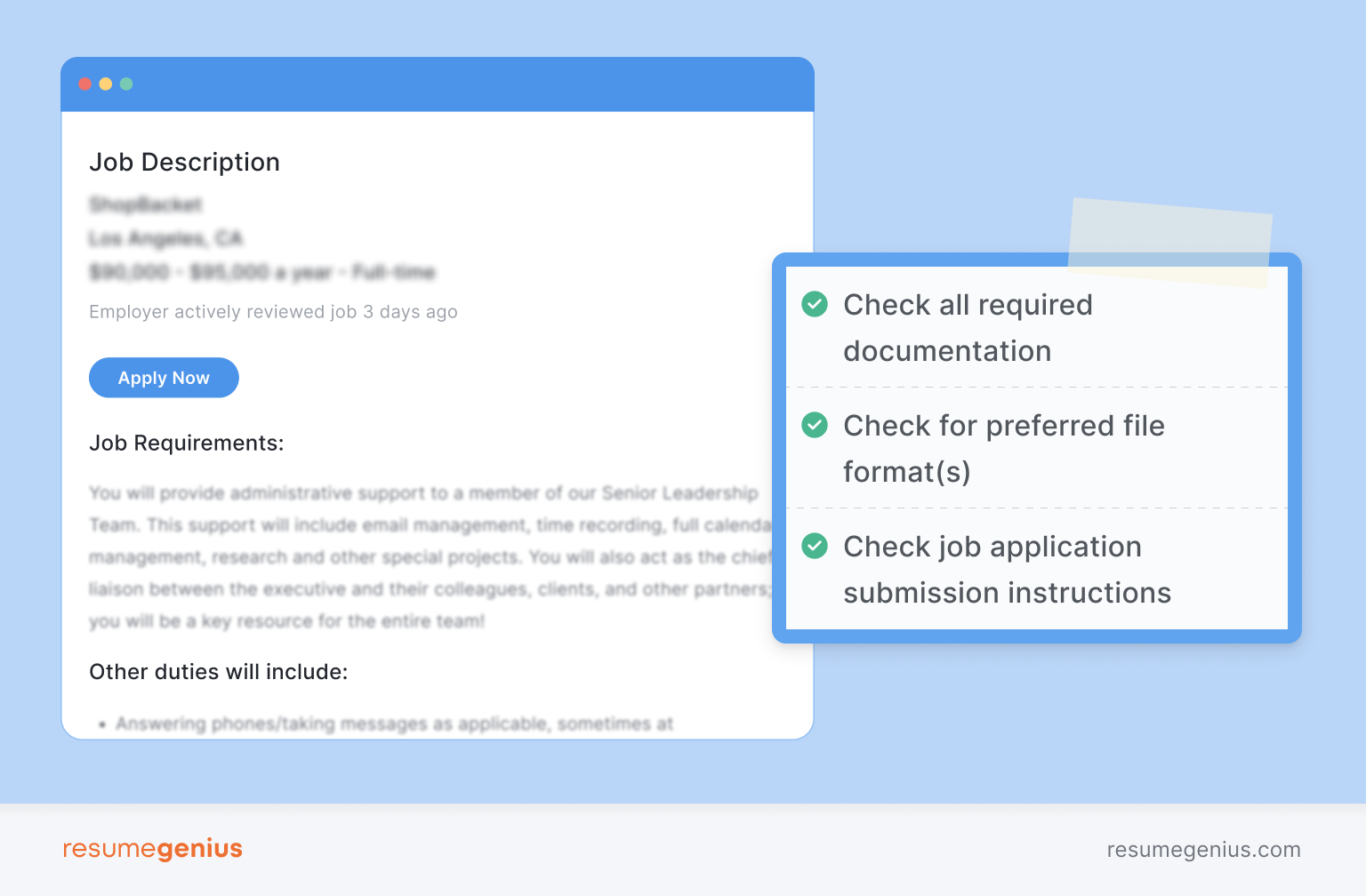
First, check the job description for how to submit your application.
Depending on the employer, they prefer a .pdf file over a .docx file. Some companies also ask applicants to name the file in a certain way or request additional documentation along with the resume and cover letter.
2. Address the hiring manager by name
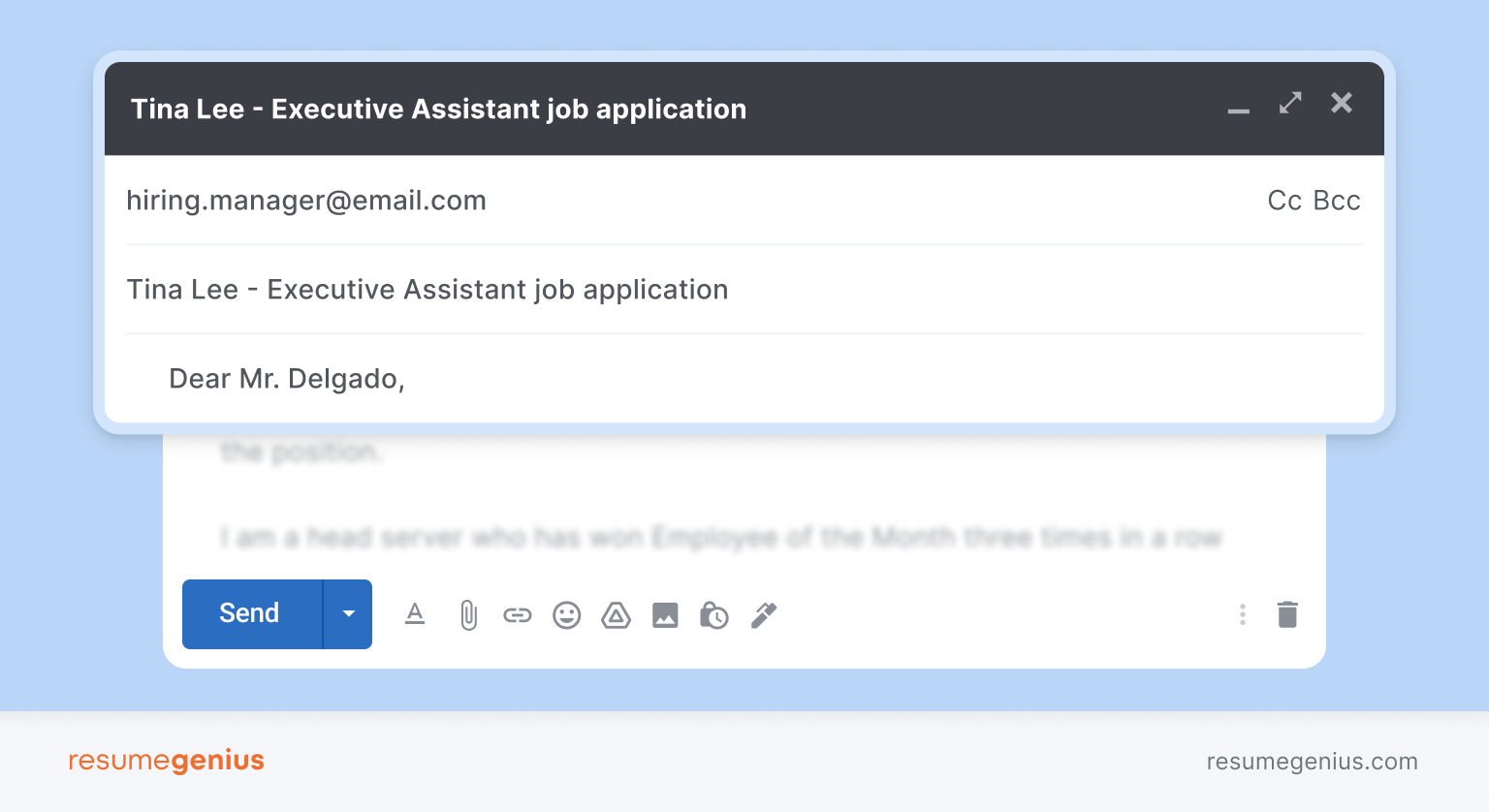
Open your email by addressing the hiring manager by name (if available). Start with a standard greeting, like “Dear + title + surname/family name,” to keep things professional. If the hiring manager’s name isn’t available and it doesn’t appear on LinkedIn or the company website, you can also write:
- Dear [Department] Team
- Dear Hiring Manager
- Dear Human Resources Director
3. Make your subject line clear and professional
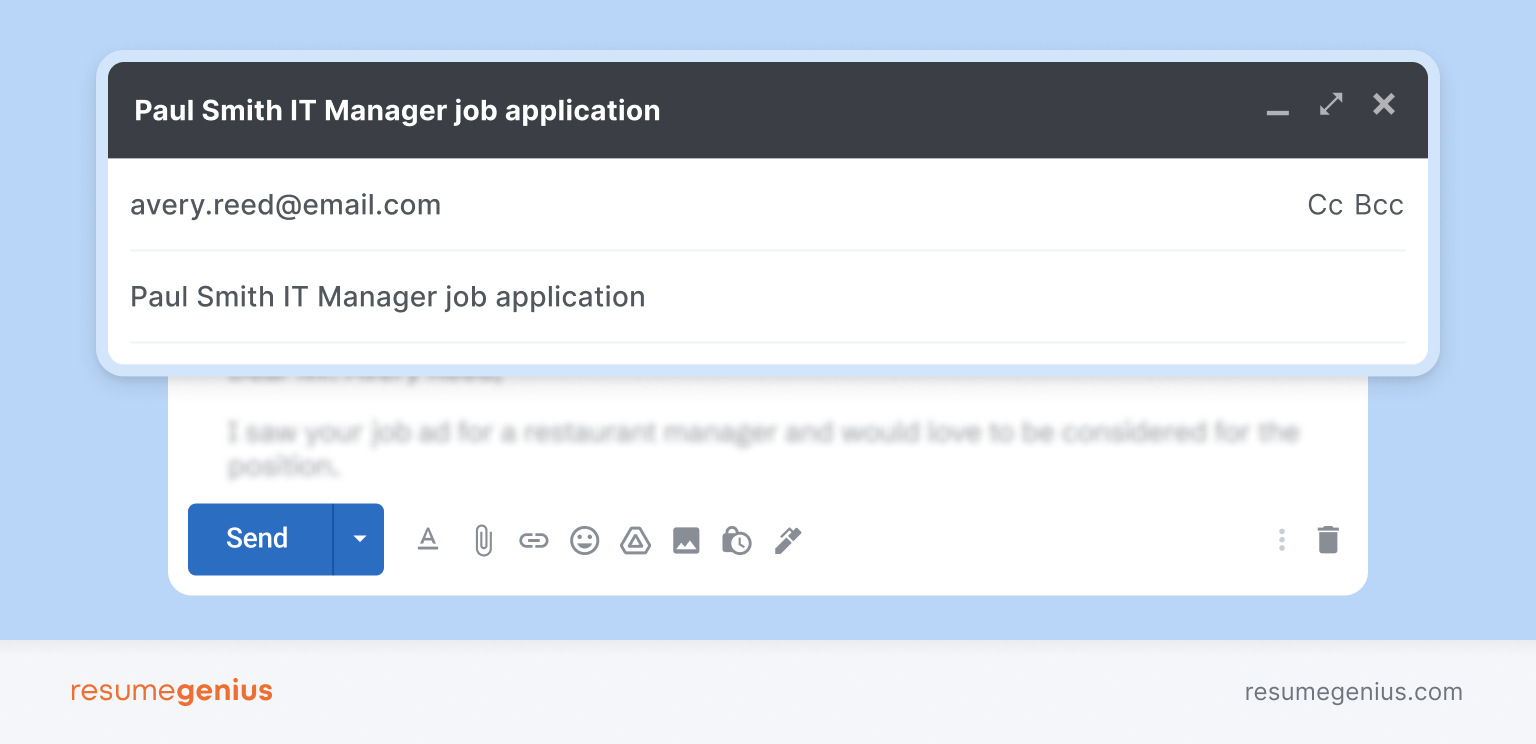
Keep the subject line of your email brief and to the point. A professional email subject line includes three elements:
- Your name
- Target job title
- The term “job application”
4. Attach your resume
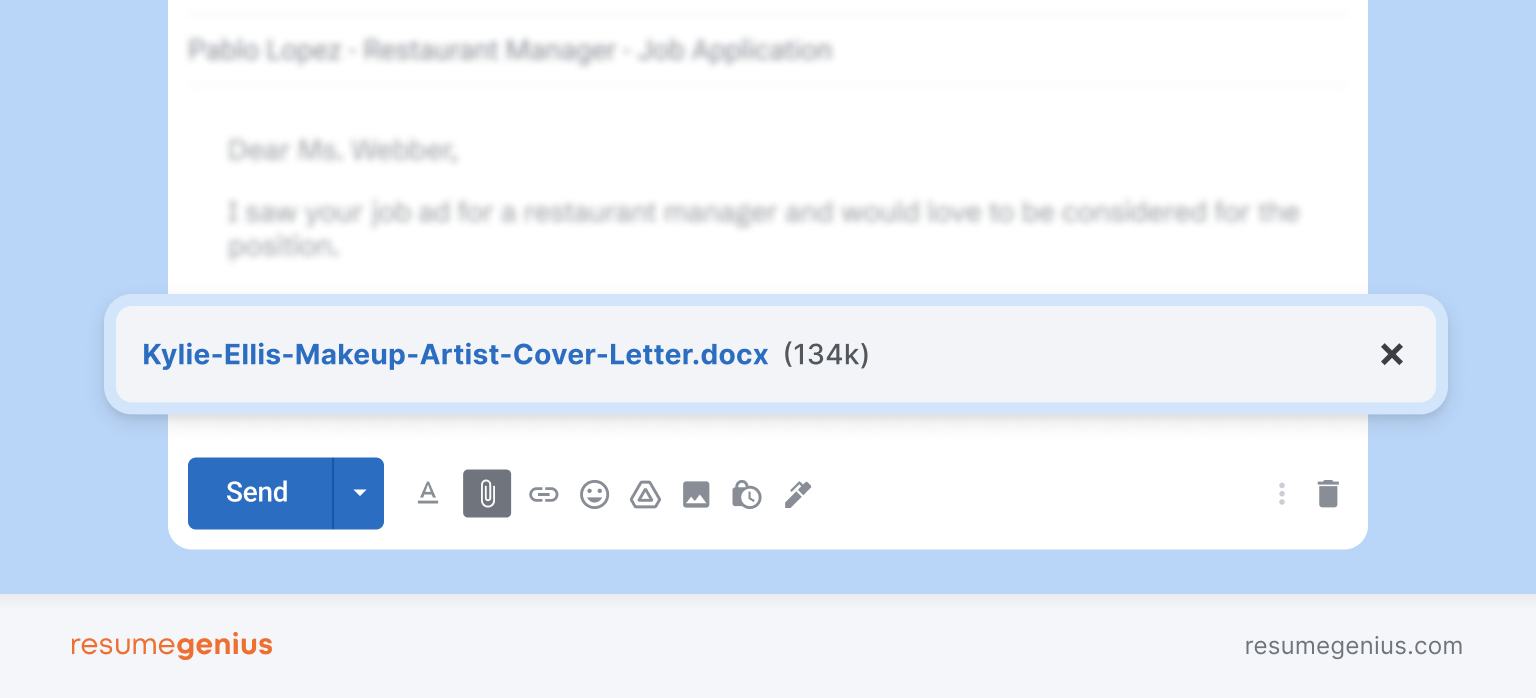
Next, attach your resume to the email. There are two standard resume file formats to choose from: .pdf and .docx. Check to see if the job ad mentions one or the other. If not, go with .pdf.
Make sure you name your resume file clearly. If the employer doesn’t specify a format, then name it: [your name] + [job title] + “resume” separated by hyphens. For example:
Zara-Tindall-Event-Planner-Resume.pdf
5. Attach your cover letter
There are two ways to include your cover letter in your application email:
- Write your cover letter in the body of your email, and only attach your resume
- Attach your cover letter file to the email (in the same file format as your resume). In this case, your email should include a short introduction, and state you’re applying for the job and have attached your cover letter and resume
Use the same file name format for your cover letter as for your resume unless the job listing says otherwise.
6. Send a test email to yourself
Before you submit your application to the hiring manager, proofread it and then send the email to yourself or to a friend. This lets you make sure that:
- There are no formatting or spelling mistakes
- No attachments are missing
- Your attachments open properly
A quick double-check of your entire email helps you avoid sending a misspelled message or broken attachments, which can seem unprofessional or careless.
What to write in the body of your email
Don’t paste your entire cover letter into the body of the email. Instead, introduce yourself in one or two professional sentences. The message should follow this format:
- Greeting
- Statement of your intention to apply
- Brief summary of experience and what makes you a strong fit (1 to 2 sentences)
- Call to action (polite suggestion to remain in contact or schedule an interview)
- Closing
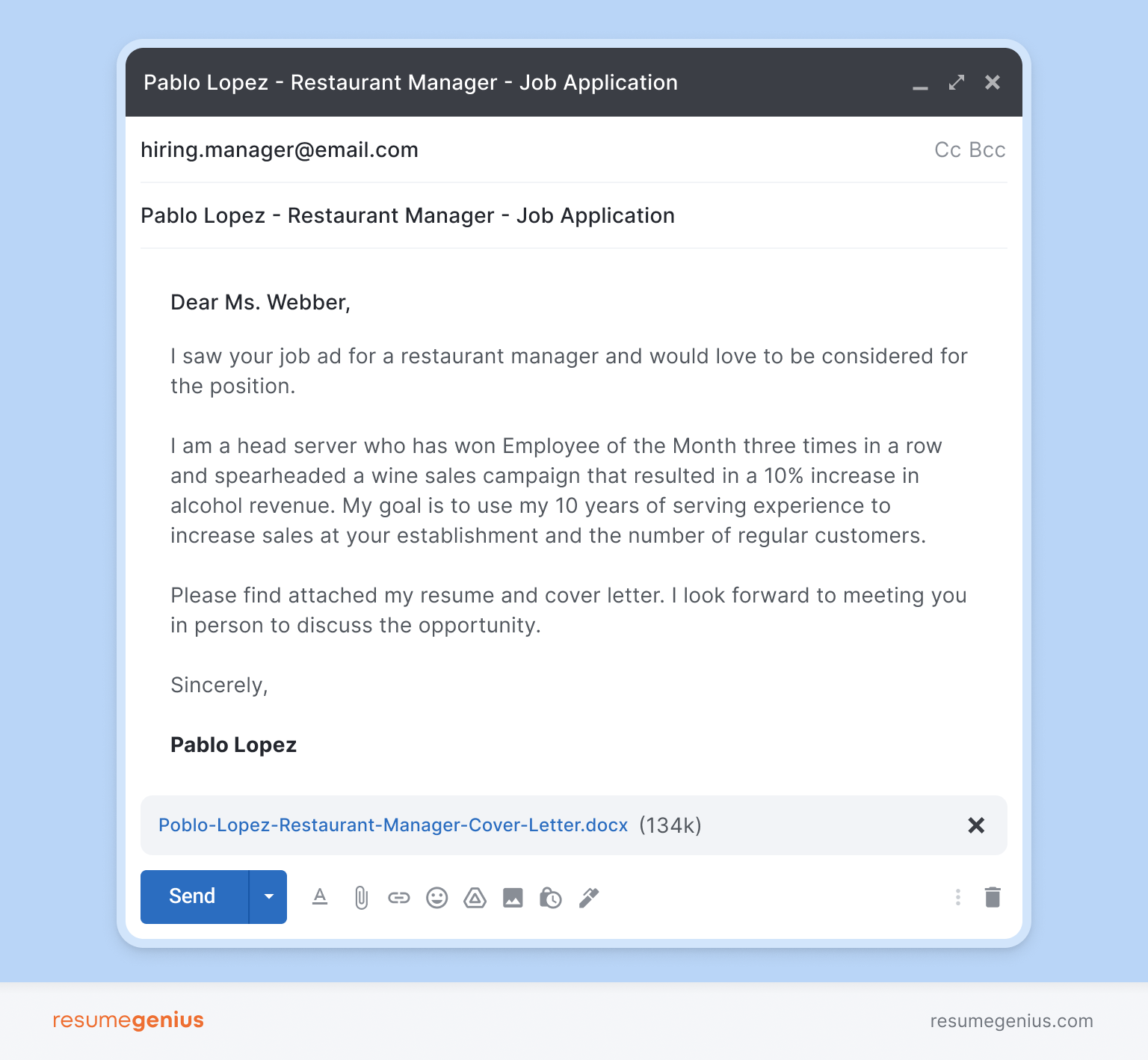
Here’s an example job application email you can use follow:
Email job application introduction (text version)
Dear Ms. Webber,
I saw your job ad for a restaurant manager and would love to be considered for the position.
I am a head server who has won Employee of the Month three times in a row and spearheaded a wine sales campaign that resulted in a 10% increase in alcohol revenue. My goal is to use my 10 years of serving experience to increase sales at your establishment and the number of regular customers.
Please find attached my resume and cover letter. I look forward to meeting you in person to discuss the opportunity.
Sincerely,
Pablo Lopez
This email example works because it highlights the applicant’s most relevant accomplishments while concisely expressing interest in the position.
The best resume templates for 2026
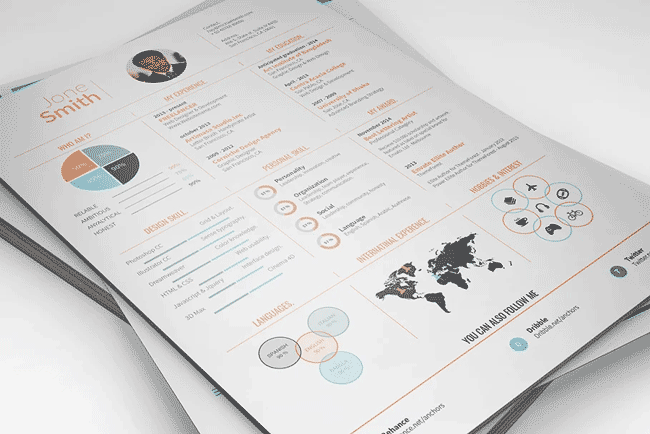
One of the easiest ways to create a resume is by filling out one of our free resume templates. Our templates come from experts and are free to download for Microsoft Word or Google Docs.
About the Author

Lauren Mastroni is a Digital Content Writer at Resume Genius, where she creates data-driven career content and actionable job search advice. With a background in academic research, she brings a research-focused approach to topics like resume writing, interviewing, and career development. Lauren is dedicated to helping job seekers at all stages navigate the hiring process and present themselves more effectively to employers.