5 Music Resume Examples & Writing Tips
 Written By Sebastian MorganSenior Content Writer & Certified Professional Resume Writer
 Reviewed By Samuel JohnsSenior Content Editor & Certified Professional Resume Writer
Sebastian Morgan
Senior Content Writer & Certified Professional Resume Writer
Seb is a Certified Professional Resume Writer with 10 years of combined experience in career counseling and editorial work. With a MA in International Communications from National Chengchi University (Taiwan),...
Our team analyzed hundreds of job postings to find out which keywords employers tend to look for on musician resumes. We used our findings to create two musician resume samples that accurately reflect trends in the creative job market.
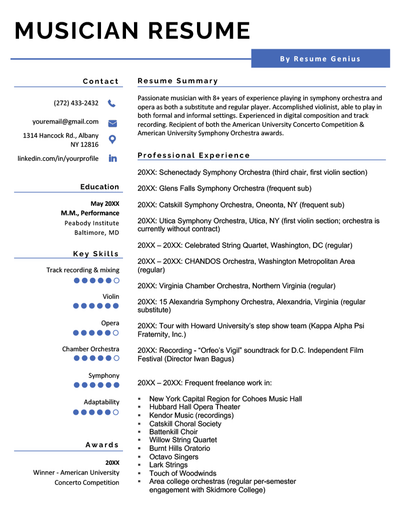
Musician resumes by experience level
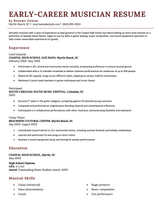
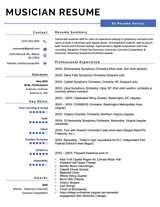
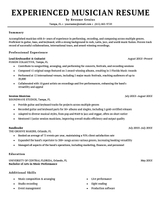
Check out the rest of our resume templates to find the perfect match for your goals.
Music resume template (text format)
- Track recording & mixing
- Violin
- Opera
- Chamber orchestra
- Symphony
- 20XX: Schenectady Symphony Orchestra (third chair, first violin section)
- 20XX: Glens Falls Symphony Orchestra (frequent sub)
- 20XX: Catskill Symphony Orchestra, Oneonta, NY (frequent sub)
- 20XX: Utica Symphony Orchestra, Utica, NY (first violin section; orchestra is currently without contract)
- 20XX – 20XX: Celebrated String Quartet, Washington, DC (regular)
- 20XX – 20XX: CHANDOS Orchestra, Washington Metropolitan Area (regular)
- 20XX: Virginia Chamber Orchestra, Northern Virginia (regular)
- 20XX: 15 Alexandria Symphony Orchestra, Alexandria, Virginia (regular substitute)
- 20XX: Tour with Howard University’s step show team (Kappa Alpha Psi Fraternity, Inc.)
- 20XX: Recording – “Orfeo’s Vigil” soundtrack for D.C. Independent Film Festival (Director Iwan Bagus)
- Winner – American University Concerto Competition
Here are more sample musician resumes if you need help applying for a specific opportunity in the music industry:
Music producer resume
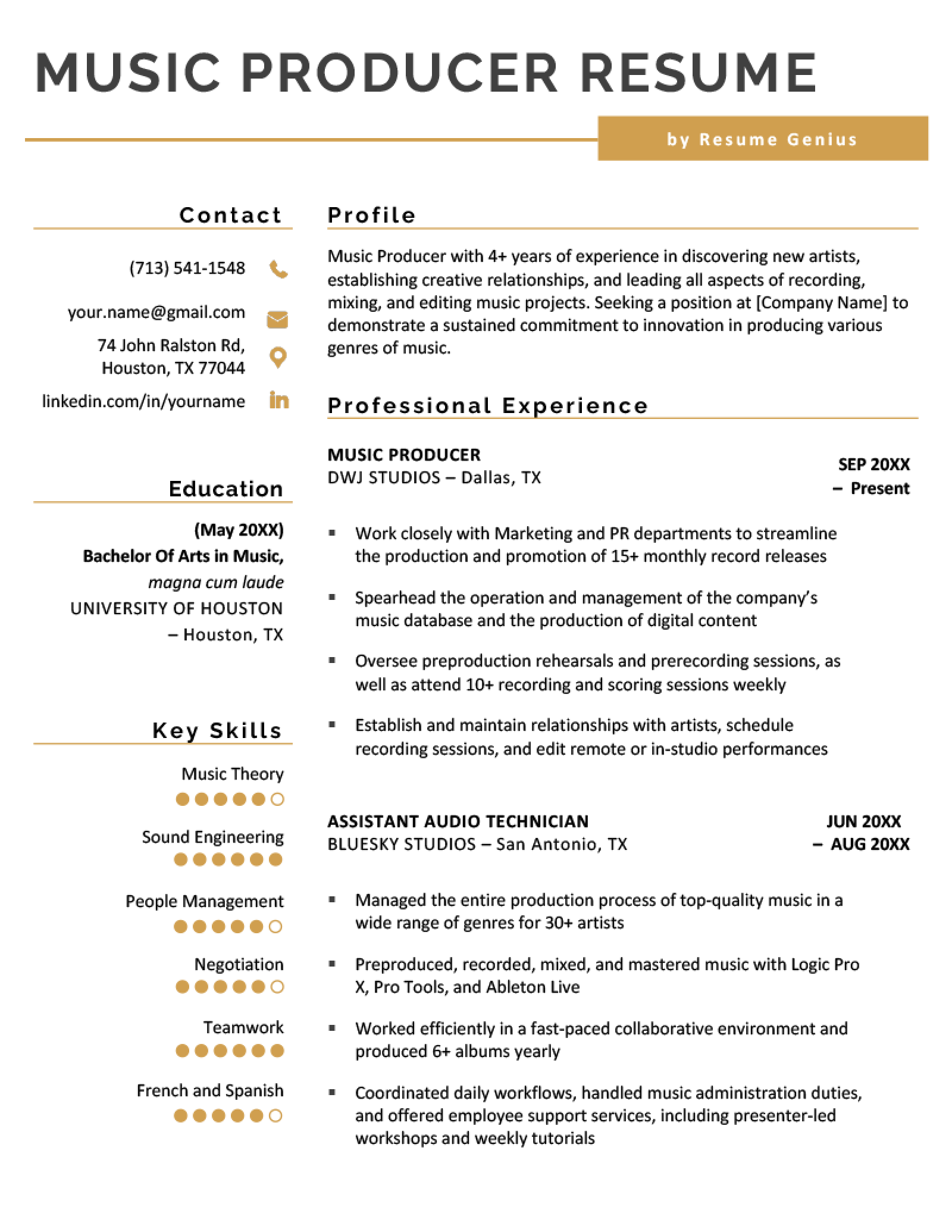
Example highlight
- Skill bars: Using a resume template with skill bars is helpful when you want employers to know how proficient you are in different areas.
DJ resume
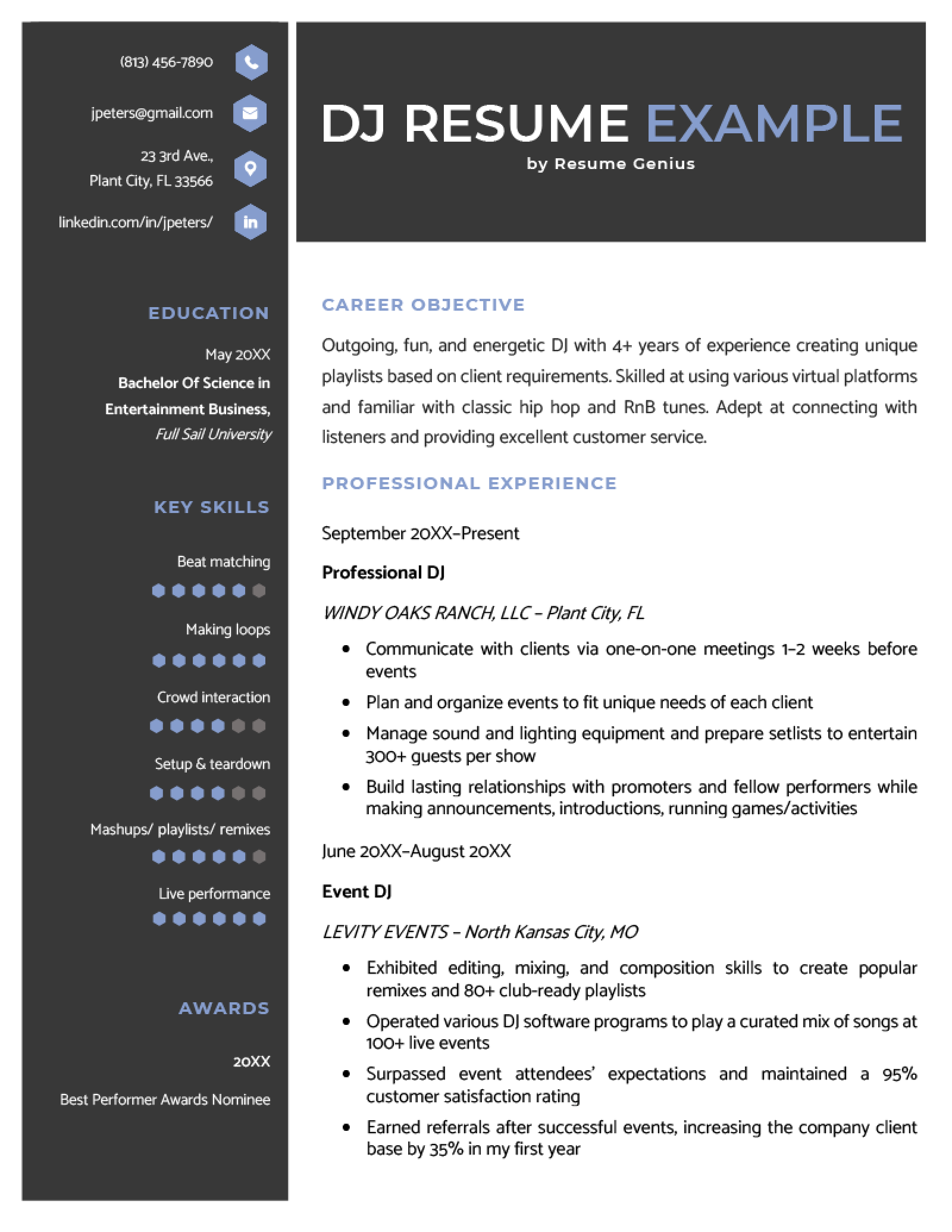
Example highlight
- Award: If you’ve received recognition for your DJing skills, add a separate awards section on your resume like this applicant does.
How to write a music resume
Securing a position in the music industry can be difficult. Positions for musicians are scarce, and good jobs can be highly competitive.
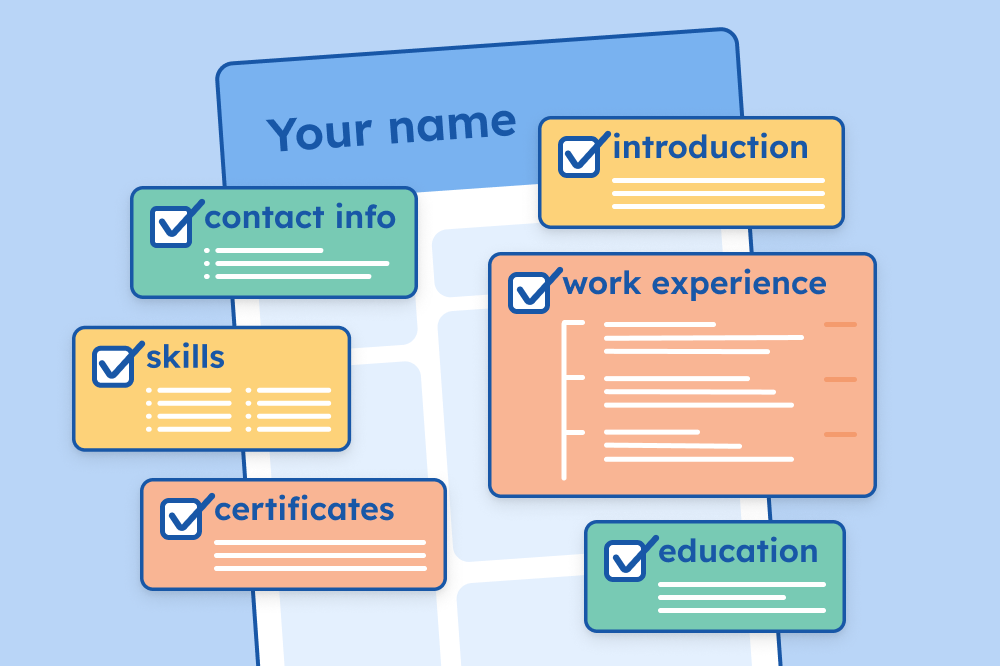
To overcome these challenges, you’ll need a great musician resume, complete with your relevant experience, skills, awards, education, and other qualifications. Read on to learn how to make a musician resume that lands you an audition.
1. List your experience as a musician
Use a resume format that divides your musician experience according to where you played, for example, by listing different orchestra, opera, musical theater, or chamber experiences that you have. Also, when listing work experience on your resume, you should include the following five pieces of information:
- Date(s) that you played
- Organization you played or worked for
- Instrument(s) you used
- Section or role you played (and chair, if relevant)
- Whether you were a substitute or a regular player
Here’s an example of properly formatted work experience on a musician resume:
20XX: Utica Symphony Orchestra, Utica, NY (first violin section; orchestra is currently without contract)
If you’re a young aspiring musician, listing school performances, major recitals, and other small projects is also an effective way of showing that you have musical performance experience.
Providing a link at the top of your musician resume to your personal website, YouTube channel, or SoundCloud is a great way to showcase your personal music projects.
2. Highlight your musical skills
In addition to your work experience, employers will want to see what instruments or techniques you’re skilled in. That’s why it’s essential to have a detailed skills section on your resume when applying to jobs in the music industry.
Here are some examples of skills to add to your resume:
- Instrument proficiency
- Vocal skills
- Music theory
- Sight reading
- Music notation software
- Digital audio workstations
- Mixing and mastering
- Live performance
- On-stage electronics
- Perfect pitch
- Symphony
- Improvisation
- Music composition
- Ensemble performances
- Opera
- Stage presence
- Audio recording and digital audio tools
- Ear training
Don’t just list your skills. Give evidence of how you’ve applied them in your work experience section and musician cover letter.
3. Add any musical awards you’ve received
Only the most talented musicians are recognized for their hard work and dedication to mastering their craft.
If you’ve won any music awards, displaying them on your resume will increase your chances of being called in for an audition.
When listing awards on your resume, include the following information:
- Year awarded
- Placement/name of award
- Awarding organization
Here’s an example of what an awards section on a music resume might look like:
20XX – Concertmaster, American University Symphony Orchestra
20XX – Winner, American University Concerto Competition
4. Include your education
While plenty of musicians don’t have more than a high school diploma, formal music education is still highly regarded.
Create a dedication education section on your musician resume, and include the following information:
- Dates attended
- University name
- Degree
- Relevant coursework (optional)
Below is an example of how to list a degree on your musician resume:
Peabody Institute – Baltimore, MD
M.M. in Performance
20XX
If you don’t have any higher education, you can choose to include your high school diploma if you’re a recent graduate.
Remember to include any music-related experience you gathered in high school, such as relevant coursework, instruments you played, and band performances you participated in.
Resume examples for different industries
Not sure what your resume should look like? The best way to learn is by taking inspiration from resume examples written by other candidates in your industry.
About the Author

Seb is a Certified Professional Resume Writer with 10 years of combined experience in career counseling and editorial work. With a MA in International Communications from National Chengchi University (Taiwan), he helps job seekers translate their experience into employer-ready applications for global job markets.


Click to rate this article
4.8 Average rating