

“What does customer service mean to you?” appears in nearly every customer service interview.
Use our expert-approved answer that works in any interview, plus job-specific sample responses and tips to help you land the customer service role you’re applying for.
Here’s a strong general answer you can use in any customer service interview:
“Customer service means creating positive experiences that solve problems and build trust. It’s about listening to understand what customers need, responding with empathy and expertise, and following through to ensure their satisfaction. Great customer service turns frustrated customers into loyal advocates by making them feel valued and heard.”
This answer works because it covers three essential components hiring managers look for:
- Problem-solving: You acknowledge that customer service exists to resolve issues, not just process requests
- Relationship building: You show that customer service creates long-term value beyond individual transactions
- Measurable impact: You demonstrate that effective customer service transforms customer attitudes and drives business results
How to answer “What does good customer service mean to you?”
A strong answer shows you understand core customer service principles and can apply them in real situations.
Use these tips to prepare a response that impresses hiring managers:
Research the company
Before your interview, research the company’s customer service approach. Explore their website, social media responses, and customer reviews to learn about their service philosophy.
If the company emphasizes speed and efficiency, highlight how you prioritize quick, accurate resolutions. If they value personalized service, focus on your relationship-building skills.
For example:
“I researched BrightTech’s approach and noticed your company values building lasting customer relationships over quick transactions. To me, customer service means taking time to understand each customer’s unique needs, like BrightTech’s emphasis on following up after support calls to ensure complete satisfaction. That relationship-focused philosophy resonates with my approach.”
Matching your answer to their values shows hiring managers that you understand their expectations and can represent their brand effectively.
Tailor your answer to the industry
Customer service expectations vary widely across industries. Tailor your answer to reflect the priorities of your target field.
For example, see how these industries emphasize different aspects of service:
- Retail: Product expertise and sales support that creates enjoyable shopping experiences
- Healthcare: Empathy, privacy, and guidance through sensitive situations
- Hospitality: Memorable guest experiences and graceful service recovery
- Transportation: Safety, reliability, and clear communication during delays or disruptions
- Food service: Attentive hospitality and accommodating diverse guest needs
Here’s an example for the retail industry:
“In retail, customer service means combining product knowledge with efficiency to help customers make confident purchasing decisions. It’s about understanding inventory, offering alternatives when needed, and creating a smooth checkout experience. Success in retail customer service drives both immediate sales and repeat business.”
Research top-performing companies in your industry — like Nordstrom in retail or Ritz-Carlton in hospitality — to understand what exceptional service looks like.
Include examples from your professional experience
Your definition of customer service becomes much stronger when supported by real-world experience. Use the STAR method to weave specific examples into your answer.
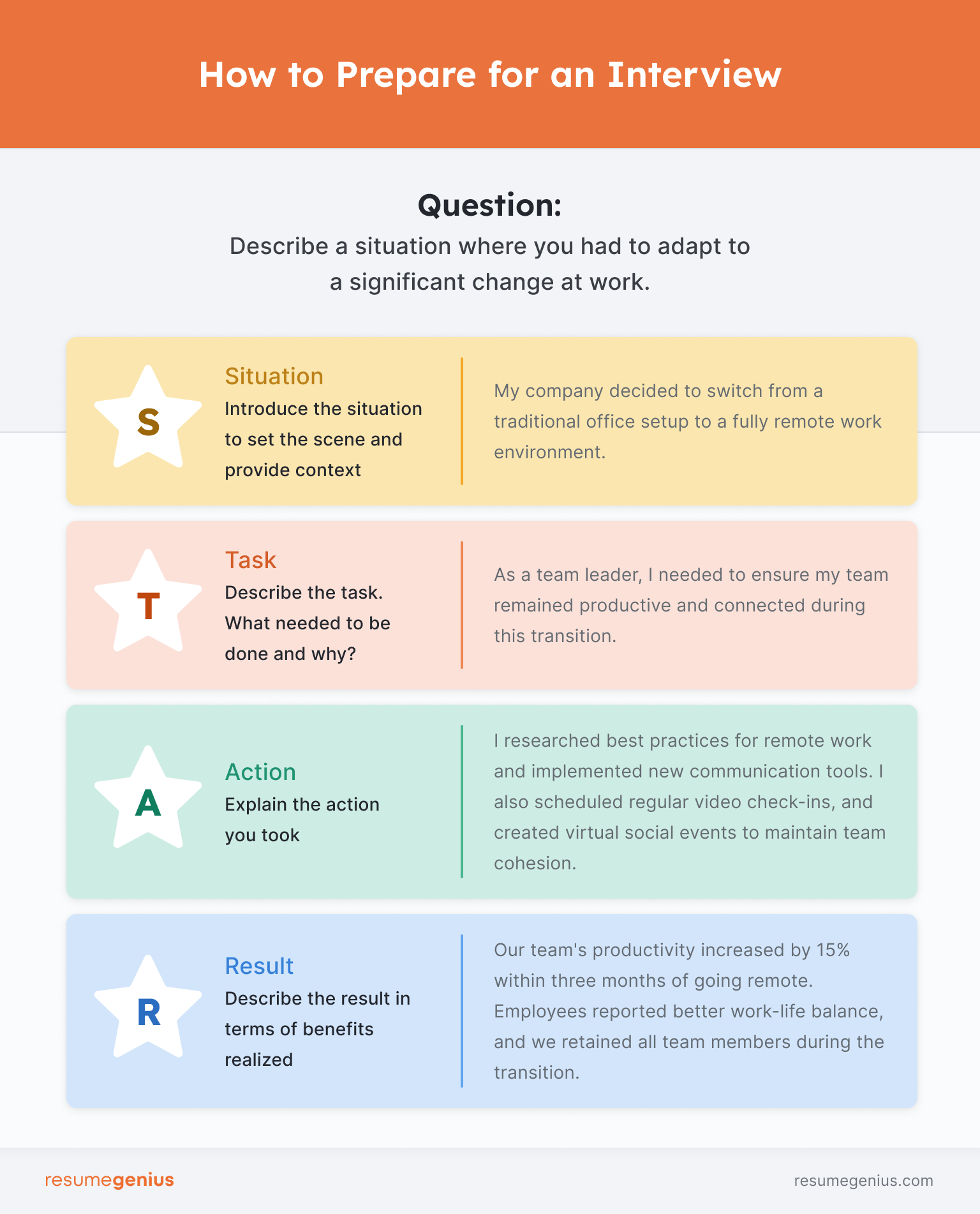
Here’s how it looks in action:
“In my retail role, a customer received a damaged product two days before Christmas. I expedited a replacement at no charge and included a handwritten apology note. The customer posted a five-star review praising our responsiveness and became a repeat buyer.”
Concrete examples like this show hiring managers you don’t just understand customer service principles — you can also apply them effectively.
Show your understanding of excellent customer service
Strengthen your answer by demonstrating you understand the skills that drive exceptional customer service, such as:
- Active listening
- Clear communication
- Problem-solving
- Empathy
- Subject matter expertise
- Patience
- Anticipating customer needs
Reinforcing these essential customer service skills helps show the interviewer that you know what good customer service looks like and can deliver it consistently.
For example:
“Apple prioritizes clear communication and subject matter expertise in every customer interaction. Customer service means explaining complex technical concepts in simple terms while demonstrating deep product knowledge. Apple’s Genius Bar succeeds because representatives translate technical issues into understandable language and provide expert solutions customers can trust.”
Showcase your customer service skills

Use these opening statements to elevate your answer
Start strong with one of these opening lines to immediately demonstrate your customer service mindset:
Strong opening statements
- “Customer service is the foundation of customer loyalty and business growth.”
- “Effective customer service turns problems into opportunities by exceeding expectations.”
- “Great customer service means taking ownership of every interaction and ensuring customers leave satisfied.”
Choose the opening statement that best aligns with the role’s priorities, then expand on it with specific examples and results from your background.
Sample answers for different industries
Now that you understand how to create an effective answer, here are complete sample answers for different customer service roles. Each combines company research, industry expectations, personal experience, and core customer service skills.
Food service industry
Food service example
“Customer service is the foundation of customer loyalty and business growth. At Olive Garden, that means creating a welcoming atmosphere where guests feel like family.
When a customer had an allergy concern, I consulted with the chef, offered safe alternatives, and ensured her meal was prepared properly. She became a regular customer. I’d bring that same commitment to making every guest feel cared for at Olive Garden.”
This answer addresses food service priorities: hospitality, attention to detail, and food safety. The example shows quick thinking and genuine concern, qualities restaurant managers value.
Retail industry
Retail example
“Effective customer service turns problems into opportunities by exceeding expectations. At Target, that means helping customers find what they need efficiently.
When a customer couldn’t find their size, I checked nearby locations and arranged a same-day transfer at no charge. Later, they purchased additional items and joined our loyalty program. I’m excited to bring this problem-solving approach to Target.”
This answer balances customer satisfaction with business results, highlighting product knowledge, efficiency, and the ability to turn service moments into sales opportunities.
Hospitality industry
Hospitality example
“Great customer service means taking ownership of every interaction and ensuring customers leave satisfied. At Marriott, that means creating memorable guest experiences.
When a guest’s anniversary dinner reservation was disrupted, I secured a premium table, arranged complimentary champagne, and had our chef prepare a special dessert. They posted a glowing review and rebooked with us. I’d bring this same dedication to service excellence to Marriott.”
This answer shows proactive problem-solving and the ability to create exceptional guest experiences.
Transportation industry
Transportation example
“Customer service is the foundation of customer loyalty and business growth. At Southwest Airlines, that means ensuring safe, reliable travel while communicating clearly during delays.
When weather caused disruptions, I updated passengers every 15 minutes, arranged refreshments, and helped rebook connections. Multiple passengers thanked me for keeping them informed despite the delay. I’m eager to bring this commitment to Southwest’s customer-focused team.”
This answer prioritizes safety and transparent communication. The example also shows composure under pressure and passenger-focused problem-solving that builds trust.
Tips for landing a customer service job
Not at the interview stage yet? Follow these tips to strengthen your customer service job application:
Practice other common customer service interview questions
Preparing for frequently asked questions helps you enter your interview confident and ready.
Each sample answer follows the same principles:
- A clear opening statement
- Customer service skills demonstrated through personal experience and measurable results
Why are you interested in customer service?
“I’m drawn to customer service because I excel at solving problems and building relationships. I get genuine satisfaction from turning frustrated customers into satisfied ones and seeing the direct impact of my work.
In my previous role, I maintained a 95% customer satisfaction rating and received regular positive feedback. Customer service lets me use my communication skills and empathy to make a measurable difference every day.”
This answer works because it shows the candidate understands what makes customer service rewarding.
How do you deal with unhappy customers?
“I start by listening without interrupting to fully understand their frustration. I acknowledge their feelings, apologize for their negative experience, and take immediate action to resolve the issue.
I once had a customer furious about a billing error. I listened to their concerns, verified the mistake, processed a refund immediately, and waived the late fee. They appreciated the quick resolution and remained a loyal customer. Staying calm and focused on solutions turns difficult situations into opportunities to build trust.”
This response demonstrates emotional intelligence and problem-solving with results that benefit both the customer and the business.
How would you handle a customer you know is wrong?
“I’d acknowledge their perspective, then gently provide accurate information while offering solutions. Correcting customers requires tact.
When a customer insisted our return policy allowed exchanges beyond 30 days, I empathized with their frustration, explained the policy clearly, and offered a store credit as a goodwill gesture. They accepted the compromise and appreciated that I tried to help. The goal is resolution, not proving who’s right.”
This example displays creative problem-solving that protects company interests while maintaining positive customer relationships.
What would you do if you didn't know how to help a customer?
“I’d be honest about not having the immediate answer, then quickly find someone who does.
When a customer asked a technical question beyond my expertise, I said, ‘That’s a great question — let me get you to our technical specialist who can give you the most accurate information.’ I stayed with them until the specialist arrived and followed up after to ensure they received complete help. Customers appreciate honesty and initiative more than guessing or providing incorrect information.”
This works because it demonstrates a commitment to customer satisfaction even when immediate knowledge is lacking.
@resumegenius Top 3 customer service interview questions and answers #interviewtips #interviewquestions #jobinterview #customerservice #careeradvice #jobsearchtips
Learn more about how to respond to the most common interview questions.
Create a strong resume
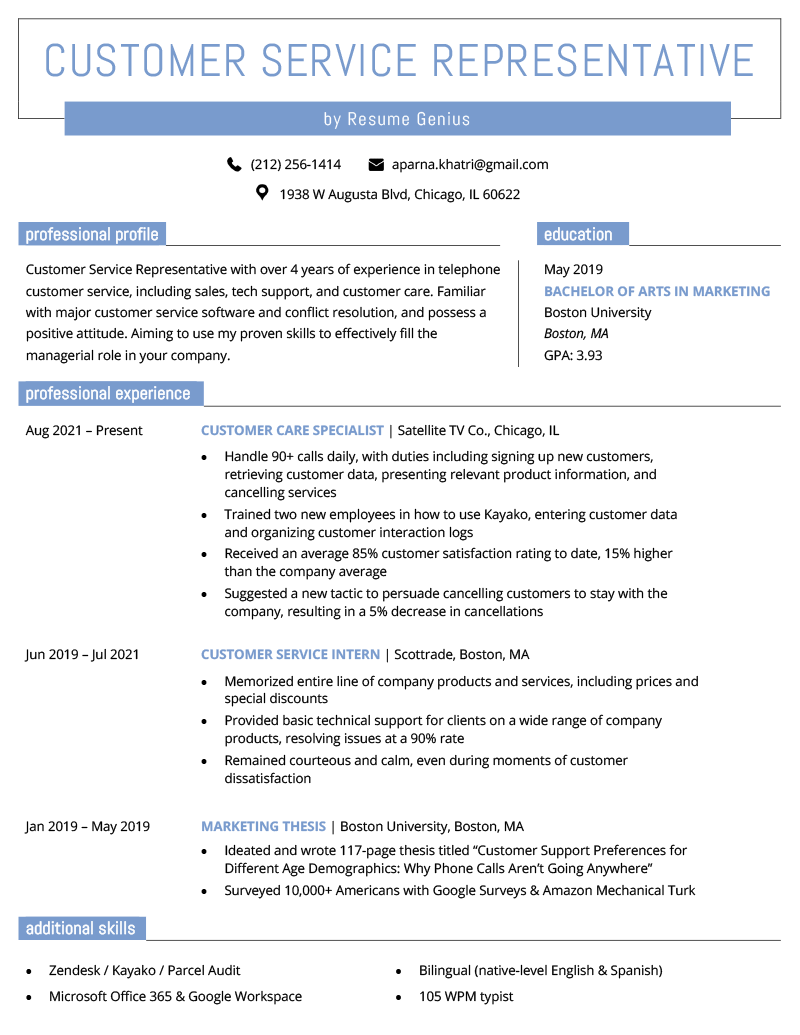
Your resume should immediately show hiring managers you have the skills and experience they need. This customer service resume example highlights relevant achievements and demonstrates impact:
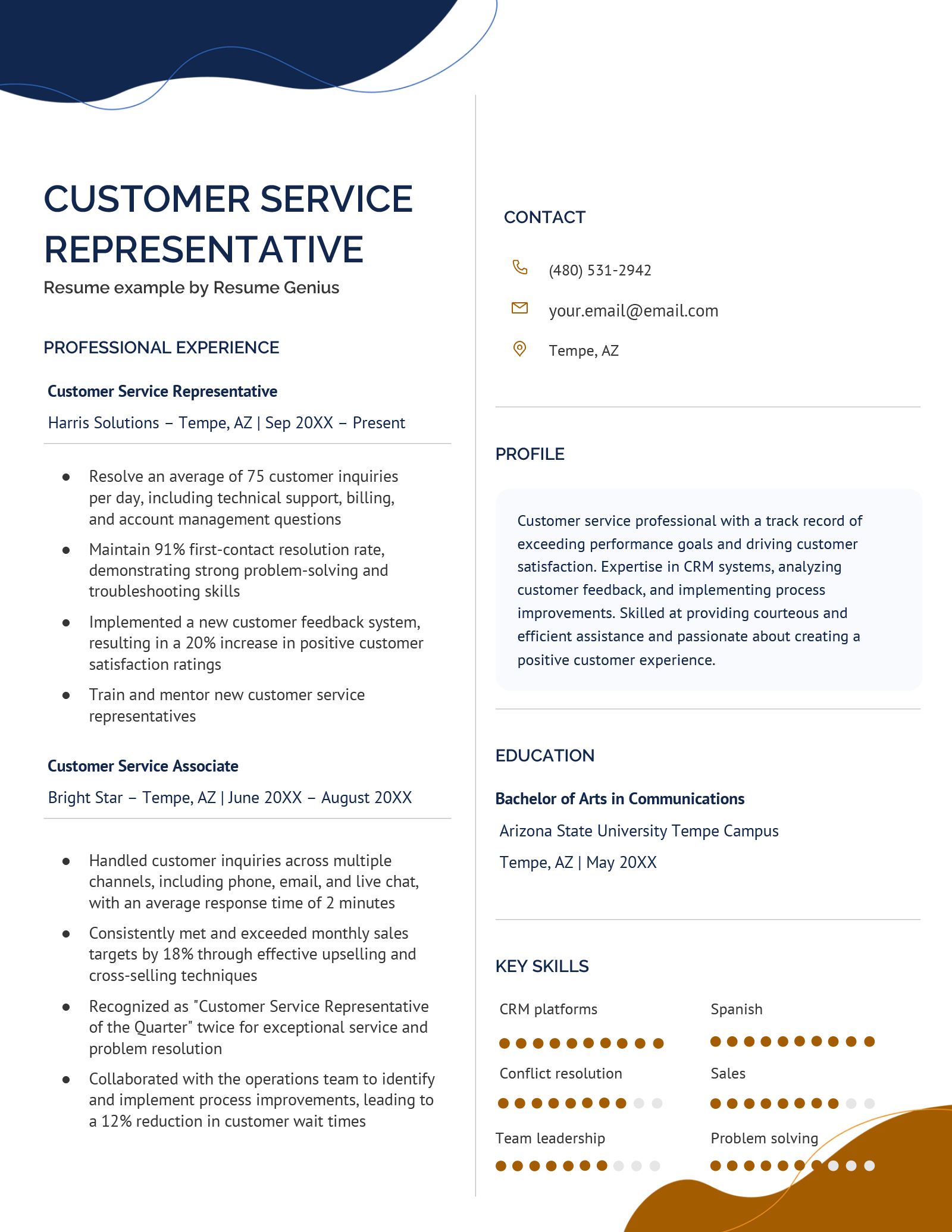
For more inspiration, explore dozens of customer service resume examples tailored to your role and experience level.
Don’t forget to customize your resume for the role’s specific requirements. Our resume builder helps you create tailored resumes quickly with professional templates that immediately grab attention.
Our resume builder can make you a resume in as little as 5 minutes. Pick the template you want, and our software will format everything for you.
Prepare for the full interview process
Beyond practicing answers, comprehensive interview preparation helps you enter interviews confident and ready to impress.
- Practice strong communication and body language: Speak clearly, maintain eye contact, and use confident posture to project professionalism
- Have a friend interview you: Practice with someone (or use an AI chatbot) who can give honest feedback on your answers and delivery
- Prepare follow-up questions: Thoughtful questions about team dynamics, training, or performance metrics show genuine interest
Master these common interview questions:
About the Author

Cort is a writer on the Resume Genius team. With a focus on helping job seekers showcase their strengths with clarity and confidence, he specializes in creating practical resources, from tailored resume samples to step-by-step guides on navigating applications and interviews.
With a background in marketing and communications, Cort has spent years honing his ability to provide straightforward, actionable content designed to help readers quickly find what they need.
Cort graduated from the University of California, Davis with a B.A. in Economics and International Relations.
Click to rate this article
4.9 Average rating