Child Care Resume Examples & Writing Guide
 Written By Conrad BenzContent Manager & Hiring Manager
 Reviewed By Geoffrey ScottSenior Hiring Manager & Career Coach
Conrad Benz is a Content Manager and Hiring Manager at Resume Genius. With nearly a decade of experience as a career services professional, Conrad is passionate about helping people navigate...
A child care resume should show that you’re caring, responsible, and able to manage different age groups with ease.
Our child care resume examples range from entry-level providers to nannies to experienced child care professionals - so you can pick the one that fits your background best.
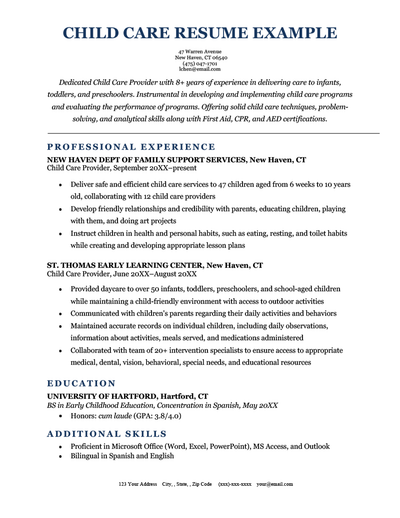
Child care resume examples by experience level
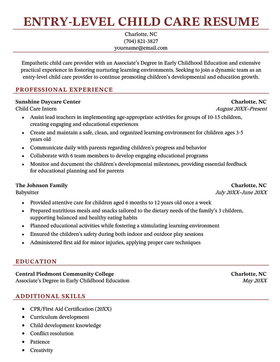
Check out our full collection of resume templates for even more designs.
Child care resume template (text format)
- Bilingual in Spanish and English
- Child safety and first aid
- Meal planning and feeding
- Behavior management
- Activity planning
- Basic teaching skills
- Deliver safe and efficient child care services to 47 children aged from 6 weeks to 10 years old, collaborating with 12 child care providers
- Develop friendly relationships and credibility with parents, educating children, playing with them, and doing art projects
- Instruct children in health and personal habits, such as eating, resting, and toilet habits while creating and developing appropriate lesson plans
- Provided daycare to over 50 infants, toddlers, preschoolers, and school-aged children while maintaining a child-friendly environment with access to outdoor activities
- Communicated with children’s parents regarding their daily activities and behaviors
- Maintained accurate records on individual children, including daily observations, information about activities, meals served, and medications administered
- Collaborated with team of 20+ intervention specialists to ensure access to appropriate medical, dental, vision, behavioral, special needs, and educational resources
Child care resume examples by job title
These sample resumes are good examples of child care resumes by skill level and type:
Nanny resume
A nanny’s job description can vary depending on the family’s needs, but typically includes childcare, transportation, and meal preparation. If you’re seeking a job as a nanny, you’ll need a properly formatted resume like this:
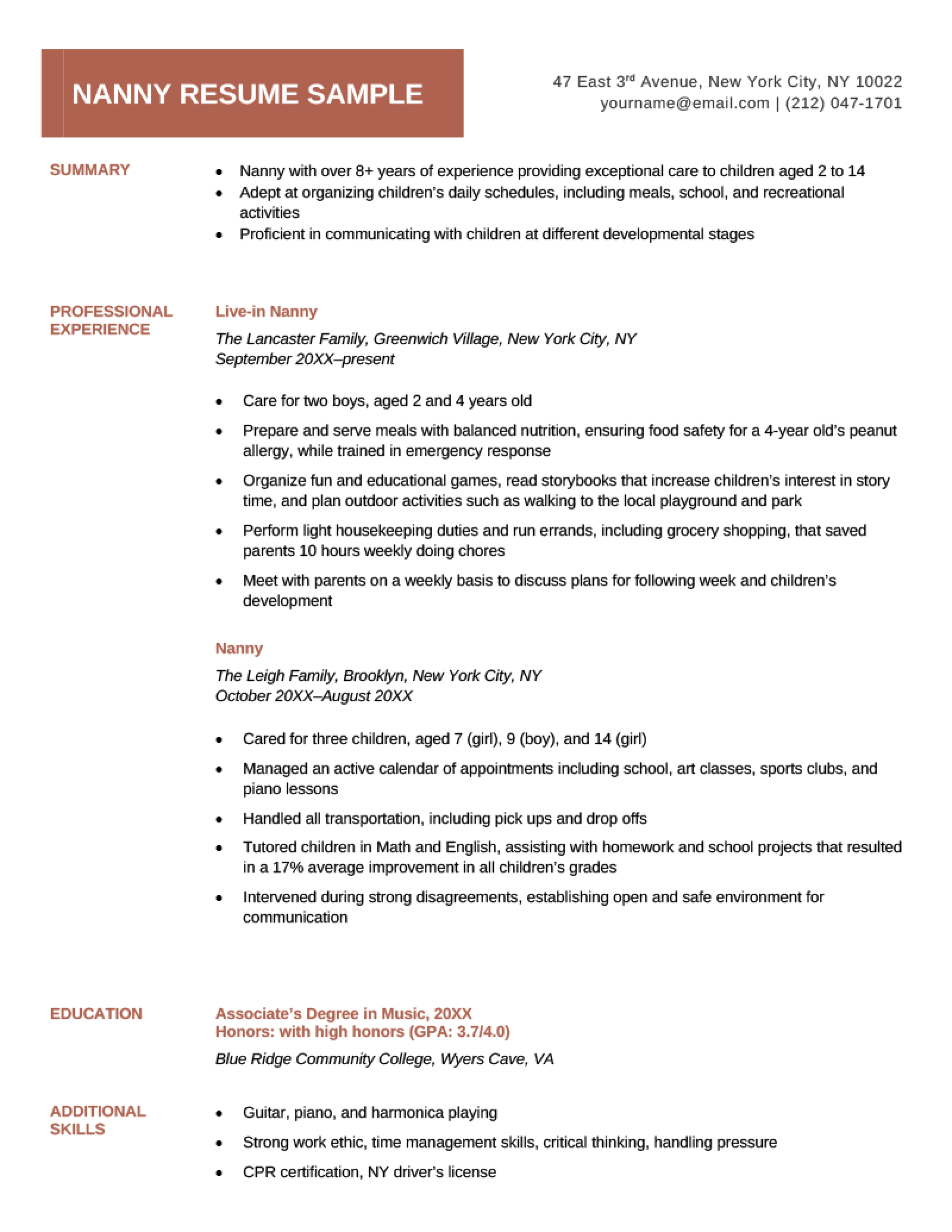
Example highlights
- Bullet point summary: This applicant uses short bullet points in their resume summary, ensuring their key competencies are easy to skim.
- Unique skills: As a child care provider, your hobbies can become your strengths on the job market. If you’re able to teach additional skills that other candidates cannot, for example how to play musical instruments, like the applicant above, employers might be more likely to hire you.
Daycare resume
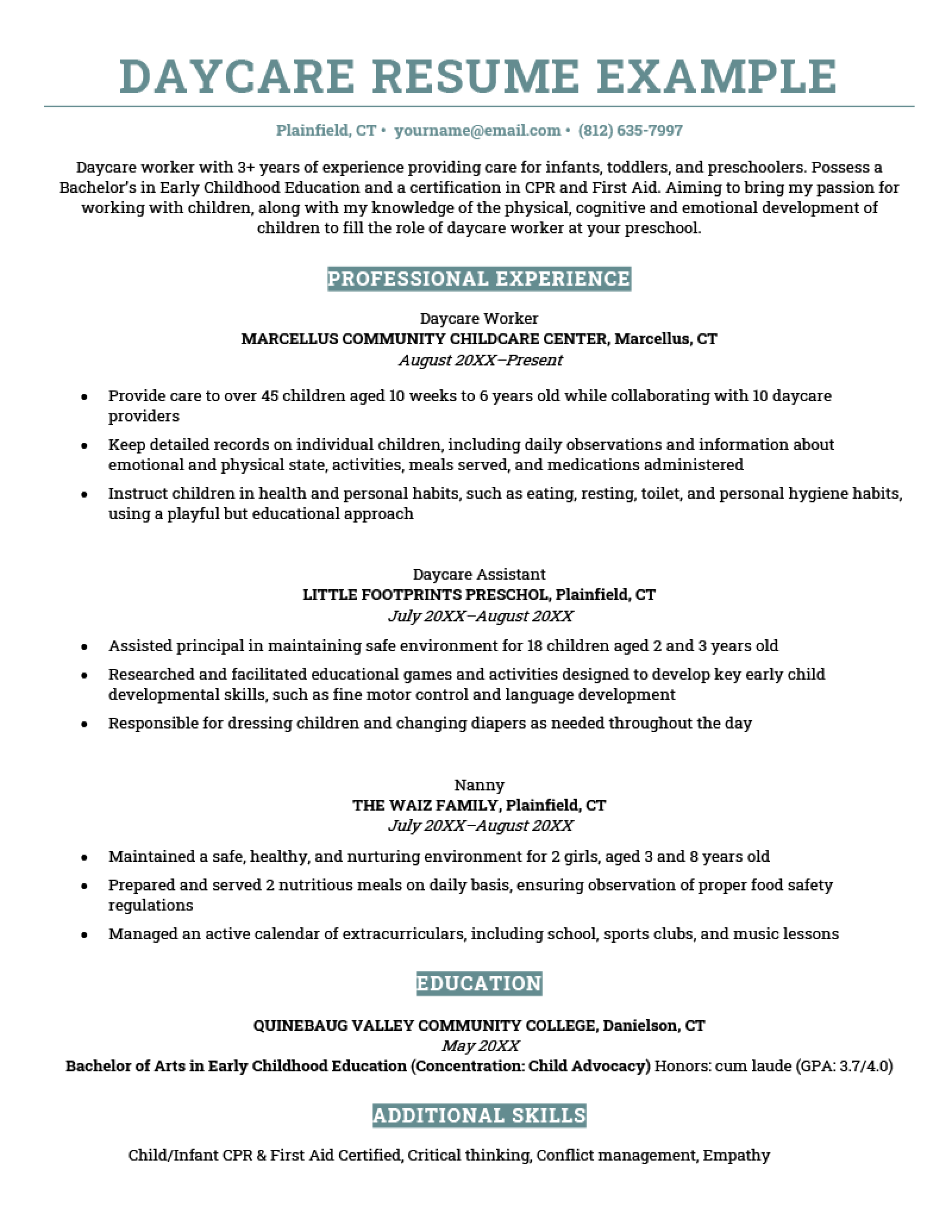
To land a job at a daycare, focus on your abilities to manage large groups of children at once. Here’s a good daycare resume example:
Example highlights
- Effective resume summary: The summary at the top of this resume mentions the applicant’s educational background, certifications, and extensive knowledge of child development. This makes them a strong candidate for daycare jobs.
- Well qualified: This applicant is certified in Child/Infant CPR and First Aid and holds a degree in early childhood education.
Most in-demand child care skills
To help you identify the most relevant skills to highlight on your resume, we analyzed child care job listings from multiple job search platforms.
Our research reveals that these words and phrases appear most often in child care job descriptions:
We analyzed hundreds of real child care job ads to find the top words and phrases to add to your resume.
Data
| Keyword | Percentage | Count |
|---|---|---|
| CPR certification | 50 | 481 |
| Communication skills | 43 | 412 |
| First aid certification | 37 | 358 |
| Ability to follow directions | 35 | 335 |
| Ability to plan engaging activities | 34 | 327 |
| Cleanliness | 8 | 78 |
| Positive attitude | 7 | 63 |
| Nurturing attitude | 3 | 26 |
| Infant care | 2 | 22 |
How to write a child care resume
If you’re great with kids and know how to craft a well-written resume that proves it, you’ll be in high demand for child care positions in daycares, after-school programs, and government child-care facilities.
Here are three tips for writing a child care resume that’s sure to get noticed:
1. Highlight your child care skills
Employers will be looking for child care providers who are responsible and able to maintain a safe and comfortable environment for the kids they look after. This requires a mix of hard and soft skills, like these:
- Pediatric first aid, CPR, and AED certification
- Allergy management (EpiPen administration)
- Knowledge of developmental milestones & developmental monitoring
- Age-appropriate curriculum implementation
- Experience with ducational software
- Inclusive education (for children with diverse learning needs or disabilities)
- Parental communication (daily logs, progress reports, etc.)
- Daily activities management (structured rest, learning, playtime, mealtimes, etc.)
- Time management
- Resource coordination (providing supplies for different activities)
- Active listening
- Ability to work under pressure
2. Tailor your child care resume to the job post
A resume tailored to the specific child care facility you’re applying for is going to have a higher chance of landing you an interview than a generic application.
Here’s how to tailor your child care resume to a specific position:
- Review the job posting to uncover any job-specific skills. For example, if your job duties include providing daycare for infants, preschoolers, and school-aged children, state your experience caring for children of all ages.
- Identify keywords for your resume from the job posting, and integrate them into your resume.
- Research the company, and tailor your resume accordingly. So if you’re applying to an early learning center, highlight your experience applying strategies to teach small children.
- Leave out skills that won’t help you excel as a child care provider to save space for other skills and achievements.
Use both your skills section and work experience section to target relevant keywords and highlight experience the employer wants.
For example, if they’re looking for candidates who are empathetic, patient, and well-organized, here are three bullet points you could use to showcase these qualities:
Tailored resume bullet points
- Provided compassionate and attentive care to 15+ children, ensuring they felt supported in their daily activities
- Excelled in high-stress environments, creating a calm and inclusive atmosphere for the children
- Planned and executed educational and recreational activities that meet the developmental needs of different age groups, maintaining effective daily schedules and routines
3. Write a resume summary that emphasizes your strengths
A strong introduction is key to grabbing employers attention from the start. A resume summary should be 2-5 sentences long and mention your:
- Years of experience in child care
- Relevant certifications or education
- Top skills
- Professional goals
Here are three good examples:
Compassionate nanny with 10+ years of experience in the field, holding an Early Childhood Education certification from [University Name]. Specialized in creating engaging, educational activities with a passion for fostering the cognitive and social development of young children. Aiming to contribute to a nurturing and stimulating environment where children can thrive.
Dedicated child care provider with 5+ years of hands-on experience, certified in both CPR and First Aid. Possess deep understanding of child safety and developmental milestones along with strong communication and organizational skills. Seeking a role that supports both children and their families in educational and personal growth.
Enthusiastic early childhood educator with 8+ years of experience, holding a Bachelor’s degree in Childhood Development and proficient in bilingual education. Known for creativity and patience, with a goal to continue developing innovative educational methods that enhance learning outcomes for preschool children.
Don’t forget to include a well-written child care cover letter with your application.
Average child care salaries in the US
After you’ve written your resume, make sure you use it to apply for jobs within a fair salary range.
The following table includes information from the US Bureau of Labor Statistics’ latest Occupational Employment and Wage Statistics report for 2026. Here are the ten states with the highest salaries for child care providers, as well as the national average for your reference when applying for work.
Top 10 states by average childcare worker salary
| State | Salary / Year |
|---|---|
| District of Columbia | $48,360 |
| California | $42,790 |
| Massachusetts | $42,580 |
| Colorado | $42,410 |
| Washington | $42,400 |
| New York | $39,690 |
| Vermont | $39,380 |
| Oregon | $39,170 |
| Hawaii | $38,210 |
| Connecticut | $38,190 |
| National Average | $35,030 |
About the Author

Conrad Benz is a Content Manager and Hiring Manager at Resume Genius. With nearly a decade of experience as a career services professional, Conrad is passionate about helping people navigate the job search process and find fulfilling work.
You can find Conrad’s career insights in publications like Typsy, Resume Library, and more.
Conrad graduated with a B.A. in International Relations from Goucher College in Maryland and currently lives in Taipei, Taiwan, where he helps ensure every article on Resume Genius provides job seekers with the information they need to succeed.
If you want to reach Conrad for a quote or media-related inquiry, you can contact him at [conrad] @ [resumegenius.com].