


Struggling to get interviews?
Getting promoted is a big achievement, and it should be included on your resume.
The best way to present your career growth depends on the length of your career and simplicity of your job history. We outline three ways to effectively show a promotion on your resume in this article.
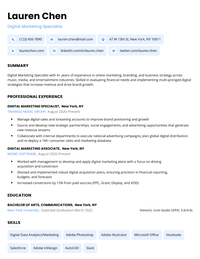
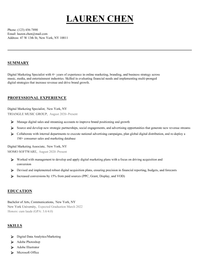
Option 1: List each position separately
List each position as a separate job entry if your work experience section is brief.
This approach emphasizes your career progression by visually distinguishing each role you’ve held. It makes it easy for hiring managers to see how your skills have evolved.
Another advantage of listing each position separately is it’s easy to order your jobs chronologically, even if you left a company and returned to it later.
Example of how to list each position separately
Northpoint Digital, Denver, CO
Performance Marketing Manager (20XX-Present)
- Promoted to Performance Marketing Manager due to strong analytical skills and success in driving campaign performance
- Develop and implement data-driven marketing strategies
- Manage a $500K annual advertising budget across Google Ads, Facebook, and LinkedIn, improving ROAS by 35%
Northpoint Digital, Denver, CO
Marketing Specialist (20XX-20XX)
- Supported campaign execution and social media strategy
- Managed content calendars and coordinated cross-functional marketing initiatives with designers and writers
- Organized promotional events and webinars, driving a 10% boost in customer engagement
The only downside to listing each position separately is it’s not the most space-efficient way to present your promotion. If you were promoted multiple times in a short period, this format will make your resume run long.
Option 2: Stack promotions under the same employer
If you were promoted multiple times at the same company, stack the positions under the company name.
This approach prevents you from repeating information and allows you to focus on your unique achievements in each role.
Example of how to stack promotions
Northpoint Digital, Denver, CO
Performance Marketing Manager (20XX-Present)
- Lead the development and execution of performance-driven marketing strategies
- Oversee a $500K annual ad budget across Google Ads, Facebook, and LinkedIn, increasing ROAS by 35%
Marketing Specialist (20XX-20XX)
- Contributed to campaign execution and enhanced social media engagement strategies
- Coordinated content calendars and collaborated with cross-functional teams to deliver campaigns
Option 3: Combine roles into one entry
Combining roles into one entry is the most concise way to highlight career growth.
This format is suitable for showcasing early promotions or small role changes where your responsibilities remain largely the same. It saves you space on your resume while acknowledging your progress through one organization.
Follow this format to comine roles:
- Most recent position
- Previous position
- One bullet point explaining why you were promoted
- Two to five bullet points describing your professional accomplishments
Example of how to combine roles
Apple Inc., Cupertino, CA
Senior Software Engineer (20XX-Present)
Software Engineer (20XX-20XX)
- Promoted within one year (the only engineer in a cohort of 20 to be fast-tracked) for determining optimal direction for company on a strategic level
- Quality Assurance testing of 100+ software modifications and fixes
- Provided technical advice on bugs and enhancements
- Resolved average of 47 customer issues a week with the support team
- Assisted the advance support team when necessary
Make it clear if you were fast-tracked for a promotion. Including details like the size of your team or the reason you were promoted will help you emphasize your success in the role and potential value as an applicant.
Frequently asked questions
We’ve answered some of the most common questions about how to list promotions on a resume.
How do I list horizontal title changes at the same company?
If you switched to a role in a different team or department, stack the roles under the same employer. Bullet your achievements in each role separately so you can highlight your diverse work experience.
Should I include every promotion on my resume?
You shouldn’t necessarily list every promotion on your resume. If you have a long career history, focus on the roles you held in the last 10–15 years. This allows employers to focus on your most relevant work experience.
If some title changes were minor or very similar in responsibility, you can group them together to keep things concise.
For earlier promotions reflect meaningful experience, listing them briefly under an additional experience section. For each role, specify the job title, employer, and employment dates.
Should I mention promotions in my cover letter?
Mention promotions in your cover letter if they demonstrate meaningful success or growth in a role. Your cover letter provides the necessary space to turn those milestones into a persuasive narrative.
Explain how each promotion helped you sharpen your skills and deepen your industry knowledge. This adds a layer of professional context that a resume alone cannot provide, showing hiring managers that your growth is the result of consistent, high-level performance and a proven track record of success.
About the Author

Seb is a Certified Professional Resume Writer with 10 years of combined experience in career counseling and editorial work. With a MA in International Communications from National Chengchi University (Taiwan), he helps job seekers translate their experience into employer-ready applications for global job markets.