Military Resume Examples & Template
 Written By Cort DaltonContent Writer
 Reviewed By Conrad BenzContent Manager & Hiring Manager
Cort is a writer on the Resume Genius team. With a focus on helping job seekers showcase their strengths with clarity and confidence, he specializes in creating practical resources, from...
Seeking a military career as a civilian? In many cases, you’ll need a resume to apply for officer programs or professional tracks.
Below, we explain when resumes are required, when they’re not, and how to write one that highlights the skills and experiences the military values.
Our resume samples cover the three most common scenarios where civilians need a military resume: ROTC scholarships, OCS applications, and direct commission programs.
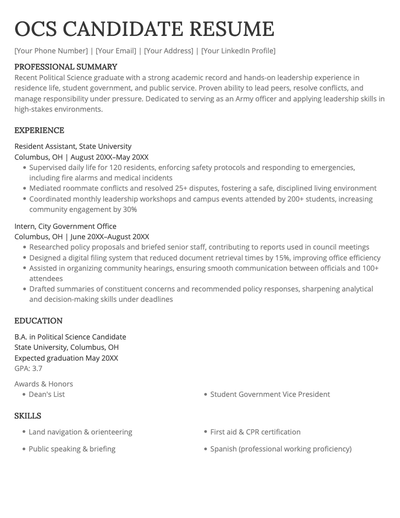

Resume examples for entering the military
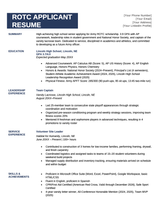
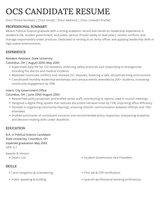
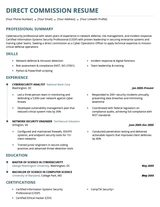
Our collection of resume templates includes alternative designs and color palettes to match your style.
Related resume samples
View all resume samples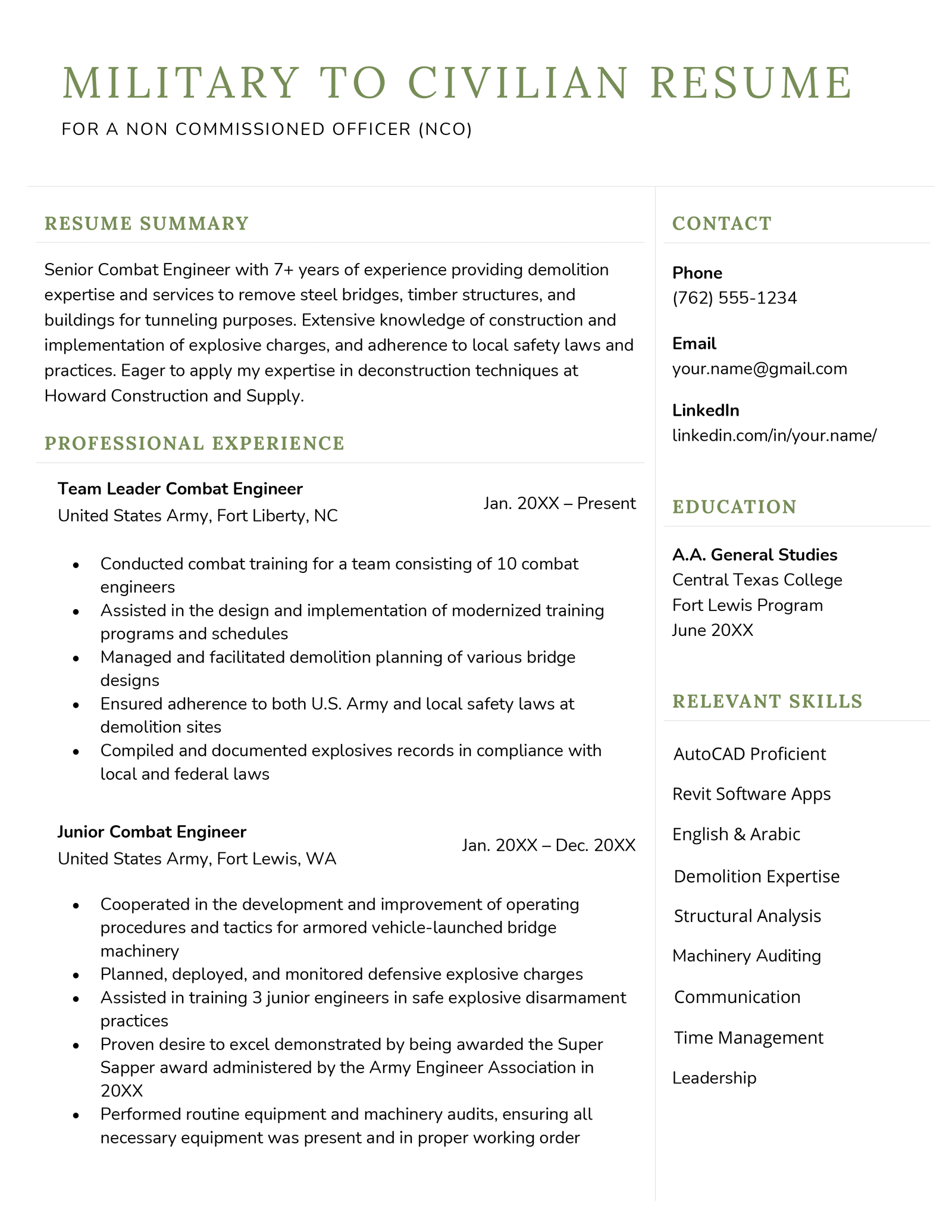
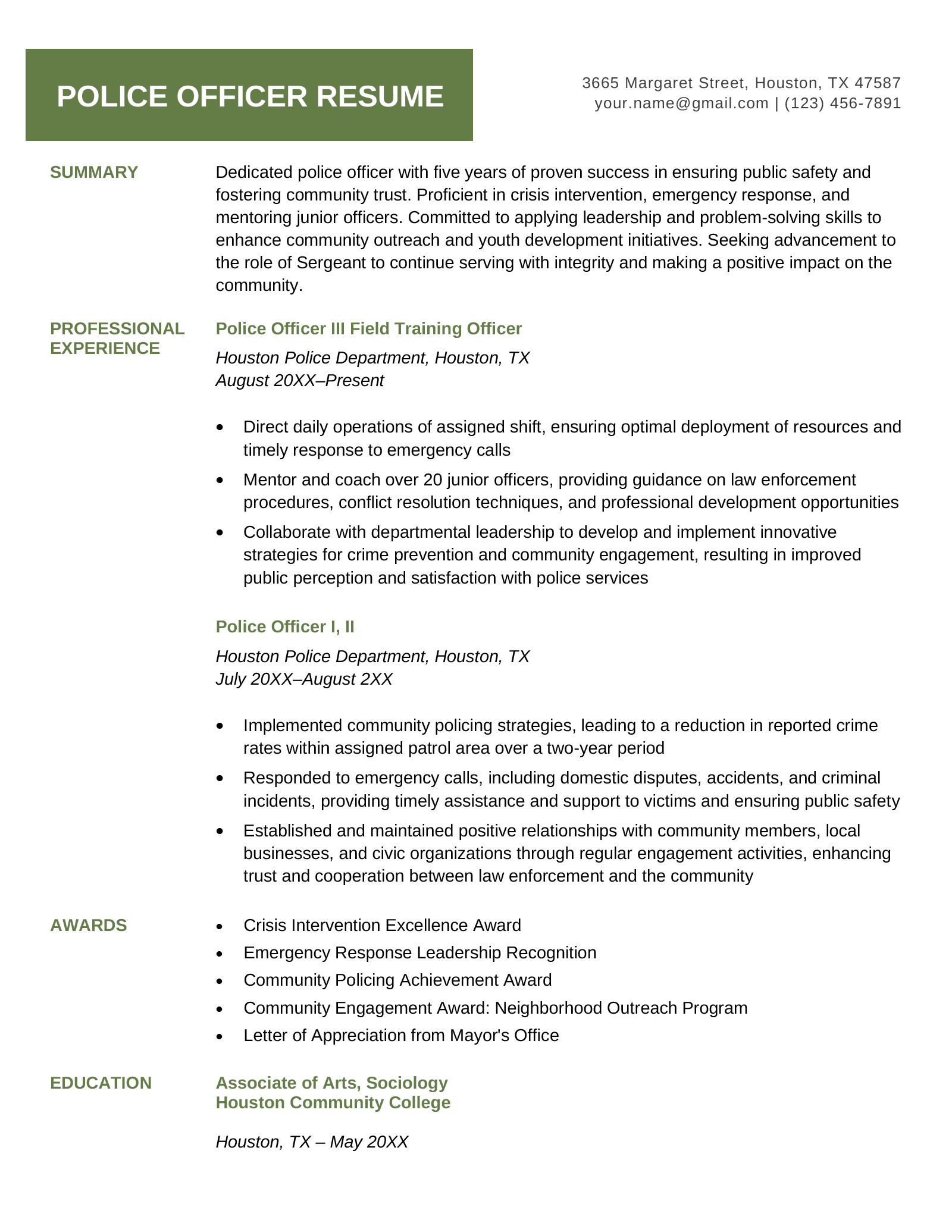
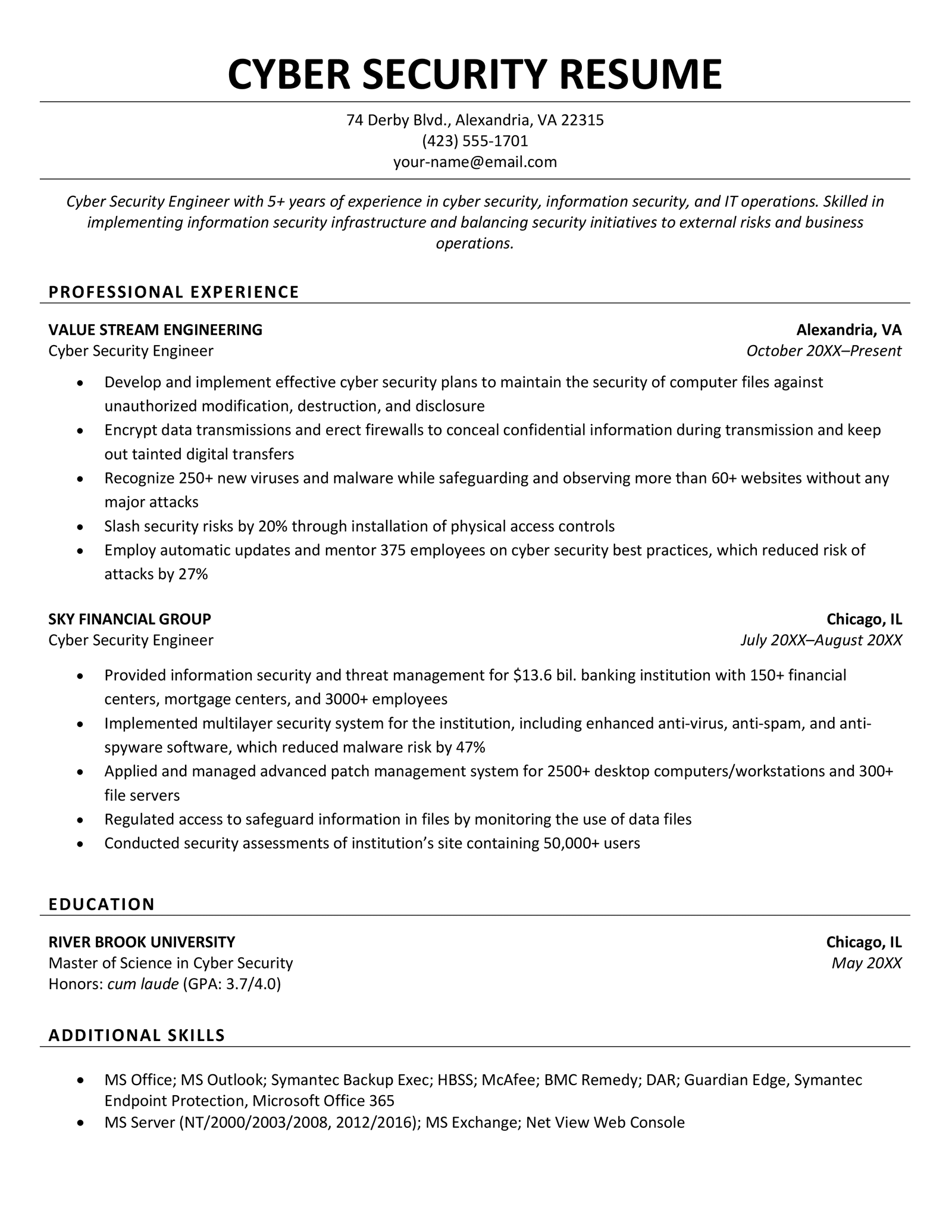

Military resume template (text format)
- Land navigation & orienteering
- First aid & CPR certification
- Public speaking & briefing
- Spanish – professional working proficiency
- Supervised daily life for 120 residents, enforcing safety protocols and responding to emergencies including fire alarms and medical incidents
- Mediated roommate conflicts and resolved 25+ disputes, fostering a safe, disciplined living environment
- Coordinated monthly leadership workshops and campus events attended by 200+ students, increasing community engagement by 30%
- Researched policy proposals and briefed senior staff, contributing to reports used in council meetings
- Designed a digital filing system that reduced document retrieval times by 15%, improving office efficiency
- Assisted in organizing community hearings, ensuring smooth communication between officials and 100+ attendees
- Drafted summaries of constituent concerns and recommended policy responses, sharpening analytical and decision-making skills under deadlines
How to write a military resume
Not every path into the military calls for a resume. Enlistment candidates rely on test scores and background checks rather than a formal document.
Officer and professional tracks work differently. A resume is often required for programs like ROTC scholarships, OCS, or direct commissions, and boards expect it to reflect qualities they value most.
Above all, military boards want to see leadership. Use every section of your resume to show how you’ve taken initiative in various aspects of your life.
Strong grades, technical skills, and extracurricular achievements still count, but they stand out when they reveal your ability to guide others and handle responsibility under pressure.
The guide below shows you how to structure your resume so reviewers see your strongest credentials first.
1. For ROTC applicants
If you’re a high school or college student applying to ROTC scholarships or programs, your resume is a chance to show maturity, strong academics, and readiness for military service.
Chances are, you won’t have tons of work experience under your belt just yet. But that’s okay – as a student, boards will look most closely at your academic achievement, followed by activities that suggest future leadership potential.
Here’s one way you could structure your resume to exhibit these qualities:
- Summary: communicate motivation to serve, strong academics, and leadership potential
- Education: list GPA, honors, AP/IB courses, and major achievements
- Activities & Leadership: include student government, varsity sports, or volunteer clubs
- Experience: part-time jobs or community service that show responsibility
- Skills: close with concrete abilities such as foreign language proficiency, technical skills, or certifications
If you do have work experience that demonstrates leadership skills like self-motivation, adaptability, or public speaking, consider putting your experience section higher up on your resume. It’s a great way to catch the board’s attention and show you’re ready to take initiative from day one.
2. For OCS applicants
When applying for Officer Candidate School, your resume should show that you’ve already taken on responsibility and can stay effective under pressure. If, like most applicants, you’re a recent graduate, your education section should appear toward the top of your resume.
With this structure, your resume prioritizes leadership in action and supports it with relevant academic and technical qualifications.
- Summary: communicate commitment to serve and highlight leadership strengths
- Experience: internships, jobs, or campus roles that required responsibility
- Education: include GPA if strong, plus ROTC and any honors or awards you earned
- Skills: wrap up with practical abilities that matter to OCS, such as foreign languages, certifications (CPR/First Aid), or tools that support mission readiness
3. For direct commission professionals
Direct commissions allow qualified civilians in fields such as medicine, law, chaplaincy, or cyber to enter the military directly as officers. Because selection depends on professional expertise, your resume should highlight the skills and experience that prove you’re ready to serve in that specific corps.
Make sure your resume’s experience section shows leadership in action, while your education section confirms your eligibility with the required degrees and licenses.
- Summary: frame your professional expertise, motivation to serve, and connection to the corps you’re targeting (e.g., Medical, JAG, Chaplain)
- Experience: detail civilian roles with measurable results and supervisory responsibility, emphasizing leadership and interpersonal strengths
- Skills: technical expertise and specialized knowledge that show immediate value to the branch
- Education: conclude with advanced degrees, certifications, and licenses that formally establish eligibility
Build your resume in minutes

About the Author

Cort is a writer on the Resume Genius team. With a focus on helping job seekers showcase their strengths with clarity and confidence, he specializes in creating practical resources, from tailored resume samples to step-by-step guides on navigating applications and interviews.
With a background in marketing and communications, Cort has spent years honing his ability to provide straightforward, actionable content designed to help readers quickly find what they need.
Cort graduated from the University of California, Davis with a B.A. in Economics and International Relations.
Click to rate this article
4.3 Average rating