

An effective nonprofit cover letter improves your chances of landing an interview at your target organization. Below you’ll find a free nonprofit cover letter sample, template, and writing tips to help you put together a job-winning application.
Nonprofit cover letters differ from standard cover letters because nonprofit employers are more value-driven. They pay close attention to your motivations and alignment.
Your cover letter is the best way to show your commitment to causes and convince nonprofit organizations of your value as a team member.
Keep reading to learn how to write a cover letter for a nonprofit and present your experience in a way that grabs the hiring manager’s attention.
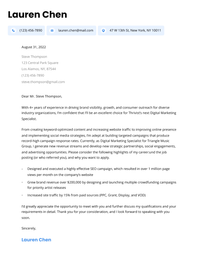
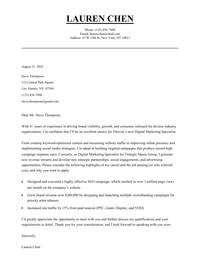
Our cover letter builder can make you a cover letter in as little as 5 minutes. Just pick the template you want, and our software will format everything for you.
Nonprofit cover letter example
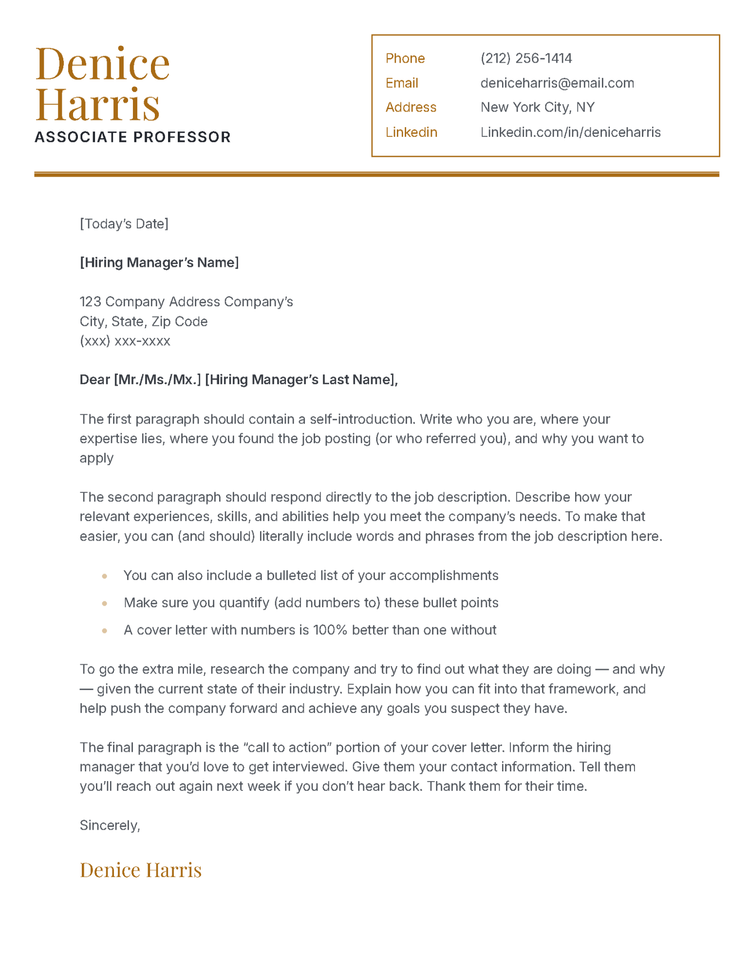
Here’s a professionally written nonprofit cover letter example that contains all of the elements hiring managers look for:
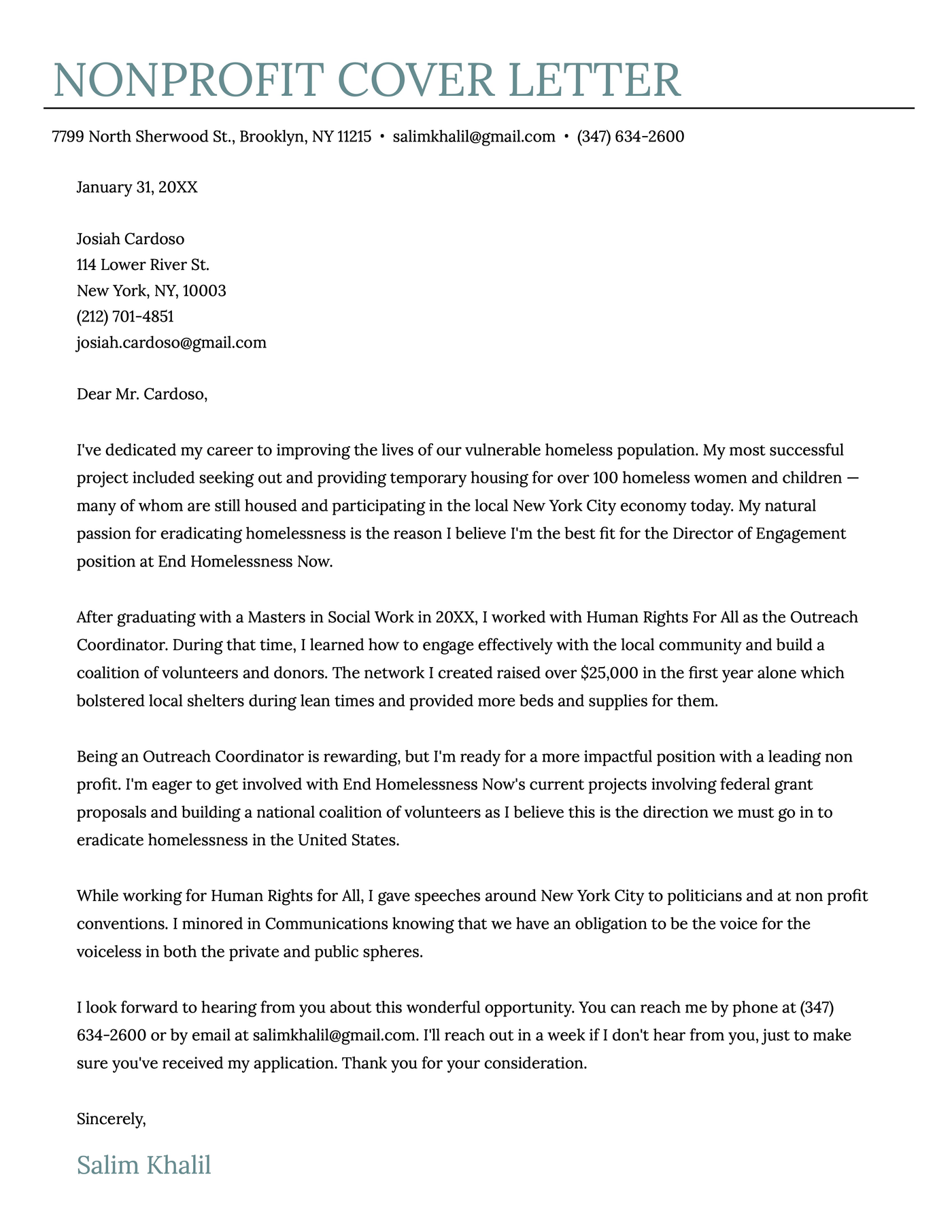
This cover letter works for several reasons. The applicant demonstrates an understanding of their target nonprofit organization’s goals (building a volunteer network), and concisely explains how their experience has provided them with the skills to help achieve those goals.
The letter also emphasizes concrete results, such as raising $25,000 for local shelters. Using impact-focused language like this will set you apart from other candidates because it shows the tangible contributions you made in previous roles.
These elements collectively show that the applicant understands the unique challenges and priorities of the nonprofit sector, making it a good example for others seeking nonprofit positions.
Nonprofit cover letter template
To make your cover letter writing process easier, here’s a nonprofit cover letter template that you can edit to suit your needs:
Dear [Hiring Manager’s Name],
I’ve dedicated my career to improving [a cause that’s important to you]. My most successful project includes [a project you recently accomplished]. My natural passion for tackling [issue] is the reason I believe I’m the best fit for the [Job Title] position at [Organization Name].
After graduating with a degree in [area of study], I worked with [Previous Organization Name] as a [previous title]. During that time, I learned how to [something you learned that’s relevant to the position]. The work I did there helped [result of your work], which bolstered our overall efforts and allowed us to make significant progress toward our goal of [description of goal].
While my current role is very rewarding, I’m ready for a more impactful position with a leading nonprofit. I’m eager to get involved with [Organization Name]’s current projects involving [recent accomplishment of the organization] as I believe this is the direction we must go in order to accomplish [stated goal of the organization].
I look forward to discussing this wonderful opportunity with you further. You can reach me by phone at [your phone number] or by email at [your email]. Thank you for your time and consideration, and I look forward to hearing from you.
Sincerely,
[Your Name]
How to write a cover letter for a nonprofit
The key to writing any cover letter is to focus on your target employer — write for their needs, not for your own.
However, when writing for a nonprofit employer, you’ll benefit from connecting your strengths to the organization’s broader purpose. Follow the steps below to build a strong case for yourself.
1. Write a passionate introduction
Passion for the cause is one of the first things employers look for in applicants for a nonprofit position.
If you’re interested in joining a nonprofit, you likely have a good reason to be enthusiastic about the work the organization does.
Use your cover letter introduction to briefly tell employers the story about how you developed an interest in their cause, how you’ve dedicated yourself to promoting it, or how the organization’s mission aligns with your personal mission.
2. Connect your experience to the nonprofit’s mission
Show how your experience aligns with the organization’s goals to demonstrate your understanding of the role and its wider importance to the employer.
For example:
At EcoSolutions, I implemented waste reduction programs for Fortune 500 companies, decreasing landfill contributions by 30% and generating significant savings. This aligns with Green Earth’s business partnership goals. I also led community initiatives engaging 5,000+ residents in sustainability efforts, reflecting your grassroots focus. My data analysis and report writing skills have influenced corporate decision-makers, which could enhance Green Earth’s policy advocacy. I’m eager to apply these experiences to further your mission of creating sustainable, livable cities.
By drawing these connections, you prove that you’ve done your research and are genuinely interested in the role, not just looking for any job.
3. Do your research
To show the hiring manager that you’re ready to excel at your new job from day one, you need to prove that you already have substantial knowledge about the organization, its successes, and its upcoming challenges.
Use the following resources (as well as the job description) to research your target nonprofit so you can learn about their past accomplishments, current projects, and future goals:
- The official website
- News articles and press coverage
- The organization’s social media pages
- Industry-specific publications and reports
Here’s an example of how to show that you understand the organization and its goals in your cover letter:
The Equal Minds Foundation has made significant strides in addressing educational disparities, a mission that deeply resonates with me. Your “Tech for All” initiative aligns with my IT asset management experience and passion for digital literacy. I’m also impressed by your after-school tutoring programs, having volunteered in similar roles and witnessed their impact firsthand.
4. Expand on the accomplishments from your resume
Use your cover letter to elaborate on the achievements you listed on your resume.
This allows you to provide context, depth, and personal insight that a resume’s concise format doesn’t allow for.
While your nonprofit resume should already demonstrate your impact in critical nonprofit responsibilities like grant funding and community outreach, your cover letter is your opportunity to explain how you approached your work and how your experience relates to the position you’re applying for.
Your cover letter also provides a chance to inject your personality and passion into your application, helping the hiring manager understand not just your qualifications, but also your motivations and work style.
For example:
Increased volunteer retention rate by 40% over 2 years
Additional context in the cover letter:
As Volunteer Coordinator at City Food Bank, I implemented a comprehensive volunteer engagement program that boosted our retention rate by 40% in just two years. This involved creating personalized orientation sessions, establishing a volunteer recognition system, and developing ongoing training opportunities, all of which could be valuable in expanding your organization’s volunteer base.
By expanding on your resume’s bullet points, you contextualize your professional history, making your application more memorable and compelling to nonprofit employers.
5. Close with a convincing call-to-action
Use a call-to-action at the end of your cover letter to encourage the employer to contact you by:
- Restating your enthusiasm about the job and telling them directly that you’re looking forward to them contacting you for an interview
- Making your contact details the last thing they see when they finish reading your cover letter
Here’s an example cover letter ending that works for a nonprofit job:
I am very excited about the chance to contribute to Second Chance Animal Rescue’s initiatives and would be grateful for the opportunity to discuss my qualifications further. Please don’t hesitate to contact me at sam.brown@email.com or (213) 369-2580 to arrange an interview. Thank you for your consideration, and I look forward to the possibility of joining your team in creating positive change.
Before sending your application, check your cover letter’s length. Most employers expect 250–400 words.
About the Author

Seb is a Certified Professional Resume Writer with 10 years of combined experience in career counseling and editorial work. With a MA in International Communications from National Chengchi University (Taiwan), he helps job seekers translate their experience into employer-ready applications for global job markets.


Click to rate this article
4.8 Average rating