
- When to mention Microsoft Office skills on your resume
- 100+ useful Microsoft Office skills for your resume
- Microsoft Word skills
- Microsoft Excel skills
- Microsoft PowerPoint skills
- Microsoft Outlook skills
- Microsoft Access skills
- Microsoft Publisher skills
- Microsoft Teams skills
- Microsoft OneNote skills
- Microsoft Designer skills
- Microsoft Clipchamp skills
- Microsoft SharePoint skills
- Microsoft Defender skills
- How to list Microsoft Office skills on a resume
- Example of Microsoft Office skills on a resume
- Additional resources
- Frequently asked questions

Struggling to get interviews?
You might think it’s a rookie mistake to mention your Microsoft Office skills on your resume. Won’t most employers expect you to have them?
The truth is Microsoft Office skills can add significant value to your job application — if they’re specialized and relevant to the role you’re applying for.
In other situations, they come across as trivial. Some even make you look inexperienced.
When to mention Microsoft Office skills on your resume
You should mention Microsoft Office skills when they are specialized and necessary to the role. That is to say, list the specific Office skills from the job description that you can use at a professional level.
Leave off any Microsoft Office skills that you only have basic proficiency in or that employers expect of someone in your field (e.g., a copywriter must possess basic Microsoft Word skills).
Mention MS Office skills if
- The job description explicitly requires a specific tool
- Your proficiency is advanced and specific (e.g., pivot tables, macros, XLOOKUP)
- You can frame your skills as an achievement (“Automated monthly reports in Excel, saving X hours/week”)
- You’re applying for an entry-level role where basic competency isn’t guaranteed
Don't mention MS Office skills if
- You can only listing the skill generically with no supporting achievements (e.g., “Proficient in Microsoft PowerPoint”)
- Proficiency is clearly assumed (most office jobs treat basic Microsoft Office skills as trivial)
- Office tools aren’t mentioned or not relevant to the core responsibilities
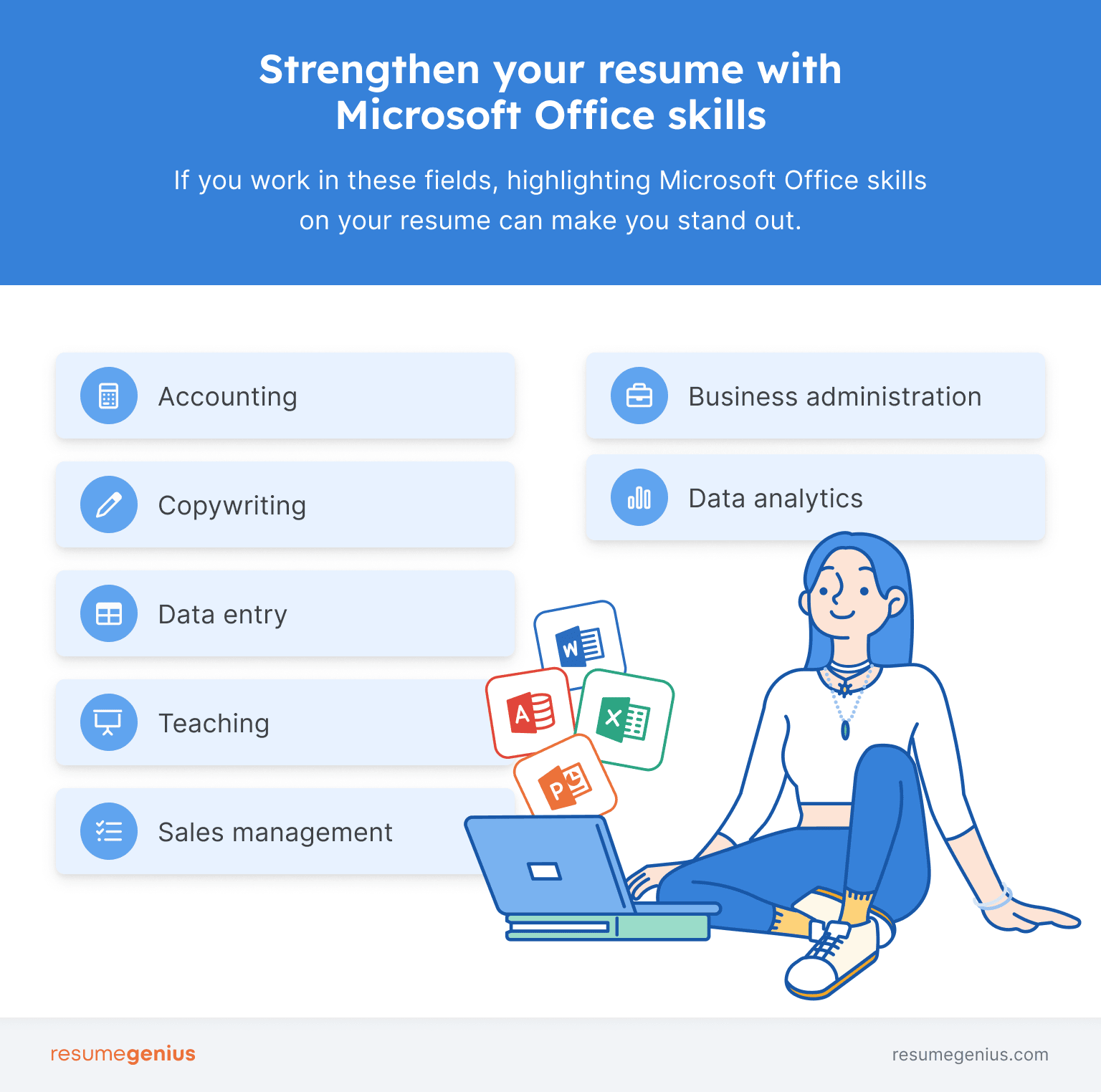
The field you’re working in plays a big role in how much Microsoft Office skills matter.
Think about whether those tools are actually central to the job’s day-to-day responsibilities.
100+ useful Microsoft Office skills for your resume
Here’s a list of some of the most common Office applications and relevant skills to include on your resume:
Microsoft Word skills
- Advanced formatting
- Tracking changes and adding comments to collaborate on documents
- Generating bibliographies and citations
- Creating graphs and charts
- Creating forms and templates
- Making master documents
- Setting up password protection
- Inserting footers and headers
- Creating mail merge templates
- Creating and customizing styles
- Using Outline View for long documents
- Inserting and managing cross-references and tables of contents
- Creating accessibility-compliant documents
Microsoft Excel skills
- Analyzing large datasets using pivot tables and slicers
- Applying conditional formatting to highlight key trends or issues
- Automating calculations with advanced functions
- Using macros to streamline repetitive tasks
- Data simulation
- Building dashboards and reports with charts and sparklines
- Using LOOKUP functions
- Validating input data to ensure spreadsheet accuracy
- Importing and cleansing data from external sources (CSV, databases, web)
Microsoft PowerPoint skills
- Creating and recording presentations
- Designing branded templates
- Visualizing data using embedded charts
- Embedding multimedia and animations
- Using the accessibility checker
- Accessibility tools like alt text for visuals
- Using slide master to maintain consistent formatting across presentations
- Using speaker notes and presenter view
- Exporting presentations as videos or PDFs
Microsoft Outlook skills
- Managing and organizing high-volume inboxes using rules and Quick Steps
- Making public folders
- Scheduling meetings, appointments, and reminders for multiple calendars
- Using Quick Parts
- Setting up email templates and signatures for consistent messaging
- Managing shared calendars and mailboxes
- Delegating access and permissions
- Using categories and flags to prioritize tasks
Microsoft Access skills
- Creating, customizing and sharing databases
- Developing and executing complex queries
- Creating custom forms for intuitive data entry
- Importing and exporting data
- Automating reporting with macros and export functions
- Filtering data
- Converting reports to PDFs
- Integrating Access databases with Excel for advanced analysis
- Designing relational databases
- Normalizing data
- Writing SQL queries within Access
Microsoft Publisher skills
- Designing marketing collateral such as flyers, brochures, and business cards
- Customizing templates
- Adjusting layout and formatting
- Creating tables and charts
- Manipulating graphics and images
- Using Design Checker
- Creating web pages
- Working with building blocks
- Exporting designs to various formats
- Preparing files for print vs. digital distribution
Microsoft Teams skills
- Organizing team channels
- Sharing files and managing permissions
- Coordinating projects by integrating Teams with Planner and OneNote
- Setting up audio/video conferencing
- Leading video meetings and webinars with screen sharing and Whiteboard
- Scheduling meetings
- Creating shift schedules and tracking time using the Shifts tool
- Streamlining communication using chats, tags, and mentions
- Gaining insights from analytics and usage reports
- Integrating with Planner and To Do apps
- Using Power Automate with Teams
- Setting up breakout rooms for meetings
Microsoft OneNote skills
- Creating and organizing notebooks, sections, and pages
- Use advanced features like ink-to-text conversion and audio recording
- Sharing notebooks
- Embedding files and images
- Editing and syncing notes
- Organizing notes with tags
Microsoft Designer skills
- Customizing pre-designed templates
- Creating AI-generated images
- Using design canvas tools to edit images
- Setting up a brand kit
- Saving and organizing designs
- Collaborating with others via Microsoft Loop or Teams
- Exporting designs to use in presentations or documents
Microsoft Clipchamp skills
- Trimming, cutting, and cropping shots
- Using speed control to adjust playback speed
- Timeline editing
- Screen recording
- Audio editing
- Adding AI voiceovers with text-to-speech
- Using text, picture-in-picture, and graphic overlays
- Using the green screen filter to replace backgrounds
- Color correction
- Adding motion graphics and animation
- Using AI features like automatic captioning and noise suppression
- Making GIFs
- Creating branded video templates
- Exporting in different aspect ratios for platforms (YouTube, TikTok, etc.)
Microsoft SharePoint skills
- Creating and customizing team sites
- Creating and managing pages and document libraries
- Managing file permissions
- Tracking file activity
- Creating and sharing lists
- Using automated workflows
- SharePoint Framework (SPFx) development
- Creating document approval workflows with Power Automate
- Managing metadata and versioning
- Integrating with Teams and OneDrive
Microsoft Defender skills
- Investigating and managing incidents
- Performing advanced hunting
- Creating KQL queries and custom detection rules
- Analyzing threat analytics and reports
- Configuring Defender XDR settings
- Onboarding and managing devices in Defender for Endpoint
- Simulating endpoint attacks
- Assigning incidents
- Adding custom indicators
- Performing live response actions
- Creating investigation packages
The best resume templates for 2026
One of the best ways to make your resume is by filling out one of our free resume templates. All our templates are designed by experts and free to download for Microsoft Word or Google Docs.
How to list Microsoft Office skills on a resume
The phrase “proficient in Microsoft Office” is one employers see on a daily basis, but it’s not effective in communicating your actual level of ability in using Microsoft Office software.
A better approach is to:
- Name the specific applications you’re proficient in
- Explain the extent to which you’ve worked with them in the past
- Provide examples of projects or tasks you’ve completed using Microsoft Office
Here’s how to write a resume that properly highlights your Microsoft Office skills:
1. List your relevant skills and skill levels
Employers want to know what your skill level in Microsoft Office is. Beginner Microsoft Office skills include creating simple documents and using pre-made resume templates, whereas more experienced users are able to take advantage of advanced features to design web pages and produce detailed reports.
When you list your MS Office experience in the skills section of your resume, rate your skill level as basic, intermediate, or advanced:
- Basic – Fundamental understanding of how to use the software
- Intermediate – Solid understanding of the basics and some experience using advanced features
- Advanced – Familiar with the ins and outs of most features and advanced customization options
Below is an example of how to describe your level of MS Office experience in your resume’s skills section:
Microsoft Office (Word, Excel, Access) – Advanced
2. Show how you’ve applied your skills
Use the experience section of your resume to explain how you’ve applied your Microsoft Office skills in previous positions.
Here are three examples:
“Improved project management charts using Excel functions including SUM, COUNTA, COUNTIF”
“Created visually impactful PowerPoint presentations to complement sales pitches, resulting in an average of 200 additional monthly sales”
“Organized onboarding materials by creating master documents using Microsoft Word”
3. List any relevant certifications
You can take exams to earn a Microsoft-issued certification for any of the Office applications. If you’ve acquired a Microsoft Office certification, make sure to put it on your resume.
Here’s an example of how to list a certification on your resume:
Microsoft Office Specialist: Microsoft Excel
Microsoft Corporation, 2020
Additionally, if Microsoft Office skills are highly relevant to the position you’re applying for, highlight your certifications in your resume summary as well.
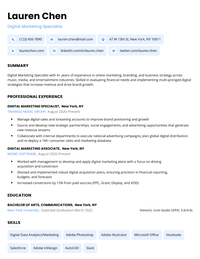
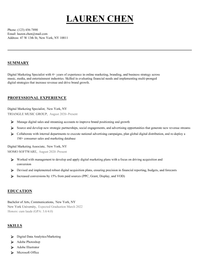
Our resume builder can make you a resume in as little as 5 minutes. Pick the template you want, and our software will format everything for you.
Example of Microsoft Office skills on a resume
As an example, here’s part of a candidate’s resume — including some professional experience and skills — that effectively demonstrates the applicant’s Microsoft Office suite skills:
Office Assistant
ANZIRA, Columbus, OH
July 2020-Present
- Manage the company inbox using Microsoft Outlook features including rules and Quick Step
- Use Microsoft Word to create mail merge templates, leading to a 15% increase in efficiency
- Schedule daily client meetings through MS Teams
- Conduct inventory management with the help of Microsoft Excel
SKILLS
- Microsoft Office (Excel, Word, Outlook, Teams) – Intermediate
Additional resources
Check out these additional resources to help you put together your resume:
- 100+ Best Skills for Your Resume (According to Employers)
- Hard Skills for Your Resume (Guide and Examples)
- Resume Keywords: List of 255+ Keywords to Use in a Resume
- How to Make a Resume for a Job in 2026
- 25+ Resume Templates for Microsoft Word to Download for Free
Build your resume in minutes

Frequently asked questions
Read on for answers to common questions about putting MS Office on your resume.
What is Microsoft Office experience?
Microsoft Office experience refers to your professional history using and proficiency in the Microsoft Office suite of applications. Having Microsoft Office experience means you’re capable of performing tasks such as:
- Writing and formatting documents in Word
- Managing data and performing calculations in Excel
- Designing presentations in PowerPoint
- Communicating and scheduling via Outlook
- Collaborating with others using Teams and SharePoint
Your level of experience can range from basic (e.g., creating simple documents or spreadsheets) to advanced (e.g., using Excel macros or building databases in Access).
Employers value proficiency in Microsoft Office because it’s used in nearly every industry to improve productivity and communication.
Is proficiency in Microsoft Office a skill?
Yes, proficiency in Microsoft Office is a computer skill, although you should specify which specific applications you have proficiency in, and at what level.
In general, you should only list Microsoft Office as a skill on your resume if it’s relevant to your target role and shows that you have more advanced skills. Employers aren’t likely to consider you a strong candidate if your Microsoft Office skills come down to creating documents in Microsoft Word.
Should I put “Proficient in Microsoft Office” on my resume?
You shouldn’t put “Proficient in Microsoft Office” on your resume by itself — it’s too vague and doesn’t show what you’re capable of. It’s best to be specific about your skills and demonstrate how you’ve used Office tools to accomplish meaningful tasks in the experience section of your resume. For example:
- “Created automated Excel reports using pivot tables and formulas to track monthly KPIs”
- “Designed professional slide decks in PowerPoint for client presentations”
- “Managed shared calendars and email communication in Outlook to support a 10-person team”
Be sure to tailor your Microsoft Office skills to the job description, and where possible, demonstrate how you’ve applied those tools to achieve results.
How do I put Microsoft Office in my resume examples?
If you used Microsoft Office applications in previous roles, include them in your resume examples by adding specific ways in which you used them, and with what result. Here are a couple of examples:
Work experience bullets for an office manager
- Utilized Microsoft Excel to streamline budget tracking and financial reporting processes, using forecasting sheets to create accurate financial projections and cut spending by 5% YoY
- Coordinated efficient communication within the team using Microsoft Outlook, facilitating prompt responses to client inquiries and reducing response times by 15%
Work experience bullets for marketing coordinator
- Created compelling presentations for client pitches using Microsoft PowerPoint, contributing to over 40 successful client acquisitions.
- Managed a centralized document repository in Microsoft SharePoint, improving team collaboration and reducing document retrieval time by 10%.
How do you describe MS Office skills in a cover letter?
Writing a cover letter provides the opportunity to add more context and detail to your accomplishments, so be sure to describe what you achieved with Microsoft Office, and how you achieved it.
Here’s an example:
In my recent role as [Your Previous Position] at [Previous Company], I used Microsoft Excel to analyze and interpret large datasets, leading to data-driven insights that informed strategic decision-making. I became recognized for my exceptional Excel skills on the team, and was frequently asked to help with particularly challenging spreadsheet tasks. This experience enhanced my analytical skills and equipped me with a keen eye for detail and accuracy.
How do I improve my Microsoft Office skills?
You can improve your Microsoft Office skills through structured learning and hands-on practice. Here are a few ways to get started:
- Take free or paid online courses: platforms like LinkedIn Learning, Coursera, Udemy, and Microsoft Learn offer tutorials for all skill levels.
- Take on real-world projects: hone your skills by creating spreadsheets, reports, or presentations based on personal or volunteer projects. Practice using templates, formulas, mail merges, and formatting tools.
- Use built-in help and templates: Microsoft apps include helpful walkthroughs and templates for resumes, budgets, reports, etc. Take advantage of these features and explore them to learn about best practices.
- Earn a Microsoft certification: If you’re serious about developing your Microsoft credentials, consider earning a Microsoft Office Specialist (MOS) certification to validate your expertise in Word, Excel, PowerPoint, or Access.
- Learn shortcuts and advanced features: Learn keyboard shortcuts, macros, advanced formulas, or automation tools like Power Automate to work more efficiently.
- Stay up-to-date: Microsoft Office tools are regularly updated—stay current with new features like Loop, Copilot (AI integration), and cloud-based collaboration tools.
About the Author

Seb is a Certified Professional Resume Writer with 10 years of combined experience in career counseling and editorial work. With a MA in International Communications from National Chengchi University (Taiwan), he helps job seekers translate their experience into employer-ready applications for global job markets.