Struggling to get interviews?
In this article, weโll cover everything you need to create a chronological resume, including examples, templates, and writing tips to help you get started.

What is a chronological resume?
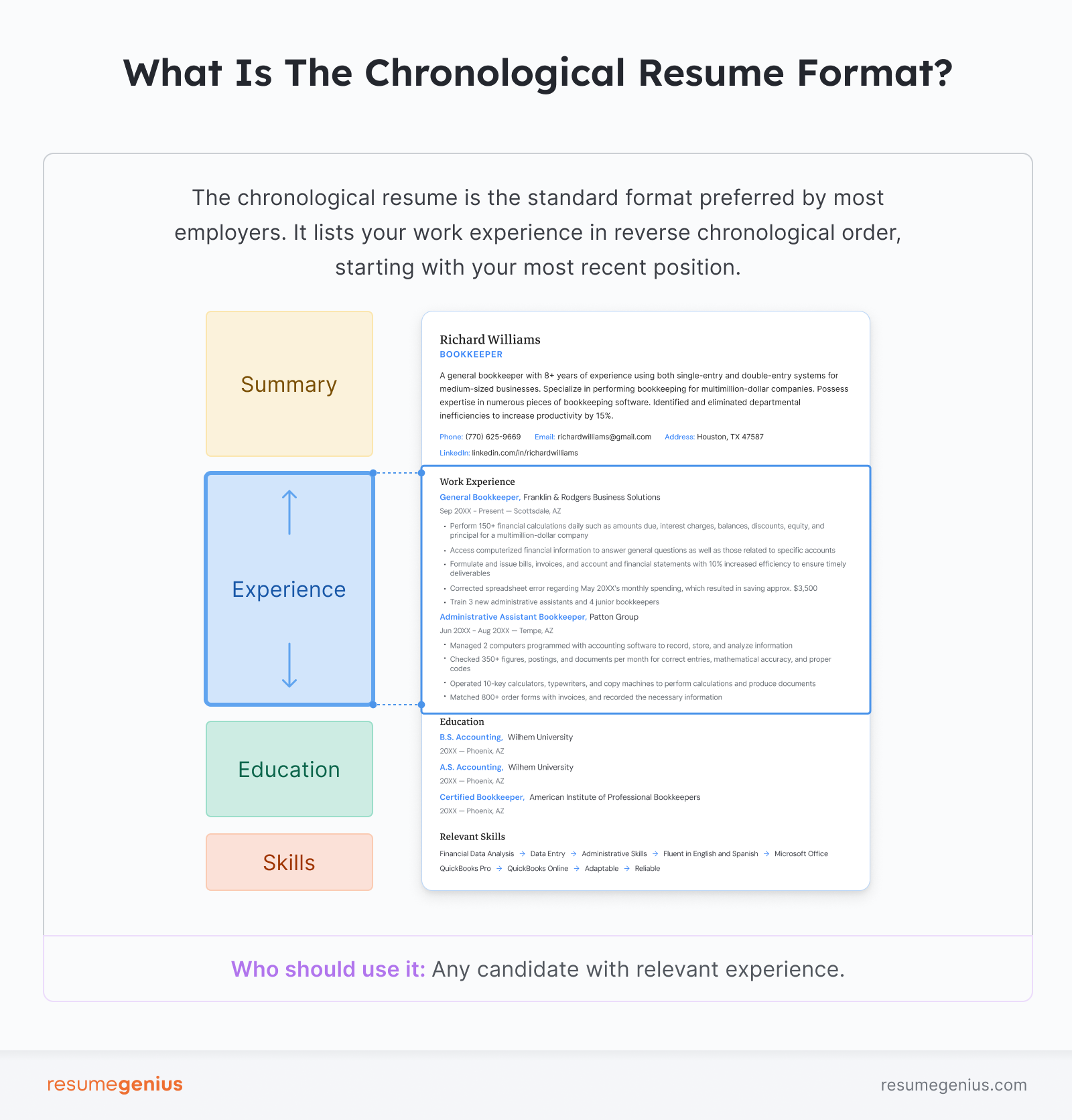
A chronological resume format lists your work history in reverse-chronological order, starting with your most recent job at the top and moving backward.
The chronological resume remains the most popular format because it suits all experience levels and presents your qualifications in a structureย that’s easy for hiring managers to follow.
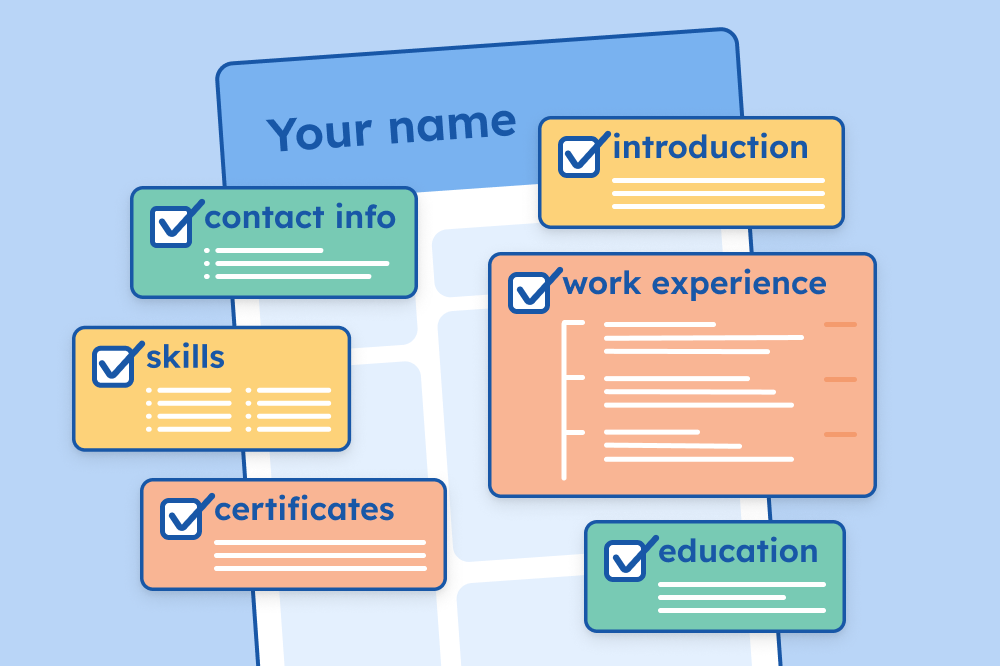
This is what a chronological resume layout looks like:
1. Resume Heading
FIRST AND LAST NAME
Email: youremail@gmail.com | Phone: 908 555 555 | Address: 118 Washington Ave., New York, NY 10280 | Linkedin: linkedin.com/in/yourpro๏ฌle
2. Resume Introduction
Passionate [industry] professional with [# of years] years of experience. Seeking to use my expertise in [relevant skills] to fill the [position name] position at [Companyโs Name]. A dedicated worker aiming to help contribute to [Companyโs Name]โs goals and take on more responsibility as quickly as possible.
3. Work or Relevant Experience
Most Recent Job Title
Employer Name / Location / Start Date – End Date
- Include a bulleted list of your accomplishments and responsibilities
- Unless this is your only job, avoid using more than five bullet points
- Add numbers (such as percentages or dollar amounts) to these bullet points to illustrate your specific achievements
Earlier Job Title
Employer Name / Location / Start Date – End Date
- List relevant accomplishments from an earlier job
- Assuming you no longer hold this job, use past tense verbs to describe your achievements
4. Education
Degree Name / Major
University, Location | Start Date – End Date
5. Skills and Certifications
- List your relevant hard skills and certifications
- Specify the actual names of software or tools you can use
6. Additional Resume Section
- Here’s where you can add any other relevant information, such asย publications, languages, volunteer experience, or even hobbies
Free chronological resume templates
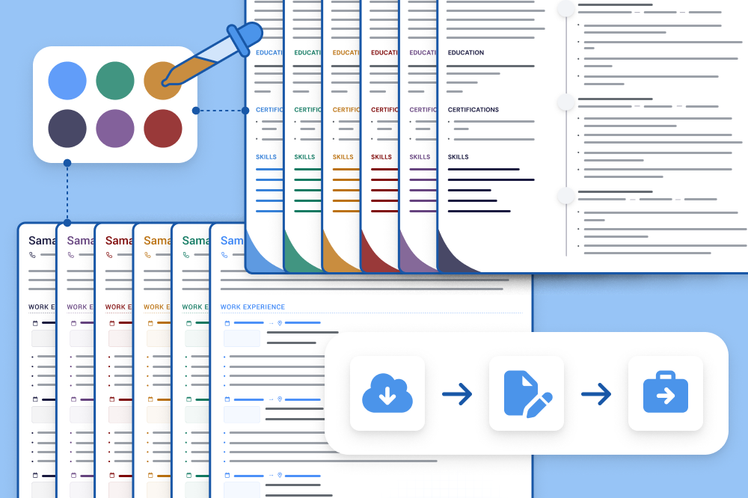
These resume templates have clean, professional layouts that make your experience stand out at a glance.
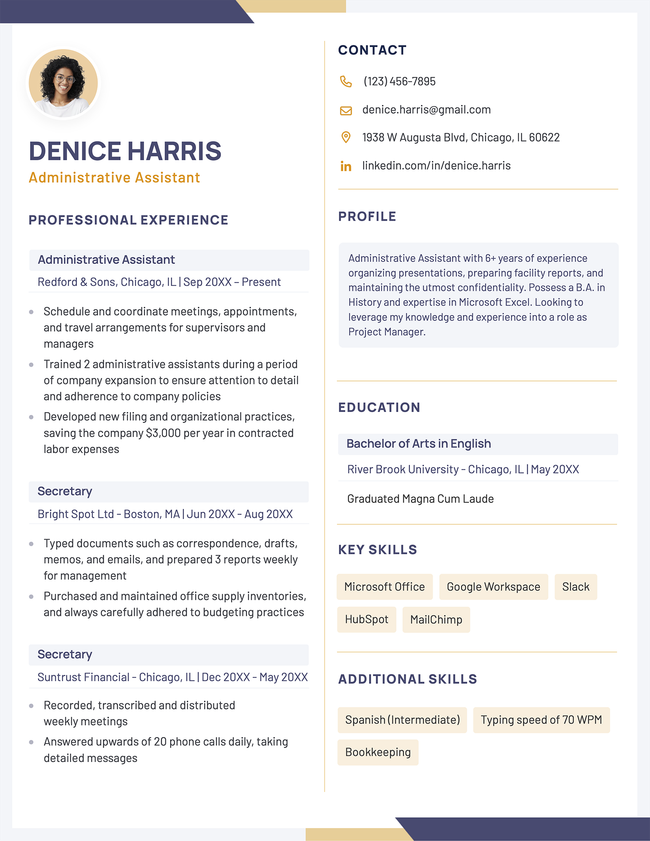
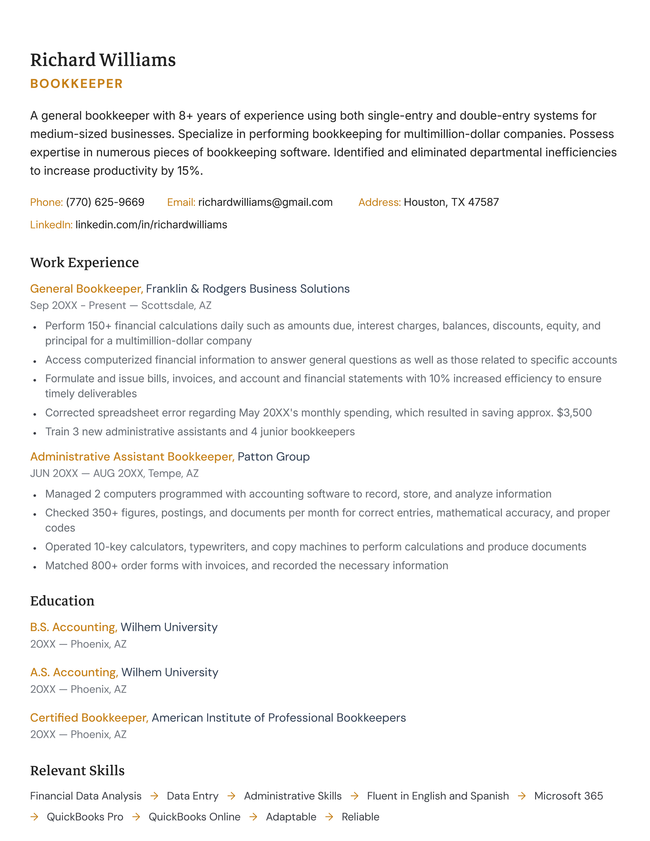
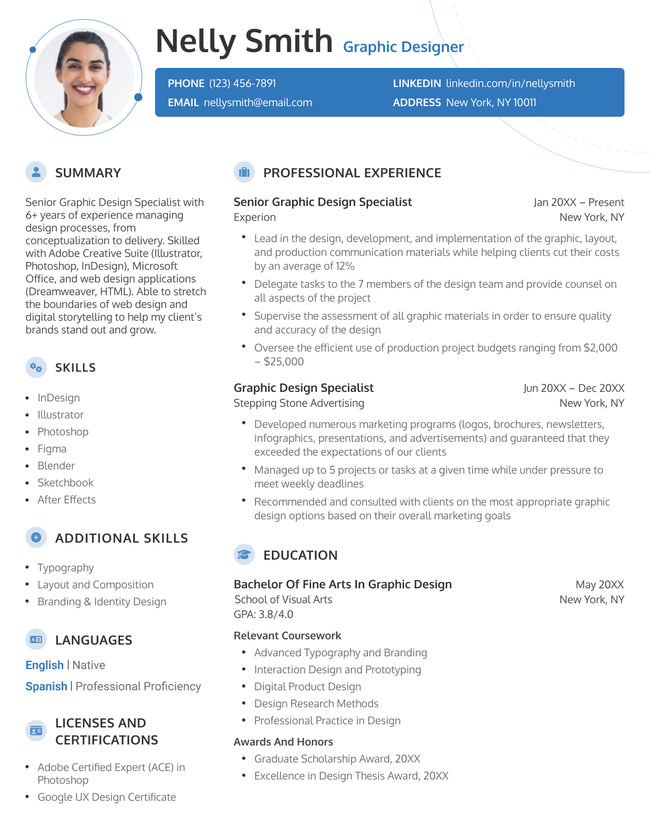
1. Mono
With its eye-catching icons and clean layout, the Mono template is a great choice for professionals in any industry.
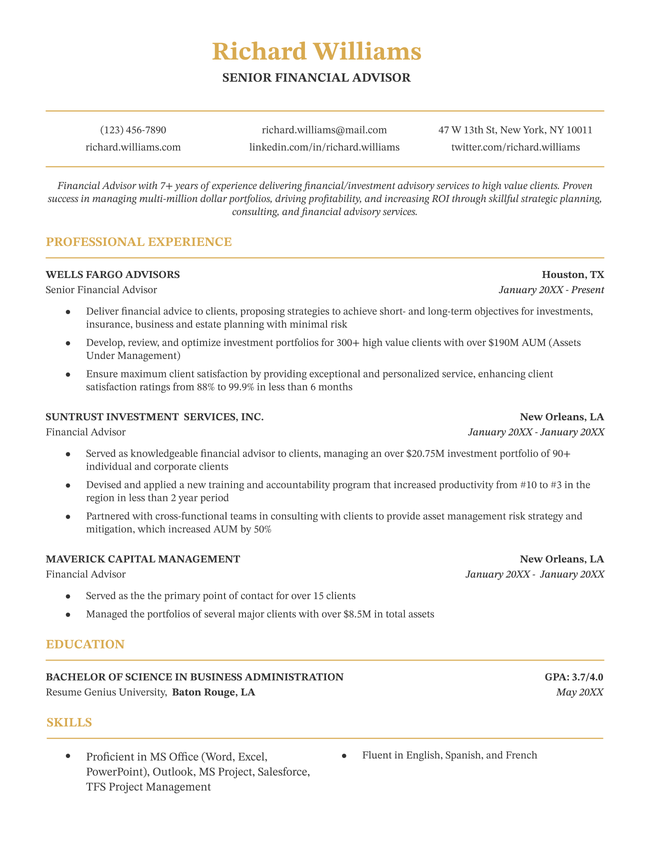
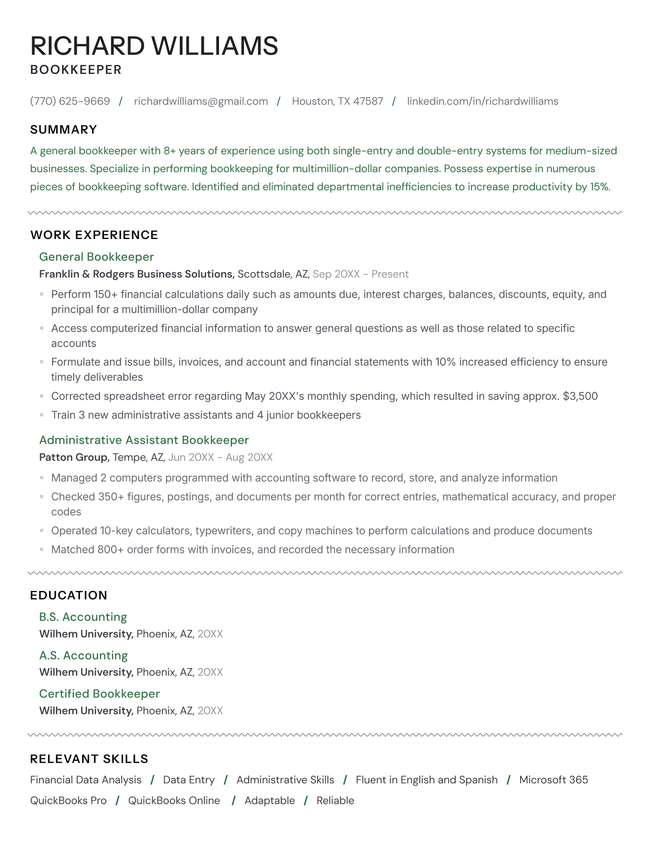
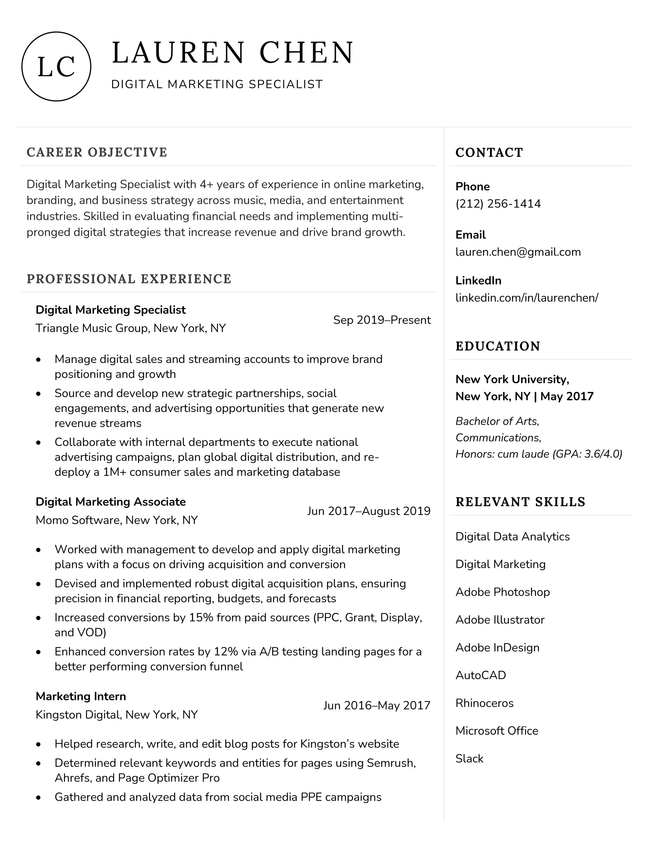
2. Path
Strategic use of accent lines and colorful headings gives this resume template a modern and professional look.
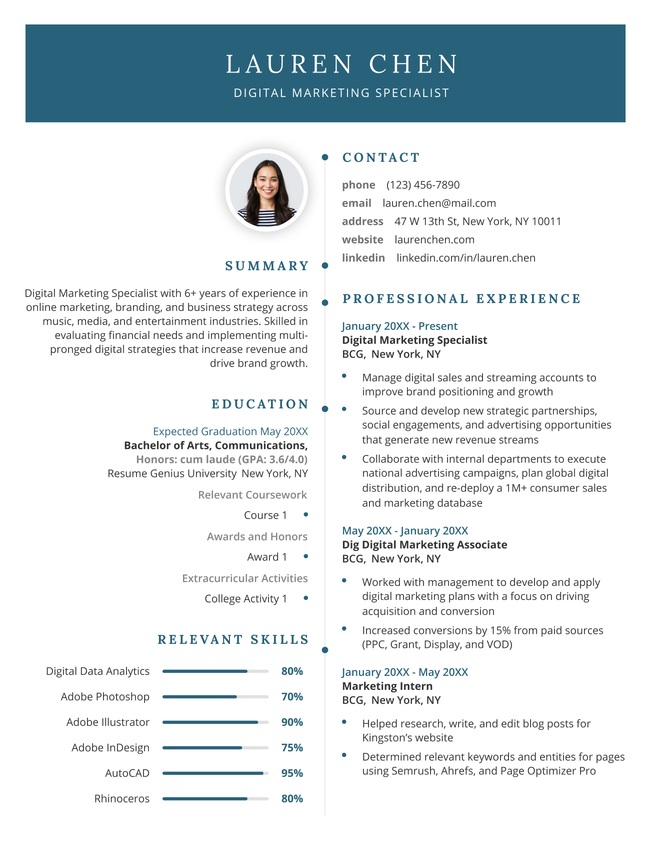
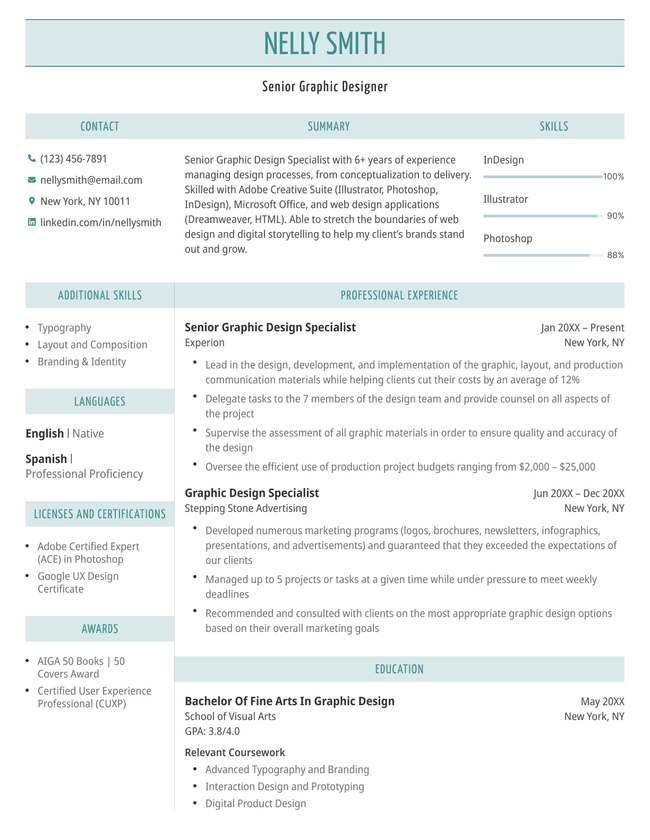
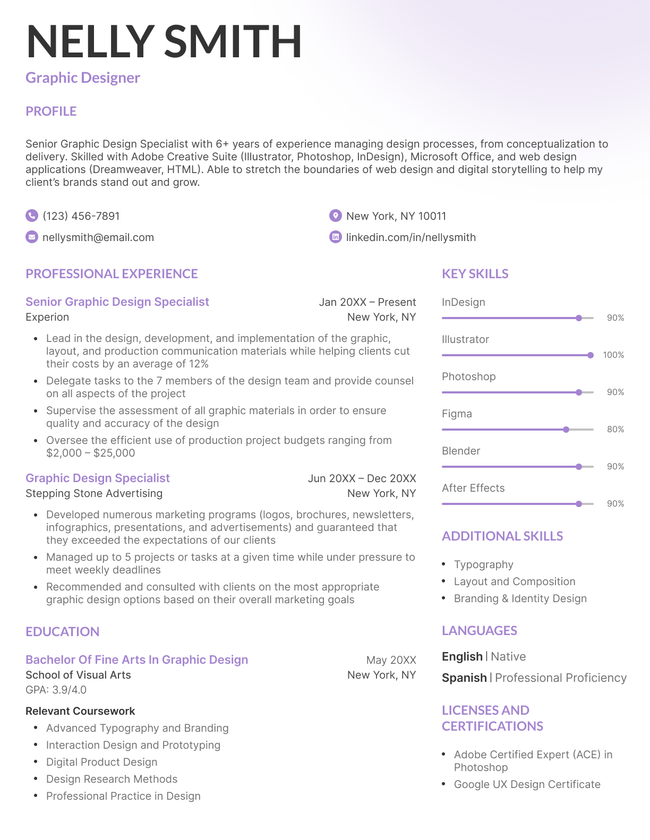
3. Progress
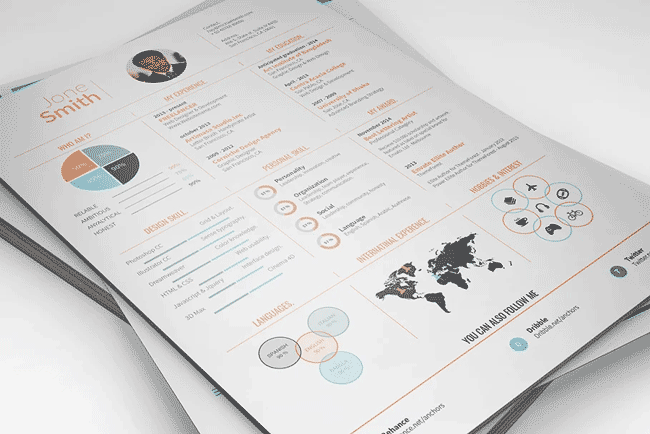
The design balances personality and professionalism, making it suitable for creative fields, marketing, or any role where visual presentation matters.
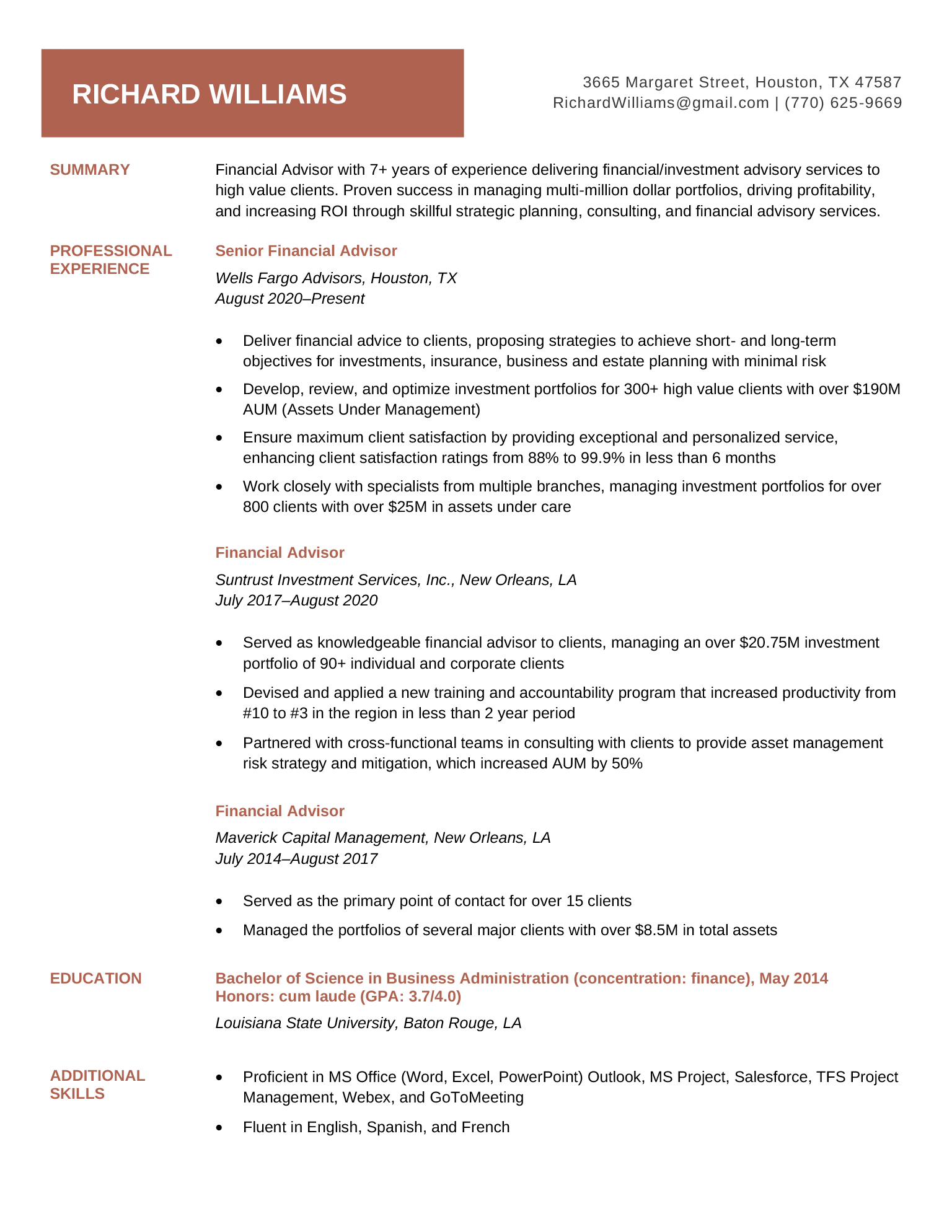
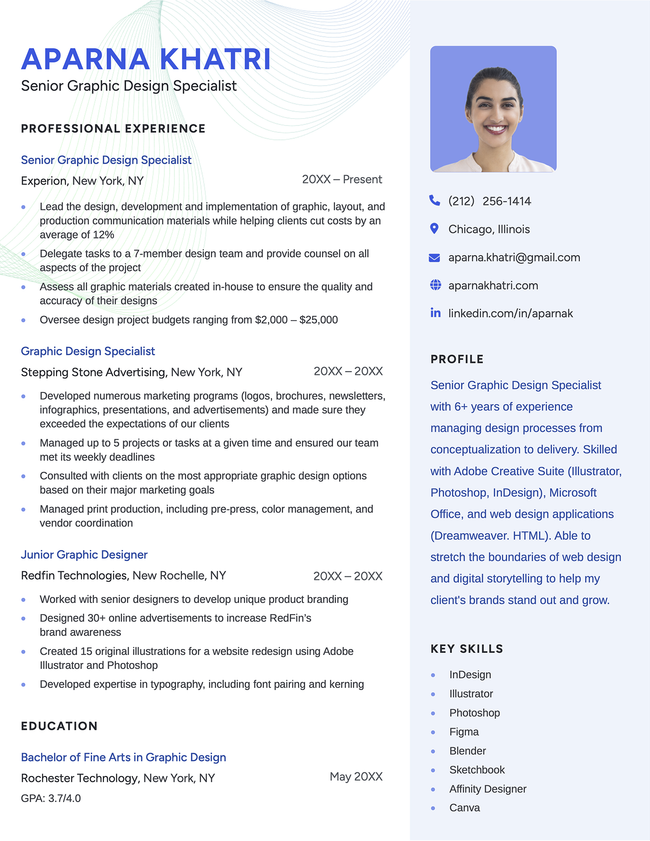
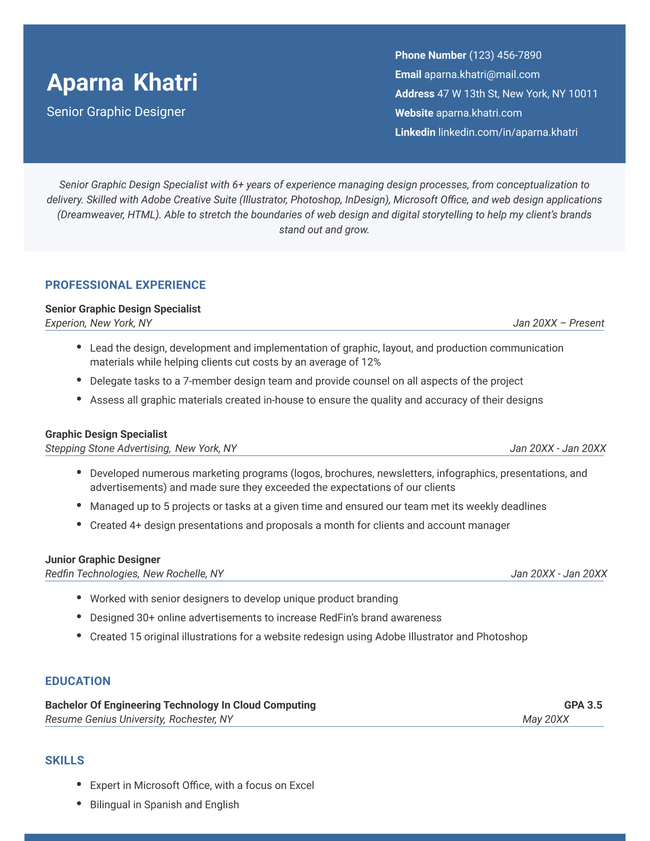
4. Timeline
The Timeline template draws attention to your career progression so employers can quickly connect the dots between your roles and increasing responsibilities.
Chronological resume examples
Here are some resume examples for different career stages that use the chronological format:
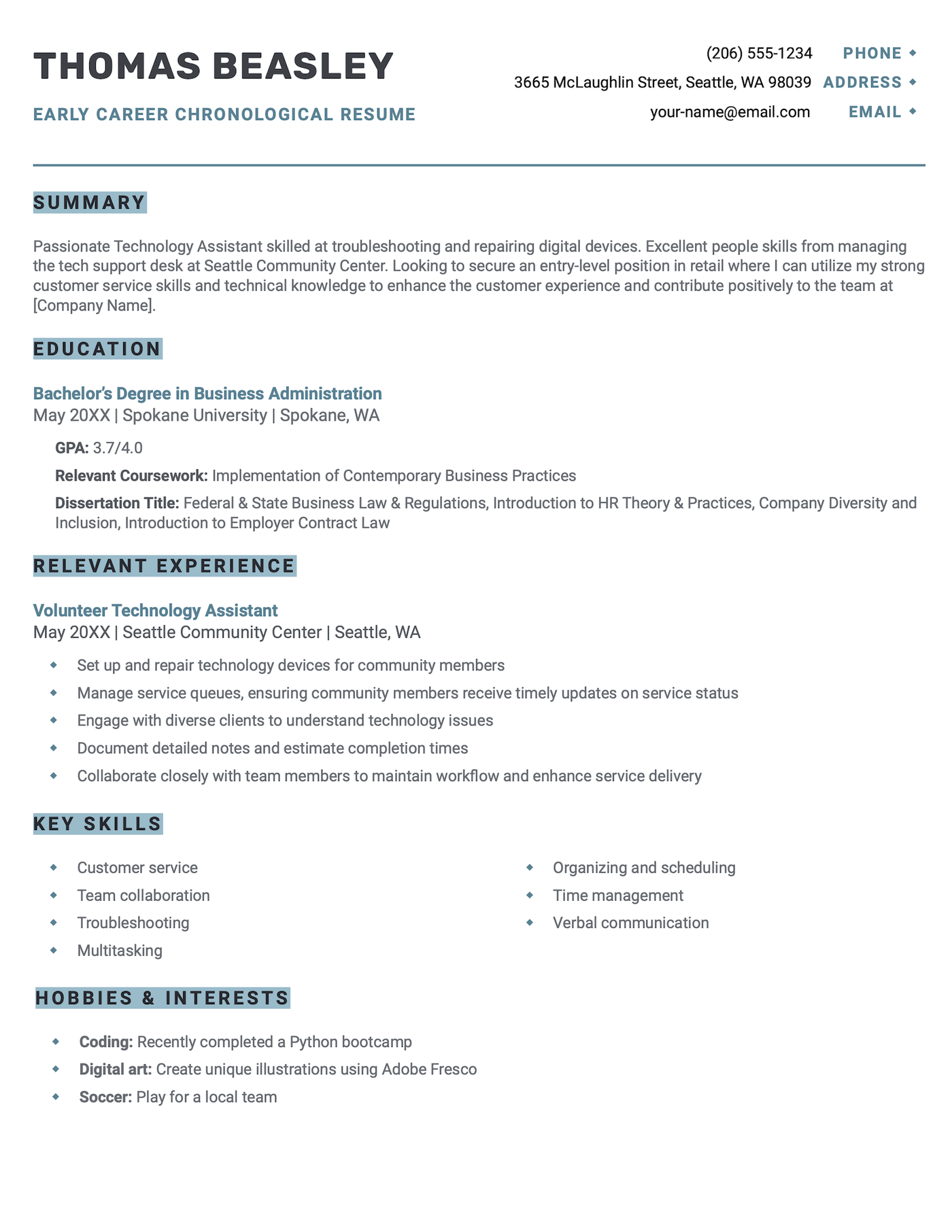
1. Early career
This resume example leads with education, with added academic details that demonstrate that the candidate is qualified even with limited formal work experience.
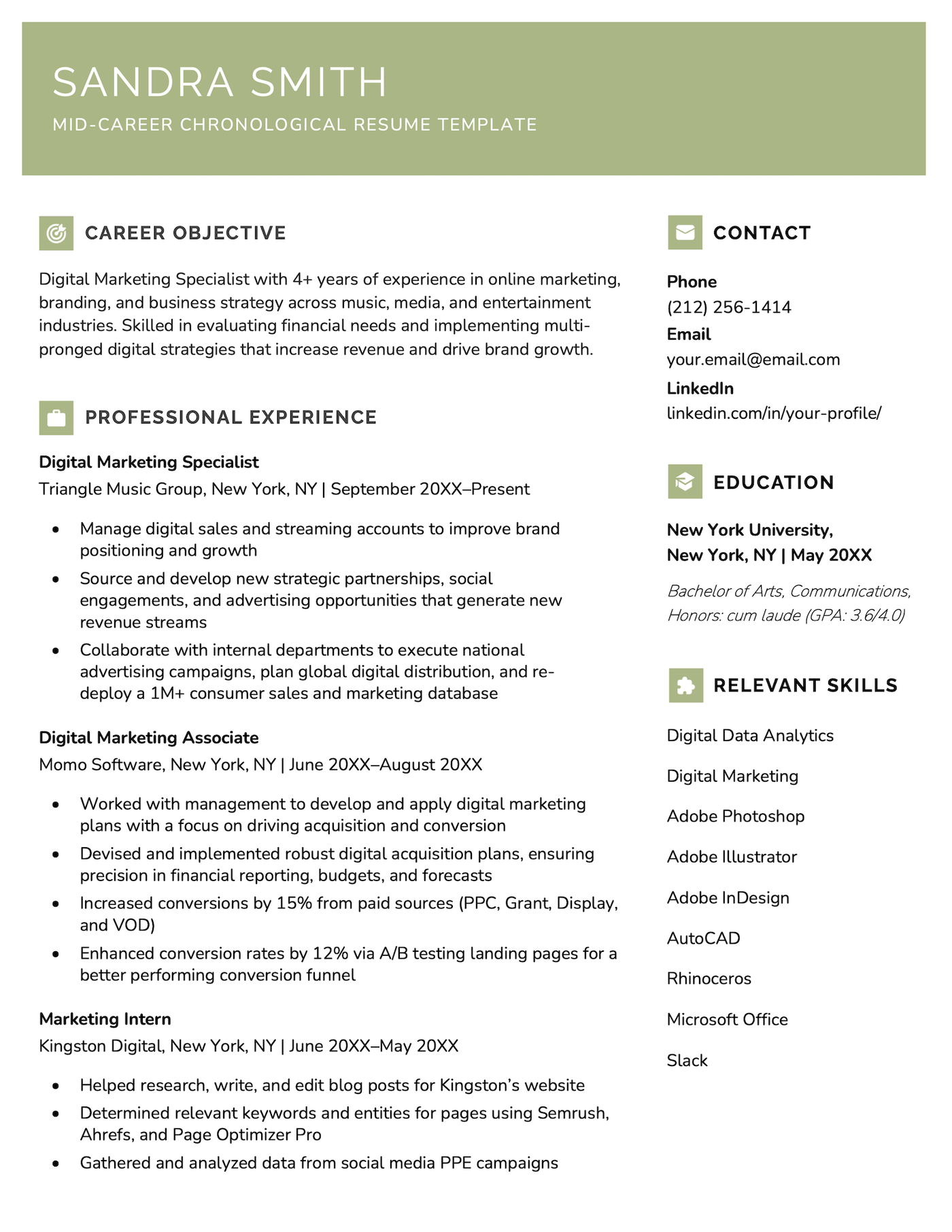
2. Mid-career
This example highlights steady career progression with clearly structured job entries. The chronological format shows career growth over time, making it easy for employers to see the applicant’s expanding responsibilities and impact.
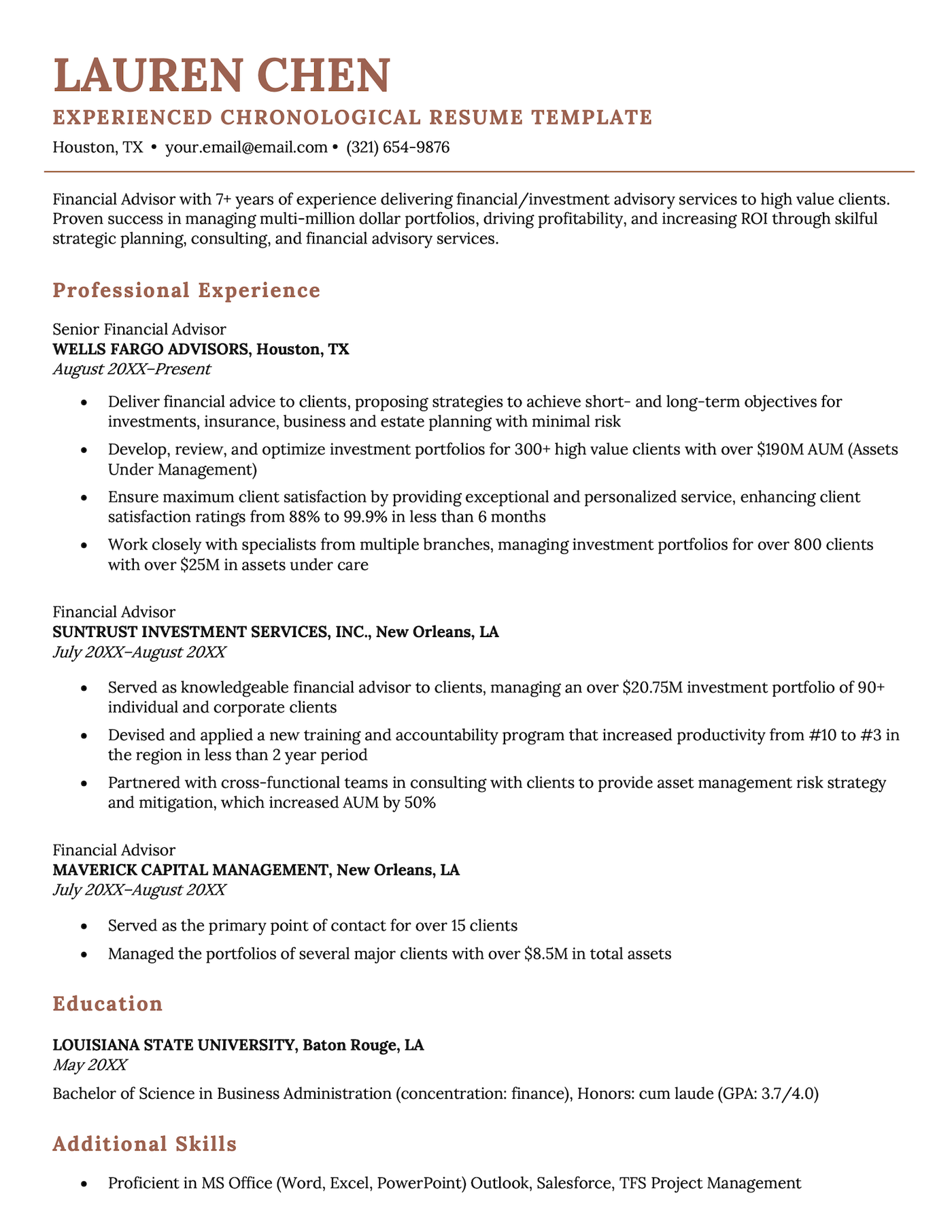
3. Senior-level
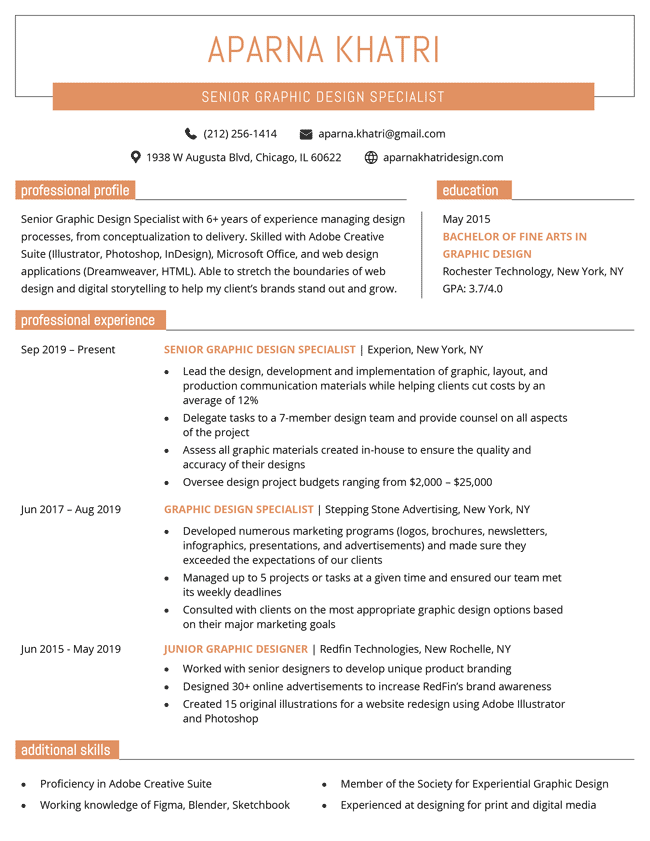
The work experience section in this example takes center stage, featuring a clean, spacious layout that highlights career progression without appearing cluttered.
How to write a chronological resume
Not sure where to begin? Follow these step-by-step tips to write a resume thatโs polished and professional.
List your contact information
Include the following pieces of information in your resumeโs header so that the hiring manager knows how to reach you:
- First and last name
- Email address
- Phone number
- City and state (optional)
- LinkedIn profile (optional)
- Portfolio URL (optional)
While including a mailing address was once standard on resumes, it’s no longer necessary because employers will contact you via phone or email.
Open with a strong introduction
One of the best ways to grab an employer’s attention is by opening your resume with a strong introduction that encourages them to keep reading.
If youโre an entry-level candidate, write a resume objective that emphasizes your transferable skills and professional goals.
If you already have a few years of experience, opt for a resume summary instead to highlight your professional accomplishments.
Use an online resume introduction generator to help you write your introduction if you’re not sure how best to showcase your skills and achievements.
Write your work experience in reverse-chronological order
The work experience section is the core of a chronological resume. List each relevant job you’ve held in reverse-chronological order, starting with your current or most recent role.
Under each position, write three to five bullet points that highlight your key achievements. Use the present tense for your current position and the past tense for previous jobs.
Remember to quantify your achievements so hiring managers can clearly understand your impact in previous roles.
Try using using our resume bullet point generator to get ideas for your work experience section:
Struggling to write your resume? Make clear, achievement-oriented bullet points for your resume in seconds with our free AI bullet point generator.
Use these work-experience bullet points to make a resume that lands you interviews.
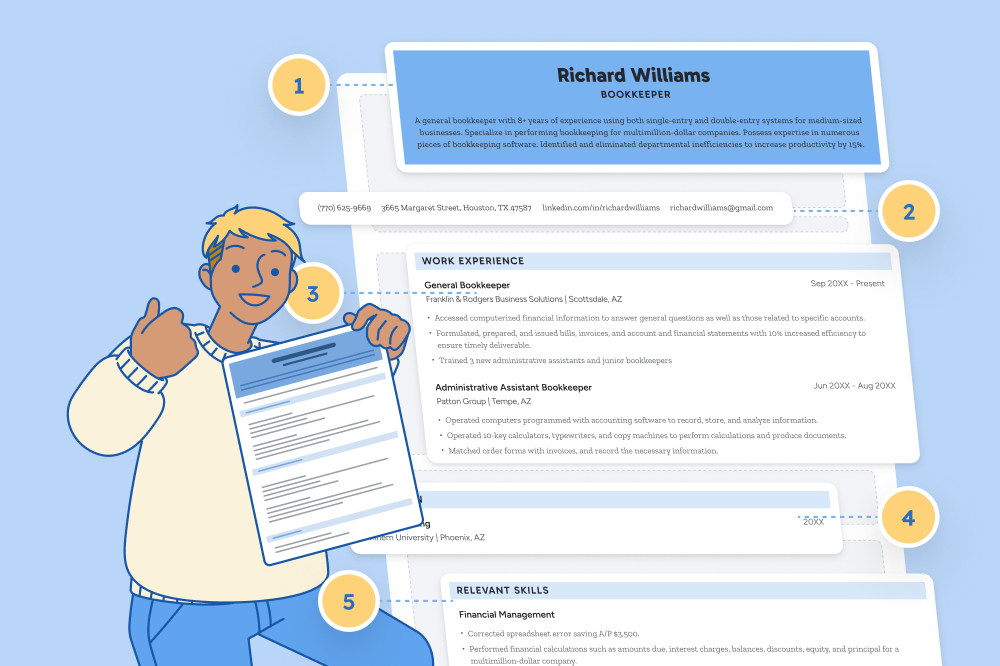
Here’s an example of a work experience section on a chronological resume that uses hard numbers and action verbs:
WORK EXPERIENCE
Office Manager
September 20XXโPresent
Express, Inc., San Jose, CA
- Manage schedules, organize office functions, and oversee daily operations of office with 50 employees
- Hired, trained, and on-boarded over 13 new employees, providing initial support that expedited staff assimilation by 20%
- Slashed office expenditures by $35K by negotiating cheaper supply contracts, implementing inventory control, and standardizing ordering procedures
Office Assistant
June 20XXโAugust 20XX
Simple Functions, Fresno, CA
- Prepared daily, weekly, and monthly reports, and updated calendar of appointments
- Performed basic accounting functions, including cash reconciliations and wire transfers
- Discovered and rectified erroneous vendor billing, saving $2K in potential costs
Add an education section
For most candidates, the education section will be short and simple, including only the following three pieces of information:
- University name and location
- Degree or certification name
- Graduation date
If youโre a recent graduate, you can also include:
- Relevant coursework
- Projects
- Honors & awards
List your skills
No chronological resume is complete without a skills section. Here is where you list the hard skills you want employers to know about.
Keep your skills list clear and concise, focusing only on skills that are directly relevant to the job you’re applying for.
If you’re not sure which skills to include, look at the job ad. Employers outline the the key qualifications in the “Responsibilities” section.
Here’s an example of a well-organized skills section on a chronological resume:
RELEVANT SKILLS
- Federal real estate laws
- Local property market
- MSL database
- Microsoft Excel
- Negotiation
- Customer service
- Social media
- Networking
- Marketing
No more formatting headaches
Frequently asked questions about writing a chronological resume
Check out our answers to some of the most common questions about chronological resumes below.
Do employers prefer chronological resumes?
Yes, employers typically prefer chronological resumes because they provide a clear, easy-to-follow timeline of your work history.
This format highlights your career progression by placing your most recent and relevant experience at the top, making it easy for employers to see how your skills have developed over time.
Who should use a chronological resume?
The vast majority of job seekers should use a chronological resume, as itโs suitable for all experience levels and aligns with what hiring managers are used to seeing.
Chronological resumes are perfect for highlighting career progression and are ideal when your work history closely matches the job you’re applying for, showing a clear growth in skills and responsibilities over time.
What is the difference between a chronological resume and a functional resume?
Chronological and functional resumes differ in both structure and focus.
A chronological resume emphasizes your work history by listing roles in reverse-chronological order, emphasizing career progression over time. In contrast, a functional resume focuses on your skills and qualifications, grouping them by category rather than by job title or timelines.
Functional resumes can be useful for job seekers with employment gaps, frequent job changes, or any other resume red flags as they shift attention away from the traditional work history.
What if I have gaps in my work history?
If you have gaps in your work history, be honest. Never fudge dates. Instead, briefly explain the gap in your cover letter, and use your resume to highlight any freelance work, volunteering, or courses you completed during that time to show continued professional growth and initiative.
Should I include every job Iโve ever had?
Not necessarily. Focus on including jobs that are relevant to the role you’re applying for. Leave out short-term, outdated, or unrelated positions unless they demonstrate key skills the employer is looking for.
Click to rate this article
4.9 Average rating


Facebook
Twitter
Linkedin
Pinterest
Reddit
Copy link