Research Assistant CV Examples & Template
 Written By Conrad BenzContent Manager & Hiring Manager
 Reviewed By Samuel JohnsSenior Content Editor & Certified Professional Resume Writer
Conrad Benz is a Content Manager and Hiring Manager at Resume Genius. With nearly a decade of experience as a career services professional, Conrad is passionate about helping people navigate...
Whether you’re entering academia or industry, your CV should reflect what hiring committees care about.
Our examples are written using real job posting data to help you spotlight the skills and accomplishments that matter most.
Research CV Examples by Experience Level
Looking for a different style? Search through our library of free CV templates.
Research Assistant Cover Letter & Related CVs
View All CV Samples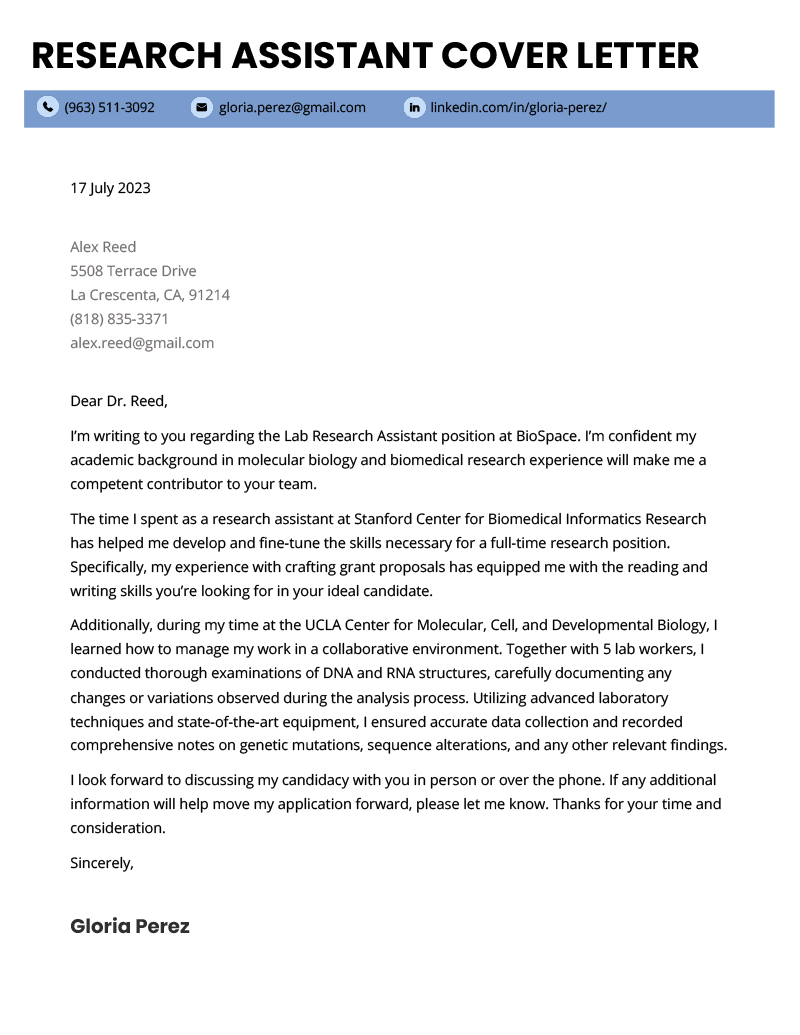
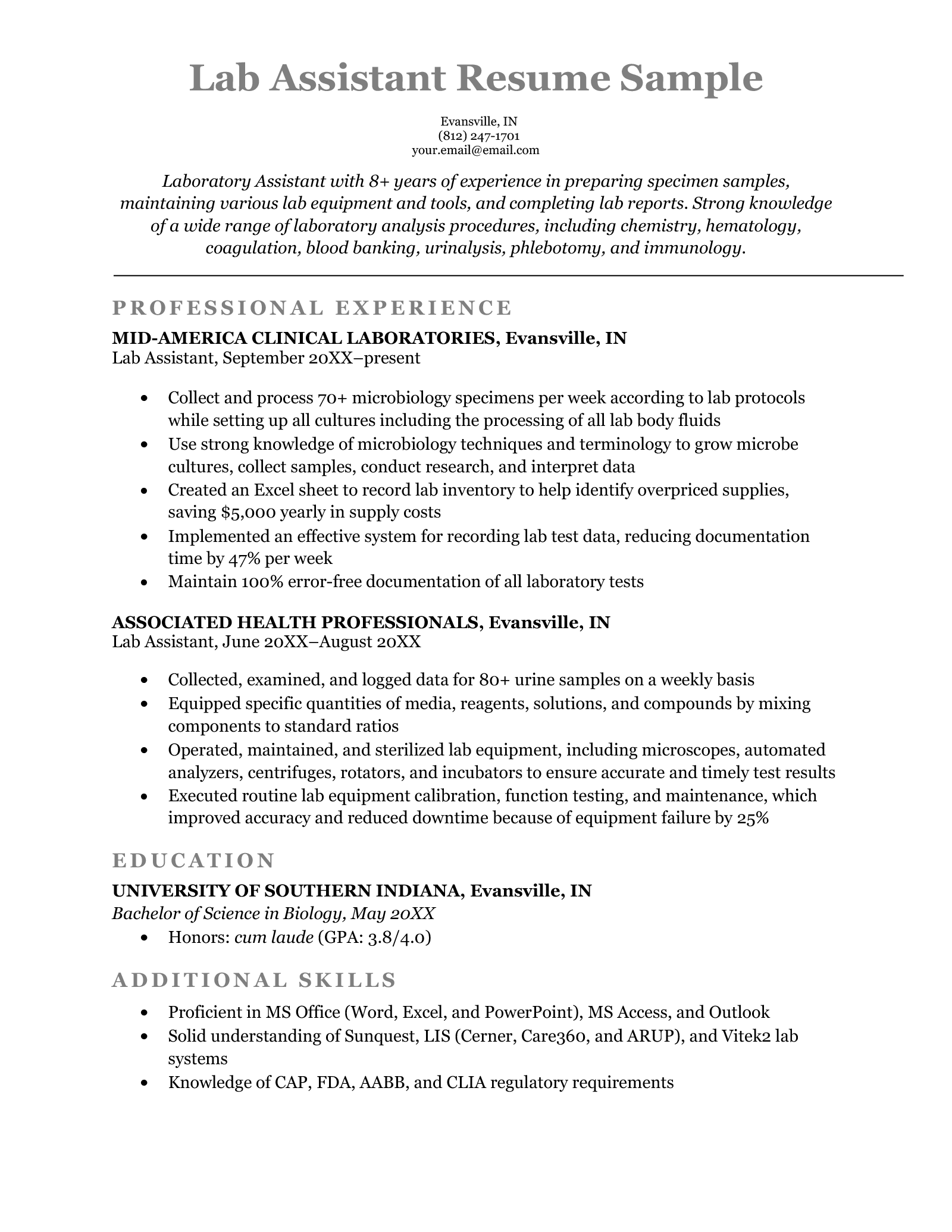
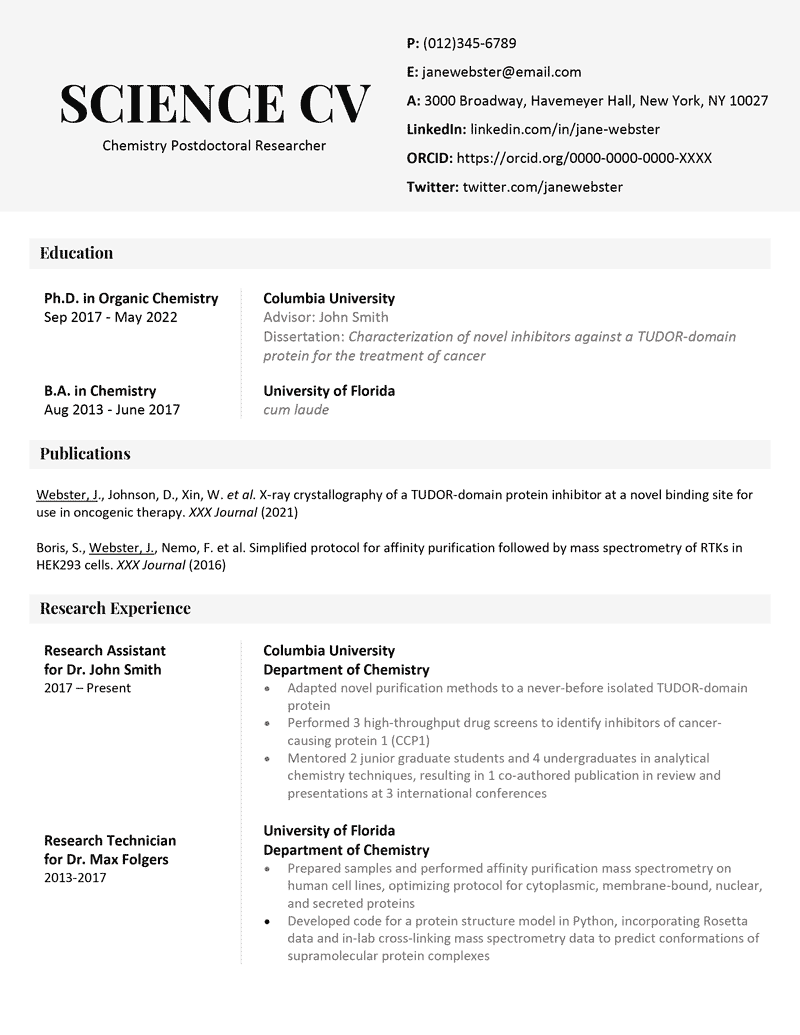
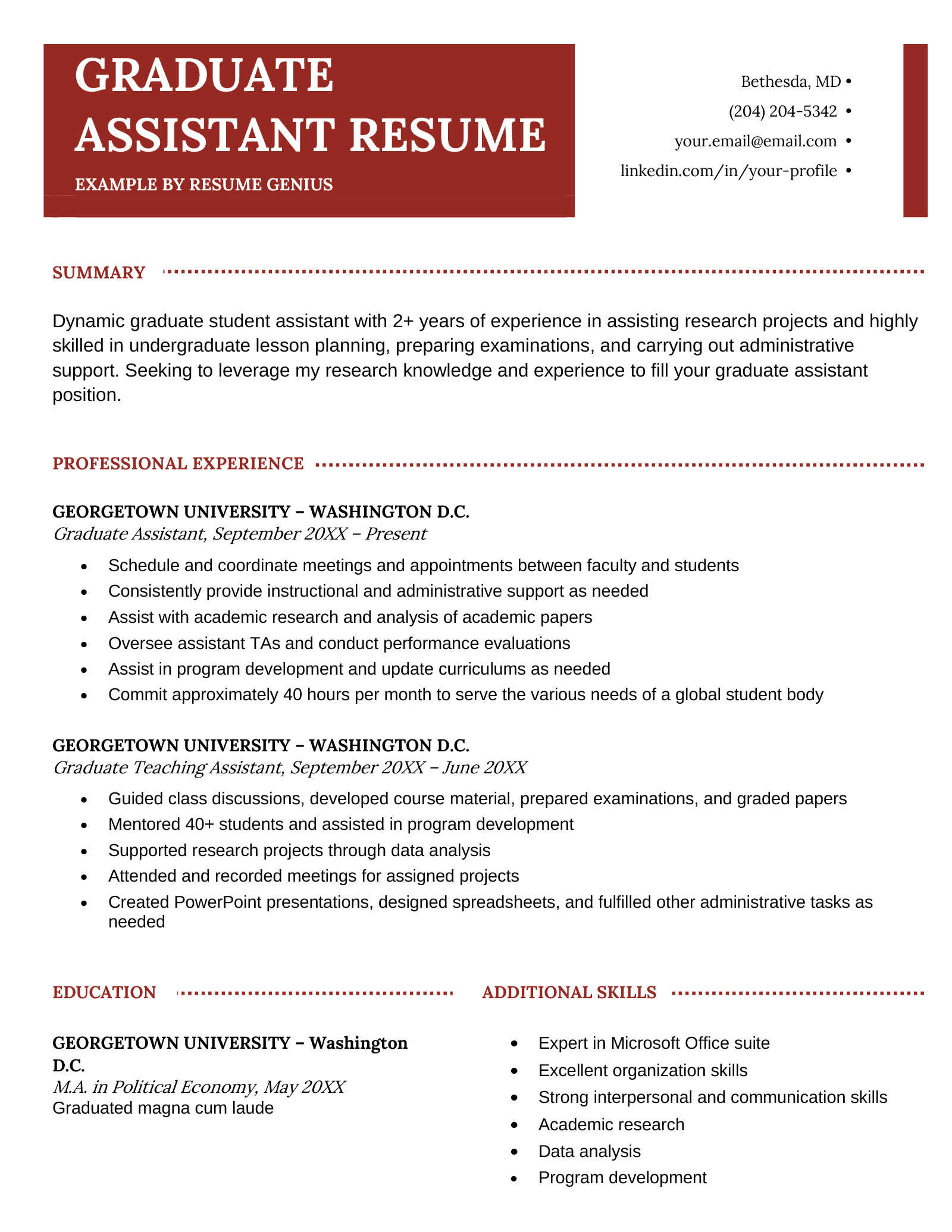
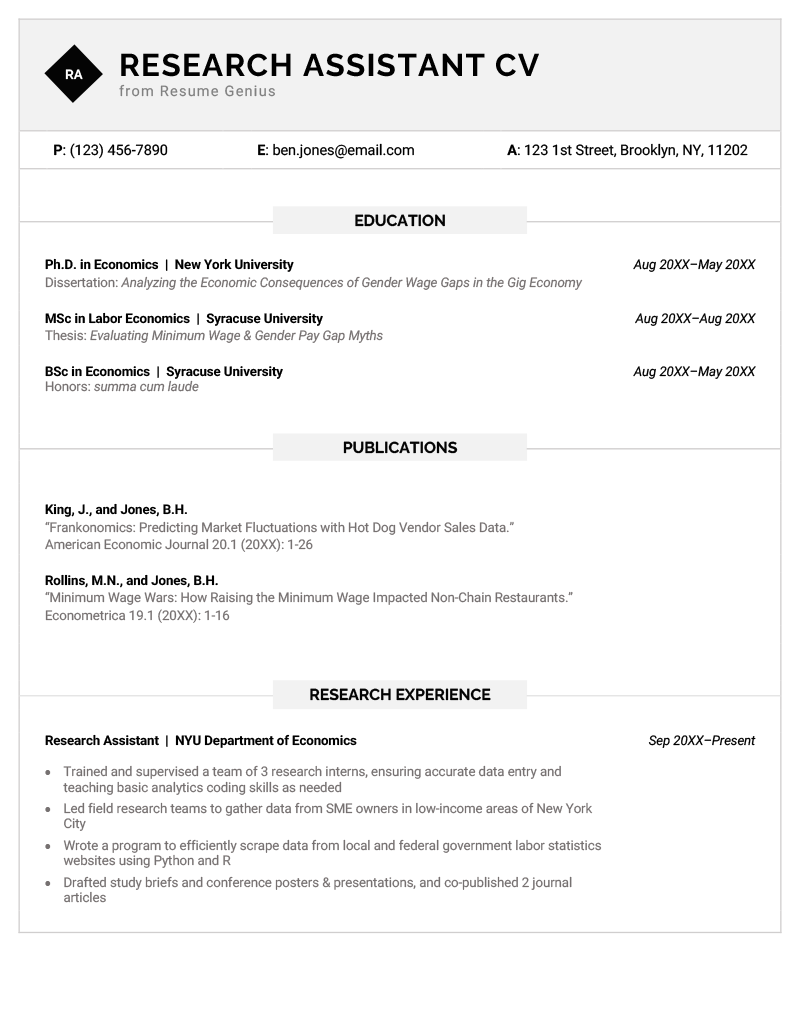
Research Assistant CV Template
How to write your research assistant CV
To land a research assistant position, you need to write a CV that reflects your professional strengths, skills, and expertise in a compelling way.
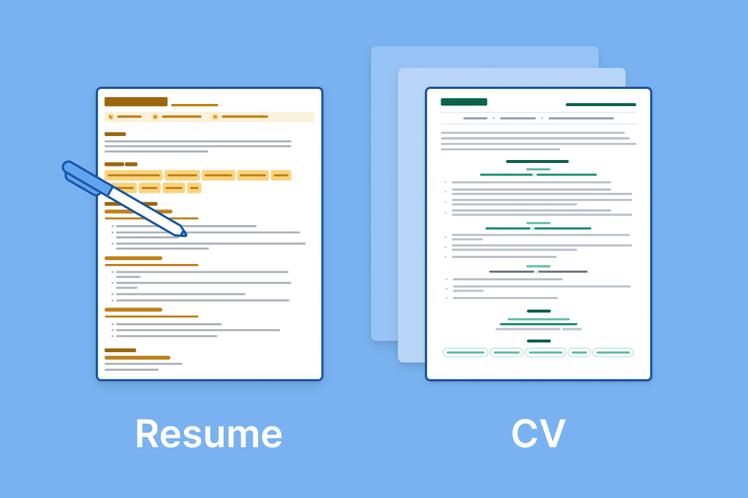
Unsure whether to write CV or resume? Generally, for academic positions that require a lot of relevant qualifications, a CV is a longer document that includes things like publications and coursework.
For visual learners, this video contains the essential elements of a compelling academic CV and provides tips on how to make yours stand out:

To build on our video’s advice, follow these four tips for writing a research assistant CV that will impress any hiring manager:
1. Use professional CV formatting
Format your CV correctly to show your professionalism and diligence. A well-organized research CV tells employers that you’ll bring an eye for detail to your research work, be it in a lab or a corporate setting.
Organize your work and academic history in neat bullet points under the following headings (where applicable):
- Education
- Teaching positions
- Research experience
- Publications
- Awards and grants
- Technical skills
- Posters and presentations
- Conferences attended
- Research interests
First impressions matter, so ensure your CV’s formatting is neat and consistent. Use a professional CV font set between 10 and 12 points throughout. Also, save your CV as a PDF rather than as a Word document to avoid formatting issues if the hiring manager opens it in an old version of Microsoft Word.
Find out what to include in your CV before getting started too, to help you visualize your format and structure.
Make a professional email address that consists only of your first and last name if you don’t have one already. Hiring managers are more likely to ignore emails from silly or number-filled addresses (e.g., funbunny1459003@gmail.com).
2. Target a specific research assistant position
Show that you’re a great fit by tailoring your research CV to a single job. By using the exact words and phrases that employers are looking for, you’ll look uniquely qualified for the position, and be more likely to land an interview.
Many organizations that hire researchers use applicant tracking systems (ATS) to filter out candidates whose CVs don’t include certain keywords. To avoid having your application filtered out, identify the skills-based keywords and phrases in the job description, and use those same words on your CV.
You should also research the school or company you’re applying to. Skim its website or scroll through its latest newsletter to learn more about what it does, and to decide which of your qualifications to emphasize.
Finally, start your research assistant CV with the most relevant information for the position. For example, if you have research experience that’s related to your target job, put that at the top of the first page to grab the hiring manager’s attention.
3. Showcase relevant academic accomplishments
Display your top academic achievements to show that you have in-depth knowledge in your area of specialization.
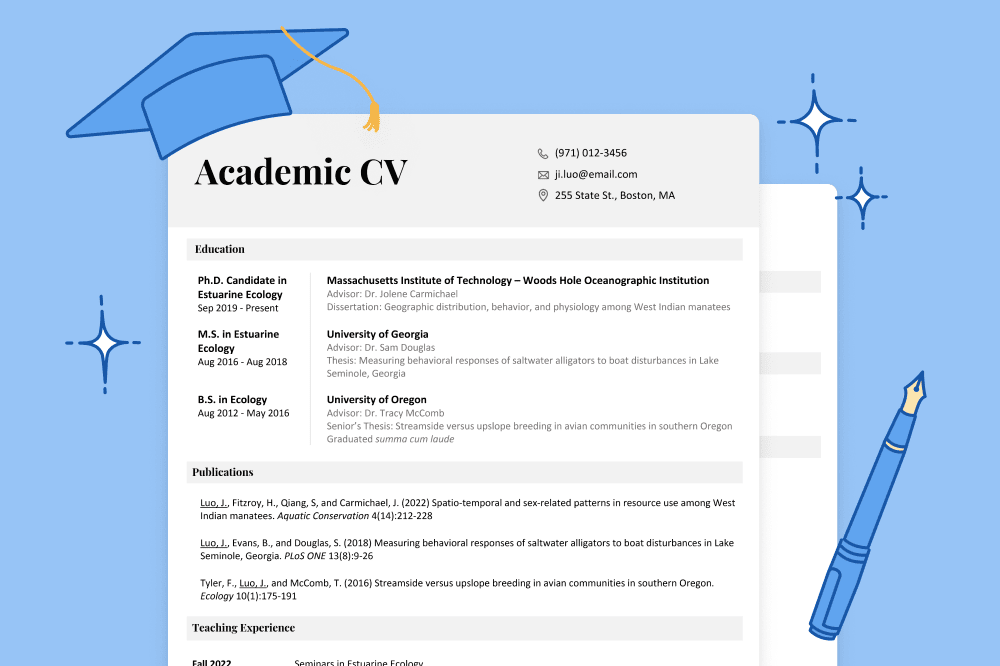
Most research positions require at least a bachelor’s degree in a related field, so list yours under the education section. If you have more than one degree, list each, also giving the dates, institution, and topic of your dissertation or thesis (if any).
You need to show more than just your degree though. Researchers are expected to generate new academic papers and reports on an ongoing basis, so also include any:
- related publications
- conferences or posters that you’ve delivered
- awards or grants you’ve received
While metrics like the number of publications, the impact factor of journals, and citation counts are traditional yardsticks, there’s a growing awareness in the academic community about the limitations of these metrics. Therefore, I also look for:
Collaborative research: The ability to collaborate across disciplines or with industry partners can be a strong indicator of a candidate’s adaptability and broad skill set.
Research impact beyond academia: Contributions to policy, social issues, or industry can also be significant.
Reproducibility: In an era where the ‘reproducibility crisis’ is a hot topic, the extent to which a candidate’s research is transparent, replicable, and ethical carries weight.
Dr. Andrew Stapleton of Academia Insider
4. Quantify your research skills and experience
To write a great CV, use hard numbers to quantify your experience. Research is a data-driven field, so use percentages and figures to give your achievements context.
Look at these examples of hard numbers from a research assistant CV:
Sourced an app for taking surveys during field research, saving 5% of grant money that would have been spent on data entry
Conference on International GDPs. Syracuse University, New York (25% acceptance rate)
Putting data and accomplishments on your CV is impactful because it gives the employer specific, measurable examples of how you’ve produced results, which maximizes your chances of being hired.
New to the research profession? If you’re writing a CV with no experience, highlight your skills and education instead of your work history.
3 CV objective examples for a research assistant
Start your resume with a CV objective statement showing your principal talents and career aims. A well-crafted CV objective conveys your passion and excitement about the target job. Check out these examples to help you write your own:
A highly motivated and detail-oriented graduate student in neuroscience seeking a research assistant position, I bring hands-on experience in conducting experiments, analyzing data, and literature reviews. Seeking to leverage my knowledge of advanced laboratory techniques and strong foundation in statistical analysis to contribute effectively to your research team’s projects.
A recent graduate with a degree in psychology, I am seeking a research assistant position where I can leverage my expertise in experimental design, data collection, and statistical analysis. With a proven track record of conducting psychological studies, I am prepared to contribute to the development and implementation of research protocols.
I am a graduate student with expertise in epidemiological study design, data collection, and statistical analysis. My experience in analyzing health-related data sets and contributing to research publications positions me to be a valuable asset to your team’s ongoing projects. Seeking a research assistant position in the field of public health.
About the Author

Conrad Benz is a Content Manager and Hiring Manager at Resume Genius. With nearly a decade of experience as a career services professional, Conrad is passionate about helping people navigate the job search process and find fulfilling work.
You can find Conrad’s career insights in publications like Typsy, Resume Library, and more.
Conrad graduated with a B.A. in International Relations from Goucher College in Maryland and currently lives in Taipei, Taiwan, where he helps ensure every article on Resume Genius provides job seekers with the information they need to succeed.
If you want to reach Conrad for a quote or media-related inquiry, you can contact him at [conrad] @ [resumegenius.com].


Click to rate this article
4.8 Average rating