
Whether you’re moving on to a new opportunity or just closing a chapter in your career, how you handle your resignation can impact your professional reputation and future job prospects.
No matter your reasons for leaving your job, this guide will show you how to make the transition smoothly and maintain positive relationships with your soon-to-be former colleagues and employer.
1. Review your employment contract
Before you resign, review your employment contract and company policies. Make sure your resignation doesn’t breach any policies.
Check for the following:
- A required notice period
- Non-compete clauses
- Confidentiality agreements
You should also check your benefits package. Pay special attention to unused vacation days or other perks that may be affected by your departure. Some companies may pay out unused vacation time, while others may require you to use it before leaving.
2. Give adequate notice
For most roles, you should give at least two weeks’ notice.
For management roles you should give 4–8 weeks to allow enough time for a smooth handover.
If possible, align your departure with the completion of a major project or the end of a reporting period. This level of consideration demonstrates professionalism and helps maintain a positive relationship with your employer.
If you need to depart sooner than the standard two weeks’ notice, you should prepare a compelling reason for your early departure (e.g., a time sensitive start date that is out of your control) and offer solutions to ease the transition.
3. Notify your employer in person
Set up a one-on-one meeting with your direct supervisor. Letting them know in person shows courtesy and gives them the opportunity to discuss the handover of your responsibilities.
Try to choose a time when your supervisor isn’t swamped with work. If possible, avoid Mondays or Fridays, as well as times immediately before important meetings or deadlines.
4. Prepare and deliver your resignation
Keep your explanation brief and positive, focusing on the opportunities ahead rather than any negatives about your current position.
Be upfront about your decision. Then, express gratitude for the opportunities you’ve had with the company and demonstrate sincere appreciation for your time there.
Example verbal resignation
“I wanted to let you know that I’ve decided to resign from my position, effective July 15.
This wasn’t an easy decision, but I’ve accepted a new opportunity that aligns with where I want to take my career next. I want you to know how much I’ve valued my time here — I’ve learned a lot, grown a lot, and I’m grateful for the support and opportunities you’ve given me.
I want to make this transition as smooth as possible for you and the team. I’ll have a written resignation letter to you by July 1, and I’m happy to help train my replacement or document my current projects before I leave.”
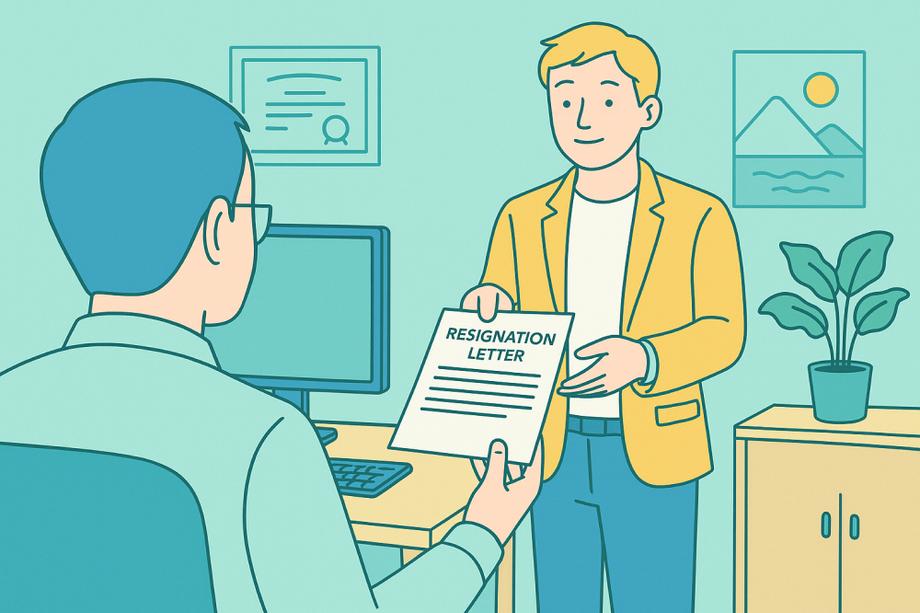
After your verbal resignation, provide a formal, written resignation letter. This letter should be brief, professional, and include your intended end date. Remember, a copy of this document may be kept in your employment file, so keep it positive and concise.
5. Make a transition plan
If a replacement is hired before you leave, offer to help train them. This will not only help your employer but also allow you to leave a positive, lasting impression.
Additionally, create a comprehensive list of your ongoing projects and responsibilities. This document will help your replacement or colleagues take over your duties. Propose a realistic timeline for wrapping up your work, considering both your remaining time and the complexity of your tasks.
Be open to feedback and willing to adjust your plan to meet the company’s needs while still adhering to your agreed-upon end date.
6. Inform colleagues and clients
Once you’ve officially informed your boss, you can share the news with colleagues and clients.
When informing coworkers, remain professional and positive. Focus on the good experiences you’ve had and express how much you’ve enjoyed working with them. Consider writing a thoughtful goodbye email to your coworkers, highlighting memorable moments and expressing gratitude.
Avoid sharing negative feelings or the details of any new position you’re taking, as this information can quickly spread and potentially cause tension.
For clients you work closely with, talk to your supervisor about the best way to break the news. Sometimes you’ll need to assure them that the services they’re receiving won’t be impacted. You may also need to introduce them to whoever’s taking over.
7. Tie up loose ends
As your departure date approaches, prioritize wrapping up unfinished work to exit gracefully and maintain your professional reputation.
Start by completing or transferring any ongoing projects. Prepare detailed handover notes for tasks you won’t be able to finish in time so your colleagues can pick up where you left off.
Document your daily tasks and procedures for the person who will take over from you. It should be clear, comprehensive, and easy to follow.
Remember to return any company property, including laptops, phones, keys, or other equipment. Make a list of these items and check them off as you return them to avoid any issues after you leave.
8. Maintain professionalism until the end
During your notice period, continue to perform your duties until your last day. Resist any temptation to slack off or complain about the company or your colleagues. Your behavior during your last few weeks can significantly impact future opportunities, references, and professional relationships.
If you’re asked to participate in an exit interview, approach it as a chance to provide constructive feedback. Be honest but tactful, focusing on how processes or conditions could be improved rather than criticizing specific people.
Remember, the professional world is often smaller than you think, and the connections you maintain today could be valuable in your career. By handling your resignation and departure with grace and professionalism, you’ll set yourself up for success in the future.
About the Author

Seb is a Certified Professional Resume Writer with 10 years of combined experience in career counseling and editorial work. With a MA in International Communications from National Chengchi University (Taiwan), he helps job seekers translate their experience into employer-ready applications for global job markets.