
If you’re applying for a job, internship, freelance project, or academic program that requires work samples, your portfolio alone usually isn’t enough. Employers and selection committees need context about what they’re looking at, why it matters, and how it connects to their needs.
That’s where a portfolio cover letter helps. It gives your projects a clear story, highlights your most relevant strengths, and explains why you’re the right candidate.
Whether you’re a student building your first portfolio, a designer applying for creative roles, or a developer showcasing projects, this guide will show you how to write a portfolio cover letter that gets noticed.
What is a portfolio cover letter?
A portfolio cover letter is a short, personalized letter you send alongside your portfolio when applying for a job, internship, freelance opportunity, or academic program.
It introduces you professionally, explains what kind of work is included in your portfolio, and connects your samples to the specific opportunity you’re pursuing. A portfolio cover letter is not meant to summarize every project in your portfolio. Instead, it should guide the reader toward your most relevant work and explain why those examples matter.
For many entry-level candidates, this is especially important. If you don’t have years of formal work experience yet, your portfolio may be the strongest proof of your abilities. Your cover letter helps employers understand the value of student projects, freelance work, internships, certifications, coursework, or personal projects that might otherwise be overlooked.
Think of it as the bridge between your potential and the employer’s needs.
3 Professional portfolio cover letter samples by experience level
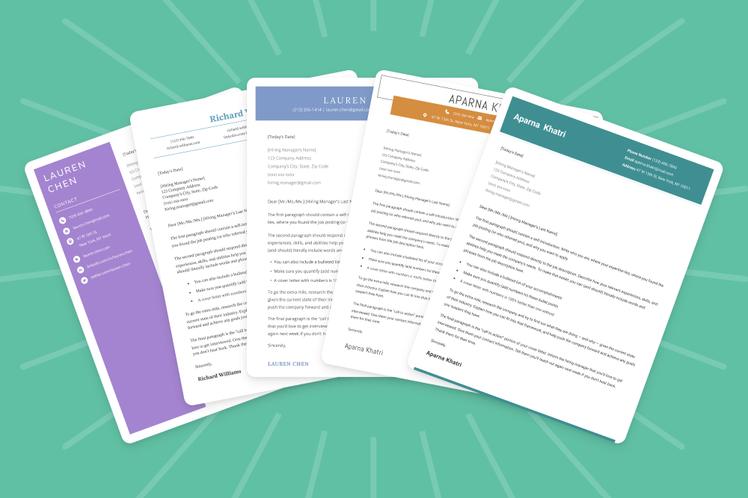
Use these three examples of effective portfolio cover letters for different career stages as inspiration when crafting your own portfolio letter.
Entry-level candidate (graphic designer)
If you’re early in your career, employers are often hiring for potential, not just experience.
That means they want evidence that you can do the work, learn quickly, and contribute professionally. A portfolio cover letter like this one helps you do that:
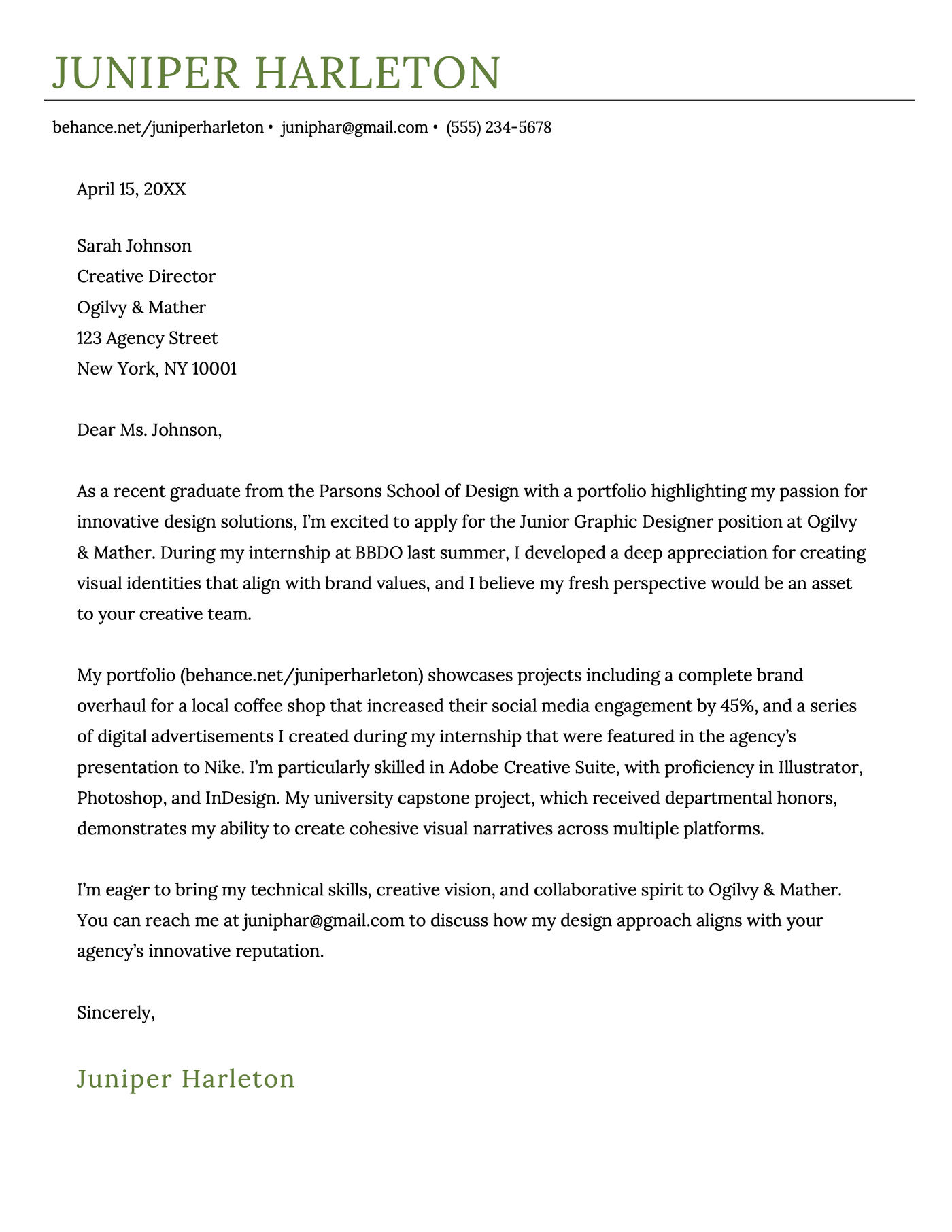
Why this is an effective portfolio cover letter:
- Clearly establishes relevant education and internship experience that qualifies them for the position, showing they understand the industry despite being new to it (mentioning Parsons School of Design and BBDO internship)
- Provides specific portfolio accomplishments with measurable results (45% increase in social media engagement for a coffee shop rebrand) rather than just claiming to be creative or talented
- Balances technical skills with creative attributes by mentioning both software proficiency (Adobe Creative Suite) and their design approach and collaborative spirit, giving a complete picture of what they offer
Experienced professional (photographer)
If you already have professional experience, you’ll want to highlight your proven track record and significant accomplishments along with your portfolio:
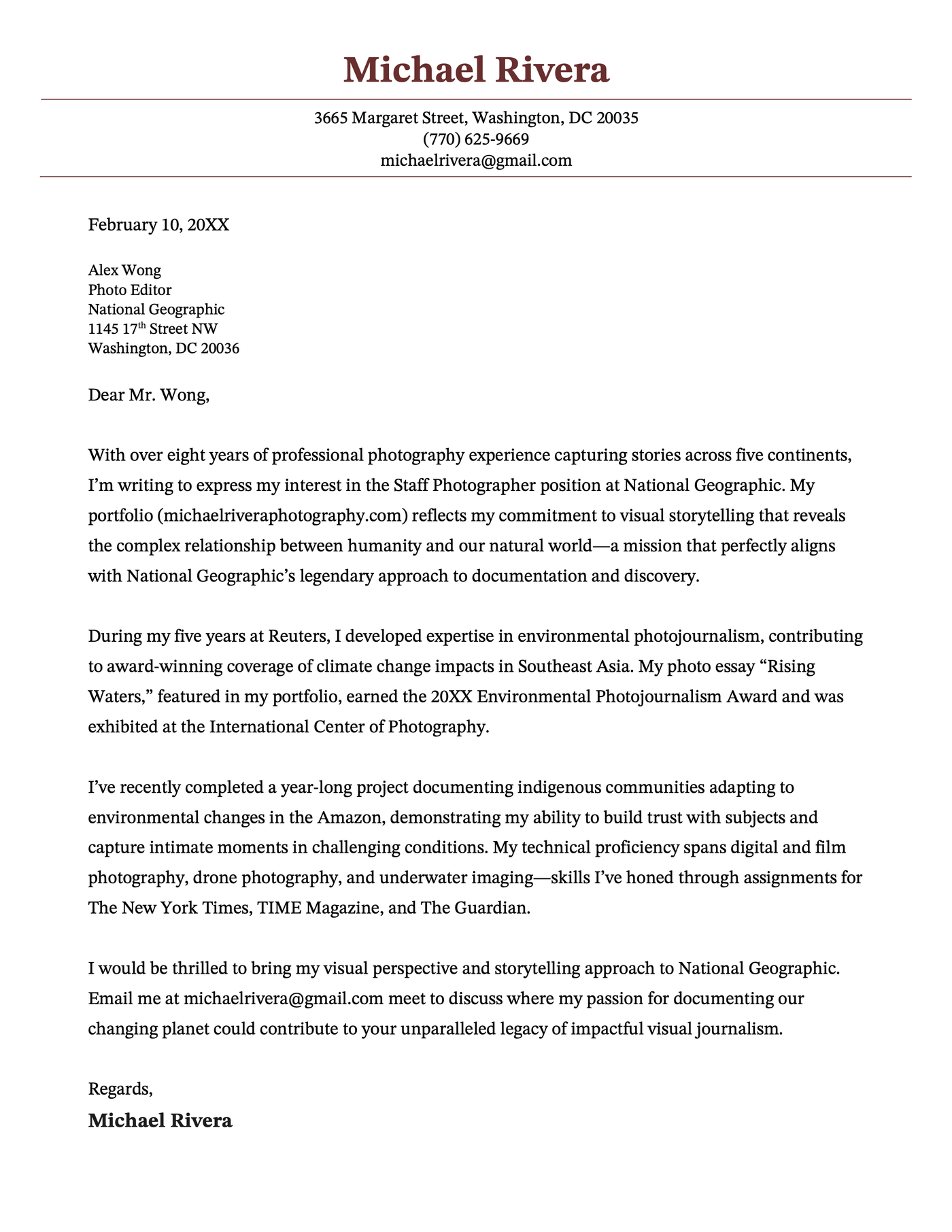
Why this is an effective portfolio cover letter:
- Immediately quantifies experience in a compelling way (eight years across five continents) that establishes credibility and global perspective, perfect for a National Geographic position
- References specific, prestigious recognition that validates the quality of their work and distinguishes them from competitors
- Demonstrates depth through specialized technical skills that are directly relevant to the role (drone photography, underwater imaging) while also showing breadth through varied high-profile clients (Reuters, NYT, TIME)
Senior-level candidate (software engineer)
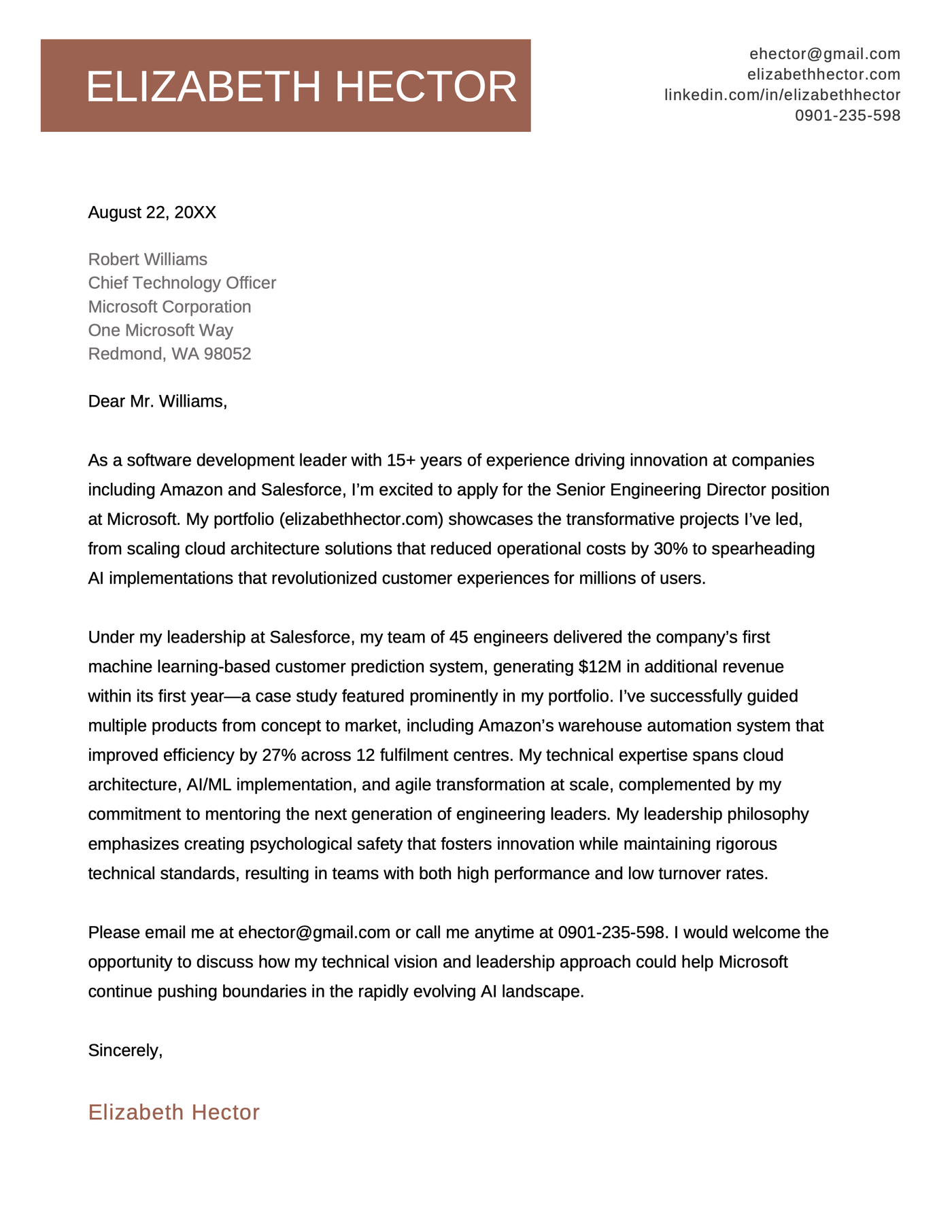
For senior-level roles, emphasize leadership experience, strategic vision, and how your portfolio demonstrates your ability to drive results:
Why this is an effective portfolio cover letter:
- Leads with leadership credentials and quantifiable business impact ($12M additional revenue, 30% reduced costs, 27% improved efficiency) showing they think beyond technical execution to business outcomes
- Articulates a leadership philosophy and management approach (psychological safety, mentoring) that addresses the human side of technical leadership, critical for a senior director role
- Connects past accomplishments to future vision for the company by explicitly mentioning how their experience relates to Microsoft’s focus on “pushing boundaries in the rapidly evolving AI landscape”
How to write a portfolio cover letter
Writing a portfolio cover letter is different from writing a cover letter for your resume because you’re not just summarizing your experience; you’re providing context for your portfolio so it makes sense to the reader.
Step 1: Understand what the employer wants to see
Before writing, review the job description or opportunity details carefully.
Ask yourself:
- What skills matter most?
- What type of work are they hiring for?
- Which portfolio pieces best match that need?
- Are they looking for creativity, technical skill, strategy, or results?
Choose examples from your portfolio that align directly.
For example, a marketing portfolio might include campaign metrics:
Marketing portfolio cover letter example
My recent digital campaign for Sunrise Beverages increased customer engagement by 37% and drove $145,000 in new revenue within the first quarter, as detailed in the campaign analytics section of my portfolio.
While a designer’s portfolio might focus on visual layouts and branding consistency:
Pros
Throughout my portfolio, you’ll notice my commitment to creating visually harmonious layouts that maintain brand consistency across multiple touchpoints, as exemplified by the cohesive typography system and color palette I developed for the Meridian Hotel rebrand.
Step 2: Start with an impactful opening paragraph
Your first paragraph should explain:
- The role you’re applying for
- Why you’re interested
- Your background
- Why your portfolio is relevant
For example:
I’m excited to apply for the Junior UX Designer role at BrightLabs. As a recent graduate with hands-on experience building mobile prototypes and usability-tested web projects, I believe my portfolio reflects the user-centered thinking your team values.
Step 3: Explain your best portfolio pieces
The next two paragraphs of your cover letter should discuss specific pieces in your portfolio and expand on your relevant professional experience. This section links your past accomplishments to the requirements of the position.
Select 2–3 relevant examples and explain:
- What the project was
- Your role
- Skills used
- Results or outcomes
For example:
My portfolio includes a nonprofit website redesign that improved navigation and increased newsletter signups during testing by 28%.
Step 4: Mention specific skills and measurable results
For each of the portfolio pieces you discuss, link relevant skills that match the job description, such as:
- Software proficiency
- Programming languages
- Platforms
- Revenue impact
- Engagement growth
- Time saved
- Awards or recognition
Then, quantify your achievements with specific metrics, such as increased engagement rates, revenue generated, time saved, awards won, that demonstrate your effectiveness.
For example:
My technical expertise spans advanced airbrushing techniques, prosthetic application, and color theory principles, all of which I’ve applied across over 200 wedding events and 15 commercial photo shoots featured in my portfolio. I’m proficient with industry-standard tools including MAC Pro cosmetics, RCMA foundations, and Kryolan special effects products, and my work has consistently delivered measurable results, including a 95% client satisfaction rate and a 40% increase in referral bookings over the past two years, with three of my bridal looks being featured in Martha Stewart Weddings magazine.
Step 5: Close with a call to action
End your cover letter by reinforcing your interest in the position and company and include a clear call to action by expressing your interest in discussing your qualifications further in an interview.
Provide your direct contact information, even if it’s already on your resume, making it as easy as possible for the hiring manager to reach you.
Finally, thank the reader for their time and consideration, and close with a professional sign-off like “Sincerely” or “Best regards” followed by your full name.
For example:
I’m particularly enthusiastic about joining Westfield Creative because your agency’s focus on sustainability-driven campaigns resonates deeply with my professional values and creative approach. I would welcome the opportunity to discuss how my experience developing award-winning visual narratives could contribute to your upcoming client projects.
Thank you for considering my application and reviewing my portfolio. You can reach me directly at (555) 123-4567 or sarah.johnson@email.com at your convenience. I’m available for interviews Monday through Friday and can accommodate virtual or in-person meetings.
Sincerely,
Sarah Johnson
About the Author

Lauren Mastroni is a Digital Content Writer at Resume Genius, where she creates data-driven career content and actionable job search advice. With a background in academic research, she brings a research-focused approach to topics like resume writing, interviewing, and career development. Lauren is dedicated to helping job seekers at all stages navigate the hiring process and present themselves more effectively to employers.