
A CV highlights your career history through sections like work experience, education, and key skills. A cover letter is a one-page formal letter where you explain why your background makes you the ideal candidate for the job.
What is a CV?
A CV is a job application document that outlines your work history, education, certifications, training, volunteer roles, and the skills you’ve gained throughout your career.
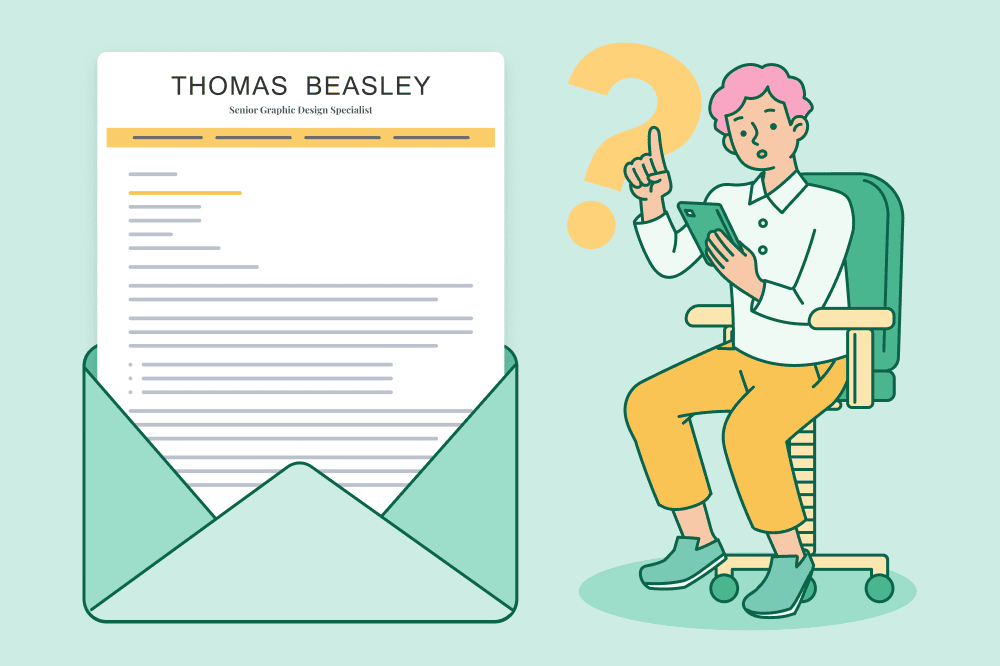
Here’s what a CV looks like:
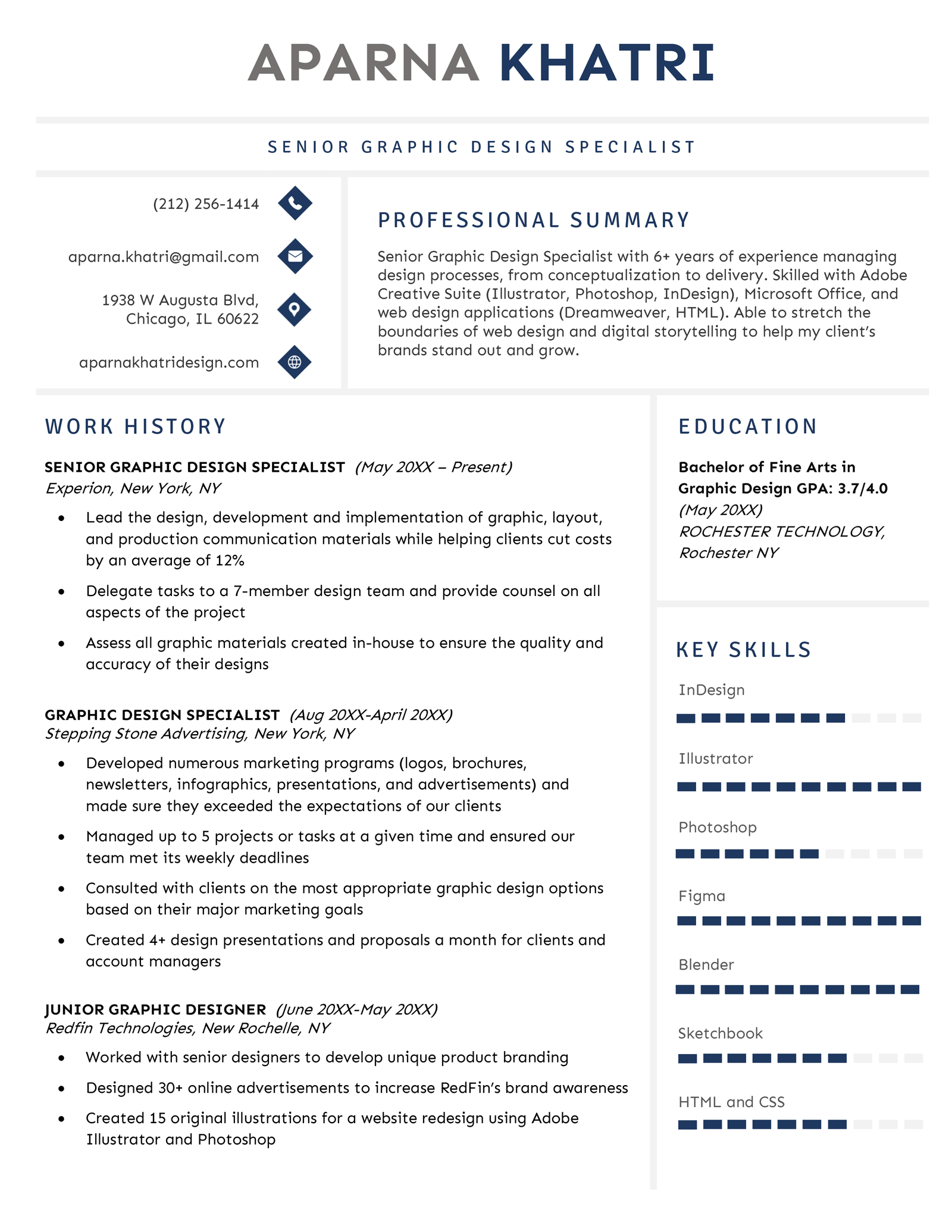
In the US, “CV” and “resume” usually mean the same thing, but an academic CV has a different format.
What do you include in a CV for a job?
To write a CV, you should include the following sections:
- Contact information: Include your name, email, and cellphone number. Add your city and state, but don’t write your full address.
- Professional summary: In 2–5 sentences, list your years of experience, describe a key achievement, list your key skills, and summarize your experience in your professional summary.
- Work history: For each role, your work experience section includes the company name, your job title, location, dates of employment, and 3–5 bullet points highlighting your key achievements (don’t just list your responsibilities).
- Skills section: List of all the job-related skills you have and tools you can use.
- Education section: Include your highest degree (or high school diploma) in your education section.
Optional sections
Optional CV sections include language skills, hobbies, volunteer work, professional awards, and relevant projects.
Here are some other good things to add to your CV:
- Words and phrases from the job ad: Mirroring the wording from the job listing shows employers that you have the skills and experience they’re looking for.
- Action verbs: Start your bullet points with verbs like “managed,” “organized,” and “created,” as opposed to weak phrases like “responsible for,” or “tasked with.”
- Numbers: Quantify your achievements by including numbers to measure the results of your efforts at each job.
What is a cover letter?
A cover letter is a one-page document you send with a CV or resume that introduces you to the employer, highlights your most relevant skills and achievements, and explains why you’re a good choice for the role.
In a cover letter, you should show your personality and demonstrate your enthusiasm for the job while explaining why you want to work for your target company.
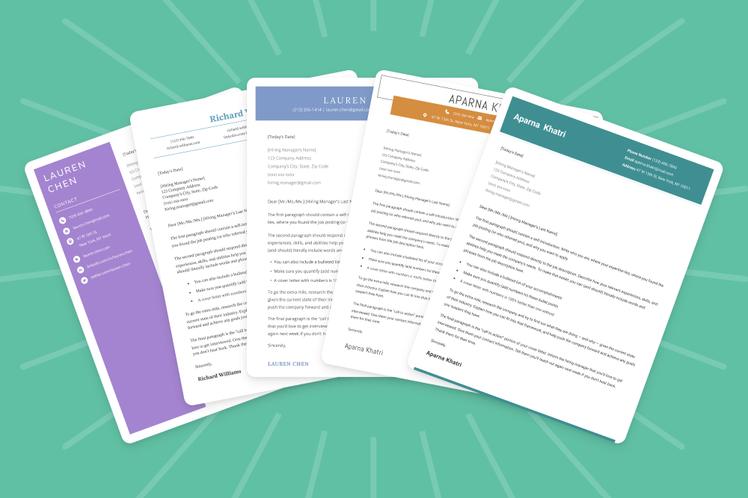
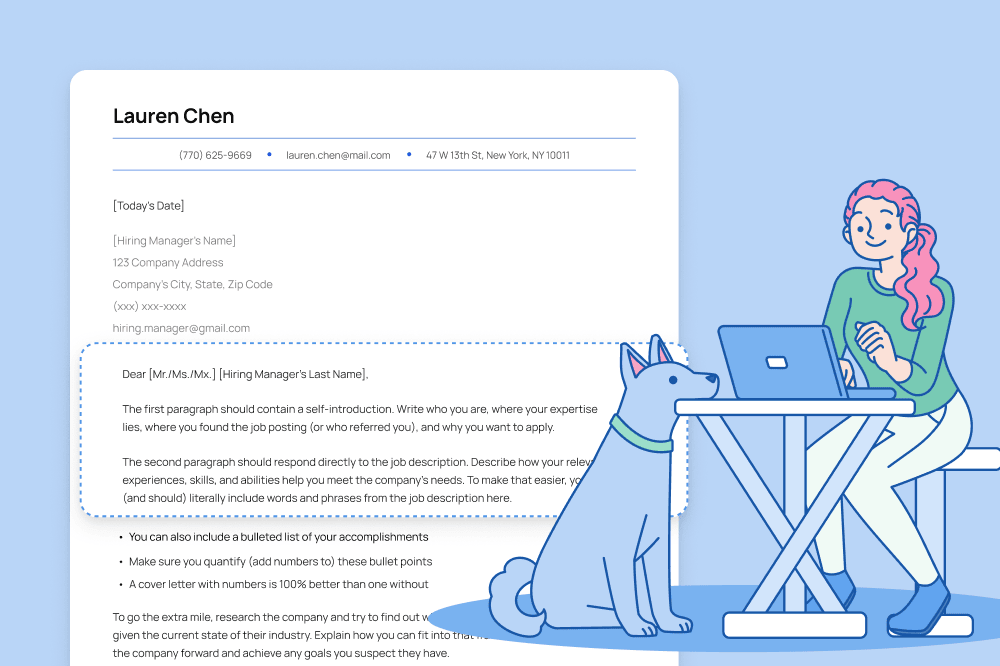
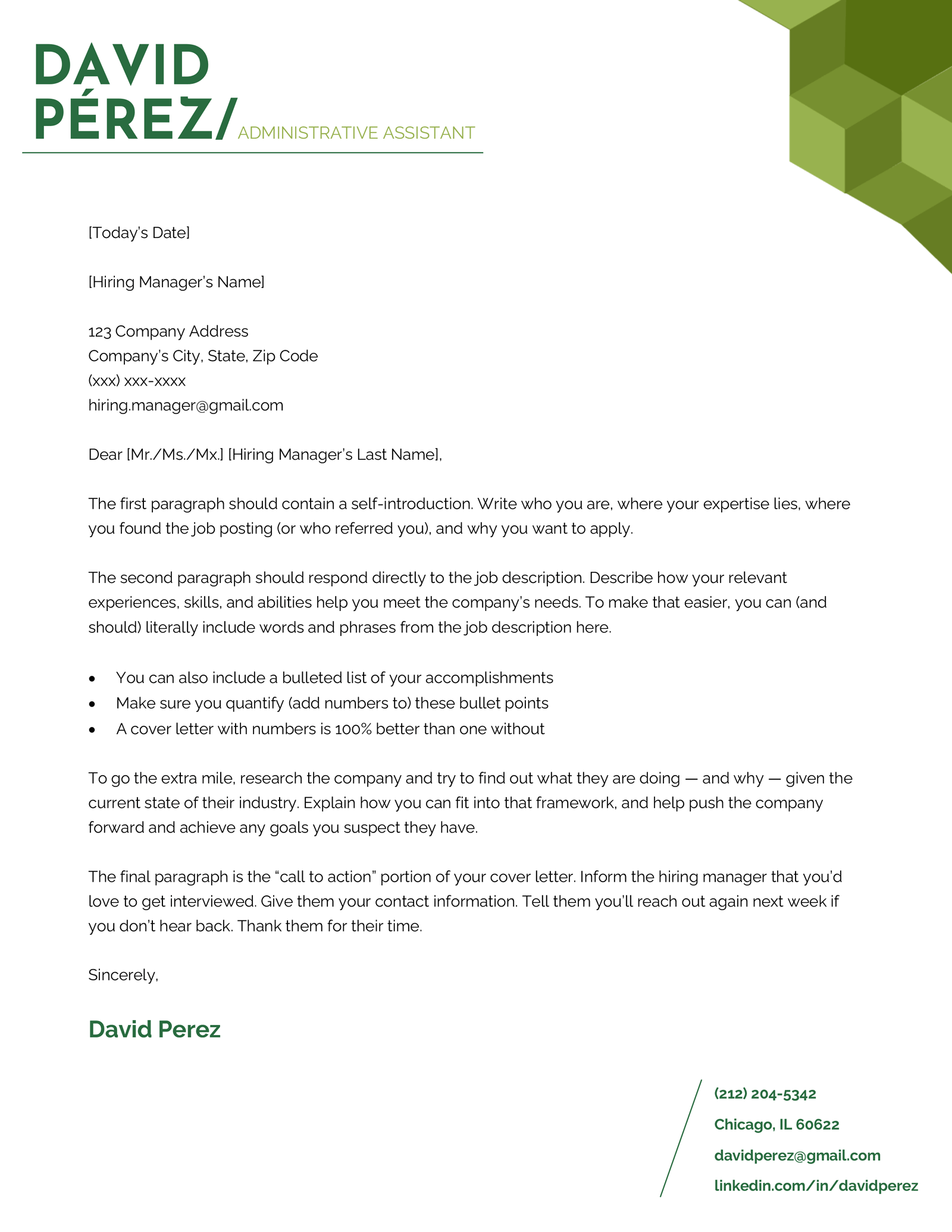
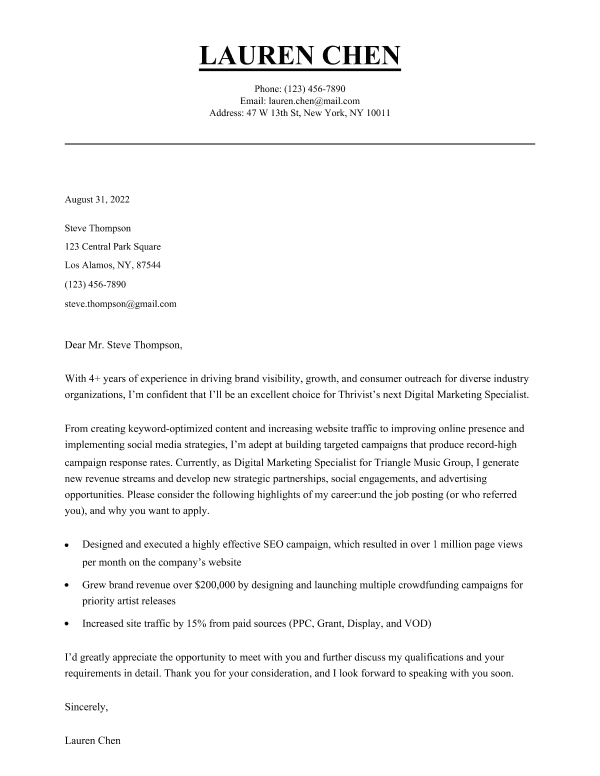
Here’s an example of a cover letter:
What do you include in a cover letter?
To write your cover letter, include these elements:
- Contact details: Include your full name and contact information at the top of your cover letter.
- Greeting: Address your cover letter to the hiring manager or employer by name, using their proper title (Mr., Mrs., Ms., Dr., etc.). If you can’t find their name, “Dear Hiring Manager” is acceptable.
- Introduction: Express your enthusiasm for the role and highlight how your skills match the company’s needs.
- Main section: In one or two paragraphs, highlight your key achievements (ideally with measurable results) and explain how your background fits the role’s requirements.
- Closing statement: End your cover letter by reaffirming your interest in the job, thanking the reader for their time, inviting them to contact you for an interview.
- Sign-off: Conclude with a polite closing such as “Sincerely,” followed by your name on the next line. Sign your cover letter digitally if possible.
Do I need both a CV and a cover letter?
Yes — you need both a CV (or resume) and a cover letter to give your application the best chance of success.
60% of hiring companies require a cover letter as part of a job application. Even if a job ad doesn’t require a cover letter, writing one helps highlight your enthusiasm for the role and sets you apart in the applicant pool.
Need help making a CV or cover letter?
If you’re in a hurry, consider using our online CV builder. It asks you a few quick questions, lets you choose a design, and present you with a finished CV or resume in minutes.
Frequently asked questions
Here are the answers to four frequently asked questions about the differences between CVs and cover letters:
1. Is a CV a resume?
If you’re applying for a job, a CV and a resume are essentially the same — so don’t worry about which term you use. While “resume” is more common, you’ll sometimes see “CV” as well.
However, “CV” can also refer to an academic CV, which includes additional sections like publications, research, teaching experience, and conferences.
In Europe, “CV” is the standard term used for all job applications, academic or otherwise.
2. Which comes first, a CV or cover letter?
If your job requires a cover letter (or you choose to write one), submit both documents at the same time.
If you’re printing your application documents, place the cover letter on top of your CV/resume.
3. Is it a must for a CV to have a cover letter?
No, it is not a must for a CV to have a cover letter. However, you’re boosting your chances by writing a cover letter.
4. Is a cover letter more important than a CV?
No, a CV is required for all jobs, while cover letters are often optional. However, 94% of hiring managers say cover letters influence the decision to offer an interview.
About the Author

14
Years of Experience
211
Articles Written
Nathan Soto is dedicated to providing practical guidance to job seekers, especially people with nonlinear career paths.
Nathan graduated from the University of Nevada with a double B.A. in French and Music. His articles and career advice have been featured on multiple platforms, offering insights into resume writing, interview preparation, and personal branding.