


Struggling to get interviews?
A clear resume introduction or opening statement can help you grab the attention of employers. Learn how to write four different kinds of resume introduction by follow our tips below.
There are four main types of resume introductions:
- Resume objective (career objective)
- Resume summary
- Resume profile (professional profile)
- Summary of qualifications
Follow the flowchart below to find out which type of resume intro is right for you:
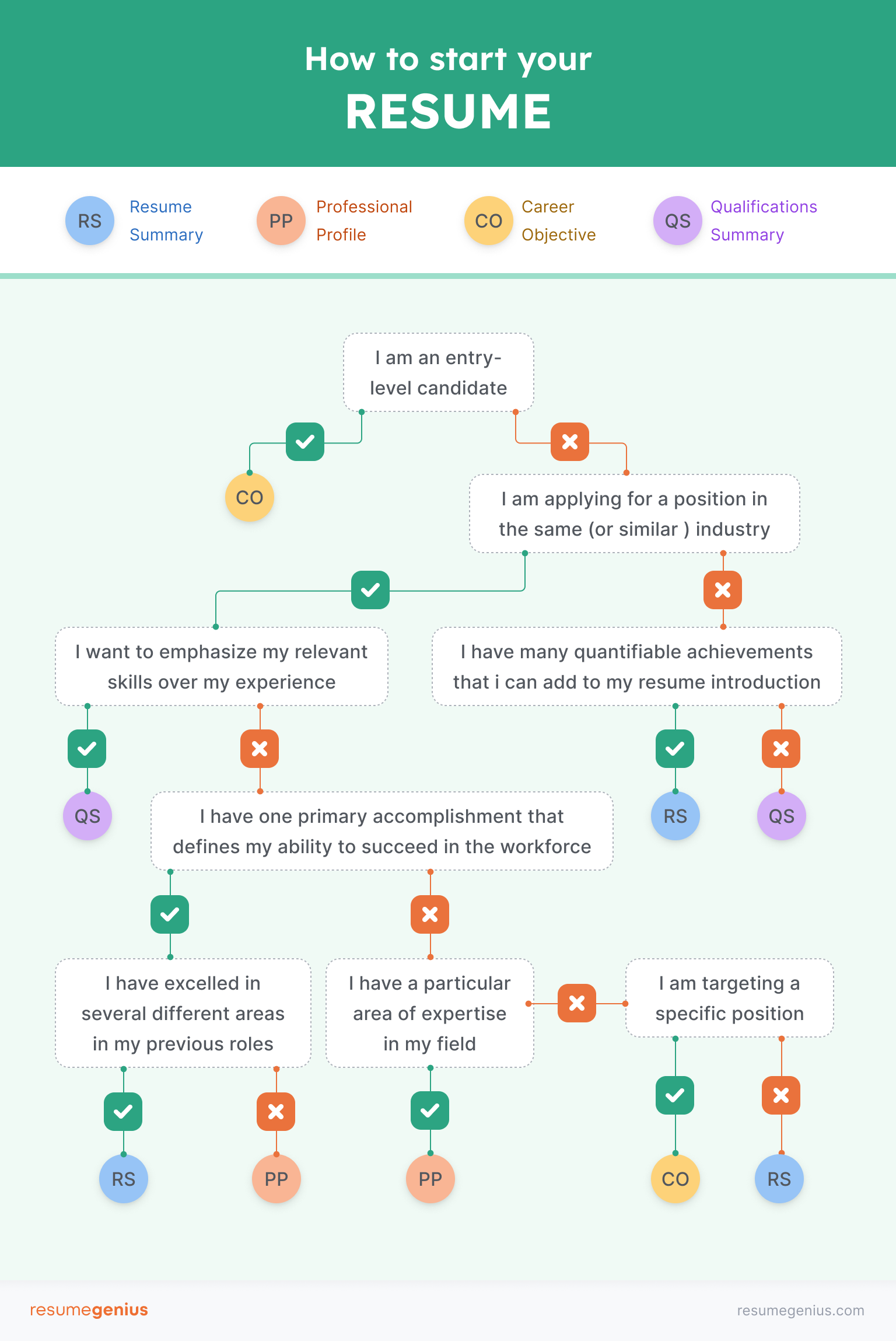
Below we explain the differences between each resume introduction and show you how to write them.
Resume objective
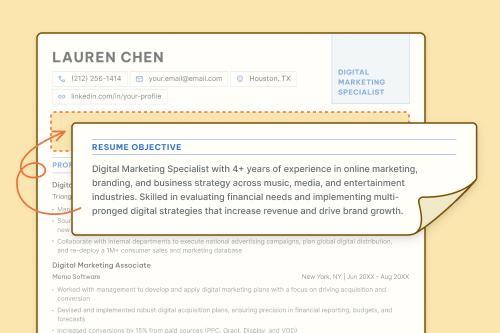
Resume objectives (also known as career objectives) are useful if you’re just entering the workforce or only have 1–2 years of experience.
An effective resume objective tells the employer what you’re looking for, what you have to offer, and why you’re a good fit for the position.
A resume objective should include:
- Number of years of work or internship experience and the job duties performed
- Qualities, skills, and abilities you have that are relevant to the job (you must be able to demonstrate these skills in the professional experience section)
- A closing statement describing your objective (i.e., how you plan to use your qualifications to help the company)
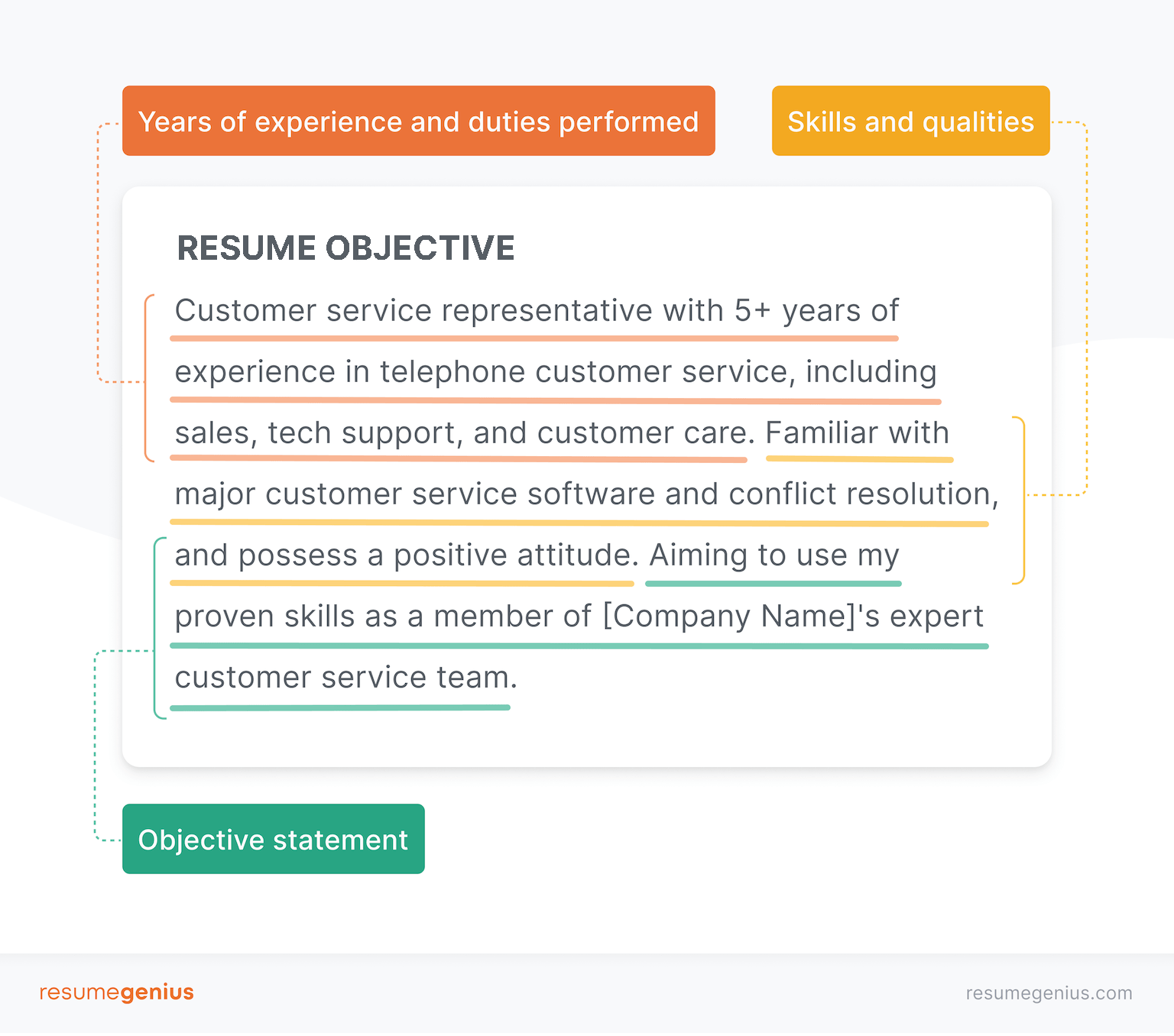
Career objective example (text version)
Resume objective
Customer service representative with 5+ years of experience in telephone customer service, including sales, tech support, and customer care. Familiar with major customer service software and conflict resolution, and possess a positive attitude. Aiming to use my proven skills as a member of [Company Name]’s expert customer service team.
Resume summary
A resume summary is the right choice if you have many career accomplishments. Resume summaries are also versatile because they can be used if you’re seeking work in the same industry or are trying to make a career change.
Your resume summary can be formatted as a 2-4 sentence paragraph or as a list, and should mention:
- Number of years of experience
- Skills and career accomplishments backed up by data whenever possible
- Relevant certifications
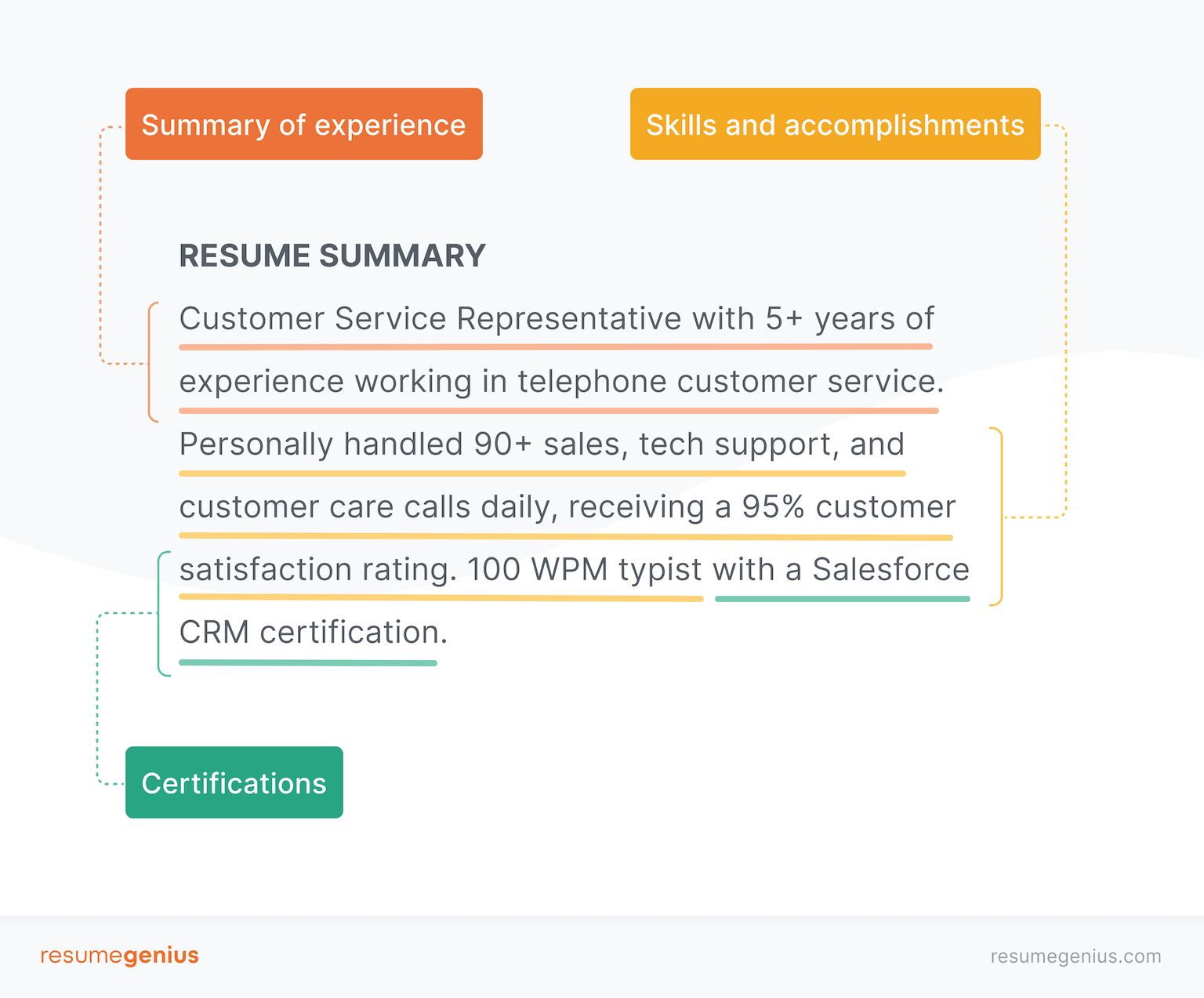
Resume summary example (text version)
Resume summary
Customer Service Representative with 5+ years of experience working in telephone customer service. Personally handled 90+ sales, tech support, and customer care calls daily, receiving a 95% customer satisfaction rating. 100 WPM typist with a Salesforce CRM certification.
Resume profile
A resume profile (also known as a professional profile) is somewhere in between a career objective and qualifications summary. Your resume profile should include the following information:
- Number of years of experience
- Specialty or job duty you excel at
- Transferable skills and career achievements
If you need to write an introduction for your LinkedIn profile or website, check out our professional bio examples to get some ideas.
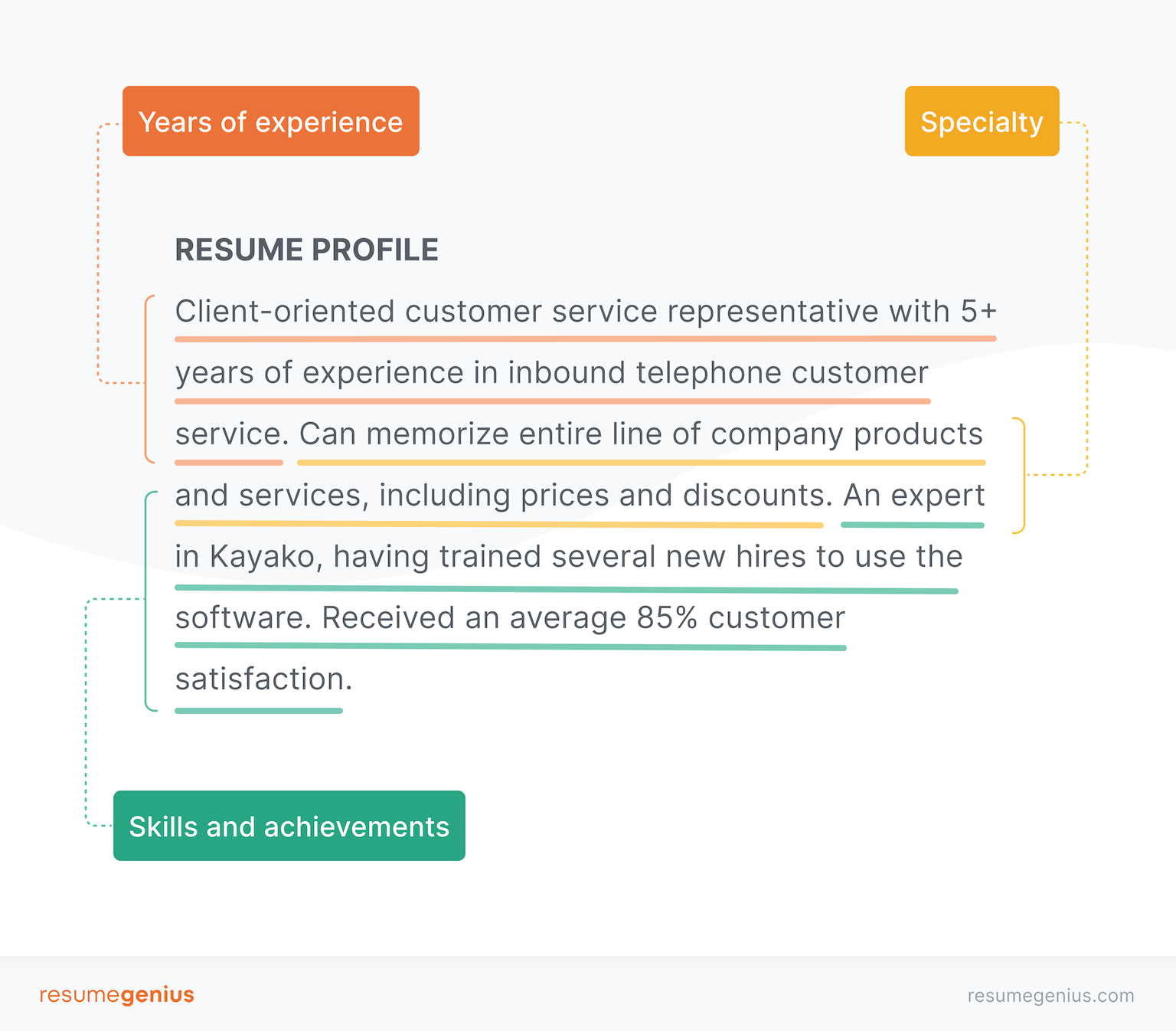
Resume profile example (text version)
Resume profile
Client-oriented customer service representative with 5+ years of experience in inbound telephone customer service. An expert in Kayako, having trained several new hires to use the software. Can memorize entire line of company products and services, including prices and discounts. Received an average 85% customer satisfaction rate.
Summary of qualifications
A summary of qualifications (also known as a qualifications summary) is best if you are switching industries and want to emphasize your transferable skills and relevant achievements. A qualifications summary should contain 5-6 bullet points that:
- Emphasize your skillset
- Highlight qualities that make you an ideal candidate
- Showcase your biggest career accomplishments
List the most relevant and impactful bullet points first.
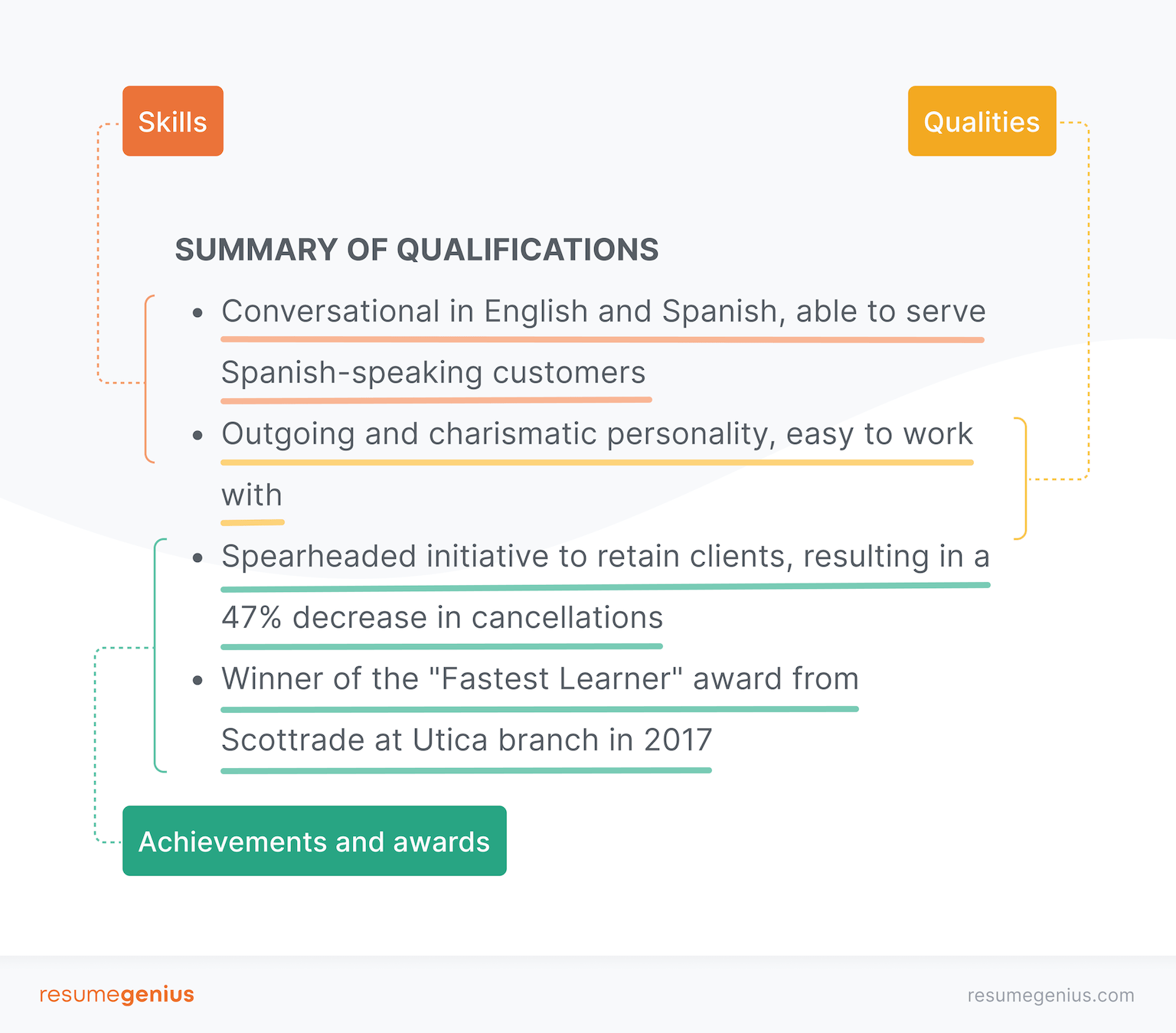
Summary of qualifications example (text version)
Summary of qualifications
- Conversational in English and Spanish, being able to serve Spanish-speaking customers
- Outgoing and charismatic personality, easy to work with
- Spearheaded initiative to retain clients, resulting in a 47% decrease in cancellations
- Winner of the “Fastest Learner” award from Scottrade at Utica branch in 2017
Resume introduction writing tips
Your introduction needs to make a good first impression by quickly demonstrating your value to prospective employers.
An effective introduction should quickly communicate who you are and how you meet the job requirements.
Here are some tips for writing a compelling resume introduction:
1. Keep it concise
Hiring managers and recruiters often spend just seconds scanning each resume. A long, wordy introduction is more likely to bore them or cause them to stop reading.
A tight, concise introduction grabs attention and demonstrates good communication skills. Aim for no more than 3-4 sentences.
2. Tailor it to the role
Don’t write a generic introduction. Your introduction should highlight your skills and accomplishments that are most relevant to the job you’re applying for.
Read the job description closely and identify keywords to use in your introduction that align with your work experience to show that you’re a strong match.
3. Quantify your impact
A resume introduction is effective when it highlights your unique combination of experience, knowledge, and skills, and demonstrates why you’d be an asset to the company.
Quantify achievements and provide specific examples whenever possible. Numbers stand out on a resume and make it more impactful and easier to skim. Including numbers and metrics also shows that you can back up your achievements.
About the Author

Nathan Soto is dedicated to providing practical guidance to job seekers, especially people with nonlinear career paths.
Nathan graduated from the University of Nevada with a double B.A. in French and Music. His articles and career advice have been featured on multiple platforms, offering insights into resume writing, interview preparation, and personal branding.