
- Use color sparingly
- Leave off outdated jobs
- Don't go over two pages
- Avoid generic soft skills
- Remove references on your resume
- Use a professional email address
- Provide links to your work
- Tailor your resume for each job
- Use simple, easy-to-read formatting
- Make your bullet points action-focused
- Quantify your results
- Be honest
- Omit high school information (if you have higher education)
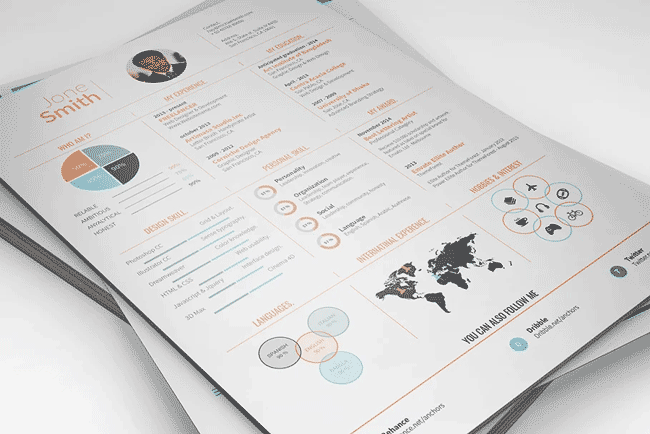
- Don’t include a photo
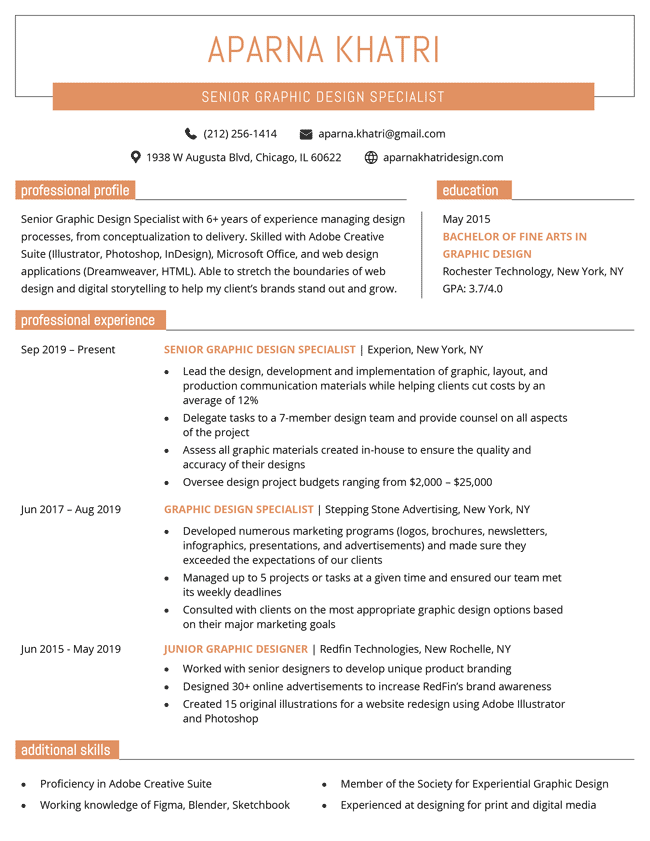
- Make headings stand out
- Show your career progression
- Get comfortable with self-promotion

Struggling to get interviews?
I’m a hiring manager with 8 years of experience. I’ve reviewed countless resumes and I understand what makes one stand out. Here are my top tips to help you write a resume that will get noticed in 2026.

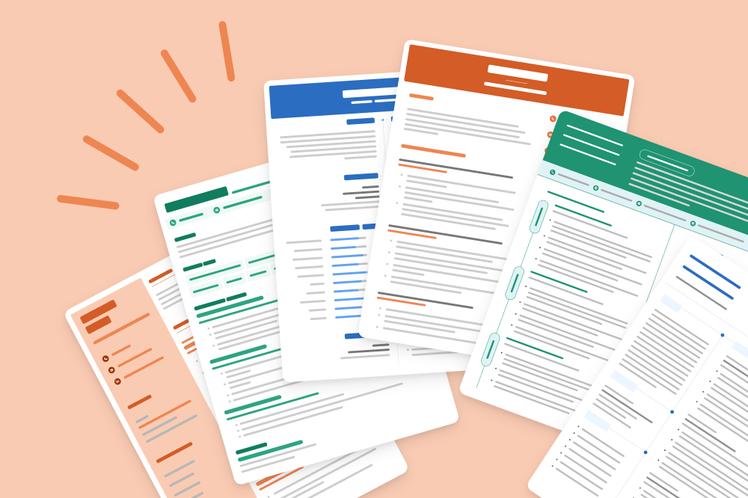
Use color sparingly
I recommend sticking to one or two professional colors, such as navy blue, dark gray, or burgundy, to keep things polished. Too much color can look unprofessional and distract from your qualifications.
Still, a subtle color accent like section headers or your name can make your resume more visually appealing. Just don’t overdo it.
Leave off outdated jobs
There’s a common misunderstanding that a resume is a comprehensive look at your work history. It’s not. Instead, consider it a snapshot of your best and most relevant professional moments.
I advise cutting work experience older than 10–15 years unless it’s highly relevant to the job. Also, cut any work experience that’s completely unrelated to your target role (unless it’s the only experience you have).
For example, someone applying for a social media manager role should remove their college bartending job from their resume, because the skills are largely not transferable.
Don’t go over two pages
A one-page resume is ideal for most positions, and your resume shouldn’t be longer than 2 pages.
Recruiters often spend just a few seconds reading each resume, so it’s crucial to highlight the most important details concisely. If your resume spills onto a third page, there’s probably something you could cut from your work experience.
Avoid generic soft skills
Skills like “team player” or “good communicator” don’t tell employers much about what you are capable of doing. Instead of saying you’re a good communicator, prove it through specific examples of how you’ve used your communication skills.
For instance, mention how you helped resolve a customer issue or negotiated a successful project outcome.
When it comes to soft skills on your resume show instead of tell.
Remove references on your resume
Don’t list references on your resume and don’t include the phrase “references available upon request” — it’s outdated and takes up valuable space. If references are needed, employers will ask for them later. Use this space for more impactful content instead.
Use a professional email address
A professional email address is not optional.
Your email should be something like “firstname.lastname@gmail.com.” Avoid using nicknames or quirky phrases that could detract from your credibility.
Provide links to your work
Want to give employers a more complete look at your work history and skills? Adding a link to your portfolio or LinkedIn profile on your resume is a great way to do it without sacrificing space.
Add links to your LinkedIn profile, online portfolio, or work samples in your resume header (included alongside your contact information). Just ensure your LinkedIn is up-to-date and aligns with your resume. Providing accessible examples of your work adds credibility.
Tailor your resume for each job
When I’m hiring, I’m looking for resumes that align closely with the job description.
To tailor your resume to the job, Identify the skills and experiences the employer values most by looking at the job listing. Then, include those words and phrases in your resume.
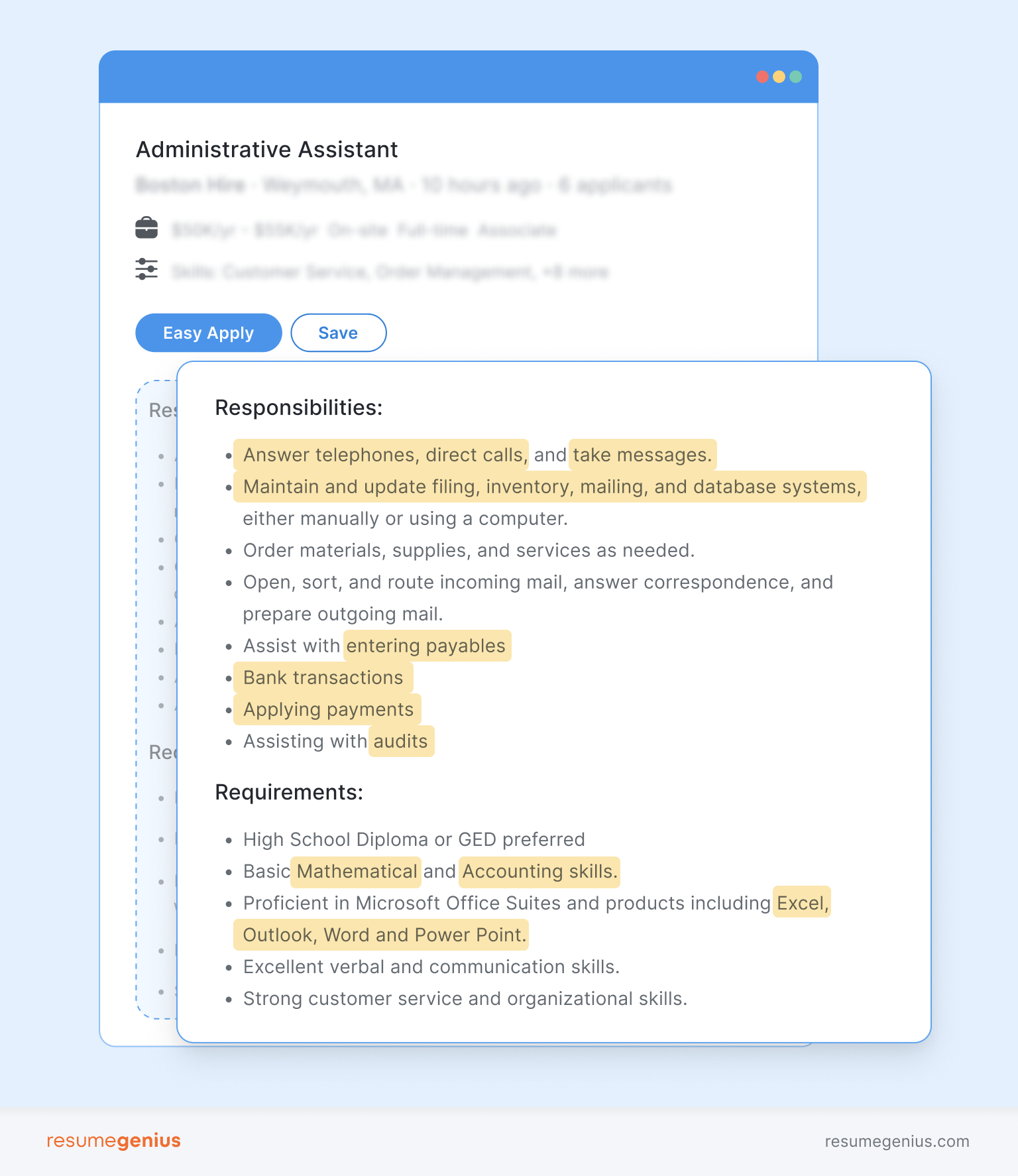
For example, if the job posting mentions “project management” and “data analysis,” use those keywords in your skills, experience, or summary sections.
This makes your resume more impactful for the people reading it, and it makes it more likely that employers using applicant tracking systems (ATS) will see your resume when they filter for the job requirements.
Use simple, easy-to-read formatting
Here’s an easy formula to guarantee your resume looks professional and is easy to read: choose a professional font like Arial or Times New Roman. Keep the main text size between 10 and 12, and keep the headings between 14 and 16.
Stick to 1 inch-margins, and use bullet points to break up text and make information digestible.
Make your bullet points action-focused
Many job seekers make the mistake of starting every resume bullet point with passive phrases like “responsible for” or “tasked with.” This downplays your accomplishments, and makes your resume boring to read.
Employers want to know what you’ve achieved and the results you’ve delivered. Instead of listing tasks, use your bullet points to focus on your own actions and accomplishments.
To do this, to begin each bullet point with an active verb like “managed,” “developed,” or “led.” These are more impactful than phrases like “oversaw,” or “in charge of.”
Quantify your results
Another easy way to boost your work experience section is to use numbers to highlight your accomplishments.
For example, instead of writing “Reduced operational costs,” specify how much you reduced costs by: “Reduced operational costs by 15%.” Quantifying achievements on your resume gives employers a clearer picture of your abilities, so add numbers to measure your success whenever possible.
Be honest
In 2026, honesty is still the best policy. Exaggerating or lying on your resume can backfire if employers choose to verify your claims.
Highlight your genuine accomplishments to build trust and credibility, and avoid overstating your qualifications in a dishonest way.
Omit high school information (if you have higher education)
If you’ve completed college or vocational training, don’t include your high school diploma on your resume.
Employers are more interested in your highest level of education and work experience. Likewise, you can omit your graduation year if you graduated over 10 years ago.
Don’t include a photo
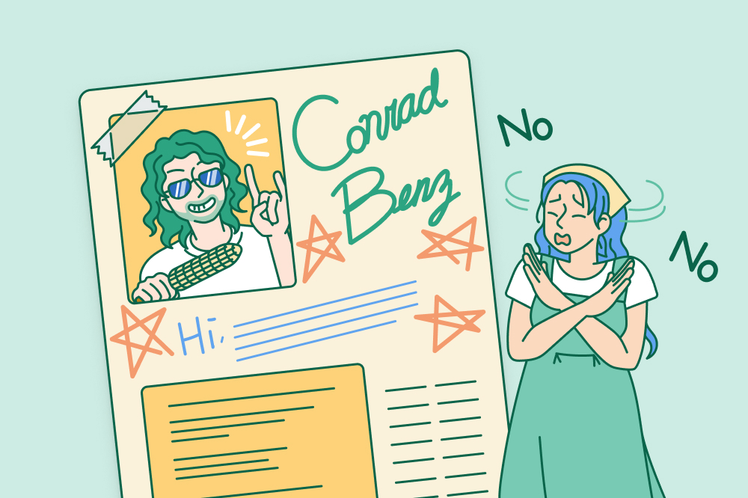
If you’re applying for a job in the US, don’t put a photo of yourself on your resume. Adding a photo is the norm in a lot of other countries, so online templates frequently provide a space for a photo.
In the United States, anti-discrimination laws make it illegal to discriminate in hiring based on several personal characteristics. In order to protect themselves from getting sued, many US companies have a policy to automatically reject any resume with a photo.
Make headings stand out
Use bold text or a larger font size for section headings.
Clear organization makes a resume more appealing and allows people to find the information they’re looking for faster.
Stick to the standard heading titles, though, because ATS software won’t be able to parse your resume if you label your “Work Experience” section something like “My Professional Journey.”
Show your career progression
Demonstrating growth within roles or promotions makes a strong impression and shows that you excel at your work.
If you’ve been promoted at a job or received recognition for your work through an award, highlight these achievements on your resume.
Get comfortable with self-promotion
Your resume is your chance to sell yourself. Don’t hesitate to highlight your accomplishments, successful projects, and awards. Confidently present your achievements and experience to show you’re qualified for the position you’re applying for.
About the Author

Conrad Benz is a Content Manager and Hiring Manager at Resume Genius. With nearly a decade of experience as a career services professional, Conrad is passionate about helping people navigate the job search process and find fulfilling work.
You can find Conrad’s career insights in publications like Typsy, Resume Library, and more.
Conrad graduated with a B.A. in International Relations from Goucher College in Maryland and currently lives in Taipei, Taiwan, where he helps ensure every article on Resume Genius provides job seekers with the information they need to succeed.
If you want to reach Conrad for a quote or media-related inquiry, you can contact him at [conrad] @ [resumegenius.com].