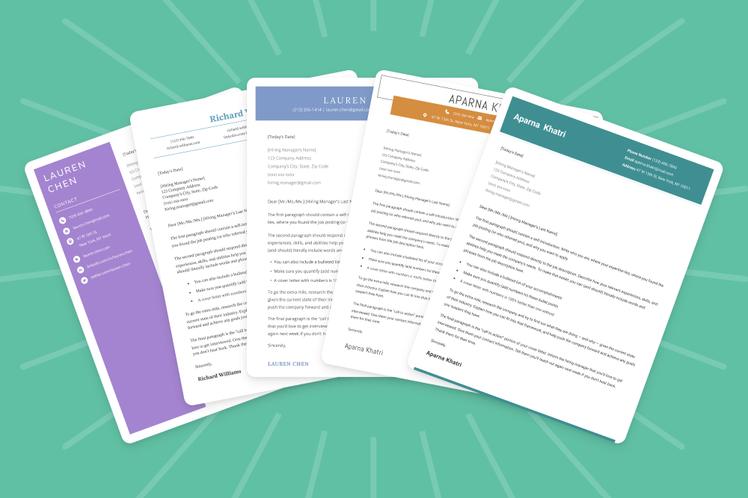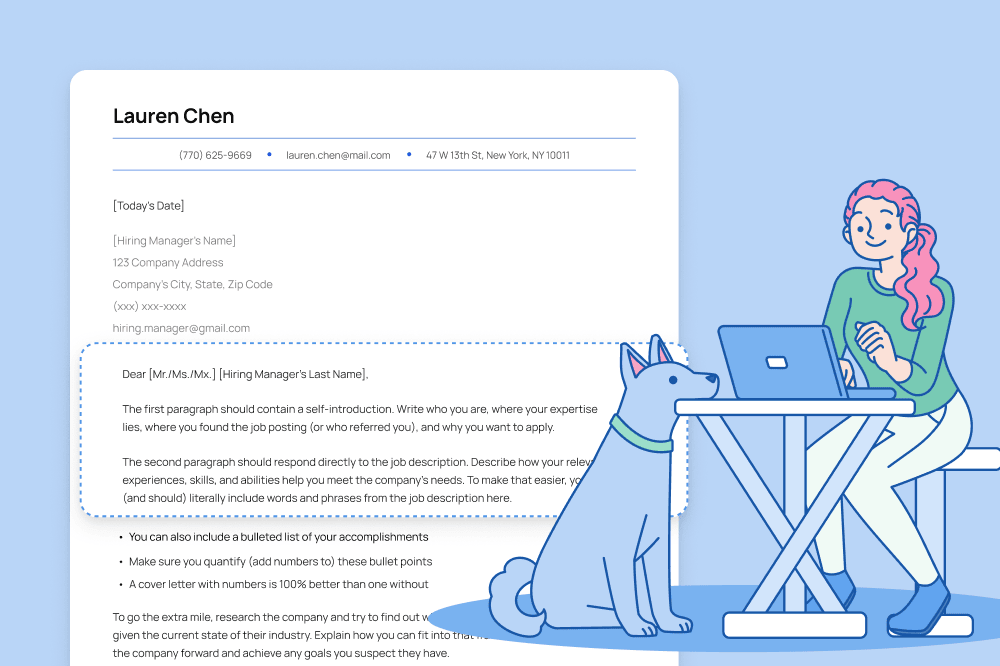


Many companies don’t publicly post all of their job openings. A well-written letter of interest lets you introduce yourself to a company that isn’t actively hiring.
If you’re struggling to find work right now, you’re not alone. Over the summer of 2025, the U.S. added an average of 35,000 new jobs per month, down sharply from 111,000 at the start of the year.
With fewer openings and more applicants competing for each role, job seekers need to be resourceful. One proven way to tap into the hidden job market and beat the competition before an opportunity even arises is by sending letters of interest.
What is a letter of interest?
A letter of interest is a one-page document expressing your desire to work for a company, even when no job opening has been posted. It’s also called a letter of intent or statement of interest.
A good letter of interest includes:
- A personalized greeting (avoid “To Whom It May Concern”)
- A brief opening explaining who you are and why the company interests you
- Two to three specific achievements backed by numbers
- A clear call to action, such as asking for an informational interview
A letter of interest differs from a cover letter for an internal position. You use an internal cover letter to apply for a promotion or transfer within your current company, while a letter of interest is sent to an employer who isn’t actively advertising a role.
Letter of interest vs. cover letter
While both letters introduce you to an employer, they serve different purposes:
| Cover Letter | Letter of Interest |
|---|---|
| Responds to an open job posting | Sent when no job is posted |
| Tailored to a specific position | Focuses on the company or a specific department |
| Emphasizes fit for the listed role | Emphasizes the job seeker’s overall value and initiative |
| Submitted at an employer's request as part of an application | Sent proactively by the candidate |
Letter of interest examples
Here are five letter of interest samples that helped candidates land interviews. Use them as inspiration to shape your own letter — either by adapting the structure or borrowing phrasing that fits your background.
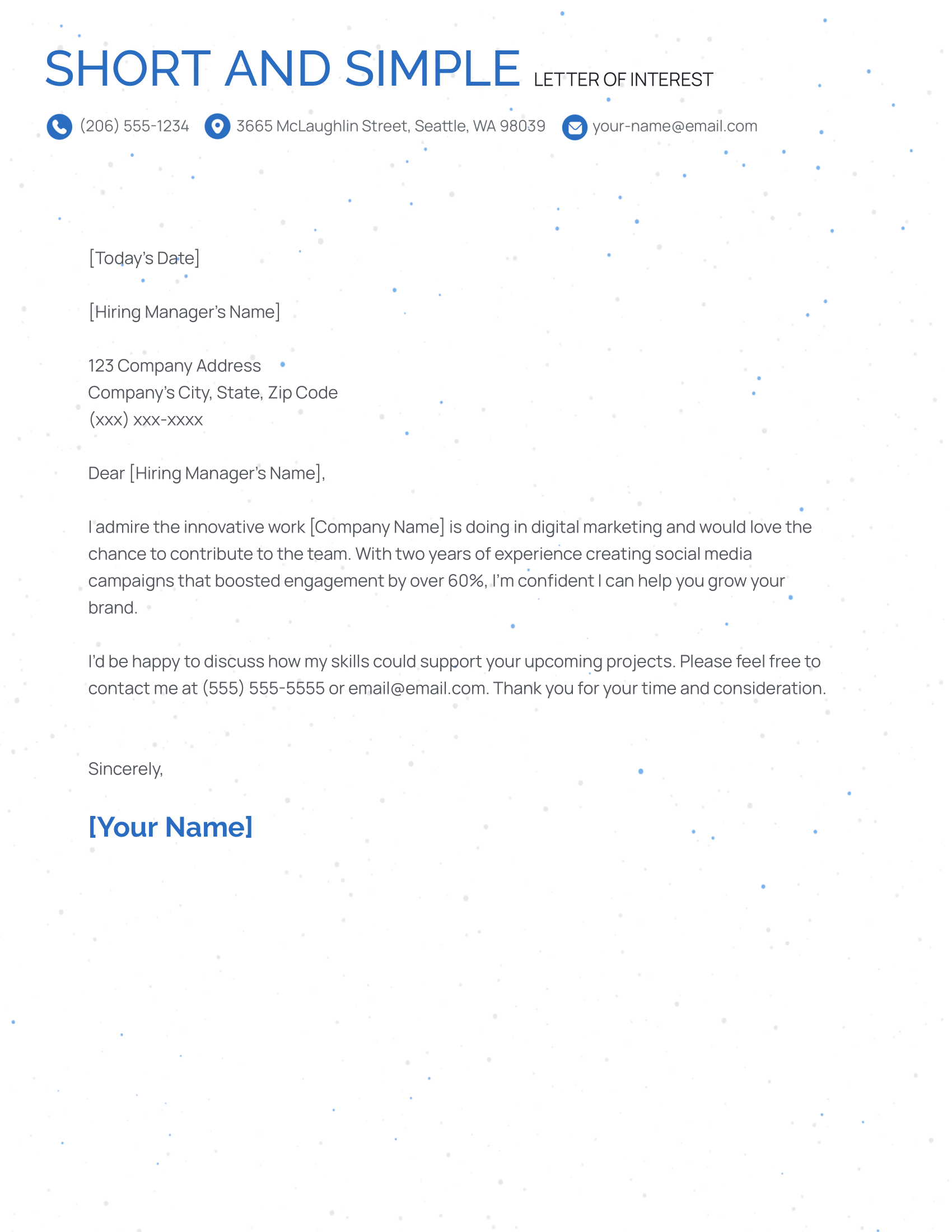
Short and simple letter of interest example
If you want to keep your letter of interest simple and quick to read, use this short example:
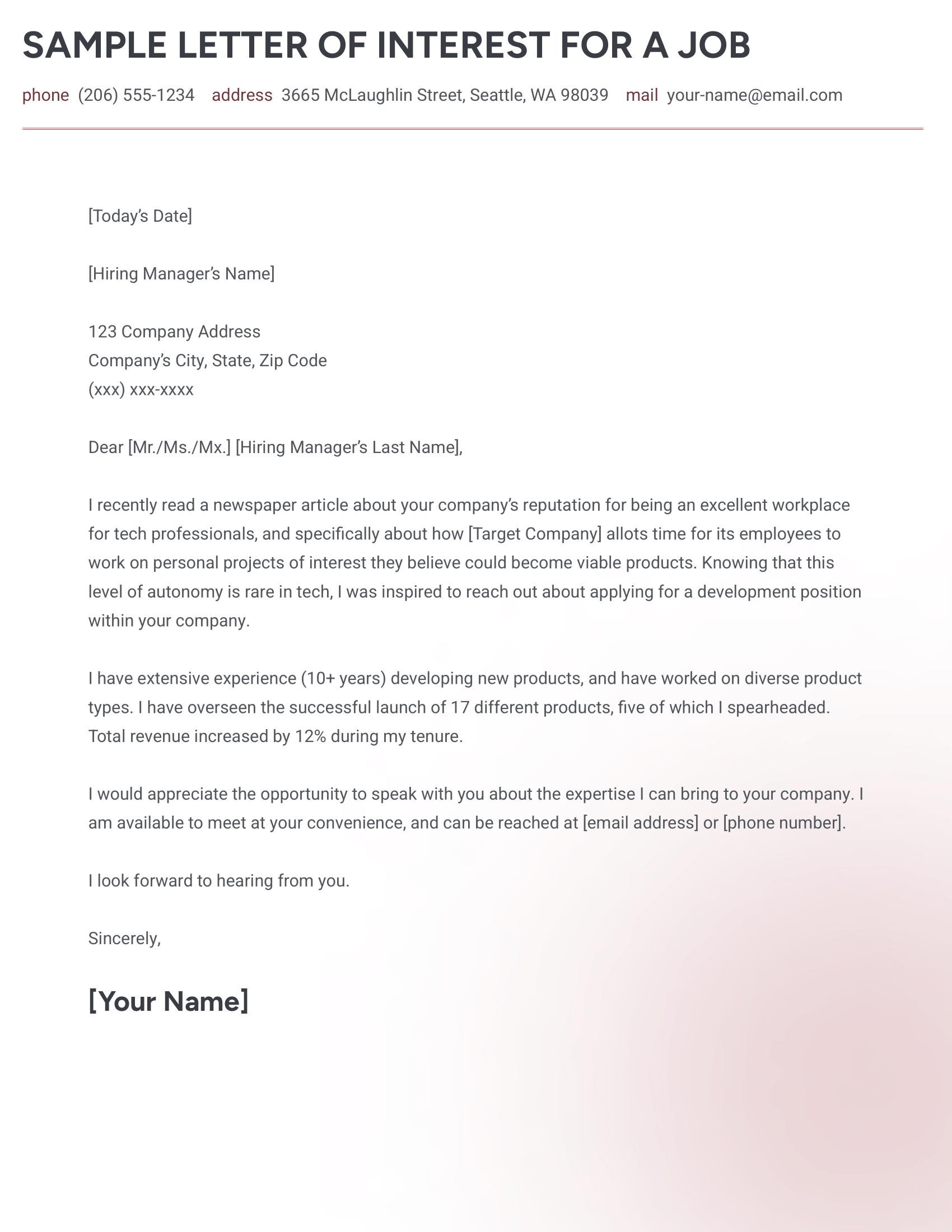
Sample letter of interest for a job
If there are companies you’ve been following or have long admired, consider sending a letter of interest to see if they have any open opportunities that match your skills. Use this general letter of interest example to get started:
Email letter of interest example
If you plan to send your letter of interest by email, the format will differ from a standard business letter and should be slightly more casual in tone. Here’s an example:
Hi [Hiring Manager’s Name],
I’m [Your Name], a recent computer science graduate with a background in web development and UX design. I’ve followed [Company Name]’s growth in the edtech space and admire your commitment to making online learning more accessible.
I’d love to contribute to that mission. Although there are no current openings, I’d value the chance to discuss how my experience building user-friendly interfaces (including an app that increased student engagement by 45%) can benefit your team.
I’ve attached my resume for your review. If you’re available, I’d appreciate the opportunity to arrange a brief call or meeting. You can reach me at (555) 555-5555 or email@email.com.
Thank you for your time and consideration.
Sincerely,
[Your Name]
[LinkedIn Profile]
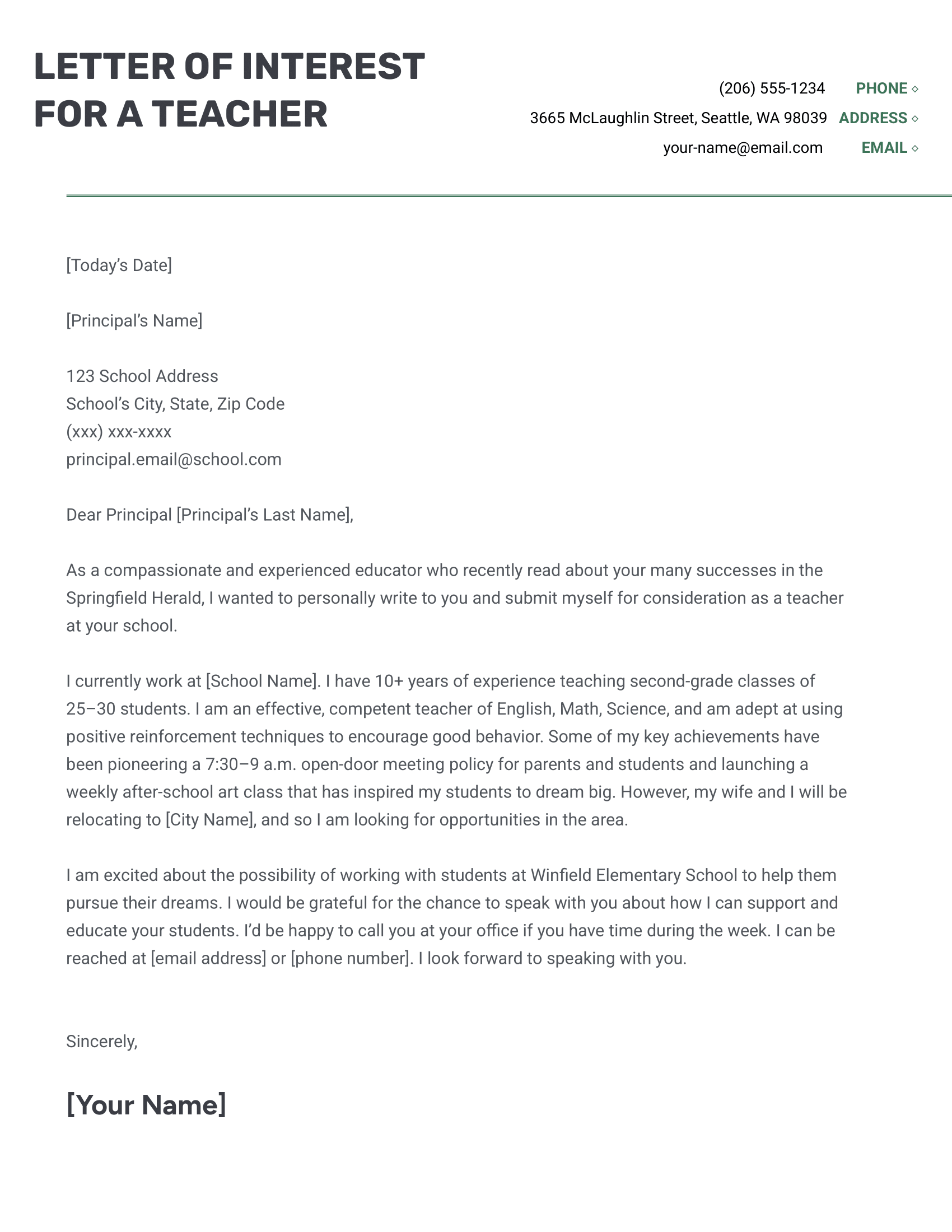
Letter of interest example for teachers
If there’s a school you’d love to teach at, you can send a letter of interest to inquire about any available positions.
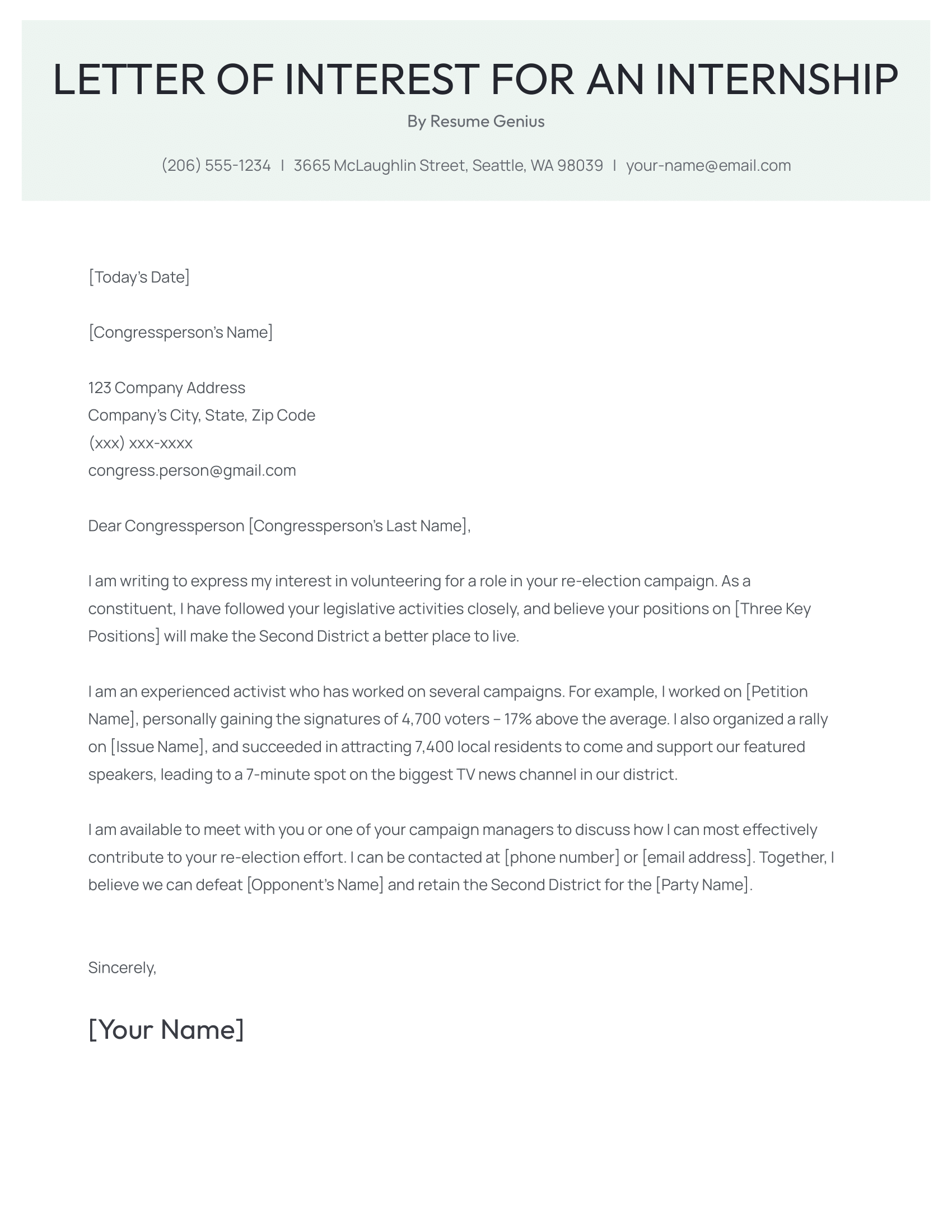
Letter of interest sample for an internship
A letter of interest isn’t just for full-time jobs. It can also help you land internships and volunteer roles. Use the example below to reach out to your dream company and ask about internship opportunities:
An internship resume and matching internship cover letter are also essential when applying for internships.
Letter of interest template
Making your own letter of interest? Simply copy and paste this template into your word processor, and then fill in the details to quickly structure your letter:
Today’s Date
Hiring Manager’s Name
123 Company Address
Company’s City, State, Zip Code
(xxx) xxx-xxxx
hiring.manager@gmail.com
Dear [Mr./Ms./Mx.] [Hiring Manager’s Last Name],
First paragraph: Introduce yourself. Explain who you are, why the company interests you, and summarize your professional background.
Second paragraph: Describe your industry-specific qualifications. Showcase relevant experience and skills, and include your most impressive achievements with measurable results.
If you want to emphasize several accomplishments, consider using a short bulleted list:
- Add numbers to the bullet points to make them memorable
- Include hard skills valuable to the company
Final paragraph: Provide a clear call to action. Share your phone number and email address, express interest in discussing your qualifications further, and thank the hiring manager for their time and consideration.
Sincerely,
Your Name
How to write a letter of interest
Here’s a step-by-step guide to help you write a letter of interest that catches the hiring manager’s eye and makes them want to learn more about you:
1. Find out who to address your letter to
Addressing your letter to a specific person shows professionalism and initiative. Generic salutations like “To Whom It May Concern” or “Dear Sir or Madam” sound impersonal and suggest you didn’t do any research.
To identify the correct recipient:
- Check the company’s website for leadership or HR contacts
- Search LinkedIn for hiring managers or department heads
- Call or email the company to ask who handles recruitment
Example salutations:
- Dear Ms. Patel,
- Dear Jordan Kim,
2. Introduce yourself in an opening paragraph
Use your first paragraph to explain who you are and why you’re contacting the company. Be direct and include:
- Your name and current role (or area of expertise)
- A statement of interest, referencing something specific about the company’s work
- A note that you understand the company may not be hiring at the moment
Here’s an example:
I’m a marketing specialist with a background in digital campaign management, and I’ve long admired [Company Name]’s innovative approach to brand development. I’m reaching out to express my interest in contributing to your team should an opening arise on your marketing team.
3. Use the body paragraphs to describe your interest and experience
Use the next paragraph(s) to demonstrate your value and leave a positive impression so the hiring manager remembers you when a position opens.
Highlight metrics that show positive outcomes, such as increasing profits by 47% or signing up 1,740 new clients.
You can also detail major projects you’ve led or completed, outlining your role and the outcome. Additionally, mention key hard skills (software, languages, tools, etc.) and balance them with soft skills that demonstrate you’re a reliable employee.
If you’re a recent graduate, emphasize volunteer experience or extracurricular activities that demonstrate transferable skills.
Here’s an example:
In my previous role as a digital marketing associate, I managed multi-channel campaigns that increased online engagement by 62% in just one year. I also coordinated a cross-functional product launch that was completed two weeks ahead of schedule and outperformed sales targets by 18%. Along with these achievements, my proficiency in Adobe Creative Suite and Figma, enables me to deliver creative and results-driven solutions that support [Company Name]’s goals.
4. Encourage the reader to reach out to you
End your letter with a clear call to action. Invite the reader to connect for an interview or informal conversation, and repeat your contact information so they’re easy to find.
Here’s an example:
I’d welcome the chance to discuss how my skills and experience can help your team reach its goals. Feel free to contact me at (555) 555-5555 or yourname@email.com. I’d be glad to speak at your convenience.
5. Use a standard letter of interest format
To make a strong impression, your letter of interest should be well-structured and follow the conventions of a standard business letter.
Here are some formatting guidelines:
- Use a professional font such as Times New Roman, Calibri, or Arial in 11- or 12-point size
- Set 1-inch margins on all sides
- Align text to the left, use single spacing within paragraphs, and add a blank line between sections
- Place your contact information at the top, followed by the date and the recipient’s contact details
- Begin with a personalized greeting, avoiding generic salutations like “To Whom It May Concern,”
- Structure the letter in three parts: an opening paragraph that introduces yourself, body paragraphs that highlight your achievements and skills, and a closing paragraph that includes a call to action
- Sign off with “Sincerely,” followed by your full name
Tips for maximizing your impact
Follow these strategies to increase your chances of getting a response to your letter of interest:
Do your research
Before you start writing, learn about the company’s mission, vision, and specific goals. Showing you understand their priorities demonstrates genuine interest.
Once you’ve done your research, connect your own experience to the company’s objectives and weave it naturally into your letter of interest. For example:
In reviewing [Company Name]’s recent initiative to expand renewable energy access, I was impressed by your commitment to sustainable innovation. In my previous role, I led a project that reduced energy consumption across three facilities by 15% within one year. I’d be excited to bring that experience to support [Company Name]’s mission of advancing environmentally responsible solutions.
Identify company connections and network
After researching the company, explore your professional network for contacts who can support your application.
Check LinkedIn to see if you have any first-, second-, or third-degree connections who work at the company. They might share insights about the company’s challenges or recommend you to the hiring team. Some companies offer a referral bonus, which may motivate current employees to recommend you to the hiring team.
When connecting, keep your message short and genuine. Here’s an example:
Hi [Name], I admire your work and am very interested in opportunities at [Company]. I’d love to connect and hear a little about your experience there.
Tailor your letter to the company
By tailoring your letter of interest to a specific company, you’ll stand out and show you’ve done your research.
Highlighting achievements and skills that align directly with the company’s needs or mission. This demonstrates your qualifications and reinforces your cultural and professional fit. For example:
I resonate with [Company Name]’s emphasis on data-driven decision-making. In my most recent role, I developed analytics dashboards that cut reporting time by 30%. I’d be eager to bring the same results-driven approach to support your team’s efficiency goals.
Follow up
After submitting your letter of interest, send a polite follow-up to remind the employer of your enthusiasm and keep yourself in the hiring manager’s mind.
Your message should be brief: restate your interest, offer to provide additional information, and thank the hiring manager for their time. For example:
Dear [Hiring Manager’s Name],
I’m writing to follow up on the letter of interest I sent on [date]. I remain very interested in opportunities at [Company Name] and would be happy to provide any additional details about my background or skills. Please feel free to contact me at (555) 555-5555 or yourname@email.com. Thank you for your time and consideration.
Sincerely,
[Your Name]
Additional resources
Here are some popular resources you might find useful in your job hunt:
- Cover Letter Templates
- Cover Letter Examples for All Job Applications and Situations
- How to Write a Cover Letter for a Job in 2026
- 100+ Good Words and Adjectives to Describe Yourself
- 9 Professional Bio Examples and Expert Writing Guide
- How to Conduct an Informational Interview
- The Ultimate Guide to Contacting Recruiters on LinkedIn (With Good & Bad Examples)
Frequently asked questions
Find quick answers to the most common questions about letters of interest:
How long should a letter of interest be?
A letter of interest should fit on one page (roughly 250–350 words). This length provides enough space to introduce yourself, highlight your key achievements, and end with a call to action, while keeping your message concise.
What should a letter of interest include?
A letter of interest should include:
- Contact information (yours and the recipient’s)
- The date
- A personalized greeting
- An opening paragraph that states who you are and why you’re writing
- Body paragraph(s) that detail your achievements, skills, and experience
- A closing paragraph with a call to action and your contact details
- A formal sign-off (e.g., Sincerely), followed by your name
About the Author

A dedicated member of the Resume Genius team with a passion for the career space, Corissa is always looking for ways to create useful resources for job seekers, from writing job-specific resume samples to crafting in-depth articles on how to ace interviews.
Corissa graduated from the University of Colorado at Boulder with a B.A. in Philosophy and a certificate in Peace and Conflict Studies.
Corissa’s articles have been published on Diversity Jobs, Recruiter.com, Teachstone, and Jobillico, among others, and her career advice has been featured in Forbes, Bloomberg Businessweek, GOBankingRates, and UpJourney. You can connect with her on LinkedIn.


Click to rate this article
4.8 Average rating