
- 9 expert tips for updating your resume
- 1. Include the appropriate resume sections
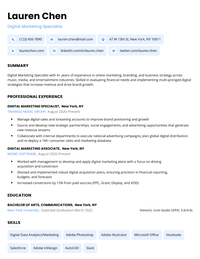
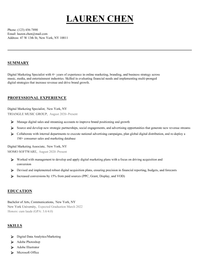
- 2. Update your resume format and design
- 3. Remove old positions and dates
- 4. Refresh your contact information (if necessary)
- 5. Tailor your resume to the job posting
- 6. Adjust your resume introduction
- 7. Mention hard numbers and specific details
- 8. Use action verbs
- 9. Save your resume as a PDF
- Why is updating your resume important?
- How often should you update your resume?
- 9 expert tips for updating your resume

Struggling to get interviews?
Updating your resume when you have new skills or experience — or haven’t applied for jobs in a long time — doesn’t need to be difficult. Follow our expert advice below to quickly update your resume for a new job search.
9 expert tips for updating your resume
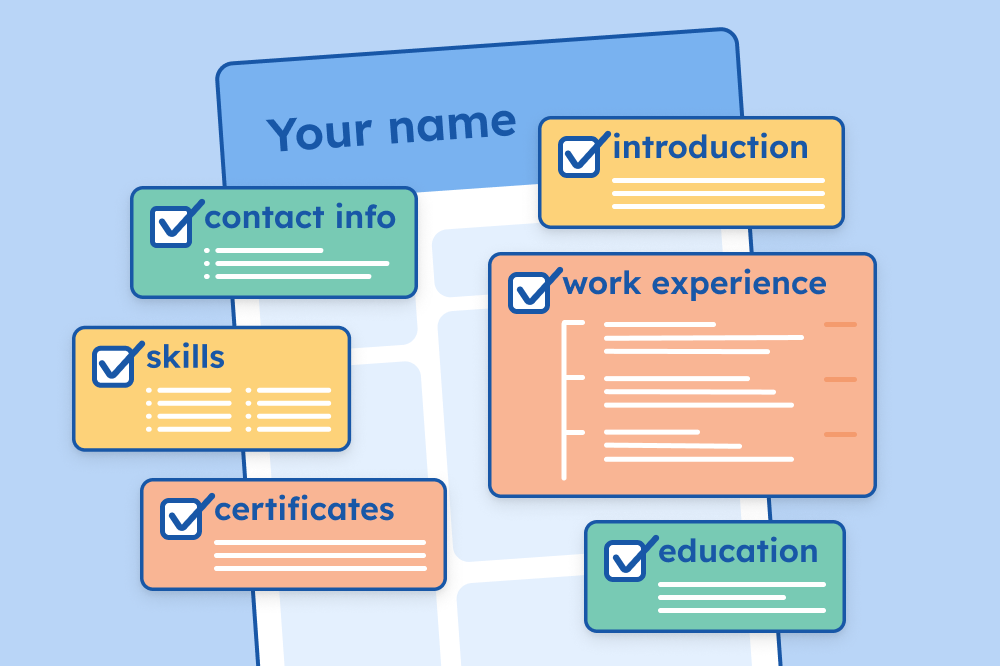
1. Include the appropriate resume sections
Make sure your resume includes the following standard resume sections:
- Resume header: Your name, phone number, email address, and professional links at the very top so employers can easily contact you
- Resume objective: A brief introduction that highlights your career goals and most relevant qualifications
- Work experience section: Details about your previous roles using bullet points that focus on your quantifiable achievements and key responsibilities
- Skills section: A targeted list of hard skills that align with what the employer requires in the job listing
- Education section: Your degrees, the schools you attended, and your graduation dates
If you’re writing a high school resume or a recent college graduate resume and don’t have enough relevant work experience, move your education section or skills section closer to the top of your resume.
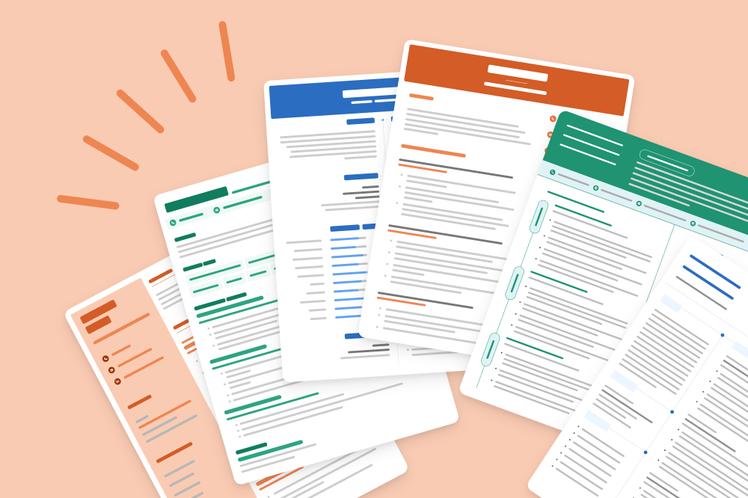
2. Update your resume format and design
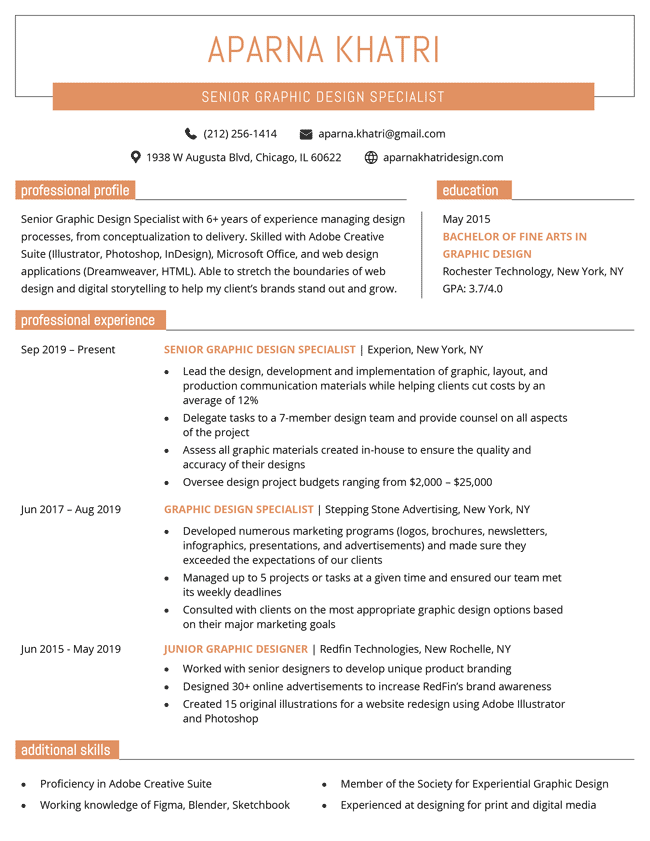
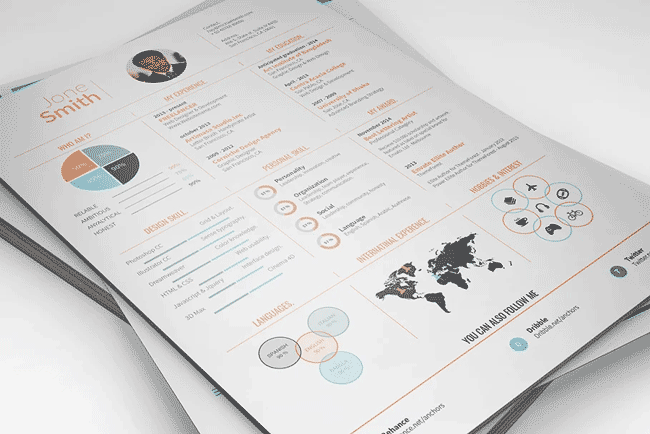
A simple way to update your resume’s appearance is by modifying the format and layout.
Here are three quick ways to upgrade your resume design:
- Change your resume format: Use the reverse chronological resume format to present your work history in chronological order from your most recent experience to the oldest. This is the best format for most job seekers.
- Adjust your resume font and size: Use a standard resume font like Arial, Verdana, Times New Roman, or Georgia, and keep your font size between 10–12.
- Use 1″ margins on all sides: Make sure your resume margins are within an appropriate range. 1″ margins are the standard, and you can adjust them within a range of ½”–1″ if you need extra space.
If you’re changing careers or have a work gap in your resume, consider using a functional resume (which highlights your skills rather than your work experience) or a combination resume (which showcases a mix of your skills and employment history).
3. Remove old positions and dates
List all of your most relevant positions on your resume and remove outdated or irrelevant jobs. Also, remove the dates from your education section if you’ve been working for several years.
Here’s a checklist for removing irrelevant information from your resume:
- List 3–6 bullet points for each of your jobs, focusing on your quantifiable achievements
- Remove dates and positions that are 10+ years old
- Take out skills and experiences that aren’t relevant to the industry you’re applying for
4. Refresh your contact information (if necessary)
In your resume header, remove your full address and only include your city and state.
Include your contact phone number, as well as a professional email address.
5. Tailor your resume to the job posting
Avoid sending a master resume when you’re job hunting. Instead, each time you apply for a new job, tailoring your resume to your target position by highlighting the skills and keywords from the job listing.

Update your resume fast

6. Adjust your resume introduction
A resume objective or summary is a 2–5 sentence introduction that summarizes your best skills, years of experience, and purpose for applying to a job.
Here’s an example of a well-written resume objective for a high school teacher resume:
Example of an updated Resume Objective
High School Teacher with 2+ years of experience managing classrooms of up to 35 students. Licensed teacher in California with a Master of Arts in Teaching from the University of California, Irvine. Specialize in teaching History and Geography. Looking to adapt my creativity, empathy, and curriculum planning skills and serve as the next History Teacher at Lakewood High School.
7. Mention hard numbers and specific details
Add numbers to the bullet points of your job descriptions to make more of an impact on hiring managers.
Using hard numbers such as data, percentages, durations, or dollar amounts show employers evidence of what you’ve achieved.
Here’s an example of work experience section bullet points with and without hard numbers:
Updated resume bullet point with hard numbers
- Supervised a design team of 10+ to launch the new Don’t Quit, Be Fit class app in December 202XX, which increased fitness class sales by 90%
Resume bullet point without hard numbers
- Supervised a team to launch a fitness app
Need help adding numbers to your resume? Try using this prompt:
@resumegenius ? Update your #resume with #chatgpt (More hacks in the ? in our bi0!) #chatgpthack #jobsearchtips #jobsearching #careeradvice #resumegenius #chatgpt4 #chatgptbot ♬ original sound – Resume Genius | Career Advice
8. Use action verbs
Starting each bullet point with an action verb (e.g., “managed” rather than “tasked with”) is a simple way to capture the attention of hiring managers and center yourself as an accomplished applicant.
Have a look at this example of a statement with and without action verbs:
Updated resume bullet point with action verbs
- Completed 430+ phone calls per week with customers, providing them with helpful solutions and excellent service regarding their inquiries
Resume bullet point without action verbs
- Responsible for providing customers on the phone with answers to their inquiries
9. Save your resume as a PDF
After proofreading your updated resume and making your final changes, save it as a PDF or .docx file.
Use the format that your employer requests, but if they don’t specify a format, send a PDF.
Sending your resume as a PDF maintains the exact formatting you used and ensures recruiters see the same version when they download and print your application.
Why is updating your resume important?
Updating your resume is one of the most important things to do when you’re searching for a job. You should submit an up-to-date, tailored resume for each position that you apply to, making sure that your skills and certifications are current.
By contrast, submitting a generic master resume for each job opening risks overloading the hiring manager with irrelevant information and misses an opportunity to show how you’re a good fit for the role.
How often should you update your resume?
You should update your resume every time you obtain new hard and soft skills, certifications, or major work or volunteer experience that are relevant to the career path you want.
If you don’t have time to maintain your resume regularly, try updating your resume every 3–6 months (even if you already have a job).
Refreshing your resume regularly will save you time and unnecessary stress.
Actively updating your resume and being ready at a moment’s notice also prepares you for job opportunities that come up.
Improving your resume regularly can also help you apply for promotions at your current company. By promptly submitting your resume for an internal position, you show your employer you’re self-motivated, organized, and fully prepared to take on a new role.
@resumegenius When is the right time to update your resume? Right now! Learn more on how to update your resume in 2023 here: resumegeniusDOTcom/blog/resume-help/how-to-update-resume #resume #resumetips #careeradvice #jobsearch #jobsearchtips ♬ Chill Vibes – Tollan Kim
About the Author

Nathan Soto is dedicated to providing practical guidance to job seekers, especially people with nonlinear career paths.
Nathan graduated from the University of Nevada with a double B.A. in French and Music. His articles and career advice have been featured on multiple platforms, offering insights into resume writing, interview preparation, and personal branding.