Mid-Career Resume Examples, Template, & Tips
 Written By Sebastian MorganSenior Content Writer & Certified Professional Resume Writer
 Reviewed By Conrad BenzContent Manager & Hiring Manager
Sebastian Morgan
Senior Content Writer & Certified Professional Resume Writer
Seb is a Certified Professional Resume Writer with 10 years of combined experience in career counseling and editorial work. With a MA in International Communications from National Chengchi University (Taiwan),...
We reviewed thousands of job ads to identify the skills employers look for at the middle management level and used our findings to tailor the resume samples on this page.
Download a resume to template your application and use the writing tips below to nail the finer details.

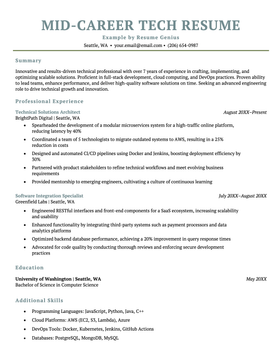
Mid-level career resumes by field
Browse our other free resume templates to select the one that fits you best.
Related Resume Samples
View All Resume Samples
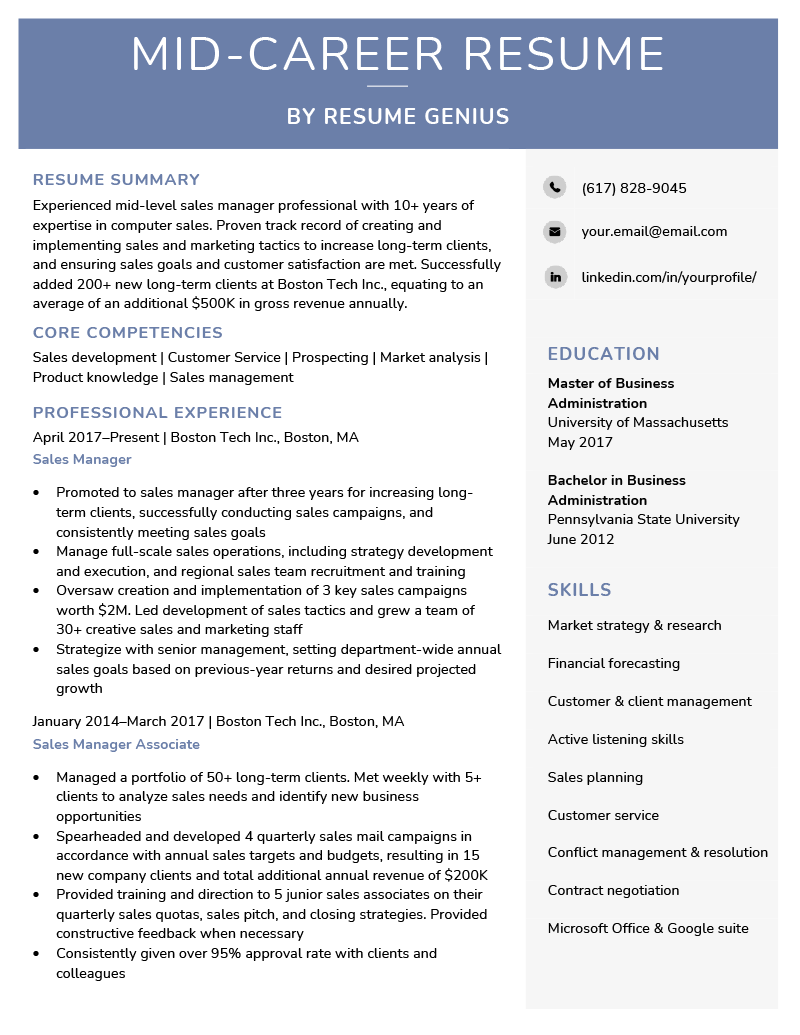
Mid-career resume template
- Sales development
- Customer Service
- Prospecting
- Market analysis
- Product knowledge
- Sales management
- Promoted to sales manager after 3 years for increasing long-term clients, successfully conducting sales campaigns, and consistently meeting sales goals
- Manage full-scale sales operations, including strategy development and execution, and regional sales team recruitment and training
- Oversaw creation and implementation of 3 key sales campaigns worth $2M. Led development of sales tactics and grew a team of 30+ creative sales and marketing staff
- Strategize with senior management, setting department-wide annual sales goals based on previous-year returns and desired projected growth
- Consistently achieve a 95%+ satisfaction rate with clients, senior management, and sales team
- Managed a portfolio of 50+ long-term clients. Met weekly with 5+ clients to analyze sales needs and identify new business opportunities
- Spearheaded and developed 4 quarterly sales mail campaigns in accordance with annual sales targets and budgets, resulting in 15 new company clients and total additional annual revenue of $200K
- Provided training and direction to 5 junior sales associates on their quarterly sales quotas, sales pitch, and closing strategies.
- Provided constructive feedback when necessary
- Consistently given over 95% approval rate with clients and colleagues
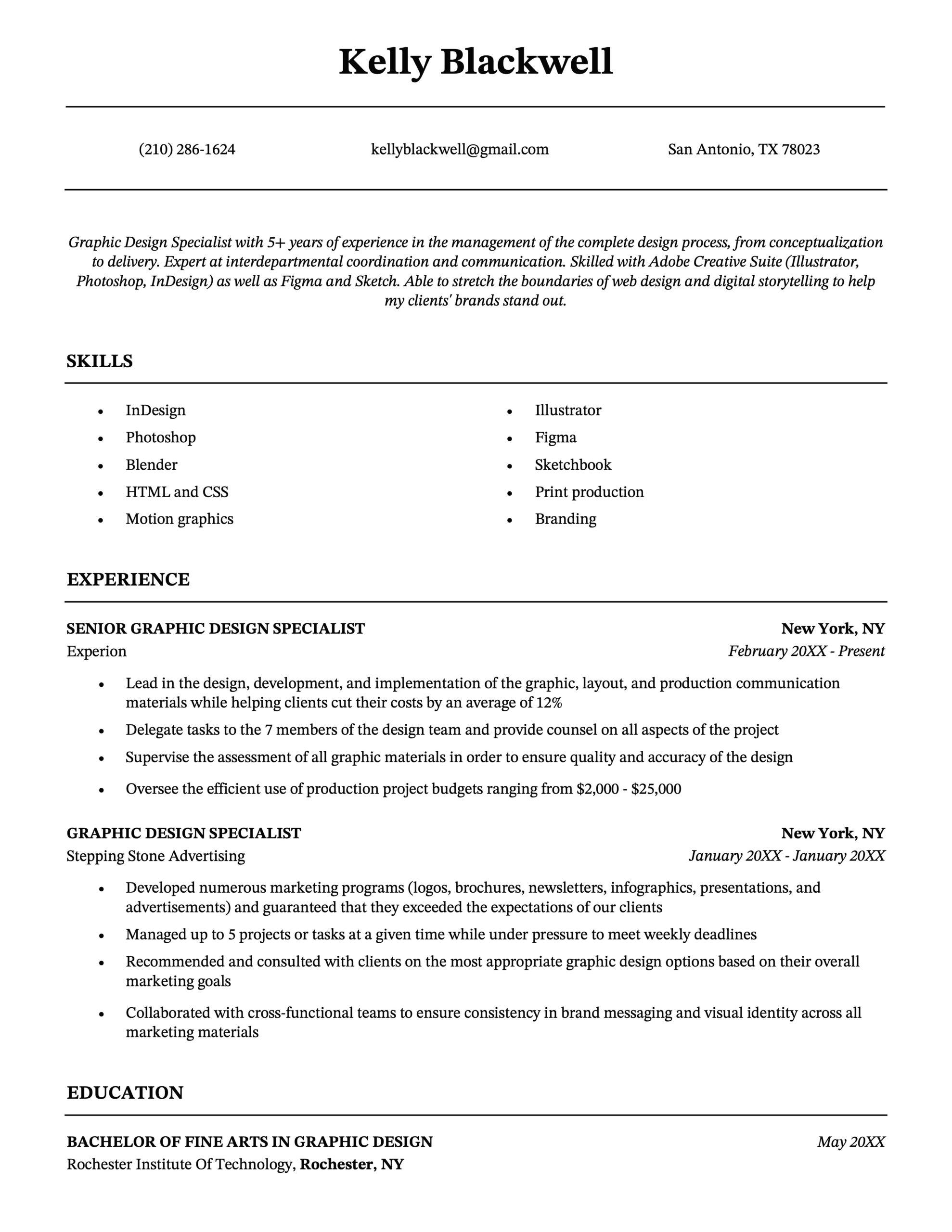
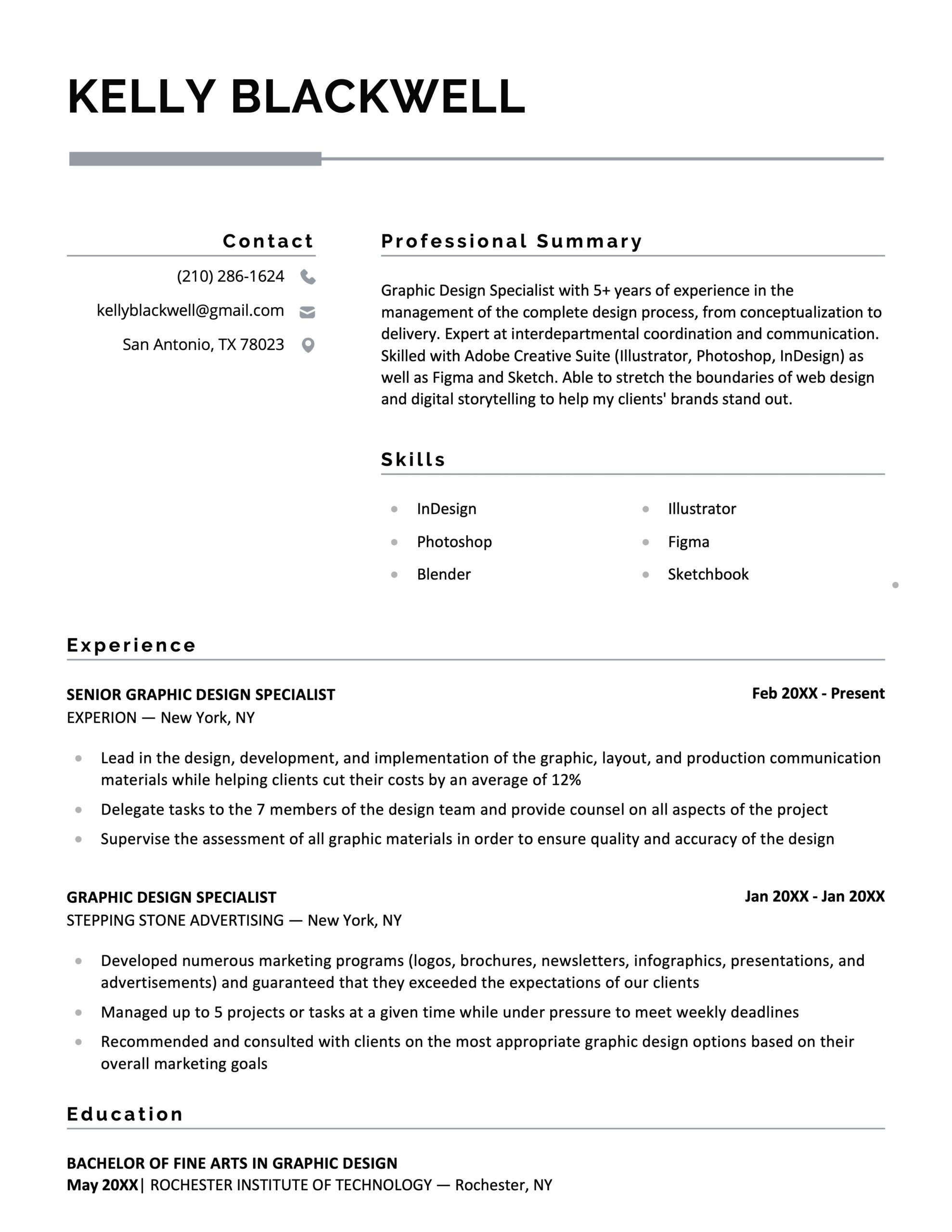
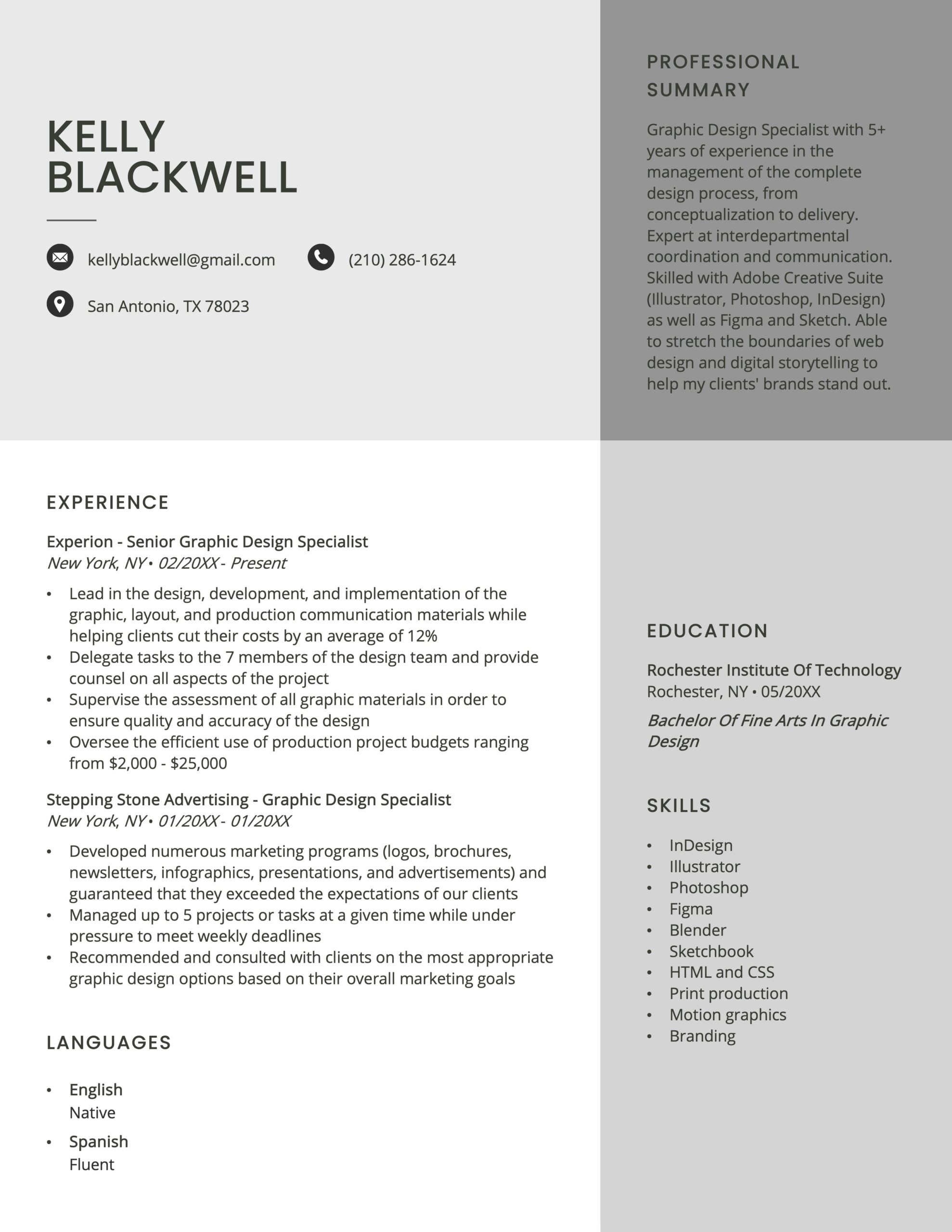
To speed up the resume writing process, use one of our templates designed for mid-career professionals:
How to write a mid-career resume
If you’re a mid-level professional looking to advance in your career by applying for a more senior position, you’ll need to prepare a well-written mid-career resume.
However, because you’ve been working for several years (if not a decade or more), it can be tricky knowing what experience to highlight or which specific qualifications to focus on without making your resume too long, crowded, or hard to read.
To ensure that you write a clear and concise mid-career resume, below, we’ve included four professional writing tips and a template to help guide you through making a great mid-level resume.
1. Start with your core competencies
At this point in your career, you’ve likely been working for about a decade and have a lot of experience and qualifications to display on your resume.
Because of this, starting your mid-career resume with a list of your core competencies is the best way to grab the hiring manager’s attention and show them you possess the necessary skills for a mid-level position.
If you’re unsure which core competencies you should highlight on your mid-career resume, read through the job description and take note of any skills the employer is looking for.
Here’s an example of how to list core competencies on a mid-career resume:
- Sales development
- Customer Service
- Prospecting
- Market analysis
- Product knowledge
- Sales management
2. Show career progression in your work experience
Progression in your career is important, especially if you’re applying for a mid-level manager position.
Hiring managers will want to see that you’ve consistently challenged yourself and developed as a professional if they’re going to hire you for a mid-career position that requires leadership skills to excel.
A good way to show career progression in your work experience section is by clearly listing your job titles (and any promotions you’ve received), and demonstrating that your responsibilities increased over time by quantifying your accomplishments using hard numbers.
Hard numbers typically include percentages, statistics, or any concrete figures that make it easier for a hiring manager to measure the results of your work and how you contributed to your previous employers.
Action verbs are also helpful to show the hiring manager you’re a dedicated mid-level professional that gets things done at work, and have the bonus of making your resume more interesting to read.
Here’s an example of an effective work experience on a mid-career resume (with hard numbers and action verbs highlighted):
- Managed a portfolio of 50+ long-term clients. Met weekly with 5+ clients to analyze sales needs and identify new business opportunities
- Spearheaded and developed 4 quarterly sales mail campaigns in accordance with annual sales targets and budgets, resulting in 15 new company clients and total additional annual revenue of $200K
- Trained and provided direction to 5 junior sales associates on their quarterly sales quotas, sales pitch, and closing strategies. Gave constructive feedback when necessary
- Consistently given over 95% approval rate with clients and colleagues
3. List your education last
An education section is an essential component of your resume, but if you’re already years into your career, it’s best to list your education last on your resume.
At this point in your career, hiring managers are primarily interested in your professional work experience (such as the roles you’ve held, responsibilities, and career achievements) than what you’ve learned in a classroom.
When listing a degree on your mid-career resume, you’ll only need to include these three key details:
- University name and location
- Degree title
- Graduation date
There’s no need to go into details about relevant coursework, academic awards, GPA, or honors (such as cum laude) because these details aren’t relevant at this point in your career. As a mid-level professional, your career achievements will trump your academic accomplishments.
4. Don’t be afraid to highlight career changes
If you’ve gone through a career change, you might be worried that hiring managers won’t give your application a fair chance because it looks like you’re quick to jump ship and change jobs.
But in fact, depending on the job you’re applying for, having previously switched careers may be a strength you can highlight for a hiring manager.
For example, if you’re applying for a position in sales with a biopharmaceutical company, having had experience working for a medical firm will equate to product knowledge and previous experience in the medical industry.
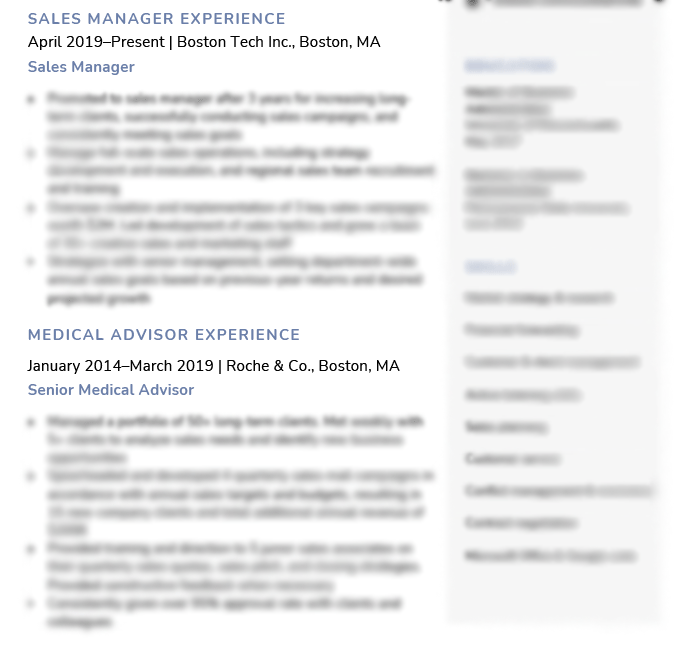
The easiest way to highlight to a hiring manager that you’ve changed careers is by separating your experience in each industry with two or more distinct headers under your professional experience section.
Here’s an example of how to show a career change on your mid-level resume:
Build your resume in minutes

About the Author

Seb is a Certified Professional Resume Writer with 10 years of combined experience in career counseling and editorial work. With a MA in International Communications from National Chengchi University (Taiwan), he helps job seekers translate their experience into employer-ready applications for global job markets.


Click to rate this article
4.7 Average rating