
Jobscan offers useful career services — but not all of them are free. Get the full breakdown of Jobscan’s features, pricing, and performance before you pay.
Jobscan is a job-hunting service that focuses on helping you optimize your resume and cover letter for applicant tracking systems (ATS). But is it actually worth the price?
In this review, we break down everything you need to know before subscribing.
Jobscan reviews from customers
Jobscan has overall ratings of 3.2/5 stars on SmartCustomer (previously SiteJabber) and 4.5/5 stars on Trustpilot.
Here are two reviews from each website — written by actual customers — to help you decide if you should invest in Jobscan:
Trustpilot Jobscan reviews
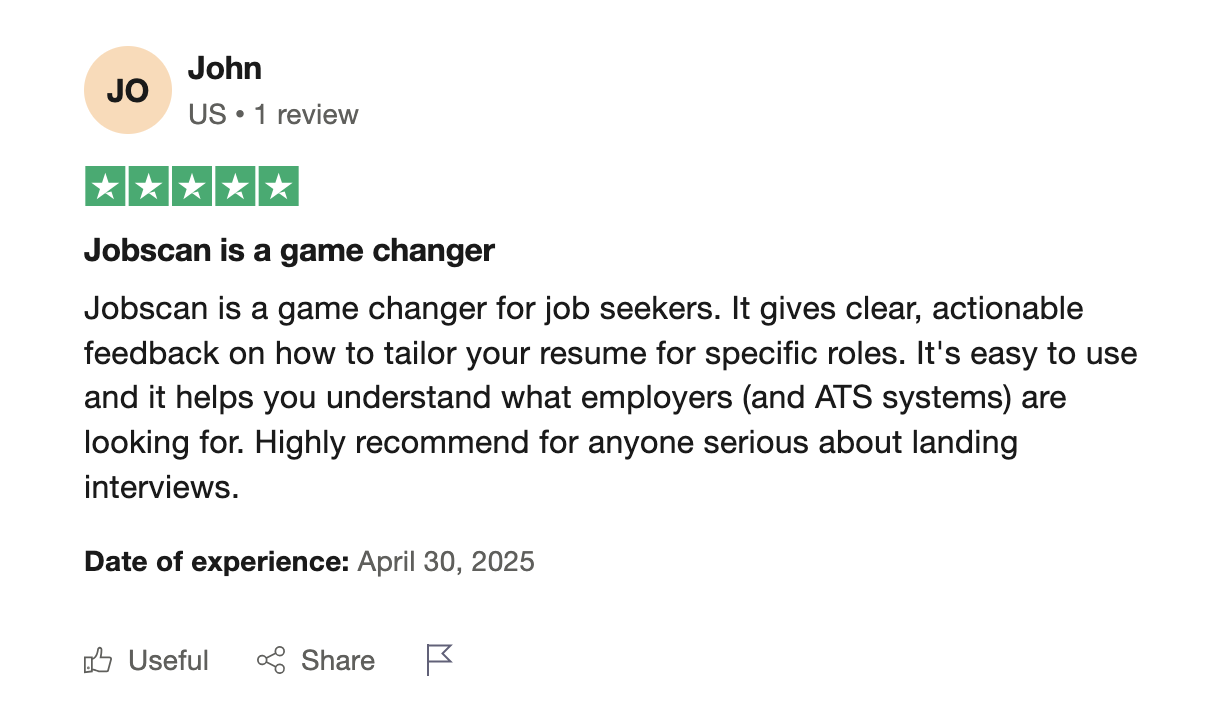
The Jobscan reviews on Trustpilot are generally positive, with many users saying that it’s easy to use and provides useful feedback on how to optimize your resume:
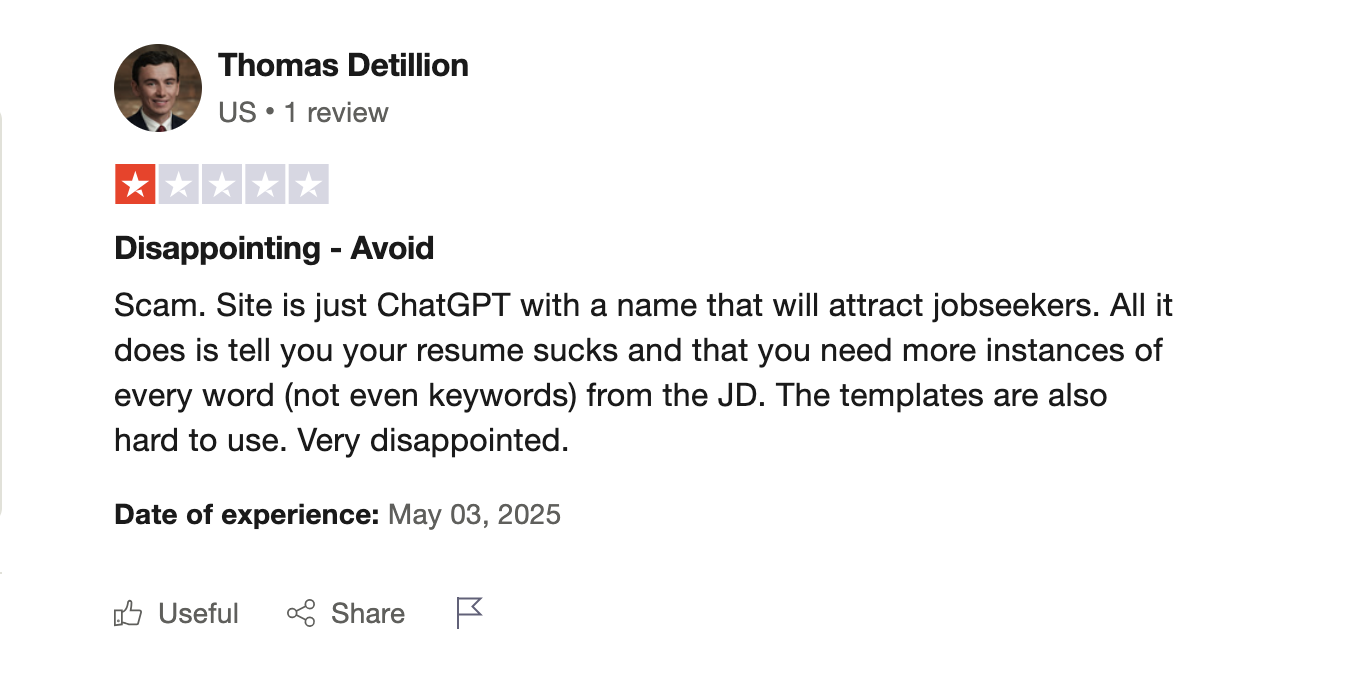
However, other users found Jobscan’s tools unhelpful or difficult to use:
SmartCustomer Jobscan reviews
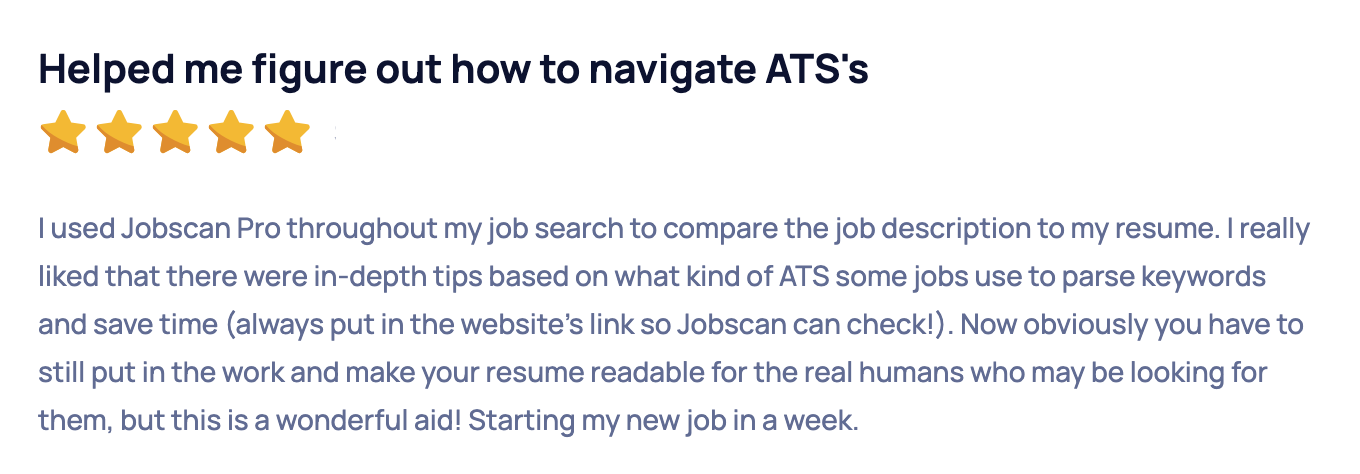
SmartCustomer has around 1,700 Jobscan reviews and ranks it 23rd out of all of the resume builder sites. The Jobscan reviews on SmartCustomer are more mixed, with some users reporting a positive overall experience:
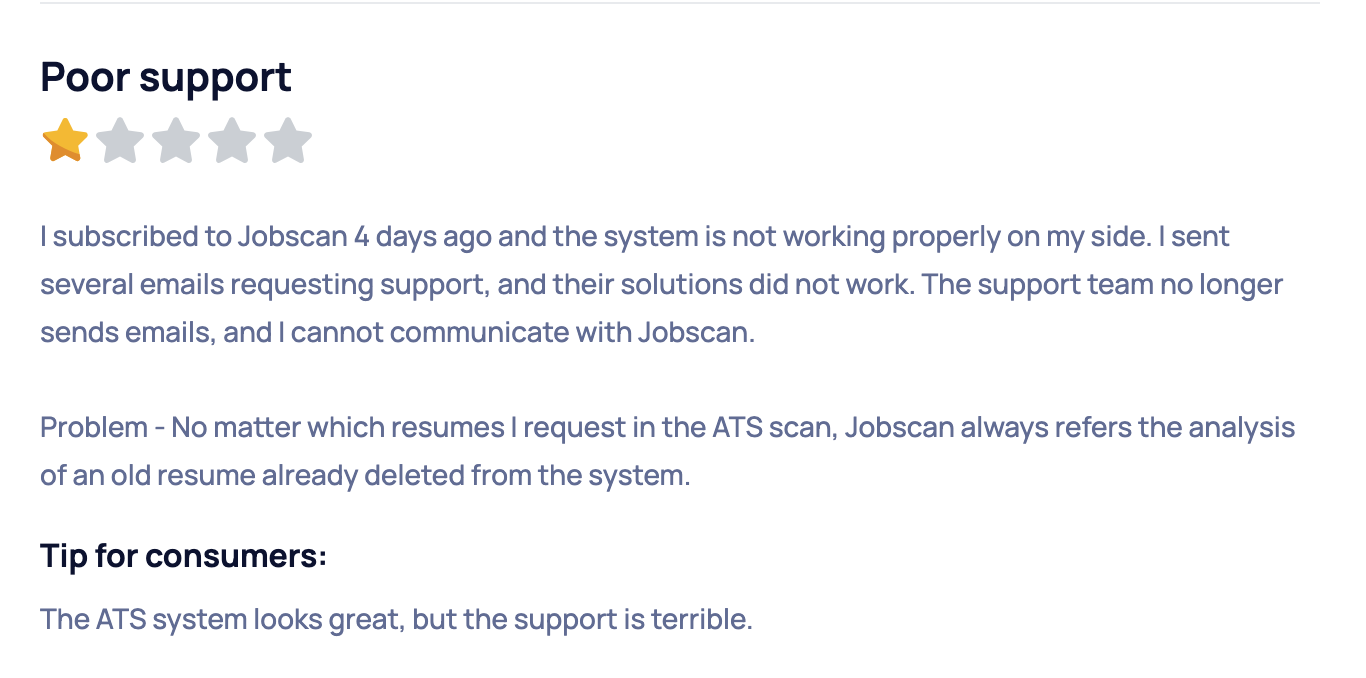
Others, however, complained of poor customer support:
Our Jobscan review
We went through everything Jobscan has to offer its users. Here’s what we liked and didn’t like:
What we liked about Jobscan
While no tool is perfect, Jobscan offers several features that genuinely add value to the job search process. Here’s what stood out to us:
ATS-optimized resume templates
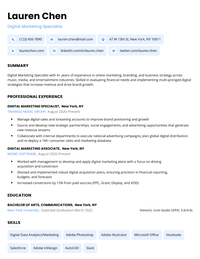
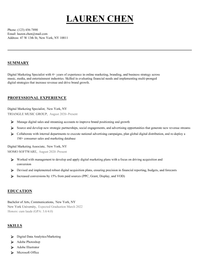
If you’re looking for a super simple resume template that will get past ATS software, Jobscan has several solid options to choose from. Here’s an example:
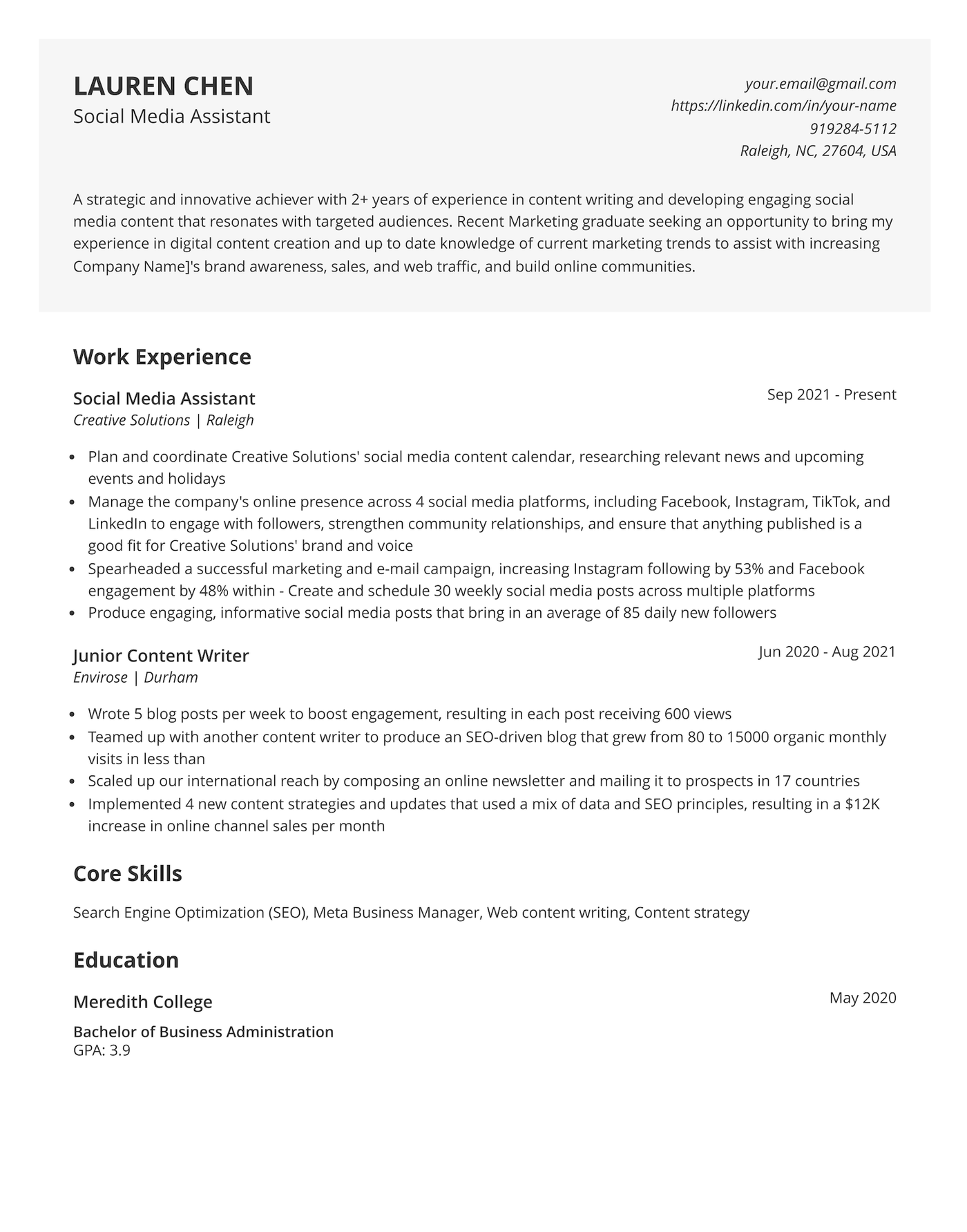
However, if you’re looking for more creative resume templates, you might find Jobscan’s template options a bit lacking.
ATS resume match score
Jobscan’s resume scanning tool reads your resume and gives it a rating based on how well it matches your target job description. The scan produces advice in these categories:
- Searchability: Checks to make sure you’ve included your contact information, target job title, proper section headers, and the required education.
- Hard skills: Highlights the hard skills listed in the job ad and notes which ones are missing from your resume.
- Soft skills: Detects the soft skills listed in the job ad and notes which ones are missing from your resume.
- Recruiter tips: Checks your word count and whether your information matches the job you want, evaluates your resume’s tone and points out cliches to remove, and makes sure you’ve included measurable results instead of just listing job duties.
- Formatting: Makes sure your page layout and font choices are ATS-optimized.
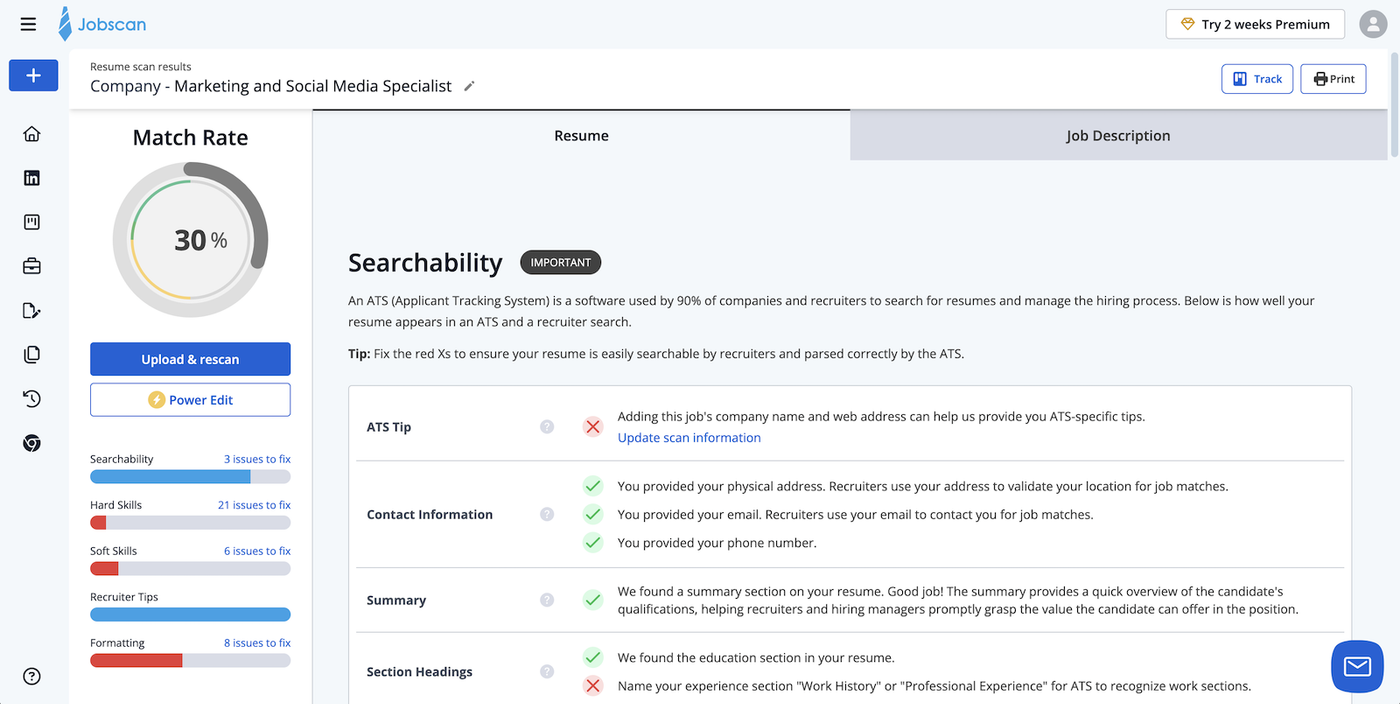
Jobscan’s resume optimization tool is definitely useful for comparing your resume to specific job ads to make sure you’ve customized your application to the role. However, you shouldn’t blindly follow this tool, or you may make your resume too long or difficult to read.
Solid resume builder
Jobscan’s resume builder is a clean, easy-to-use tool designed to help job seekers create ATS-friendly resumes from scratch.
It offers pre-formatted templates optimized for applicant tracking systems, and it integrates seamlessly with Jobscan’s optimization engine, allowing you to tweak your resume in real time based on a job description.
While it’s not as design-flexible or visually modern as some other resume builders, its focus on functionality and keyword optimization makes it a useful tool for applicants targeting corporate roles.
Useful job tracker
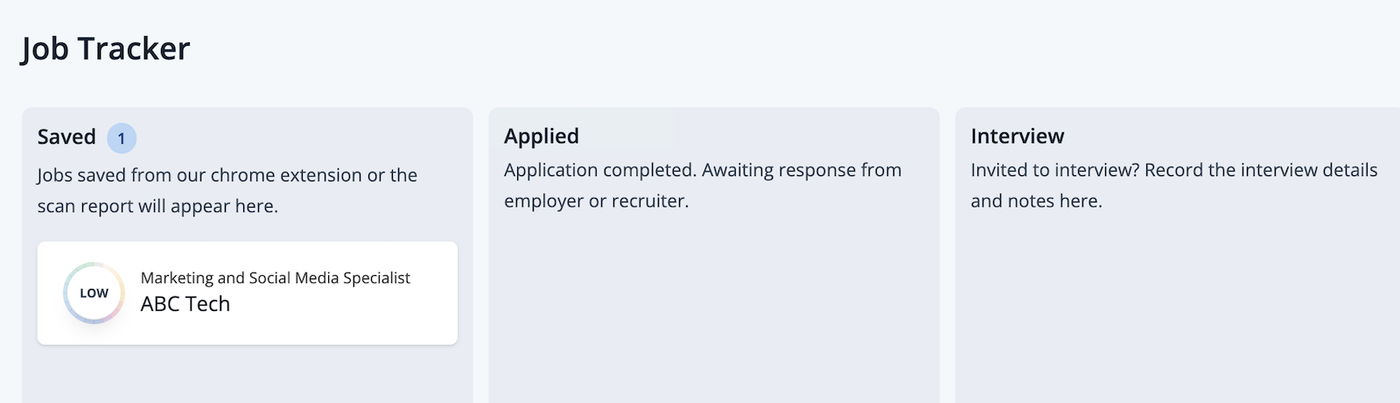
Jobscan’s job tracker lets you manage applications, deadlines, and follow-ups in one place, with added notes and status updates for each position. While it lacks some advanced features found in competitors, this is a helpful bonus for Jobscan users who want a central hub to manage their job hunt without switching platforms.
What we didn’t like about Jobscan
While Jobscan has clear strengths, it’s not without its drawbacks. Here are a few areas where we think it falls short:
Limited free use
One of our biggest frustrations with Jobscan is its limited free tier. While you can run a few scans without paying, the free version offers very restricted functionality (capped at five scans per month).
For active job seekers applying to dozens of roles, that quota runs out quickly, often before you’ve gotten real value from the platform.
While it’s understandable that a premium tool charges for its features, a more generous free plan or trial period could help users make a more informed decision about whether or not to pay for a subscription.
Expensive subscription
Jobscan’s premium subscription comes at a relatively steep price — $49.95/month or $89.95 for three months. For job seekers already facing financial uncertainty, this cost can feel prohibitive, especially when compared to free or lower-cost resume tools on the market.
Keyword stuffing risk
One downside of Jobscan’s resume optimization approach is that it heavily emphasizes keyword matching.
While this can help you create an ATS-friendly application, in some cases it encourages users to over-optimize their resumes. The result? Keyword stuffing — adding terms just to increase match scores, even if they don’t reflect your true experience or read naturally.
No human feedback
One of the most significant limitations of Jobscan is the lack of personalized, human review.
While it provides automated suggestions based on keyword analysis and ATS patterns, it doesn’t offer the nuanced insight that a professional resume writer or career coach might provide.
The advice you receive is algorithm-based, meaning it may miss context, tone, or industry-specific conventions that only a human could catch.
Is it worth paying for Jobscan?
Jobscan is worth paying for because its helpful features like ATS optimization and keyword matching make it quick and easy to tailor your resume to a specific job opportunity. That said, there are many cheaper alternatives to the resume builder that offer similar features if you’re not prepared to spend $49.95 on your resume.
How does Jobscan compare with Resume Genius?
When it comes to all-in-one job search tools, Jobscan offers a solid range of features including resume optimization, a basic resume builder, LinkedIn scans, and a job tracker.
It’s designed primarily for applicants who want to tailor their resumes to specific job descriptions using keyword matching and ATS-friendly formatting.
However, if your main focus is simply building a great-looking, professional resume quickly and easily, Jobscan falls short, especially compared to tools like Resume Genius.
Jobscan vs. Resume Genius
| Jobscan | Resume Genius | |
|---|---|---|
| Best for | Matching your resume to job descriptions and improving keyword match. | Building a polished, ATS-ready resume from start to finish. |
| Free version | 7-day free trial | Yes |
| Cheapest full access | $49.95 per month | $2.95 for first 14 days |
| Money back guarantee | No | 14-day money back guarantee |
| File formats | Word | PDF, Word, TXT |
| Template selection in builder | 9 designs | 25+ designs |
| Free template downloads from website | None | 120+ blank templates (Word, Google Docs, Indesign, LaTeX, PDF, LibreOffice, InDesign) |
| AI writing assistant | AI Coach | Yes (Sage) |
| Free resume review by an expert | No | Yes |
| Cover letter builder | Yes | Yes |
| US job board access | Yes | Yes |
| Free ATS resume checker | Yes | Yes |
Resume Genius is purpose-built as a resume builder, and it shows. The number one rated resume builder on SmartCustomer, it offers a much smoother, faster, and more user-friendly experience for creating polished, professional resumes.
With its step-by-step prompts, professionally designed templates, and customizable content suggestions, Resume Genius makes the process nearly effortless, even if you’re starting from scratch. In contrast, Jobscan’s resume builder is functional but basic, and clearly not the core strength of the platform.
If you’re looking for a full career toolkit with optimization features, Jobscan might be useful in certain cases. But if your priority is creating a high-quality resume without the extra complexity, Resume Genius is by far the better option.
Additional resume builder reviews
Don’t think Jobscan is the right choice for you? Read some of our other resume builder reviews:
- Resume Genius reviews
- Zety reviews
- Novoresume reviews
- MyPerfectResume reviews
- Indeed resume reviews
- Kickresume reviews
- Resume Now reviews
- Rocket Resume reviews
- LiveCareer review
- Canva reviews
- Resume.io reviews
- Teal resume builder reviews
- ResumeNerd reviews
- Jobscan reviews
- Best resume writing services
- Best CV writing services
- Monster resume builder review
Build your resume in minutes

About the Author

Lauren Mastroni is a Senior Digital Content Writer at Resume Genius, where she creates data-driven career content and actionable job search advice. With a background in academic research, she brings a research-focused approach to topics like resume writing, interviewing, and career development. Lauren is dedicated to helping job seekers at all stages navigate the hiring process and present themselves more effectively to employers.